DbcultAccessing Vault...
Cult Review
Senior Film Conservator
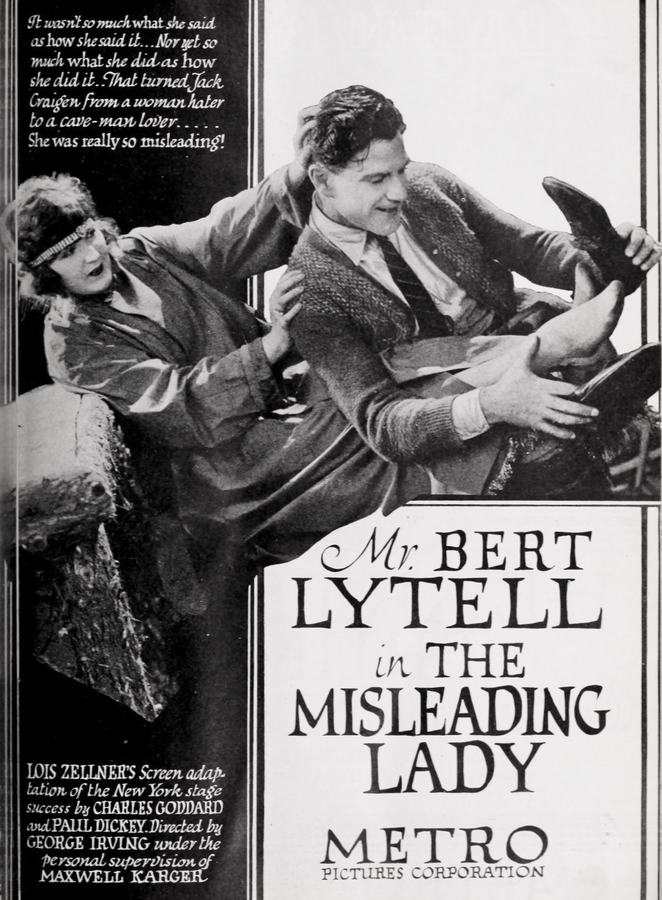
The roaring year of 1920 coughed up a sardonic cocktail of jazz, gin, and suffrage headlines; into that tinderbox Paramount Pictures flung The Misleading Lady, a silent rom-com that pretends to be a drawing-room lark yet harbors the pulse of a sex-war manifesto. Viewed a century later, the film feels like a mischievous ghost waltzing through our so-called progressive living rooms, pinching our assumptions about consent, courtship, and comedic violence.
Let’s be blunt: the plot is Pygmalion tossed into a wood-chipper of gender stereotypes and reassembled with charm-bracelet whimsy. Jack Craigen—engineer, colonial profiteer, sworn woman-hater—returns to Manhattan lugging a steamer trunk of imperial entitlement. Helen Steele—Manhattan’s answer to a Parisian paper doll—wants the lead in The Siren, a play that will flop harder than a beached trout unless she can “experience” seduction. One wager later, she’s batting bedroom eyes at the swaggering misanthrope while rehearsing melodramatic swoons in her boudoir mirror.
Director Paul Dickey—better known for Broadway thrillers—stages the courtship like a fencing duel shot in soft focus. Every smirk, every dropped handkerchief becomes a thrust and parry. The camera fetishizes Lucy Cotton’s swan neck while granting Bert Lytell’s granite jaw enough close-ups to quarry marble. It’s seduction as blood sport, scored by a ragtime orchestra that hammers keys like pistons. The wager itself, a scant intertitle card reading “Seven nights to hook the bear!” lands with the blunt savagery of a carnival barker.
Yet the film’s most anarchic trick arrives at minute forty-five when the masquerade detonates. Jack discovers the ruse, but instead of retreating into wounded masculinity, he weaponizes the colonial mythology he once peddled in Kimberley diamond camps. He will, he declares in sea-blue intertitles, “play Matabele groom to her reluctant bride.” Translation: he kidnaps her. The narrative gleefully swaps the bustle of Fifth Avenue for pine-scented shadow, trading foxtrot for caveman drag.
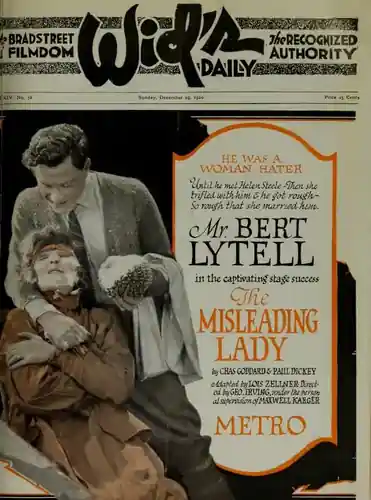
Once the action relocates to Jack’s Adirondack lodge, the film’s tonal palette mutates faster than a chameleon on tartan. Helen’s silk chemise snags on bark; Jack’s tuxedo tie gives way to a lumberjack shirt unbuttoned to the sternum. Cinematographer F. E. Hutchinson bathes the forest in chiaroscuro, so moonlight drips like quicksilver through spruce boughs, recalling the Germanic woodland horror of The Book of Nature yet played for slapstick. The moment Jack claps an iron cuff around Helen’s ankle, the film winks at the audience: yes, we’re trafficking in abduction, but isn’t the actress just researching her role?
Cue the parade of uninvited guests. First comes a deranged violinist convinced he is Napoleon, brandishing a bread stick like a sabre—an obvious ancestor of the asylum escapees in Spellbound. Next, two rum-runners tumble out of a Packard, so sozzled they attempt to toast marshmallows over an unlit stove. Finally a scoop-hungry reporter barges in, notebook flapping like a moth at lantern glass. Each intrusion chips away at Jack’s alpha-posture, until the lodge resembles a vaudeville trap instead of a private dungeon.
Lucy Cotton delivers a master-class in silent-era semaphore. Her Helen can glide from doe-eyed ingenue to panthera tigress with the arch of one eyebrow. Watch her in the midnight kitchen scene, chained yet dictating terms of engagement; she juts her chin, eyes glinting like obsidian, and suddenly the power dynamic flips. The camera adores her, but she returns the gaze, weaponizing it. Compare her shimmering malleability to the marble resolve of Rae Allen’s supporting turn as the vampish cousin in Don’t Change Your Husband; Cotton wins by a mile because she lets cracks show—humility, fear, horniness.
Bert Lytell has the harder task: selling brutish magnetism without tripping into mustache-twirling villainy. He leans on micro-gestures—finger drumming against a whiskey glass, the way his grin collapses into a grimace when Helen laughs at his chains. His performance is a tightrope walk over a crocodile pit, and he never once plummets. The chemistry between the leads crackles like static on wool in January; you half expect the filmstrip to combust.
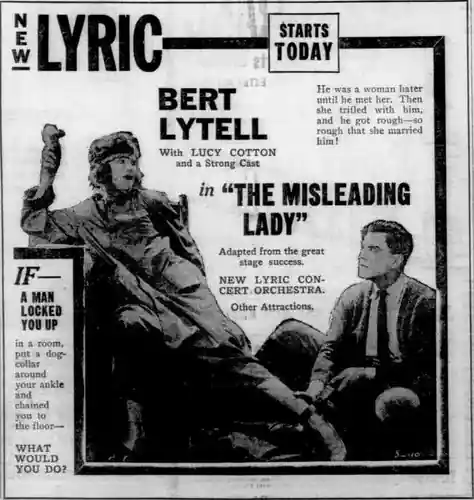
Lois Zellner’s intertitles snap, crackle, and sting. She coins neologisms (“flapper-fission,” “sugar-cuffed”) that predate the jazz-age slang of The Great Leap: Until Death Do Us Part by a full decade. Even better, she weaponizes ellipsis; sentences break off mid-clause, forcing the viewer to ghost-write the profanity. The effect is a script that feels co-authored by Dorothy Parker and a mischievous drill sergeant.
Hutchinson’s camera stalks corridors like a gossip columnist. In one bravura shot, he frames Helen’s chained ankle through a frying pan’s polished bottom, distorting the limb into a fish-eye monstrosity—an image both erotic and grotesque. Later, moonlight slashes across Jack’s face in prison-bar stripes, foreshadowing the ethical cage he’s building around himself. These flourishes elevate the film from stage-bound farce to celluloid poetry.
Modern viewers will balk at the central conceit: kidnapping as courtship. Yet the film’s closing reel undercuts the hero’s patriarchal triumph. Helen, now freed, turns the tables, proposing a counter-wager: if Jack can survive a single week as her “domestic slave,” she’ll marry him. The final intertitle winks—“Game to the Siren!”—and Jack’s grin wavers between ecstasy and terror. The narrative thus cannibalizes its own misogyny, suggesting that marriage itself is the ultimate shackle for both sexes.
Compare this last-minute inversion to the bleak determinism of Kiss of Death or the ecclesiastic masochism of Otets Sergiy; The Misleading Lady prefers to pirouette on the knife-edge between satire and submission.
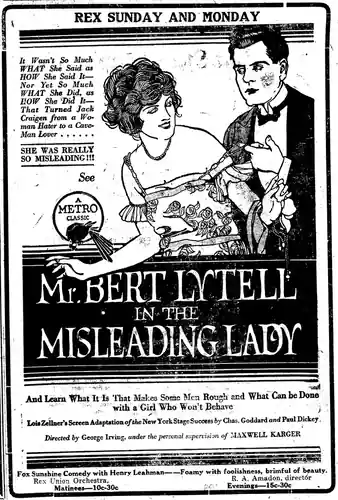
At a brisk 75 minutes, the film barrels forward like a runaway toboggan. Scene transitions smash-cut with iris-wipes shaped like champagne bubbles. The third-act pileup—five intersecting subplots colliding in a blizzard—feels almost Shakespearean, though the DNA is pure Mack Sennett. The pacing blueprint would later inspire Howard Hawks’s His Girl Friday, yet here the velocity is laced with menace; you laugh while checking for exit signs.
Existing prints are mute, but archival notes suggest the original road-show presentation featured a live quintet performing a medley of Romberg melodies interpolated with jungle tom-toms during the mountain sequences. Contemporary restorations often slap on generic ragtime, neutering the tonal whiplash. Seek out the 2018 Bologna restoration, where composer Maud Nelissen interpolates Kwela penny-whistle riffs into the lodge scenes—an inspired nod to Jack’s colonial past that makes the comedic sadism sting sharper.
Histories of screwball often trace lineage to It Happened One Night, yet the DNA helix spins back to this obscure 1920 confection. The battle-of-sexes template, the isolated location, the secondary lunatics who function as Greek chorus—every trope is here in nascent form. Even the “walls of Jericho” conceit reappears transmogrified as a bear-skin partition. Cinephiles hunting for proto-screwball fossils should start here, then double-back to When We Were Twenty-One for a sobering chaser.
Absolutely—provided you come armed with historical empathy and a taste for tonal whiplash. The film offers neither the pastoral mysticism of Vingarne nor the proto-feminist swagger of Money Magic, yet it occupies a liminal sweet spot where jazz-age hedonism collides with Victorian residue. You’ll cringe, you’ll chortle, you’ll question your own complicity—then you’ll rewind to savor Cotton’s eyebrow acrobatics one more time.
Stream it on the-misleading-lady-1920 in 2K, pour a sidecar, and brace yourself for a 75-minute master-class in how to weaponize courtship, chain your beloved, and still land a comedic knockout. Just don’t try the lodge trick at home—some gimmicks are best left to the ghosts of 1920.
IMDb —
1922
Community
Log in to comment.