DbcultAccessing Vault...
5.4/10
Senior Film Conservator
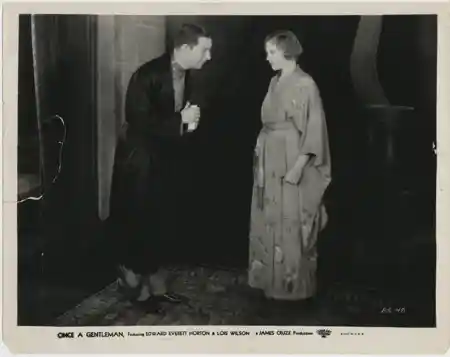
A definitive 5.4/10 rating for a film that redefined the boundaries of cult cinema. Once a Gentleman remains a cornerstone of transgressive art.
So, is Once a Gentleman worth a look today? Absolutely, if you've got a soft spot for silent films or just a curious mind. It’s not some profound masterpiece, but it’s a genuinely *fun* little movie, especially for those who appreciate the quirks of early cinema.
Anyone who enjoys a good old-fashioned romantic comedy with plenty of physical gags will probably get a kick out of it. If you need explosions or rapid-fire dialogue, well, you'll probably find this a bit too quiet and slow. That’s okay.
The whole setup is pretty straightforward: Francis X. Bushman plays this fellow, Larry, who’s down on his luck but has a real sparkle in his eye. He bumps into Lois Wilson’s character, a lovely society girl, and immediately decides he’s going to win her over. Only problem? He’s got no money, no fancy family. So, he just… makes it all up. 🤷♂️
There’s a scene early on where Larry tries to *casually* read a newspaper upside down, pretending he’s just waiting for a car. You can almost feel the entire film holding its breath with him. It goes on a bit long, that particular bit, but it really nails his desperation.
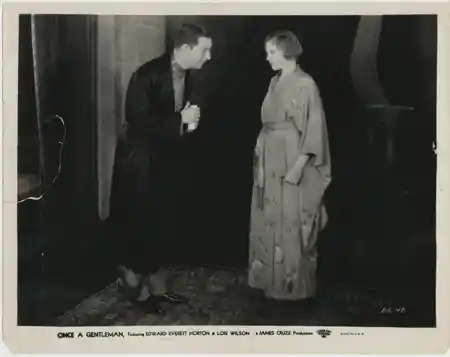
Lois Wilson, she’s just lovely here. Her expressions are so clear, even without words. You always know what she’s thinking, whether it’s amusement or a touch of concern. She really carries the emotional weight of her character’s dilemma.
Edward Everett Horton pops up too, playing Larry's slightly bewildered friend. He gets some of the best reactions. There’s a moment where he’s trying to help Larry sneak into a party, and he keeps fumbling with the coat check ticket. His wide-eyed panic is just *classic* Horton.
The pacing is… well, it’s a silent film. It takes its time. Sometimes it feels like a scene could have been trimmed by ten seconds, but then you get these wonderful, lingering shots on someone’s face. It gives you time to really *feel* what they’re feeling.
I remember this one dinner party sequence. Larry is trying to use the right fork, and he keeps glancing at the person next to him, trying to mimic them. He accidentally picks up the wrong one, and the waiter gives him this tiny, almost imperceptible *look*. It’s such a small detail, but it tells you everything about the social pressure. That waiter was a master of subtle judgment. 🧐
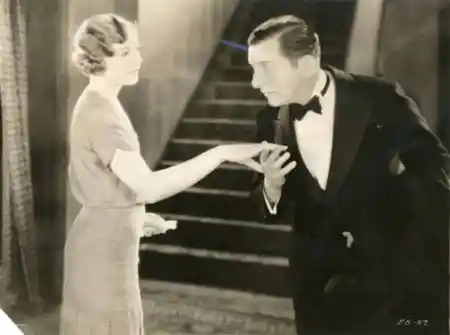
The film doesn't try to be *too* clever with its plot twists. You kind of see the big reveal coming from a mile away, but that’s part of the charm. It’s less about the surprise and more about watching Larry squirm and try to keep his story straight.
There’s a rather charming, if somewhat chaotic, chase through a park later on. It’s not a car chase, mind you. More like a series of near-misses involving a gardener’s cart and a very confused dog. It feels very much of its era, a little silly, but genuinely endearing.
And the ending, without giving too much away, manages to feel earned. Larry isn’t just forgiven; he’s appreciated for his true self, which is always nice to see. It’s a sweet message, really. Don't need to be fancy to be good.
It’s not perfect, of course. Some of the intertitles feel a bit clunky, explaining things that the actors' faces already told us. But that’s a small complaint. For a film from 1926, it holds up remarkably well as a lighthearted diversion. It’s a testament to good, clear storytelling.
A little bit of old Hollywood magic. ✨
IMDb —
1921
Community
Log in to comment.