DbcultAccessing Vault...
Cult Review
Senior Film Conservator
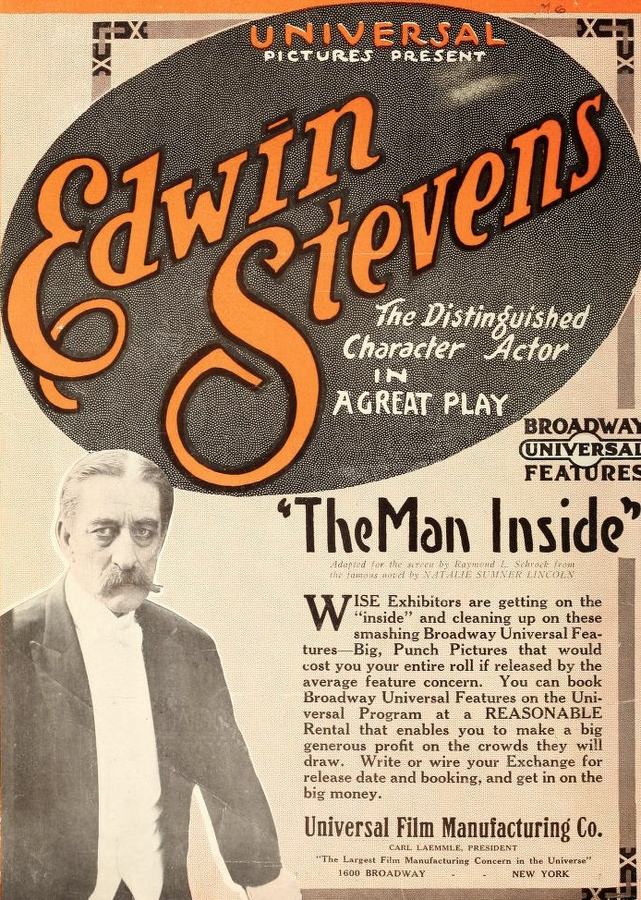
Stepping into the shadowy corridors of early cinema, one occasionally unearths a gem like The Man Inside (the-man-inside), a film that, despite its vintage, pulsates with a surprisingly intricate and morally ambiguous narrative. This isn't merely a whodunit; it's a meticulously woven tapestry of political intrigue, deep-seated familial animosity, and the corrosive power of secrets. From the very outset, the audience is plunged into a world where trust is a luxury few can afford, and every friendly face might conceal a dagger. It's a testament to the ingenuity of its era that such a convoluted plot could be so effectively, if at times melodramatically, unfurled on screen, demanding the viewer's rapt attention as layer upon layer of deception is peeled back.
The catalyst for this entire dramatic edifice is the sudden, violent death of Senator Carew, discovered lifeless in his automobile after a seemingly innocuous society ball. But nothing in The Man Inside is ever truly innocuous. Preceding his demise, Carew had penned a chilling letter to the Secretary of State, a missive hinting at a deeply entrenched American spy operating with impunity in South America. This revelation instantly transforms a tragic accident into a calculated assassination, setting the stage for a high-stakes investigation where national security hangs precariously in the balance. The initial suspects are almost too conveniently placed: Lieutenant Lane, a naval officer whose recent, fiery proposal for Carew's daughter, Cynthia, was met with a stern refusal, and Phil Carew, the Senator's nephew, known for his public disagreements with the deceased. These early red herrings are skillfully deployed, drawing the audience into a maze of possibilities before revealing the true, far more personal, villainy lurking beneath the surface. The film masterfully employs these misdirections, reminiscent of the intricate plotting found in other early thrillers, keeping the audience guessing about the identity of the clandestine operative.
At the heart of this sprawling mystery lie the Thorntons, a family seemingly brought in to offer solace but who are, in fact, inextricably linked to the burgeoning scandal. Eleanor Thornton arrives to comfort her distraught friend, Cynthia, while Eleanor's uncle, Dana Thornton, assumes stewardship of Carew's affairs, a position that grants him unsettling access to sensitive documents. Dana, initially appearing as a pillar of support, soon emerges as a figure of profound suspicion. His surreptitious theft of crucial papers shifts the investigative gaze from the more obvious candidates to a far more insidious threat emanating from within. This familial entanglement adds a potent emotional dimension to the espionage narrative, transforming a straightforward spy hunt into a deeply personal quest for justice and retribution. The film explores how easily trust can be manipulated within the closest circles, a theme that resonates with the moral ambiguities explored in works like Prestuplenie i nakazanie, where the psychological toll of crime and its concealment drives the narrative.
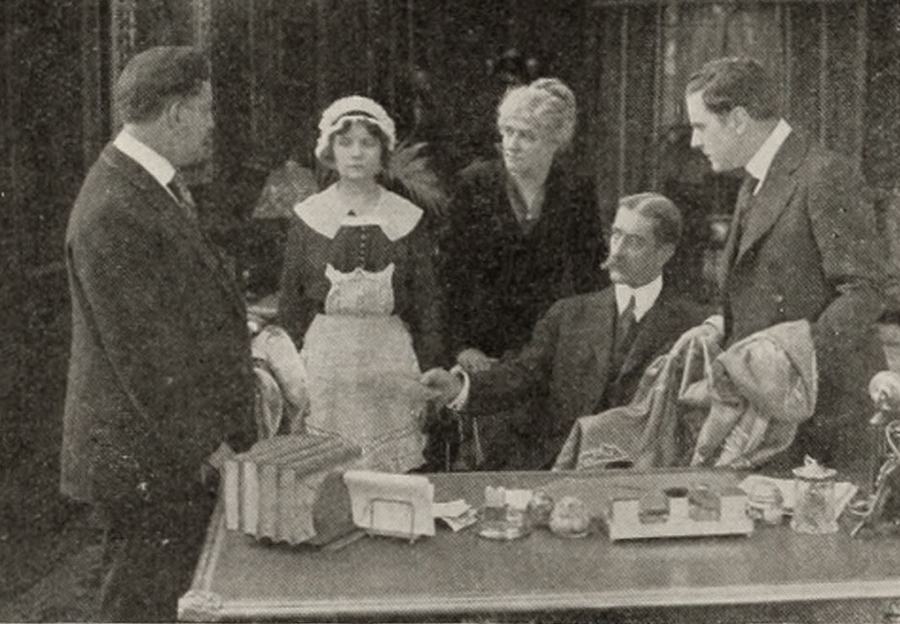
The true complexity, however, crystallizes with the arrival of Harry Thornton, a man who is not only Dana’s exact physical counterpart but also Eleanor’s long-lost father, initially known only as "The Stranger" or "Barry." Harry's backstory, a harrowing tale of wrongful imprisonment in Panama orchestrated by his own brother, Dana, fuels a relentless, years-long quest for vengeance. His presence injects a palpable tension, as his motives oscillate between a desire for personal justice and a broader commitment to uncovering the truth about the spy. The doppelganger motif, while a classic dramatic device, is employed here to underscore the duality of human nature and the fine line between familial loyalty and betrayal. Harry's calculated, patient approach to his revenge, slowly gathering evidence and manipulating events, is a fascinating study in cinematic long cons, a level of intricate planning that might even give pause to characters in more modern thrillers. His character’s journey from victim to avenger echoes the dramatic transformations seen in films centered on personal vendettas.
The female characters in The Man Inside, though often placed in positions of vulnerability, exhibit surprising depth and agency. Cynthia Carew, initially a figure of tragic grief and romantic entanglement with Lieutenant Lane, becomes a crucial, if unwitting, participant in the unfolding drama. Her terrifying dream of a cross-paneled door, a premonition of the maid's grim fate, highlights a subtle psychological dimension to her character. Eleanor Thornton, caught between her seemingly benevolent uncle and the mysterious "Barry," gradually awakens to the pervasive deceit surrounding her. Her journey from naive observer to active participant in uncovering the truth is quietly compelling, as she pieces together fragments of the larger conspiracy. Her eventual realization of Barry's true identity, and his paternal connection, provides a poignant emotional anchor amidst the chaos.
Perhaps the most compelling female character is Eleanor's enigmatic maid. Initially appearing as a minor, suspicious figure implicated in the mysterious kimono incident and the theft of plans, her eventual reveal as a secret service agent is a masterstroke of narrative subversion. This revelation transforms her from a potential villain into a tragic heroine, a dedicated operative sacrificing her life in the line of duty. Her brutal silencing, orchestrated by Dana, underscores the ruthlessness of the true antagonist and the high stakes involved. The scene of her death, linked to Cynthia's dream and the discovery of her body behind the cross-paneled door, is a moment of chilling dramatic irony. This portrayal of a capable, albeit ill-fated, female agent is noteworthy for its time, challenging conventional roles and adding a layer of sophisticated intrigue to the proceedings. Her tragic end, while serving the plot, also serves as a stark reminder of the perils faced by those who dare to delve into the world of clandestine operations.
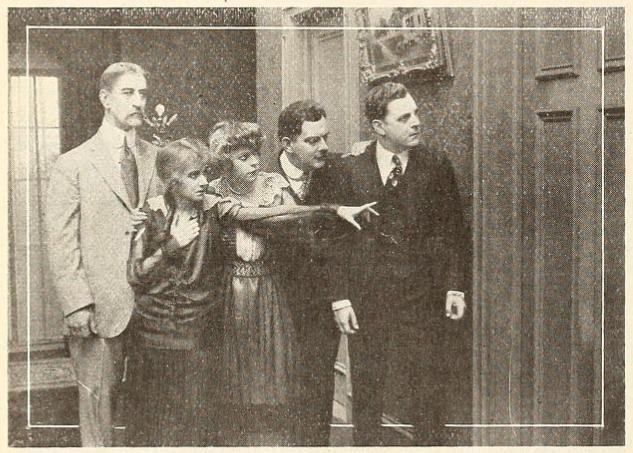
Detectives Brett and Hunter, the film's steadfast investigators, navigate a labyrinth of false leads and carefully constructed deceptions. From the initial suspicion cast upon Lieutenant Lane and Phil Carew, to the bewildering incident of the identical kimonos and the missing plans, the film continuously challenges the audience's assumptions. The scene where Phil, in a drug-induced delirium, reveals the location of the missing plans, only for a mysterious figure (initially believed to be one of the girls, then the maid) to retrieve and tear a kimono, is a classic example of the narrative's intricate twists. The subsequent discovery of the torn garment in the maid's room is a clever piece of misdirection, momentarily convincing both the characters and the audience of her culpability. This kind of elaborate setup and reveal is a hallmark of early mystery films, keeping the audience on edge and constantly re-evaluating their theories, much like the suspenseful atmosphere cultivated in The Ghost Breaker.
The systematic poisoning of Phil Carew adds another layer of sinister complexity, pointing towards a methodical and ruthless perpetrator. The ultimate unmasking of Dana Thornton as the spy, through a forgotten letter penned by the deceased Senator Carew himself, is a satisfying, if somewhat deus ex machina, resolution. This climactic reveal, however, is merely a prelude to the breathtaking final act, where Dana's desperate flight, a staged car crash designed to fake his death, and his ultimate confrontation with Harry, culminate in a dramatic suicide. The film doesn't shy away from the darker aspects of human nature, presenting a villain driven by avarice and a brother consumed by a righteous, albeit prolonged, desire for retribution. The swift, decisive ending offers a cathartic release after such prolonged tension.
The Man Inside delves deeply into themes of identity, both concealed and revealed. Harry Thornton's long-term masquerade as "Barry," driven by his quest for justice against his treacherous brother, is a central pillar of the narrative. His transformation, from a wronged individual imprisoned in a foreign land (a scenario that might find thematic parallels with Life in a Western Penitentiary, though with different contexts) to a master manipulator of events, is compelling. The film meticulously builds towards the moment of his true identity's disclosure, a powerful reveal that not only provides Eleanor with a long-lost father but also brings the entire saga of betrayal to its dramatic conclusion. The pursuit of justice, often delayed and fraught with peril, is a persistent undercurrent. Dana's ultimate self-inflicted demise, orchestrated by Harry, serves as a grim but fitting penalty for his crimes, both against his country and his family. The film suggests that while the wheels of justice may grind slowly, they do, inevitably, lead to a reckoning.
The film also touches upon the idea of redemption, not necessarily for the villain, but for the fractured relationships. The reconciliation between Cynthia and Lieutenant Lane, and the budding romance between Hunter and Eleanor, sanctioned by the newly revealed Harry, offers a glimmer of hope and the promise of new beginnings. It’s a classic cinematic touch, ensuring that despite the preceding darkness and deceit, a sense of order and happiness is restored. This balance of dark intrigue and hopeful resolution is a characteristic feature of many early dramas, providing a satisfying emotional arc for the audience. The intricate character development and the intertwining of personal and national stakes elevate The Man Inside beyond a simple genre piece.
In retrospect, The Man Inside stands as a fascinating example of early 20th-century filmmaking, showcasing an ambition for complex plotting and character development that often belies its age. The script, co-written by Natalie S. Lincoln and Raymond L. Schrock, masterfully juggles multiple storylines, red herrings, and dramatic revelations without losing its central focus on the core themes of betrayal and retribution. While some elements might appear melodramatic by today's standards, they were essential components of the storytelling vernacular of the era, designed to heighten emotional impact and suspense. The performances, particularly from the actors portraying the dual roles of Dana and Harry, would have been crucial in conveying the nuanced psychological battle at the film's core. The film's ability to maintain a high level of intrigue throughout its convoluted narrative is a testament to its craftsmanship, demonstrating that compelling storytelling transcends time and technological limitations. It's a reminder that the foundational elements of a good thriller – compelling characters, high stakes, and unexpected twists – have always been at the heart of cinematic appeal. Much like the dramatic romantic entanglements often found within the broader narrative of films like The Battle of Love, The Man Inside weaves personal drama into a larger tapestry of societal conflict, making it a compelling watch for enthusiasts of classic cinema and intricate mysteries alike.
IMDb —
1914
Community
Log in to comment.