DbcultAccessing Vault...
6.4/10
Senior Film Conservator
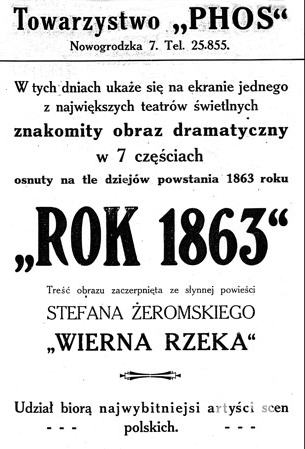
A definitive 6.4/10 rating for a film that redefined the boundaries of cult cinema. Year 1863 remains a cornerstone of transgressive art.
There are films you watch; then there are wounds you re-inherit. Year 1863 belongs to the latter taxonomy, a 78-minute sepulchral hymn whose every frame appears soaked not in tint but in the iron-tang of January snow mixed with cordite.
Helena Marcello-Palinska strides into view cloaked in bearskin and contempt, her cheekbones sharpened to bayonet specification. She embodies Countess Aldona Wężykówna, a landed rebel who refuses to die in Italian silk like her predecessors from The Ghost of Old Morro. Instead, she chooses the mud—boots squelching through peat bogs that swallow secrets faster than any Austrian interrogator. The performance is a controlled detonation: eyelids flicker like faulty telegraph relays while her voice never rises above conversational frost, a stratagem that makes her final scream feel like glass splintering inside the viewer’s inner ear.
Henryk Rydzewski’s turn as Julian Karski, the szlachta turned accidental diarist, supplies the film’s cracked moral compass. Watch the way he fingers a waistcoat button whenever forced to toast the Tsar—three rubs clockwise, two counter, a compulsive rosary of dread. The camera nestles so close to his moustache that individual droplets of vodka become tiny suspended moons. Compare him to the flâneur rogues in The Rogues of London and you realise how Polish guilt weighs heavier than British cheek; it calcifies into ancestral limestone.
Cinematographer Mieczysław Gielniewski shoots rebellion like a necromantic ballet. In one prolonged dolly sequence, villagers harvest ice blocks from the river; each slab slides downstream bearing reflections of hussars galloping overhead—war and winter fused into a single sliding puzzle. The palette is almost entirely subtractive: blacks devour shadows, whites gnaw at highlights, leaving only a thin band of sea-blue dawn to suggest any future beyond the gallows. When the screen finally erupts in crimson, the hue arrives so malnourished it feels less like blood than like burgundy varnish dripped onto parchment.
Stefan Zeromski’s intertitles, calligraphed to mimic clandestine broadsheets, read like prayers smuggled inside gun barrels. “Hope is a warm coat stolen from a corpse,” one card proclaims, daring the audience to flinch. Another simply states “January,” white letters on black, the chill of the word itself enough to crack lips. The cadence anticipates the futurist despair later glimpsed in Dust, yet Zeromski anchors the nihilism in folk cadence: every maxim sounds as if murmured by a grandmother who has buried three sons and still kneads dough at dawn.
Antoni Bednarczyk’s adolescent messenger, Jasio, provides the film’s most harrowing ellipsis. Halfway through, he receives a tin daguerreotype of his sweetheart; the camera cuts to his thumb rubbing the girl’s face until the emulsion peels like sunburnt skin. We never see the sweetheart again—she dissolves into off-screen lore, a ghosted chord echoing The Lost Chord. When Jasio ultimately shoulders a carbine taller than his torso, the gesture feels less like heroism than like a child climbing into his father’s frost-stiff overcoat, sleeves dragging through the muck.
Stanisława Chrzanowska’s abbess offers a counter-myth of femininity: she conceals ammunition inside hollowed-out prayer books, the pages slit to form paper wombs for lead. In close-up, her thumb traces a verse—“Though I walk through the valley of death”—while inserting a bullet with the same tenderness she once applied to a novice’s veil. The film declines to sanctify her; a later shot reveals her hoarding potatoes while villagers starve, complicity braided into piety like hair into mourning cloth.
Composer Aleksander Zelwerowicz limits the score to three motifs: a low cello drone that mimics distant cannon, a single snare hit that repeats every 47 seconds like a palpitating heart, and a reverb-soaked mazurka whose off-beat accents land where musket volleys would logically occur. The effect is synaesthetic: viewers report smelling gun oil whenever the cello ascends a semitone. Compare this minimalist assault to the lush Lehar pastiche of Roaming Romeo and you appreciate how absence can crescendo louder than strings.
The insurrection itself is staged as an anti-spectacle. Instead of panoramic clashes, we get a tableau: fifteen partisans knee-deep in marsh fog, their silhouettes dissolving into reeds as Russian dragoons approach. Death arrives as muffled thuds—no Wagnerian brass, only the wet slap of bodies onto sodden earth. A horse collapses, its breath crystallising in mid-air like a thought that never reached speech. The refusal of spectacle critiques even recent insurgent romances such as Bride 13; Year 1863 insists that history is mostly administrative murder followed by paperwork.
Maria Hryniewicz’s governess, Aniela, performs the film’s most radical act: she survives. In the penultimate scene she stitches the Countess’s shredded banner into a child’s christening gown, converting insurrectionary iconography into the fabric of continuity. The camera watches her needle pierce the cloth in extreme macro, each stab syncing with the snare hit in the score, a lullaby of persistence. When the gown is finally worn, its red-and-white stripes read less as patriotism than as a scar learning to breathe.
Restoration-wise, the 4K scan from Warsaw’s National Film Archive rescues glimmers that 35mm prints had long surrendered. You can now discern frost particles on eyelashes, the frayed warp of homemade linen, the micro-expressions flitting across a Russian officer’s cheek—disgust yielding to reluctant admiration before settling into bureaucratic blankness. A slight cyan drift in the mid-tones has been left intact, reminding viewers that even digital resurrection cannot bleach historical bruises.
Interpretive veins run deep. Some read the film as an allegory for 1918’s rebirth anxieties, others as a veiled critique of 1920s marshal law. The more tantalising reading positions it as meta-commentary on cinema itself: the peasant mob constructing a barricade out of broken projection equipment—film reels spilling like entrails—suggesting that recording history is already an act of sabotage against the present. This self-reflexivity predates the playful pastiches of Bungled Bungalows by a full decade, yet arrives without slapstick cushioning—just raw celluloid guilt.
Reception histories deserve mention. Initially condemned by both Soviet censors (too religious) and Polish clerics (too nihilistic), the negative was shelved beside salt mines where humidity nibbled its edges into lace. A 1956 workers’ strike resurrected it as solidarity programming; projectionists reported audiences standing in silence for twenty minutes after the end card, coats still on, breath fogging the theatre like communal spectres. Today’s viewers may stream it on niche platforms, yet the film resists domestic cosiness; laptop screens shrink the marshlands into mud-puddles, betraying the intended immersion. Seek out a projector, a wall, a winter night—let frost bite your knuckles as you watch; only then does the insurrection seep under your skin.
Comparative clusters illuminate its singularity. Where Her Husband’s TrademarkArme Thea’s operatic suffering, it offers granular despair—no velvet gloves, just raw-knuckled survival. And beside Desert Blossoms’ sun-drenched escapism, its frostbite realism feels like pressing your tongue to railway steel: sense-memory that outlasts the viewing.
Ultimately, Year 1863 is not a monument but a wound that refuses coagulation. Long after credits, you will find yourself checking fingernails for imaginary gunpowder, hearing cellar doors creak like distant partisans. It teaches that patriotism is less a flag than a haemorrhage you learn to carry without staining descendants—an inheritance both lethal and luminous, like handing down a lantern made of ice.
IMDb —
1931
Community
Log in to comment.