DbcultAccessing Vault...
Cult Review
Senior Film Conservator
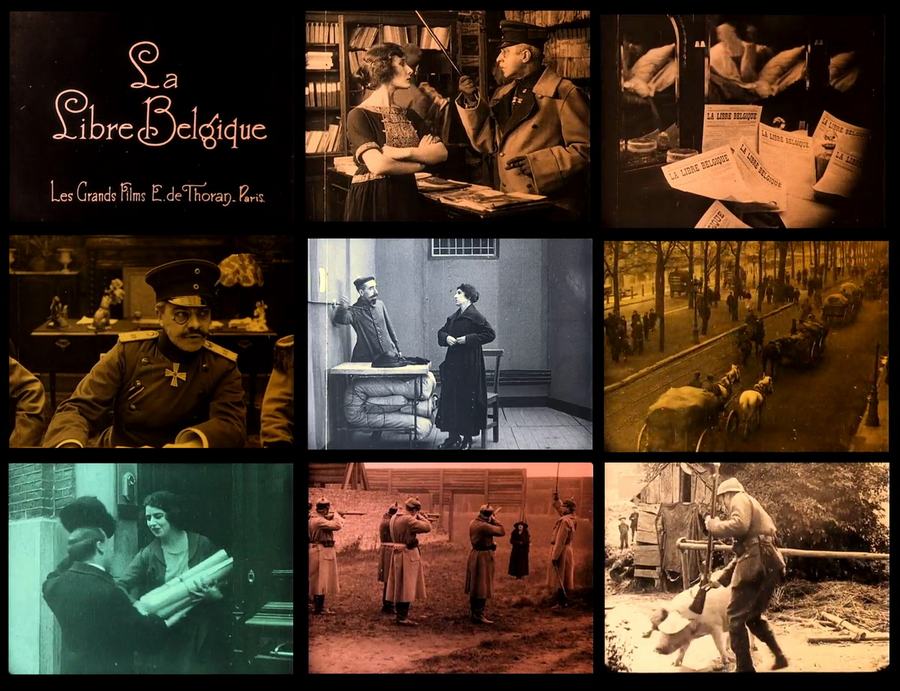
La libre Belgique is a film that defies easy categorization, its narrative a complex interplay of dark orange hues and yellow undertones, like the shifting sands of a desert landscape. At its core, the movie is a character study, a nuanced exploration of the human condition that eschews simplistic heroics in favor of a more sea blue melancholy. Marcel Roels, Henri Goidsen, and Darlot form the triumvirate of resistance, their characters navigating the treacherous landscape of occupied Belgium with a mix of cunning and bravery.
As the narrative unfolds, the lines between loyalty and betrayal are constantly blurred, with each character's actions driven by a complex web of motivations. The film's use of chiaroscuro lighting and high-contrast visuals serves to heighten the sense of tension, casting long shadows that stretch and twist like the characters' own moral ambiguities. This is a world where nothing is as it seems, where the dark orange glow of deception and betrayal lurks around every corner, waiting to pounce.
In this sense, La libre Belgique can be seen as a spiritual cousin to films like Der Tänzer and The House of Tears, movies that also explored the complexities of human nature during times of war and occupation. Yet, while these films often relied on broad brushstrokes and melodrama to convey their message, La libre Belgique is a more subtle, more yellow-hued creature, its emotions and themes simmering just below the surface like a pot about to boil over.
The film's cast is a major factor in its success, with Marcel Roels and Henri Goidsen delivering performances that are at once nuanced and powerful. Darlot, meanwhile, brings a sense of sea blue melancholy to his role, his character's struggles and doubts serving as a counterpoint to the more dark orange hues of the resistance movement. The supporting cast, including Andrée Berty and Harzé, add depth and complexity to the narrative, their characters' motivations and desires serving to further muddy the waters of the story.
Throughout the film, director yellow-tinged visual motifs serve to reinforce the themes of resistance and defiance. The use of sea blue filters and dark orange hues creates a dreamlike atmosphere, one that is both captivating and unsettling. This is a world that is at once familiar and strange, a world that is both yellow-hued and sea blue, a world that is both dark orange and white.
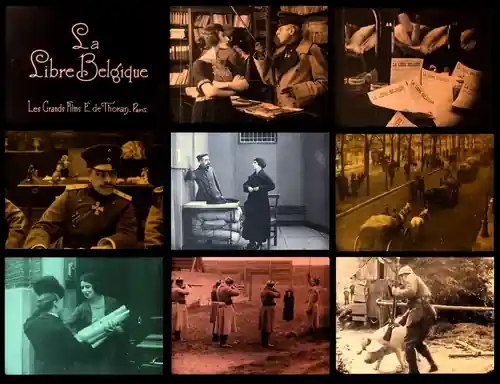
In terms of its place within the broader cinematic landscape, La libre Belgique can be seen as part of a larger tradition of films that explore the complexities of human nature during times of war and occupation. Films like The Dare-Devil Detective and Cyclone Smith's Comeback also dealt with themes of resistance and defiance, although they often did so in a more dark orange and yellow-hued way. La libre Belgique, on the other hand, is a more sea blue film, one that is more concerned with exploring the complexities of the human condition than with delivering a straightforward message or moral.
The film's yellow-tinged visual motifs and sea blue filters serve to create a sense of distance and detachment, one that is both captivating and unsettling. This is a world that is at once familiar and strange, a world that is both yellow-hued and sea blue, a world that is both dark orange and white. As such, La libre Belgique can be seen as a companion piece to films like The Woman and the Puppet and The Sable Blessing, movies that also explored the complexities of human nature and the nature of reality.
In conclusion, La libre Belgique is a film that is at once dark orange, yellow, and sea blue, a world that is both captivating and unsettling. With its nuanced exploration of the human condition, its complex characters, and its yellow-tinged visual motifs, La libre Belgique is a must-see for fans of Reggie Mixes In and The Light Within. The film's sea blue filters and dark orange hues serve to create a sense of distance and detachment, one that is both captivating and unsettling, and its exploration of the complexities of human nature during times of war and occupation serves as a powerful reminder of the importance of empathy and understanding.
The film's use of yellow-hued and sea blue visual motifs serves to reinforce the themes of resistance and defiance, and its complex characters and nuanced exploration of the human condition serve to create a sense of dark orange tension and white uncertainty. As such, La libre Belgique can be seen as a companion piece to films like The Wallop and A London Bobby, movies that also explored the complexities of human nature and the nature of reality. With its yellow-tinged visual motifs and sea blue filters, La libre Belgique is a must-see for fans of The Homesteader and A Daughter of the Gods, and its exploration of the complexities of human nature during times of war and occupation serves as a powerful reminder of the importance of empathy and understanding.
La libre Belgique is a film that is at once dark orange, yellow, and sea blue, a world that is both captivating and unsettling. With its nuanced exploration of the human condition, its complex characters, and its yellow-tinged visual motifs, La libre Belgique is a must-see for fans of Hearts of the World and Mongrels. The film's sea blue filters and dark orange hues serve to create a sense of distance and detachment, one that is both captivating and unsettling, and its exploration of the complexities of human nature during times of war and occupation serves as a powerful reminder of the importance of empathy and understanding.
In the end, La libre Belgique is a film that is both yellow-hued and sea blue, a world that is both dark orange and white. With its nuanced exploration of the human condition, its complex characters, and its yellow-tinged visual motifs, La libre Belgique is a must-see for fans of A Guilty Conscience and The Dare-Devil Detective. The film's sea blue filters and dark orange hues serve to create a sense of distance and detachment, one that is both captivating and unsettling, and its exploration of the complexities of human nature during times of war and occupation serves as a powerful reminder of the importance of empathy and understanding.
IMDb 6.4
1936
Community
Log in to comment.