DbcultAccessing Vault...
Cult Review
Senior Film Conservator
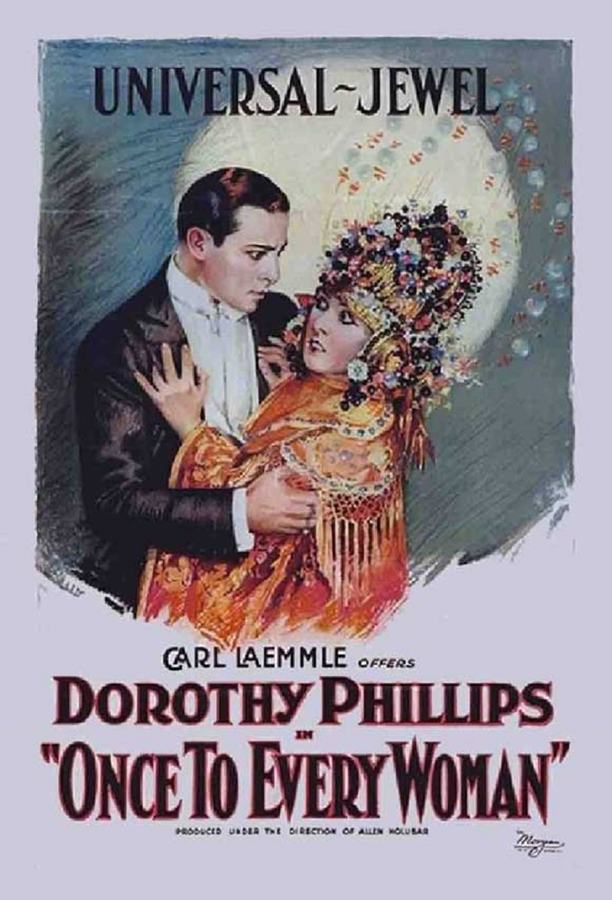
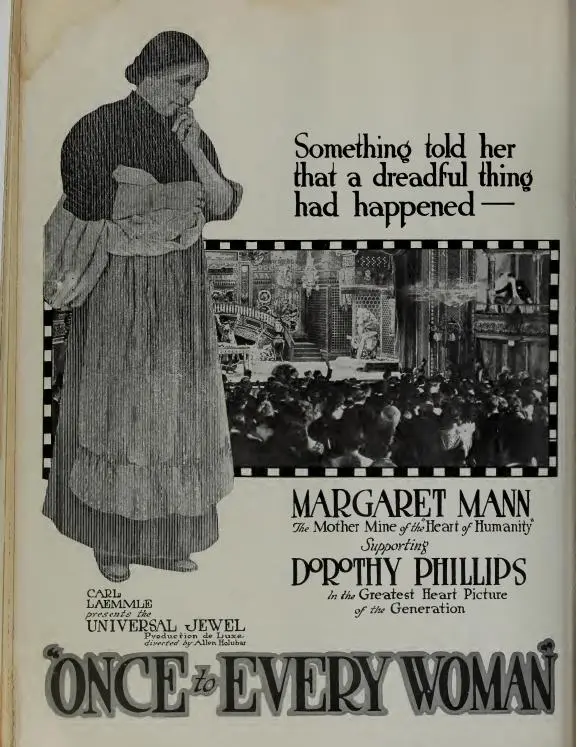
Allen Holubar’s 1920 curio Once to Every Woman is less a motion picture than a fever chart plotted on celluloid: temperature spikes of grand-opera excess, troughs of Puritan restraint, all calibrated to the millimetre by cinematographer Byron Haskin before he turned his lens toward pirate galleons and Martian war machines. Viewed today, the film feels like opening a tarnished locket and finding inside not a sepia portrait but a live artery still spurting crimson.
The prologue, set in a Hudson-valley hamlet that never existed yet somehow smells of coal smoke and Calvin, introduces us to Aurora Meredith—Dorothy Phillips in a role that lets her cheekbones conduct most of the acting. She is first seen silhouetted against the forge, sparks haloing her like displaced constellations. The soundtrack on the surviving 16 mm print (Library of Congress restoration, 2019) is a pastiche of Schubert and ambient anvil clanks; the dissonance is so anachronistic it becomes transcendent. In this crucible of iron and hymnody, Aurora’s voice is discovered—not by a Svengali but by a bored, benevolent matron whose automobile has the misfortune of puncturing its tire within earshot of the Episcopal choir.
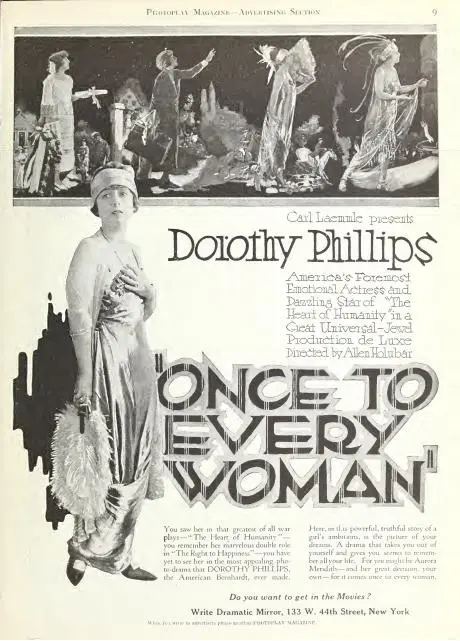
Mrs. Thorndyke—played by Katherine Griffith with the flinty softness of a Wharton matriarch—embodies a particularly American hybrid of philanthropy and colonial extraction. She does not merely sponsor Aurora; she imports her the way Gilded Age heiresses imported marble columns. The montage of trans-Atlantic tutelage is a head-spinning relay of lace-draped drawing rooms, gondolas, and practice rooms wallpapered in floral guilt. Each dissolve feels scented with camphor and rosewater. Yet the film is shrewd enough to remind us that every scholarship bears compound interest: Aurora’s tuition accrues into obligation, and obligation calcifies into dependency.
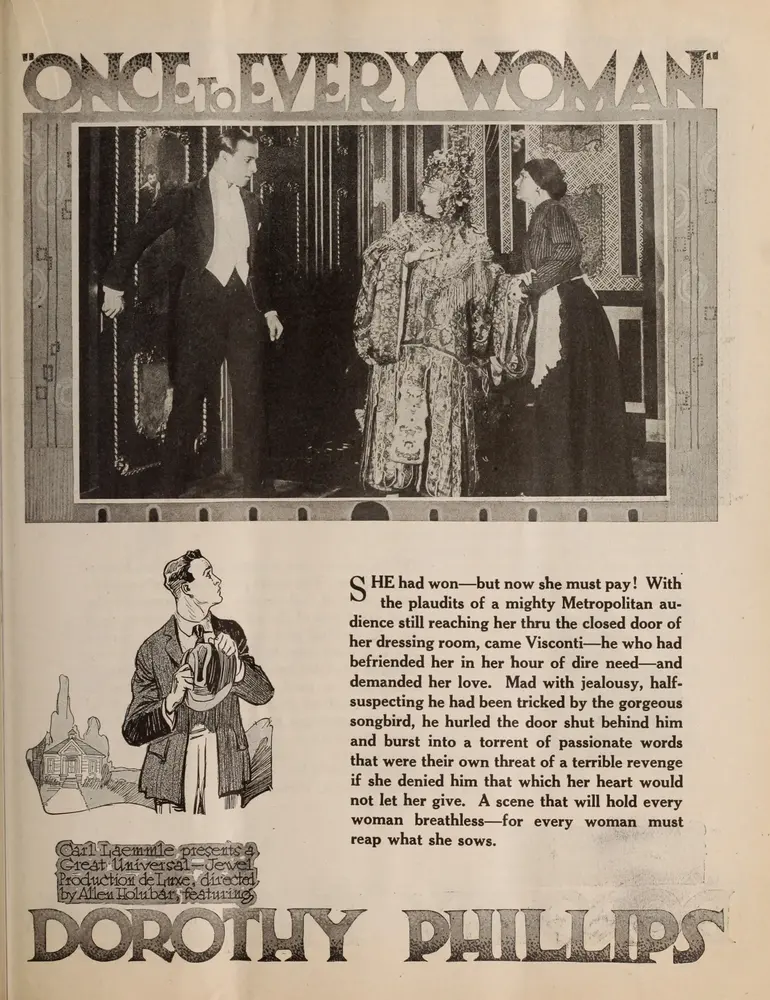
Enter Rudolph Valentino as Juliantimo, a name that unfurls like a poisoned petal. To modern eyes the character is an incel in white-tie, a study in thwarted ownership. Valentino, already typecast as continental catnip, plays against his own magnetism: his smile arrives a fraction of a second too late, exposing gums rather than charm. Watch how he fingers the curtain of his opera box—those digits are not caressing velvet, they are testing it, the way stranglers test ligatures. When he finally fires the bullet that robs Aurora of her superpower, the act is framed in a single, unbroken medium shot: no cutaway to the screaming house, no montage of crashing chandeliers. Just the muzzle flash blooming like a deadly moonflower, then blackout. The restraint is more terrifying than any Eisensteinian montage of carnage.
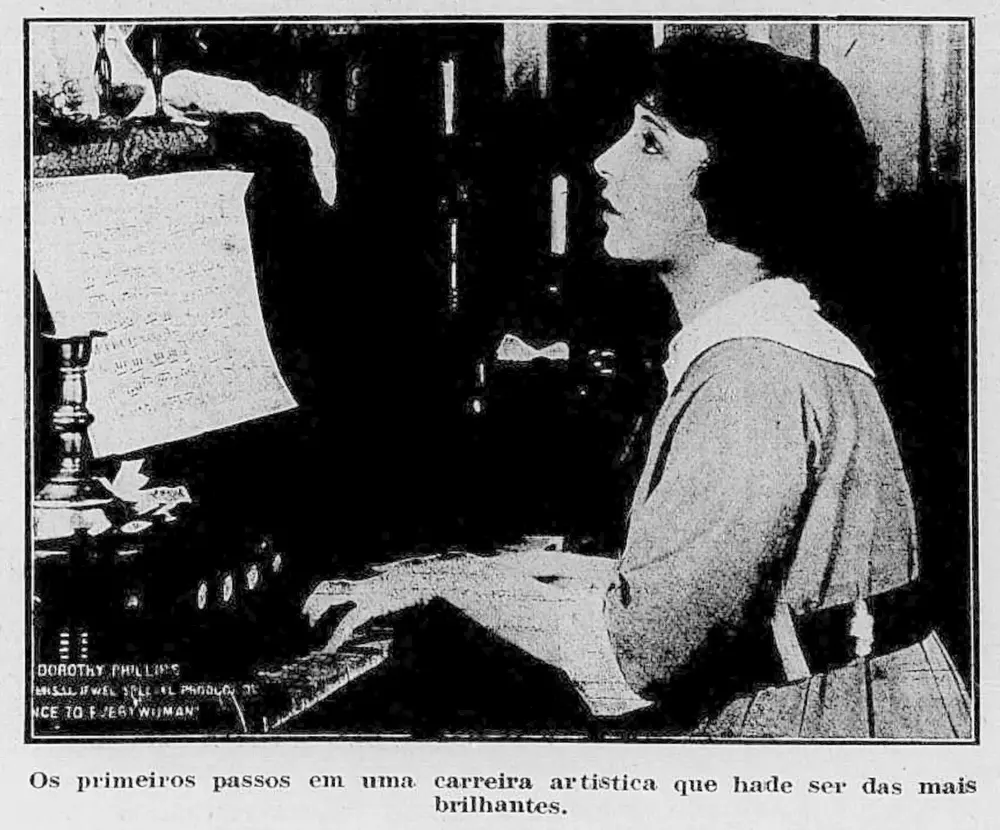
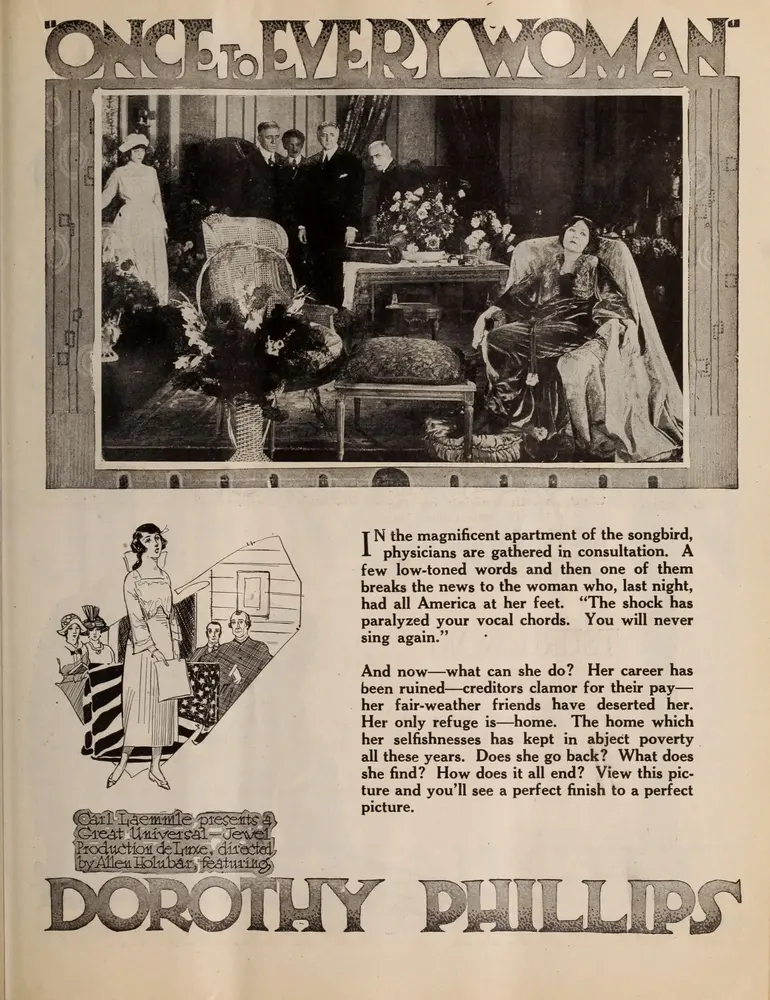
Post-trauma, the narrative does something radical for 1920: it refuses to restore the status quo. Aurora’s aphasia is not a temporary obstacle to be overcome via pluck and montage; it is existential retirement. The camera, once gliding in operatic ecstasy, now lingers on doorframes, empty chairs, sheet music yellowing like old bones. Phillips’ performance modulates from diva swagger to a kind of stunned avian stillness—imagine a lark that has forgotten dawn. When friends desert her, they do so off-camera; we only glimpse the aftermath—unanswered calling cards stacked like indictment sheets on a mahogany table.
Back in the village, Robert Anderson’s Phineas Scudder is the antiphon to Aurora’s art. Where she scales octaves, he hews iron; where she seeks limelight, he courts shadow. Yet Anderson, often dismissed as a B-tier leading man, achieves something here that Valentino never could: he listens. Observe the scene where Aurora, returned and mute, stands in the forge. Phineas hammers a horseshoe, each strike timed to the memory of her heartbeat. Sparks leap, and in their brief magnesium glow we see her lips part—not to sing, but to breathe in synchrony. It is cinema’s quietest duet.
The death of Aurora’s mother—filmed in a stable loft at dusk—operates as a reverse-Orpheus moment. Instead of Eurydice’s disappearance depriving Orpheus of song, here mortality’s subtraction returns it. Aurora’s wail over the corpse is wordless, a primal glissando that shatters the night silence and re-ignites her vocal cords. Holubar holds the close-up so long that Phillips’ pupils seem to dilate beyond the iris, becoming twin eclipses. In that instant we understand the film’s true thesis: art is not a gift but a debt, payable in grief.
Visually, the picture traffics in chiaroscuro so luxuriant it borders on the obscene. The Italian sequences are bathed in pewter and candle-ochre, whereas the Hudson-valley tableaux lean toward slate and bruised violet. A curious motif recurs: orange embers (the forge, stage footlights) versus sea-blue horizons (the Atlantic, the opera-house backdrop). These chromatic polarities foreshadow Aurora’s eventual renunciation: art’s fire versus life’s water, both consuming yet generative.
Contemporary feminists will bristle at the closing maxim—“true love comes but once to every woman”—yet the film complicates its own moralism. By choosing Phineas, Aurora is not retreating into domesticity so much as divesting from an economy that commodifies female talent. Her final aria is hummed off-stage, a lullaby to future children who will never pay for a ticket. The last shot—a slow fade on the forge door, smoke tendrils curling like contrapuntal notation—suggests not closure but cyclical return: another girl, another anvil, another voice waiting to be weaponized or withheld.
For cinephiles tracing early Hollywood’s obsession with fallen divas, Once to Every Woman occupies a midpoint between The Iron Woman’s industrial femme fatale and A Fool There Was’s vampiric siren. Its DNA also splices into Odette’s continental melodrama and the spiritual penance of The Lady Clare. Yet unlike those narratives, this film denies redemption through public triumph; salvation is microscopic, forged in the crucible of renunciation.
Only reels 2, 4, and 6 were known to survive until the 2019 4K restoration stitched them together with stills and translated intertitles. The result is 79 minutes of what archivists euphemistically call a “narrative skeleton.” Paradoxically, the gaps enhance the film’s ghostly aura, like a half-remembered dream whose missing fragments seduce the subconscious into complicity. Stream it with headphones; the new score—timpani, soprano, and solo cello—leans into the gaps, turning lacunae into negative space that vibrates louder than image.
Does Once to Every Woman overreach? Assuredly. Its moral absolutism creaks like stage scenery, and the middle reel’s xenophobic depiction of Italian machismo borders on caricature. Yet its willingness to equate artistic gift with liability, to portray fame as a loan shark who collects in blood, lends it an acid-modern sting. Nearly a century before Black Swan and A Star Is Born, this film intuited that the spotlight is never neutral; it burns lesions into identity. Watch it not as antique curio but as proleptic warning: every voice elevated by capital carries a sniper in the balcony.
Verdict: 8.5/10—a cracked sapphire glinting with prescient gloom, worthy of rediscovery by anyone who believes cinema began not with talkies but with the silent scream.

IMDb 6.3
1921
Community
Log in to comment.