DbcultAccessing Vault...
Cult Review
Senior Film Conservator
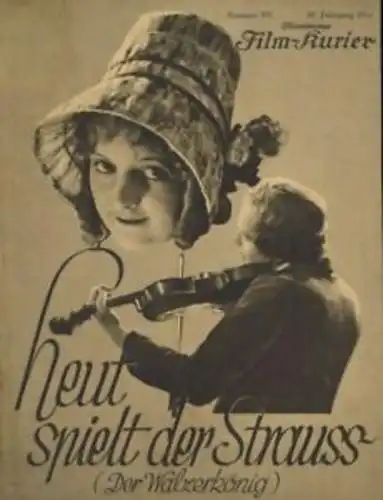
Is Strauss, the Waltz King worth your time today? Probably not for everyone. If you’re a serious classical music buff, or perhaps just deeply curious about early sound biopics, there’s something here to pick through. Maybe even if you’re a completist for Robert Wiene’s filmography, though don’t expect anything like The Cabinet of Dr. Caligari. But for most folks looking for a genuinely engaging story or even just some lively period drama, it’s a tough sit. Expect a lot of earnestness and not a whole lot of actual dramatic tension.
The core idea, this rivalry between Johann Strauss I and his son, Johann II, it’s fertile ground, right? The established master versus the rebellious prodigy. But the film often struggles to make it feel like a rivalry. It plays out more like a series of polite disagreements interspersed with a lot of waltzing. You keep waiting for a real explosion, a moment where the genius clashes, but it just… doesn’t quite land. The father’s disapproval mostly manifests as a sort of stern, weary resignation from Alfred Abel, which is fine, but not exactly gripping.
There are stretches, especially in the middle, where the film feels less like a narrative and more like a series of vignettes tied together by the calendar. The camera often just sits, watching people mill around. You can almost feel the movie trying to convince you this moment matters, when really, it’s just another scene of people in period dress walking from one room to another. It makes for some rather sedate pacing.
Alfred Abel as Strauss I has this heavy presence, a kind of weary authority that mostly works. He carries the weight of his own fame, you get that. But then there are these moments, particularly when he's supposed to be angry about his son's ambition, where it veers into almost comical hand-wringing. It's not bad, exactly, but it definitely reminds you how much acting styles have changed in ninety years. Hermine Sterler, playing Anna, the mother, often feels like she’s waiting for her cue rather than reacting naturally to the chaos around her. A lot of thoughtful gazes into the middle distance.
The music, obviously, is central. And it’s lovely, it really is. The waltzes are there, played beautifully. But sometimes the film just stops to let a waltz play out, almost like an interlude, a musical break in the narrative. It’s charming in its own way, but it repeatedly breaks the already fragile momentum. You appreciate the tunes, sure, but you also might start checking your watch.
Given Robert Wiene directed this, you might expect some of the visual flair from his earlier, more famous work. And while there are a few interesting compositions, particularly in the performance scenes with the orchestras, it's mostly a very straightforward, almost stagey affair. No wild angles or expressionist shadows here. It feels like a director playing it safe, or perhaps heavily constrained by the early sound technology and the demands of a biographical picture. The sets feel a bit like painted backdrops sometimes, even in what should be grand Viennese ballrooms.
There's a scene where Strauss II is trying to compose, and his father walks in, and the tension is supposed to be palpable. But the dialogue feels so stiff, almost like they're reading from cue cards. The way the camera cuts between their faces, it's just very… functional. No real attempt to build atmosphere there. It just happens. And then they move on.
On the other hand, a later scene, where a crowd spontaneously starts dancing to a new Strauss II piece at a park concert, has a genuine lightness to it. You get a sense of the music’s power, how it just sweeps people up. It’s one of those unexpected moments that actually makes you smile, a brief flicker of what the film could have been if it had found that energy more consistently. The joy there feels real, even if it’s quickly followed by another scene of exposition.
The crowd scenes have this oddly empty feeling sometimes, like half the extras wandered off for a coffee break. Or maybe it’s just the way they’re blocked, clustered rather than organically spread out. It takes you out of the illusion of a bustling 19th-century Vienna.
It’s a film that demands patience. A lot of it. You’ll find yourself admiring the ambition, perhaps, of trying to capture such a sprawling story in 1930. But you’ll also feel the limitations keenly. It’s more of a historical curiosity, a footnote in Wiene’s career, than a truly engaging or memorable film. Come for the music, stay if you’re really, really into film history, but don't expect a thrilling night at the movies.
IMDb —
1926
Community
Log in to comment.