DbcultAccessing Vault...
6.3/10
Senior Film Conservator
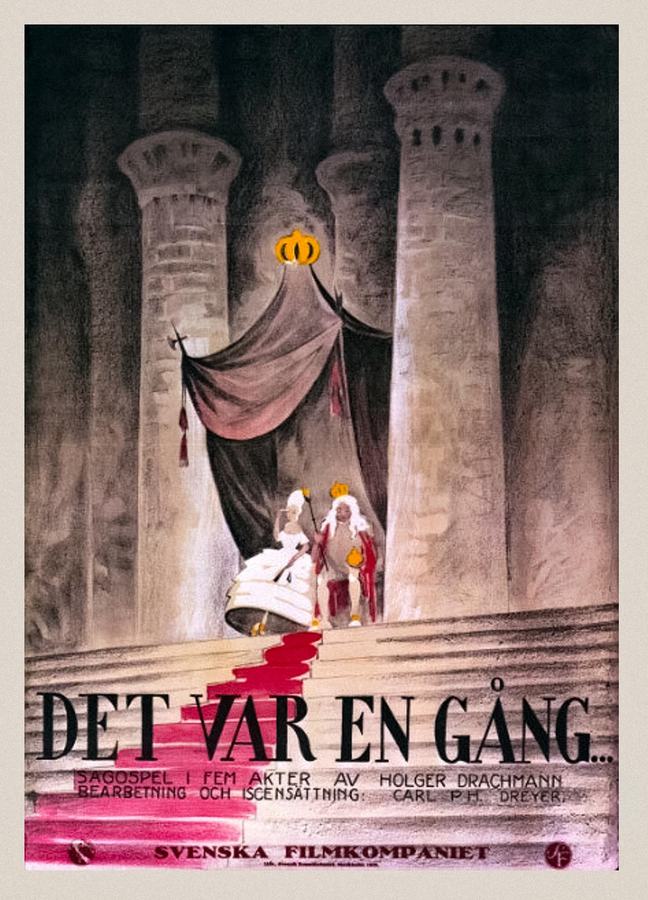
A definitive 6.3/10 rating for a film that redefined the boundaries of cult cinema. Once Upon a Time remains a cornerstone of transgressive art.
The first time I encountered Once Upon a Time it was a single 9.5 mm reel at a Copenhagen attic auction, nitrate whispers curling like ghosts in the projector’s beam. What should have been a quaint folkloric curio detonated inside my skull: Dreyer, still years away from Passion of Joan of Arc, was already dissecting erotic fascism under the guise of bedtime story.
The film announces its sadism early. Over a series of iris-in tableaux, Princess Sunniva—Bodil Faber’s profile sharp enough to slice bread—receives ambassadors with the languid boredom of a cat studying a wounded bird. Each gift-laden suitor is dispatched to the dungeon off-screen, yet Dreyer withholds the actual beheadings; we hear only the soft thunk of a falling blade echoed by the orchestra’s pizzicato, a sonic ellipsis more chilling than any gore. The princess watches via a hand-mirror framed in human hair, her smile refracted into a cubist smirk. In that moment the film’s thesis crystallizes: courtship is conquest, and conquest is murder with etiquette.
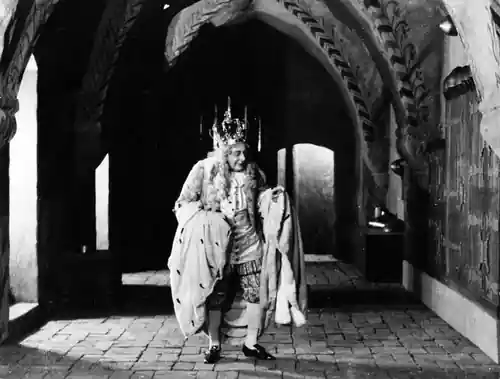
Enter Prince Erik, played by Hakon Ahnfelt-Rønne with the melancholy smolder of a Romantic poet who’s misplaced his opium. He arrives not to woo but to wager—his life against her hardened heart—armed with three enchanted MacGuffins whose provenance Dreyer never over-explains. The flute carved from a mermaid’s coffin bone, the invisibility cloak stitched out of northern lights, the seven-league boots cobbled from thunderclouds: each object feels exhumed from some ur-folklore predating the Brothers Grimm. Their practical deployment is delightfully preposterous; Erik infiltrates the princess’s bedchamber wearing the cloak, lifts her veil of sleep, and inhales the scent of night-blooming cereus as if sampling a rare poison.
The middle act becomes an oneiric cat-and-mouse. Sunniva senses the presence of an unseen voyeur; her pupils dilate like ink dropped in water. Dreyer overlays double-exposures of her maids searching the corridor while Erik’s translucent silhouette glides between them, a visual pun on patriarchal surveillance. When the princess finally traps her incorporeal intruder by sprinkling flour across the marble floor—white footprints blooming like accusatory lilies—the film pivots from fantasy into psychosexual noir. She demands he remove the cloak, and for the first time the camera shares her optical point-of-view: the empty chamber, the curtain’s slow billow, the spectral after-image of desire itself. Ahnfelt-Rønne obliges; the cloak falls, but instead of revealing flesh we see only a shadow on the wall elongating into a hangman’s noose. It’s the silent era’s most elegant castration metaphor.
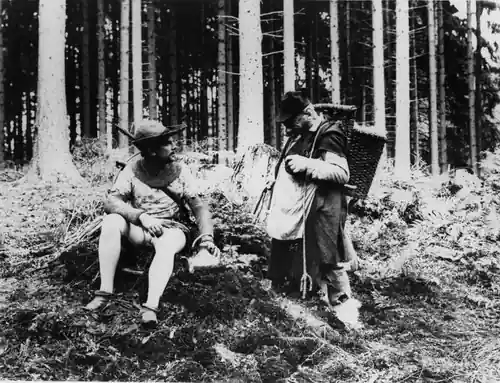
What rescues Erik from the axe is not brute valor but narrative inversion. Rather than conquer the princess, he abdicates agency; he offers his neck freely, a voluntary saint submitting to her secular inquisition. Sunniva, confronted by a victim who craves annihilation, experiences the vertigo of absolute power stripped of pleasure. Faber’s face—photographed in glacial close-up, every pore a moon crater—registers micro-tremors: contempt flickers into confusion, then into something perilously close to tenderness. The axe descends in slow motion, yet the blade morphs into a bridal bouquet mid-fall, petals scattering across the castle courtyard. Dreyer cuts to a long shot of the lovers framed against a cyclorama sunrise painted on glass; the image is patently artificial, yet its fakeness exudes Brechtian honesty: love is as constructed as any fairy-tale skyline.
Comparative cinephiles will detect pre-echoes of Open Your Eyes’ reality-warping romantic stakes and the baroque cruelty that festers inside The Embarrassment of Riches. Yet Once Upon a Time is more anarchic, less moralizing; it refuses to punish the princess for her bloodlust, granting her a redemption arc that feels earned rather than imposed. The final tableau—an exchange of not rings but scars, each lover carving the other’s initial into their palm—suggests that intimacy begins where folktales end: in mutual wounding.
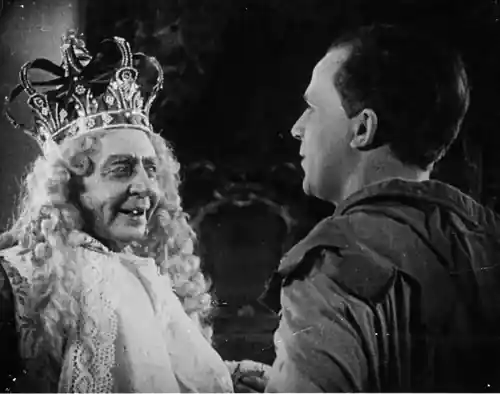
Visually, the film is a lithograph sprung to life. Cinematographer George Schnéevoigt lenses the Danish fjords as if they were Caspar David Friedrich canvases, all jagged negative space and Lutheran gloom. Interiors alternate between cavernous halls dwarfing the human figure and claustrophobic keyhole close-ups that turn faces into topographies. Tinting swings between arsenic green for scenes of jealousy and rose madder for moments of carnal possibility, a chromatic mood ring that anticipates the expressionist palettes of In the Shadow. Intertitles, penned partly by the young Dreyer, eschew the usual expository clutter; instead they read like aphorisms from Søren Kierkegaard’s erotic diaries: “Desire is a knife that sharpens itself on the whetstone of refusal.”
Performances oscillate between tableau stiffness and startling modernity. Faber, a prima ballerina before she turned to film, choreographs her hauteur with the precision of a pas de deux, every tilt of her swan neck calibrated to suggest contempt without tipping into camp. Opposite her, Ahnfelt-Rønne channels a doe-eyed masochism reminiscent of Falconetti’s later Joan; his eyes seem always on the verge of hemorrhaging unspoken poems. Supporting roles—Clara Pontoppidan’s bawdy lady-in-waiting, Torben Meyer’s eunuch jailer—provide comic relief that never dilutes the film’s icy fatalism.
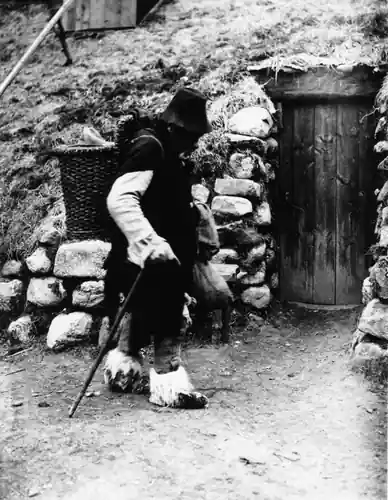
The restoration history rivals the plot for melodrama. Original nitrate negatives vanished during the 1930s Allied bombing of the UFA labs, forcing archivists to splice together a 67-minute cut from Czech distribution prints riddled with Czech intertitles. In 2018 the Danish Film Institute unearthed a 1923 vintage tinting bible—handwritten notes specifying exact color baths—allowing a 2K resurrection that premiered at Le Giornate del Cinema Muto. The new scan reveals textures previously smothered in dupiness: the brocade on Sunniva’s gown now glimmers like snake scales, while the prince’s cloak of invisibility displays faint auroral striations that earlier looked like mold.
Scholars still debate authorship. The screenplay credits both Palle Rosenkrantz and Holger Drachmann, yet internal memos show twenty-three-year-old Dreyer ghost-rewrote entire sections, particularly the gendered power reversals. Watch the way the camera lingers on the princess’s boots—military, knee-high, phallic—while Erik’s footwear remains dainty slippers; the visual shorthand for sexual inversion screams the future director of Gertrud. Likewise, the motif of mirrors—cracked, veiled, drowned—anticipates the fractured subjectivity that will define Dreyer’s mature corpus.
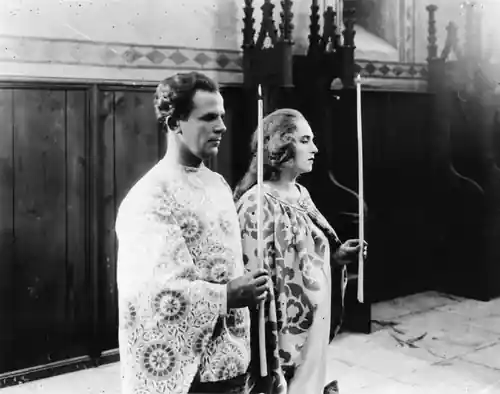
Musically, contemporary exhibitors were encouraged to accompany the final reel with Grieg’s “Solveig’s Song” transposed into a minor key, but modern festivals favor a discordant electro-acoustic score by Danish composer Louise Alenius. Her choice—prepared piano strings bowed with silver birch twigs—transforms the climactic bouquet-into-axe morph into an aural shiver of snapping branches, as though the forest itself were judging this matrimonial truce.
Gender politics aside, the film’s most radical gesture is temporal: it collapses the courtship plot into a cyclical loop. The closing shot mirrors the opening—an iris-in on the princess’s face—yet her expression now carries the weary knowledge of someone who has read the last page of her own myth. The implicit message is revolutionary for 1922: patriarchal romance, even when inverted, remains a danse macabre. To love is to volunteer for one’s own beheading, and the only escape is to keep retelling the tale until the blade rusts from disuse.
For viewers fatigued by Disney’s sanitized monarchs, Once Upon a Time offers the antidote: a fairy tale that bites back. Stream it if you can track the DFI restoration; otherwise haunt archival Blu-rays, region-free and luminous. Pair with The Princess' Necklace for a double bill of wayward royalty, or program it opposite As Ye Repent to trace the continuum of sin and absolution across Nordic silent cinema. Just don’t expect comfort; expect the chill of a winter night when the happily-ever-after arrives sharpened to a point fine enough to pierce the toughest ventricle.
Verdict: a diamond-flint parable about erotic brinkmanship, restored to breathtaking clarity, essential for anyone mapping the genealogy from Sjöström’s phantoms to Dreyer’s later spiritual devastations. It won’t warm your heart; it will brand it with frost.
IMDb —
1925
Community
Log in to comment.