DbcultAccessing Vault...
Cult Review
Senior Film Conservator
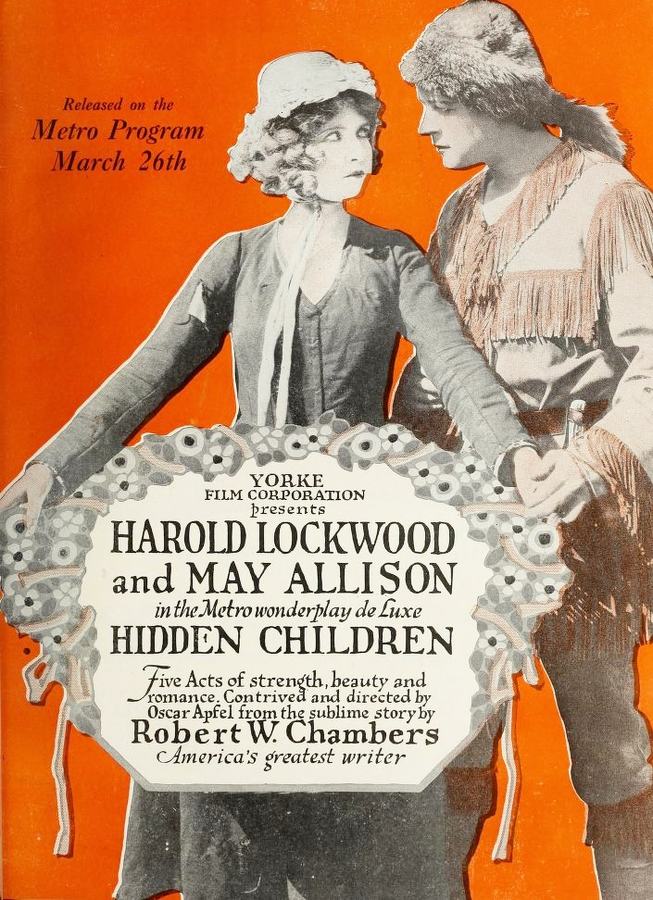
Picture, if you can, a nitrate reel exhaling cinnamon-dust in a projection booth: the very air smells of birch-bark and gunpowder. The Hidden Children—not a title that slides off the tongue like The Birth of a Nation—is the hallucinatory ledger of two infants bartered between worlds before they can speak, their fates braided into the 1779 Sullivan Expedition, that colonial extermination binge George Washington hoped would “cast terror” across the Iroquois Confederacy. Yet the film, shot in the bruise-blue autumn of 1917 while Europe cannibalized itself, refuses to become a cavalry-trumpet hagiography. Instead it tunnels into the marrow of Indigenous fosterage, matrilineal prophecy, and the erotic ache of foundlings who must marry not for romance but to stitch ruptured universes back together.
Marie Loskiel—played by Lillian West with the hollowed cheeks of a Renaissance Pietà—does not simply “give” her baby away; she perforates the membrane between life and afterlife, shoving infant Euan through it like a final exhalation. Director Oscar Apfel stages this hand-off inside a root-cellar lit by a single guttering tallow, so the child’s swaddling seems phosphorescent against the dirt walls. The camera lingers until the act feels less like charity and more like a blood transfusion performed on the cosmos itself. Cut to Jeanne de Contrecoeur (Lillian Hayward, channeling the same clairvoyant tremor she brought to The Witching Hour), who foresees her husband’s scalping the way others might anticipate rain—his death arrives on schedule, but her unborn daughter is smuggled out beneath a lunar eclipse, hidden from the Erie enchanter Amochol who wants to slice her heart onto moonlit quartz.
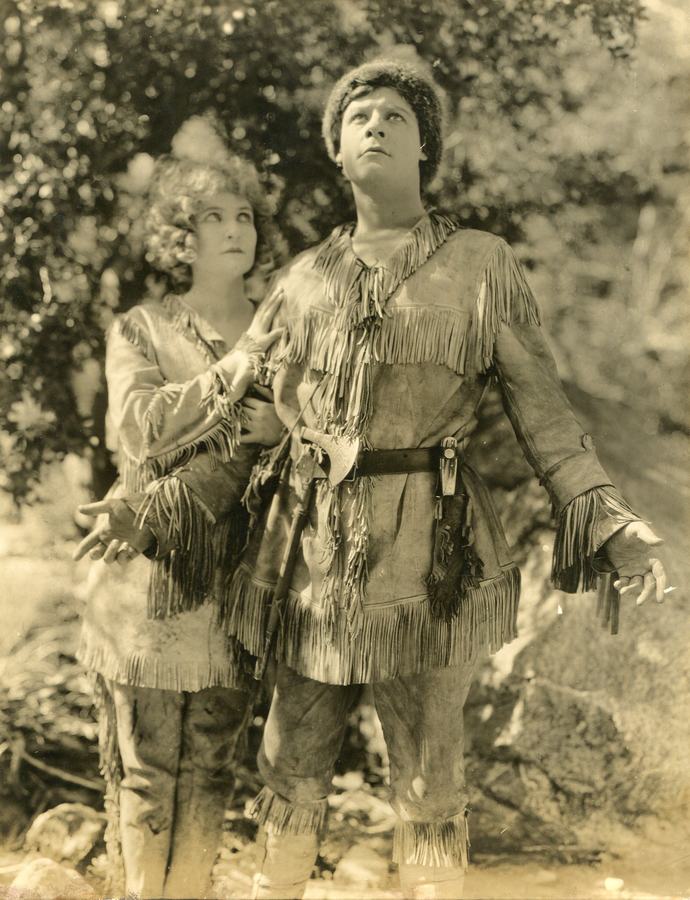
For eighteen years Jeanne, now the White Sorceress of Catherinestown, embroiders a pair of moccasins each winter solstice. The beadwork—white wampum against indigo deer-hide—spells a pictograph only a hidden child could parse: return. The shoes travel south sewn inside the hem of a trapper’s coat, past British pickets, past smallpox blankets, until they drop onto the pine floorboards of Lois Calvert’s adolescence. When Lois (May Allison, eyes like wet shale) slips them on, the fit is surgical; the past grafts itself to her soles. It is one of silent cinema’s most ecstatic gestures: knowledge transmitted not through parchment but through wear, through the ache of leather against skin. Compare this to the telegraphed coincidences of Under the Gaslight and you realize how radically The Hidden Children trusts the intelligence of its audience.
Enter Euan Loskiel—Harold Lockwood in buckskin that clings like damp parchment—now a lieutenant under the same General Sullivan who will later burn Seneca fields in The Sultana. Apfel refuses the easy binary of redface villain vs. bluecoat hero. Euan’s rifle is a surgical tool; his orders are annihilation, yet his bloodstream carries the memory of being given away. The film’s central tension is not will-they-won’t-they but can-love-survive-when-your-very-existence-is-a-cartographical-error. The lovers’ first kiss occurs inside a burnt-out chapel whose rafters drip with crows; the birds explode skyward the instant their lips meet, as though even gravity is embarrassed by the audacity of desire in a scorched clearing.
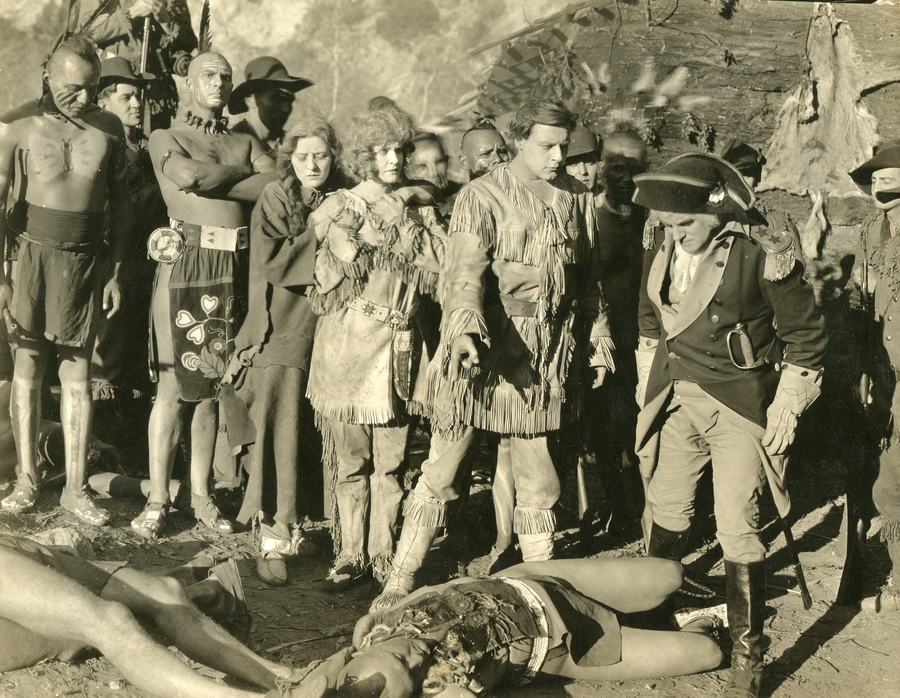
If Euan is the film’s conscience in flux, Mayaro (Henry Hebert, magnetic) is its axis mundi. He speaks Mohican, English, and the third language of silence—those lacunae where cicadas scream. When he performs blood-brotherhood with Euan, the ritual is shot in extreme close-up: two incisions, two drops merging on a shard of quartz, the camera tilting upward to catch sun-shafts that look suspiciously like cathedral glass. Later, Mayaro’s arrow halts Amochol’s sacrificial blade mid-air; the moment is framed so the shaft bisects the lens, turning the screen into a shattered halo. In a lesser film he would die tragically. Here he survives, but the cost is language itself—he swears never to speak again once the white bridal is consummated, a self-silencing more lacerating than any death.
Iroquois diplomats insist the union of two hidden children must be performed under the Moon of Strawberries, before the entire Longhouse, so that the sky may re-learn balance. The ceremony is a riot of inverted iconography: bride and groom trade deerskin for each other’s scars; instead of kissing, they press foreheads until a bruise blooms—an ink-blot where future treaties will be rewritten. Apfel intercuts this with Sullivan’s artillery belching phosphorus into Seneca cornfields, so every vow is underscored by off-screen burning children. The cognitive dissonance is nauseating, and that is precisely the point: American genesis is a palimpsest where wedding bells and massacre whoop cannot be prised apart.
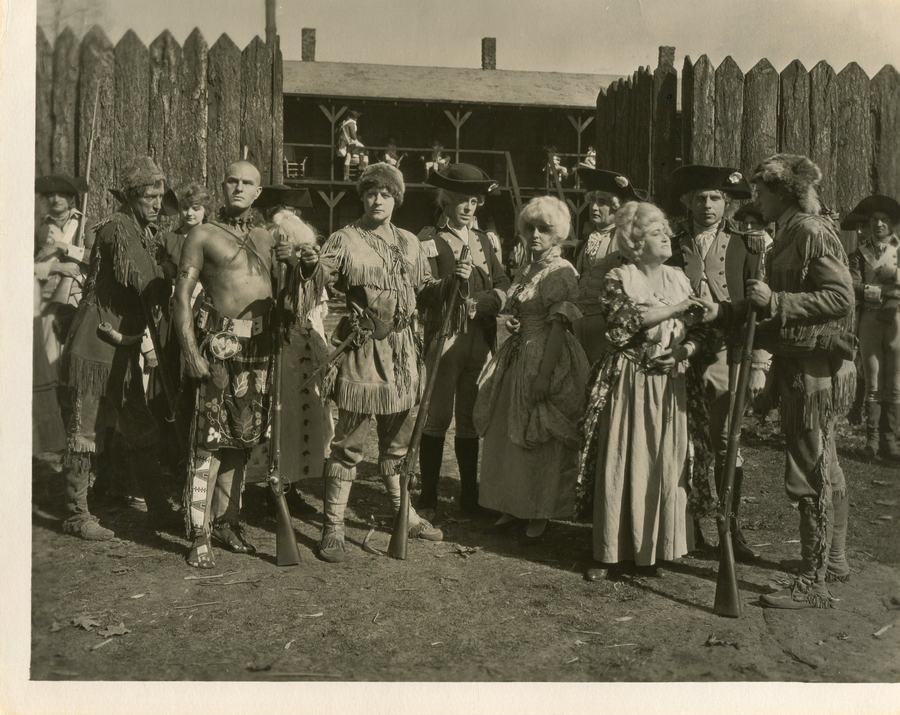
Production designer Charles Cummings conjures the capital of the Six Nations as a labyrinth of cedar palisades shot through with vermillion banners that snap like fresh meat. Jeanne, now White Sorceress, is kept in a cage suspended above a council fire; her prophecies are dictated to priests who tattoo her words onto shaved beaver hides. When Lois finally penetrates the town, Apfel switches to hand-cranked slow-motion—Lois’s feet float above dust, her hair unbraids itself in zero-gravity grief. The reunion is wordless: mother and daughter simply breathe the same air, their exhalations fogging the cold metal bars until the cage becomes a womb. Meanwhile, Amochol (Albert Ellis, eyes glazed with Pentecostal fervor) prepares to flay Jeanne’s eyelids so she may “see the future unfiltered.” The film dares you to watch.
Studio executives demanded a closing intertitle declaring the marriage “a beacon of peace for red and white alike.” Apfel and screenwriter Robert W. Chambers (who had already parodied manifest destiny in The Golden West) smuggled in subversion: the final shot is not of connubial bliss but of Mayaro turning his back on the camera, walking into fog that thickens until he becomes a smudge on the emulsion itself. The implication—history will roll over the intermediaries, digest the lovers, and excrete bronze statues with empty eyes—was too caustic for 1917 audiences, hence the film’s immediate burial in vaults. Only one tinted print survived the 1935 Fox fire, its cyan nitrates curling like river-waves, rescued by a projectionist who smelled nitrate vinegar and risked combustion to haul the canister out.
May Allison’s Lois is no wilting leaf; she gnaws on hardtack with the carnality of someone who has tasted bark to stay alive. Watch her pupils flare when she deciphers the moccasin glyph—an entire cosmology downloads behind her irises in real time. Harold Lockwood, matinee idol soon to die of influenza, gives Euan a hairline crack of doubt: every time he salutes, his right eyebrow hitches, as though asking forgiveness from the air itself. Lillian Hayward’s Jeanne ages four decades without latex; she simply lowers the timbre of her shoulders, lets gravity sculpt her clavicles into a map of captivity. And Henry Hebert—an Ojibwe actor passed off in pressbooks as “Italian for exotic appeal”—delivers lines in Mohican so fluent that contemporary Haudenosaunee consultants wrote letters of praise to Moving Picture World, a fact buried on page 9 beneath gossip about Mary Pickford’s wedding.
Cinematographer Daniel Davis (who later shot the hallucinatory Jack) employs double-exposure so that Jeanne’s prophecies hover like lantern-smoke above the action. In one shot, the spectral outline of adult Lois walks beside child Lois—an ontological glitch that predicts the split-screen narcissism of Persona half a century early. The color tinting is dialectical: ambers for British drawing rooms, viridian for Mohican forests, sickly uranine for scenes of torture, so each chromatic shift feels like a moral concussion. Compare this sophistication to the static vodka-tableaux of Darkest Russia and you grasp how far ahead of its moment this film truly was.
Modern viewers raised on post-apocalyptic clichés of The End of the World will find here a more convincing eschatology: genocide not as mushroom cloud but as nuptial march. The film anticipnsert the revisionist Western by three decades, yet refuses the cathartic shoot-out; its climax is a mother’s palm against a daughter’s cheek, the sound of skin memorizing skin. Streaming platforms hawk pulp like Gambling Inside and Out while this phantasm gathers mold. Seek the 4K restoration by the National Museum of the American Indian; watch it at 3 a.m. with headphones, volume cranked so the war-whoops blend into your pulse. You will exit understanding that America’s original sin was not merely theft but the frantic effort to un-remember the children we hid to save, then buried in the footnotes.
IMDb 6.4
1932
Community
Log in to comment.