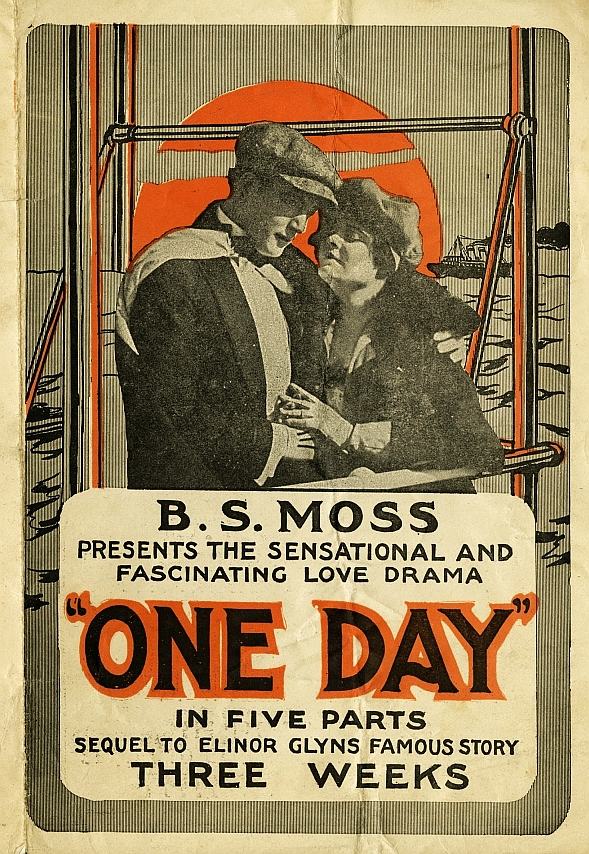
The year 1916 stood as a watershed moment for cinematic ambition, a period where the primitive flickers of the nickelodeon era began to coalesce into sophisticated, long-form narratives capable of profound emotional resonance. Among these early triumphs, One Day, an adaptation of Elinor Glyn’s provocative prose, emerges as a fascinating artifact of Ruritanian romance and dynastic intrigue. To view this film today is not merely an exercise in nostalgia; it is a confrontation with the very foundations of the 'hidden monarch' trope that has permeated Western storytelling for over a century.
The narrative architecture of One Day is built upon the classic dichotomy of the corrupt regent and the exiled rightful heir. Unlike the more visceral depictions of power struggles found in contemporaneous works like On the Steps of the Throne, Glyn’s story—and by extension, the film’s screenplay—focuses heavily on the intersection of personal desire and sovereign duty. The inciting incident, a botched assassination of an infant king, sets a tone of high-stakes melodrama that the film sustains with remarkable consistency. Pavlovitch, portrayed with a chillingly bureaucratic coldness, represents the quintessential usurper whose legitimacy is as hollow as the treasury he eventually depletes.
The Aesthetics of Exile and Restoration
The transition from the oppressive, shadowed corridors of the Veserian court to the pastoral, light-drenched landscapes of the English countryside serves as a visual metaphor for the protagonist’s journey. Dimitri, the bodyguard whose loyalty acts as the film’s moral compass, is a precursor to the modern action hero, though his motivations remain rooted in an antiquated sense of chivalry. When he delivers the young Paul I to Paul Verdayne, the film shifts its focus toward the psychological weight of an unknown heritage. This theme of the 'unknowing prince' is handled with a subtlety that rivals The Opened Shutters, where the revelation of truth serves as the primary catalyst for character growth.
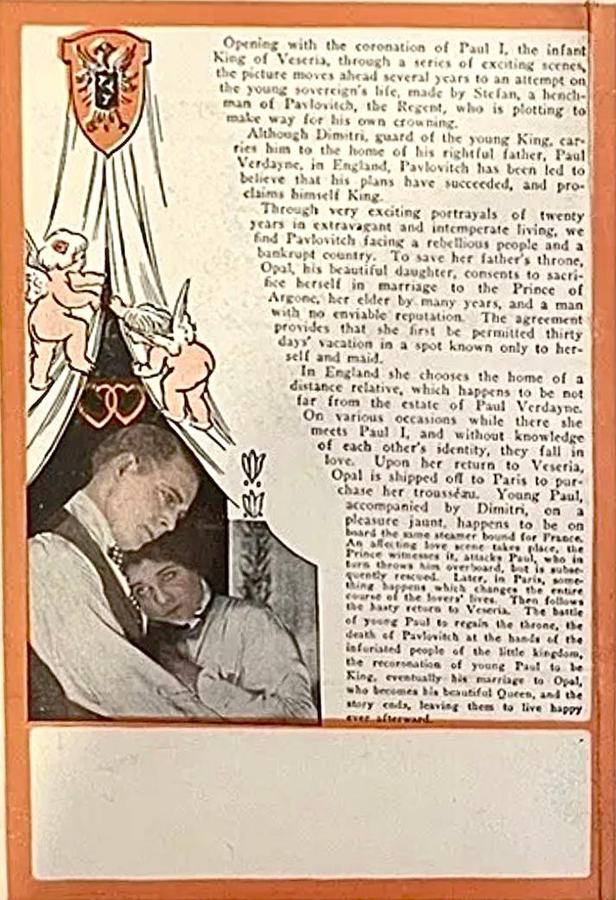
Twenty years of narrative compression follow, a bold choice for a silent-era production. We find Veseria in a state of entropic decay. The film excels here in its portrayal of a kingdom on the brink of collapse, utilizing set designs that suggest a faded grandeur. Pavlovitch’s bankruptcy is not just financial; it is a spiritual destitution that he attempts to rectify by selling his daughter, Opal, into a loveless union with the Prince of Argone. This plot point introduces a feminist subtext that was surprisingly progressive for 1916. Opal’s demand for 'thirty days alone' is an assertion of agency in a world that views her as a mere political instrument.
The Serendipity of the English Estate
The core of One Day's romantic appeal lies in the statistical impossibility of its central coincidence. Opal, seeking refuge from her fate, chooses an estate in England that happens to border the residence of the man she is destined to love—the grown Paul I, now living as Paul Verdayne. While modern audiences might find this narrative convenience somewhat jarring, within the context of early 20th-century romanticism, it was viewed as the work of Providence. The film treats their meeting not as a chance encounter, but as a cosmic realignment. The chemistry between the leads, though constrained by the theatrical gestures of the silent era, manages to convey a genuine sense of magnetic attraction.
Comparing this to the darker, more cynical undertones of The Intrigue, one can see how One Day seeks to provide a more optimistic outlook on the inevitability of justice. The 'One Day' of the title refers to this singular moment of connection that changes the trajectory of an entire nation. The film argues that the personal is political; the love between Paul and Opal is the only force capable of healing the rift created by Pavlovitch’s original sin of usurpation.
Technical Mastery and Narrative Pacing
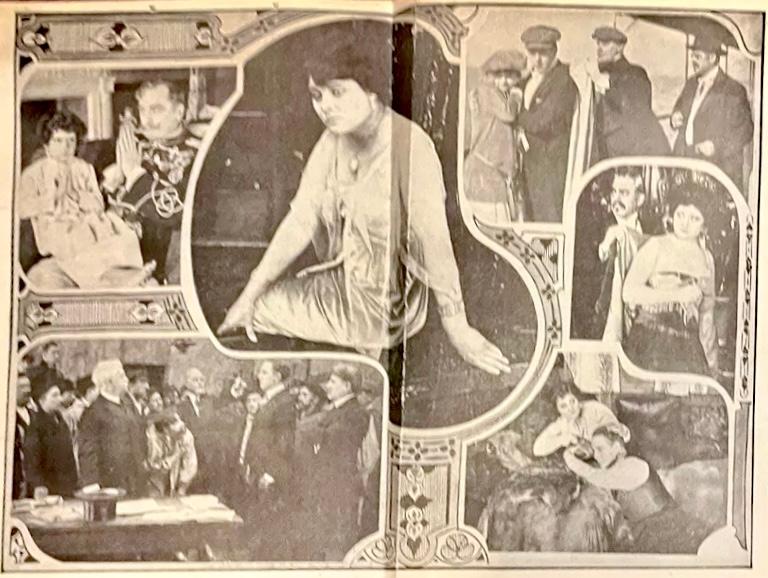
From a technical perspective, the cinematography in One Day demonstrates a sophisticated use of deep focus and framing to tell its story. The director utilizes the architecture of the English manor to create a sense of safety and permanence, contrasting it with the shaky, unstable atmosphere of the Veserian palace. The editing, while linear, avoids the sluggishness that plagued many longer features of the time, such as The Heights of Hazard. Instead, it maintains a brisk pace that keeps the viewer engaged in both the romantic and the political threads of the plot.
The performances are noteworthy for their restraint. William Bechtel and Victor Sutherland provide a grounded presence that prevents the film from descending into pure camp. Sutherland, in particular, carries the weight of the 'hidden king' with a quiet dignity that makes his eventual return to power feel earned rather than merely scripted. Madge Tyrone’s portrayal of the elder characters adds a layer of maternal gravitas that anchors the film’s more flighty romantic sequences. The cast effectively navigates the tonal shifts between the suspense of the opening assassination attempt and the lyrical beauty of the English interludes.
Comparative Context and Historical Significance
When placed alongside other international productions of the era, such as the Danish Manden med Staalnerverne or the Italian Fior di male, One Day distinguishes itself through its specific focus on Anglo-European relations and the fantasy of the Ruritanian state. It shares a thematic kinship with King Charles II: England's Merry Monarch in its fascination with the restoration of a rightful bloodline, yet it feels more intimate due to Glyn’s influence. Glyn, who would later become famous for her concept of 'It' (the indefinable quality of star power), infuses this film with an early version of that cinematic magnetism.
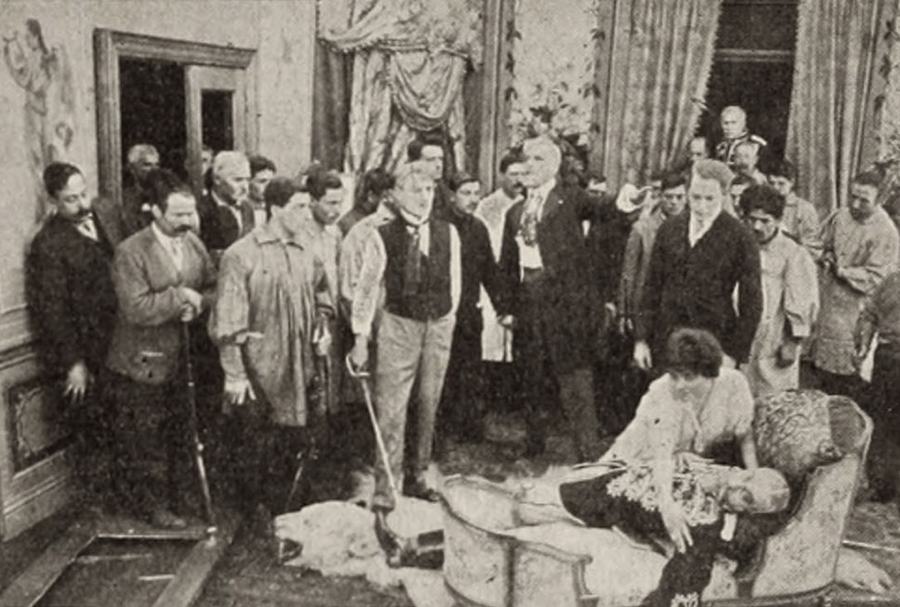
The film also touches upon the tragedy of the 'bankrupt country,' a reality that many European nations were facing in 1916 due to the Great War. While Veseria is fictional, the anxiety surrounding collapsing empires and the sale of noble titles was very real. In this sense, One Day serves as a form of escapist propaganda, suggesting that the solution to national ruin lies in the return to traditional values and the union of true hearts. It lacks the stark social realism of Niños en la alameda, but it replaces that grit with a sweeping, operatic vision of destiny.
The Climax: A Reunion in France
The third act of the film shifts the action to France, a neutral ground where the various plot threads finally entwine. This geographical shift is crucial, as it removes the characters from the baggage of their respective homes and allows for a pure confrontation of wills. The revelation of Paul’s true identity is handled with a dramatic flair that mirrors the high-stakes tension of Who Killed Simon Baird?, yet the resolution is far more harmonious. The film’s ability to pivot from a potential tragedy to a triumphant restoration is a testament to the strength of its source material.
As the history of Veseria is rewritten by the chance meeting of two lovers, the film concludes on a note of profound satisfaction. It suggests that even the most deeply entrenched corruption can be overturned by a single day of truth. This message resonated deeply with 1916 audiences and continues to hold a certain charm today. While it may not possess the experimental edge of Zhuangzi shi qi or the raw emotionality of Hans Faders Ære, One Day stands as a pillar of classical narrative cinema.
Final Thoughts: A Legacy of Romance
In the final analysis, One Day is a film that demands to be understood within the context of its era while being appreciated for its timeless themes. It is a story of how the past never truly stays buried and how the rightful order of things has a way of asserting itself through the most unlikely of circumstances. Whether compared to the rugged survivalism of The Flower of No Man's Land or the delicate innocence of Lille Teddy, One Day remains a more complex and politically charged work than it is often given credit for.
For the modern cinephile, this film is a crucial piece of the puzzle in understanding the evolution of the romantic epic. It showcases a moment in time when cinema was discovering its power to not just reflect the world, but to reshape it into something more beautiful, more just, and infinitely more romantic. Elinor Glyn’s vision, brought to life by a dedicated cast and a director with an eye for grandeur, remains a compelling testament to the enduring power of the 'One Day' that changes everything.