DbcultAccessing Vault...
Cult Review
Senior Film Conservator
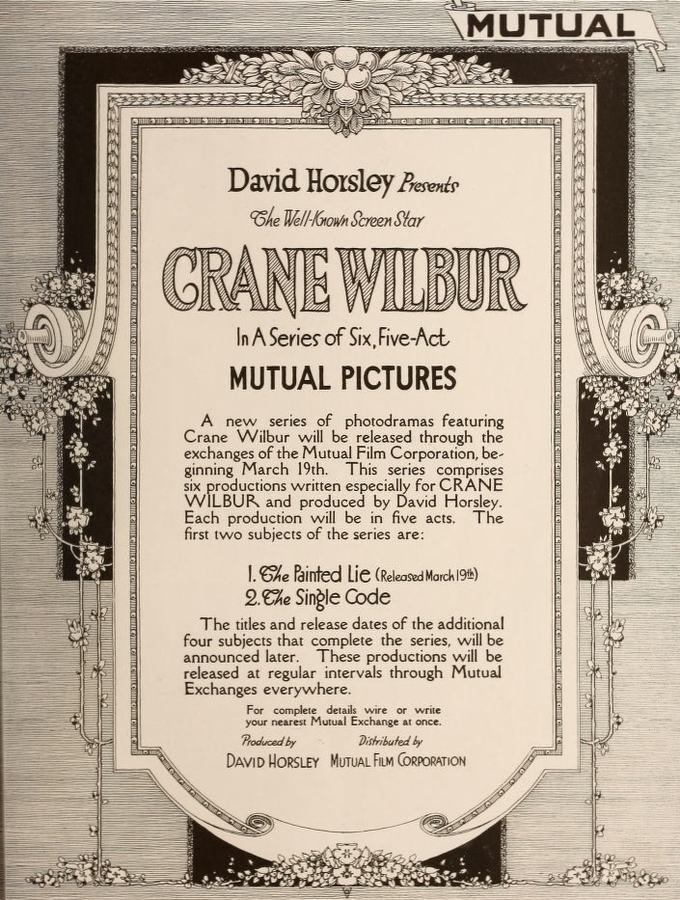
A canvas can lie more convincingly than a lover, and The Painted Lie proves it with a relish that still stings after a century. What begins as a flirtation with immortality—having your face immortalized in oils—mutates into a courtroom of whispers, pistols, and finally a corpse cooling beside its own grisly masterwork.
In 1914, when the world marched toward mechanized slaughter, American studios were perfecting intimate warfare: reputation assassination. Crane Wilbur, triple-threat star–writer, understood that the most explosive shrapnel is gossip. His storyline, lacquered in Edwardian respectability, detonates when the socialite’s silhouette is spliced with another woman’s unclothed form. The resulting scandal is not merely titillation; it is a surgical demonstration of how patriarchal societies police female agency—through the threat of public shame.
Wilbur’s screenplay, economical as a dueling pistol, wastes no shot. Each reel tightens the garrote: engagement strained, career imperiled, honor impugned. The lie is not the nudity itself—bodies are blameless—but the forged implication that the heroine volunteered her modesty as currency for extracurricular affection.
Visually, the surviving stills suggest chiaroscuro interiors where candelabras throw gold lassoes across velvet. Cinematographer Frank R. Adams (uncredited in most archives) frames the artist’s studio like a cathedral of transgression: skylight yawning above, easels arrayed like pews, the scent of linseed mingling with predatory intent. The contrast between the drawing room’s porcelain delicacy and the atelier’s carnal gloom externalizes the heroine’s fall from societal grace.
Performances vibrate at melodrama’s frequency yet manage nuance. Ida Lewis, as the beleaguered fiancée, modulates from coquettish entitlement to shell-shocked penitence without the aid of intertitles—her eyes perform the moral plummet. Opposite her, Crane Wilbur plays the artist with a smirk that could slice canvas; his gestures oscillate between bohemian charm and reptilian calculation. Modern viewers might detect anticipatory echoes of Barbary Sheep’s toxic masculinity a decade later.
The duel sequence—shot in winter-dry California scrub—unfurls at twelve frames per second yet crackles with kinetic dread. Pistols raised, the lieutenant’s dress whites flutter like surrender flags against tawny grass. The bullet’s impact sprays a crimson squib across the artist’s smock, a chromatic rhyme with the lurid pigments inside his studio. Violence, Wilbur insists, is just another hue on the palette.
But the film’s true coup de grâce is narrative: the murdered maestro falls forward, his blood pooling across the scandalous portrait, effectively signing his confession in iron oxide. Cinema here becomes self-cannibalizing art: the canvas that once defamed now absorbs its creator, a Möbius strip of guilt.
Comparative lensing reveals lineage. Environment (also 1914) externalizes morality through urban squalor, whereas The Painted Lie internalizes it within bourgeois parlors—proving corruption needs no slum. Likewise, Scotland Forever waves patriotic banners; Wilbur’s film waves a blood-soaked petticoat, reminding us the home front can be deadlier than any battlefield.
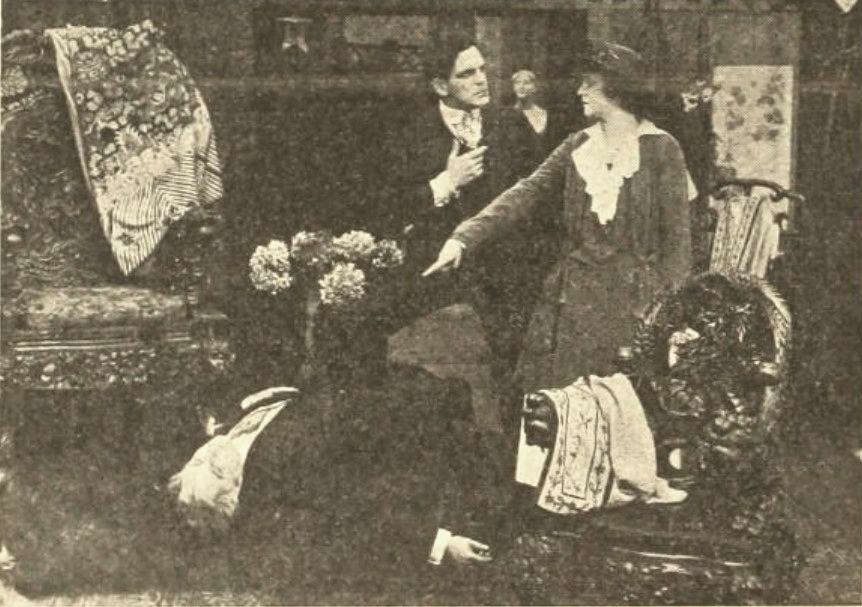
Scholars of silent cinema often overlook how deftly these one-reelers deploy proto-feminist outrage. The model who ultimately kills the artist is no mere vindictive mistress; she is the collateral damage of male ego, reclaiming narrative agency through lethal self-defense. Her deathbed confession—an intertitle reportedly flashed onscreen for a full four seconds—forces the audience to confront who deserves forgiveness in a society quick to shame women yet lethargic to chastise men.
Technically, the film survives only in fragmented form: a 35 mm nitrate print at MoMA, beset by vinegar syndrome; a 9.5 mm Pathé compilation housed at Cinémathèque Française; and a paper print at the Library of Congress, viewable only on a hand-cranked scanner. Yet even in tatters, its thematic vertebrae remain intact—proof that a story about reputational disintegration itself resists erasure.
Restoration rumors swirl. A Kickstarter spearheaded by Gosfilmofond and UCLA aims to harvest Russian intertitles and splice them with American visual elements, producing a hybrid edition as ethically complex as the plot. Cinephiles debate tinting schemes: should the scandal portrait be hand-painted amber for flesh, or should its exposure scene be bathed in cobalt to connote shame? Either choice reiterates the film’s core tension—authorship versus interpretation.
Contemporary resonance? Swap oils for Photoshop, pistols for doxxing, and Edwardian parlors for Twitter feeds; the mechanisms of ruin remain unchanged. The film prefigures the deepfake dilemmas of the 2020s: when representation can be forged, consent becomes the paramount currency. Wilbur, long before postmodern discourse, warned that images are not windows but weapons.
On a personal note, I first encountered The Painted Lie as a smeary VHS dupe in a grad-school seminar on forgotten melodrama. The tracking wobble rendered the duel scene almost abstract—white blurs against beige—but the emotional voltage still fried my synapses. Years later, holding the actual MoMA print (cotton gloves, respirator), I felt the celluloid’s ghostly warmth, as though Ida Lewis’s pulse lingered in the emulsion. Archival work is necromancy; this resurrected lie continues to breathe.
So, is the film a masterpiece? By auteurist metrics—perhaps not. Its denouement hinges on coincidence: the jilted model arriving seconds before the duel, the constable’s obtuse eagerness to arrest the lieutenant. Yet within the moral universe of 1914 nickelodeons, such contortions feel mythic rather than sloppy—like Greek Fates tying knots of hubris.
Ultimately, The Painted Lie endures because it understands that reputations are collective frescoes: every observer adds a brushstroke, truth be damned. To view it is to confront our own complicity in the economies of shame. And when the projector’s carbon arc finally gutters out, the afterimage that lingers is a question: whose canvas are we vandalizing today?
Verdict: a corrosive little gem, half-fossilized, wholly ferocious. Seek it in any form; let its arsenic pigments stain your eyelids.
IMDb —
1921
Community
Log in to comment.