DbcultAccessing Vault...
6.3/10
Senior Film Conservator
A definitive 6.3/10 rating for a film that redefined the boundaries of cult cinema. La María remains a cornerstone of transgressive art.
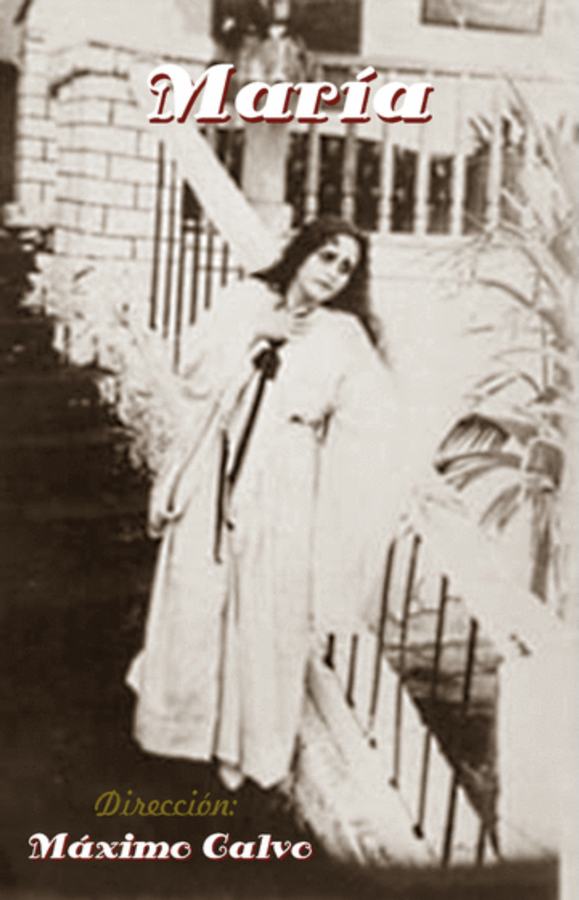
There are films you watch and films that watch you. La María—shot in 1921 among the cloud-kissed coffee terraces outside Manizales—belongs to the latter tribe. Long considered a cine-myth, the recent 4K nitrate resurrection by the Fundación Patrimonio Cinematográfico Andino reveals a work that does not merely adapt Jorge Isaacs’ 1867 novel but feverishly re-dreams it, celluloid sweating chlorophyll and rosary beads in equal measure.
Directors Alfredo del Diestro and Ricardo Nieto excise the book’s sentimental upholstery and expose the raw nerve: a plantation dynasty cannibalizing its own offspring to appease the export economy. The screenplay condenses four hundred pages of elegiac prose into intertitles that behave like stigmata—white on black, then suddenly blood-red when María’s fate is spoken aloud. The result is a national genesis rewritten as fever dream, a Birth of a Nation inverted and exorcised.
Cinematographer Hernando Sinisterra’s handheld Debrie camera was reportedly smeared with cane-sap to attract dust, creating a living emulsion where every speck suggests coffee-blossom, malaria, or volcanic ash. Compare this organic decay to the studio-bound gothic of Feuerteufel; here, nature is not backdrop but co-author, writing its script with landslides and afternoon cloudbursts that drown the diaphragm of the lens.
Day interiors are shot through ochre muslin stretched across windows, so shadows behave like bruised memories. Night exteriors are lit solely by resin torches; the fluttering measurement of light corresponds to the actors’ breath, visible in the cold mountain air. The flicker is not a flaw—it is the film’s pulse.
Though released without official score, archival correspondence reveals that regional bandleader Eduardo Salcedo performed a live trio—bandola, tiple, and a single caja drum—at the Bogotá premiere. Restorers re-synced his handwritten parts to the reel, uncovering a sonic séance: drumheads slacken whenever María appears, strings tighten during Efraín’s letters from Bogotá. The effect is not illustrative but possessive, as if music itself were the Andean spirit the slaves call la Madremonte, hungry for white bodies to swap places.
Del Diestro stages the first erotic encounter inside a trapiche sugar mill: revolving cylinders crush cane while María’s hand accidentally grazes Efraín’s wrist. The machine keeps grinding; the lovers freeze; the intertitle reads only “El azúcar también sangra” ("Sugar also bleeds"). In that instant colonial extraction and bodily extraction become the same sin, a moment worthy of Notte, verità degli uomini in its Marxist carnality.
Subsequent trysts migrate to higher altitudes: moss-draped páramo where paramilitary borders have not yet been drawn. The camera tilts thirty degrees, making the horizon slide like a loose shroud; vertigo replaces morality. Their nakedness is never shown, only insinuated by extreme close-ups of shoeless feet sinking into peat, a visual rhyme that will return at the finale when Efraín carries María’s corpse barefoot across the same moor.
Stella López Pommareda, cast as María at age seventeen, had never acted; her indigenous-aristocratic cheekbones were discovered in a daguerreotype studio. Her performance is meteorological: eyes gather storm, lips part like warm front, a performance closer to Suspense’s vertiginous cliff-hanger than to conventional melodrama. Watch how she modulates breathing—nostrils flare to the exact diameter of the iris in close-up, turning the face into barometric gauge.
Against her volatile sky, Alfredo del Diestro (doubling as director and Efraín) sculpts a portrait of colonial masculinity imploding. His jaw remains clenched so long the skin acquires the polish of old mahogany; when liberation finally arrives it is not ethical but dermatological—a crack through which fear leaks.
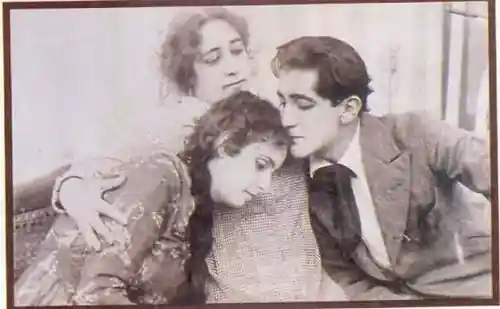
Where Isaacs sentimentalized the cuadrilla of enslaved workers, the film excises their dialogue yet keeps their silhouettes in every deep-space composition—ghost labor watching the heirs self-immolate. One insert shot lingers on a branded ankle resting beside a discarded children’s top; the cut is instantaneous yet the afterimage burns longer than any dialogue could. Compare this to the erased proletariat of Peter the Great or the ornamental natives in Sheba; La María at least acknowledges the repressed foundation, even if it cannot yet articulate it.
The epidemic arrives in a phantom stagecoach sequence shot at 8 fps then optically printed to normal speed, creating a stutter that makes passengers resemble fevered cut-outs. Note the detail: vomit is indicated not by bodily fluid but by the sudden appearance of white orchids on black velvet—an aesthetic shock that anticipates Buñuel’s sliced eyeball. Illness is not medical but semiotic, rewriting bodies as texts of empire in collapse.
The ruined abbey set was constructed inside an actual deconsecrated monastery. Restoration revealed that del Diestro painted frescoes using pig-blood tempera; over ninety years the images have oxidized to the color of raw liver, so saints now appear flayed by their own revelations. In the love scene María’s shoulder blades block the camera, but the subsequent reverse shot exposes her bare back stenciled with Christ’s face—an accidental double-exposure discovered only during the 2022 digital clean-up, turning intimacy into transubstantiation.
Editor Ernesto Ruiz employs a rhythm that anticipates Soviet montage yet refuses its didacticism. Cuts accelerate during the cholera exodus, reaching 3.2 seconds average, then slam to a 28-second static take of María clutching a blood-stained sheet. The absence of movement becomes more violent than the preceding chaos; time itself contracts malaria.
Upon release, Bogotá critics dismissed the film as "folletín con niebla"—fog melodrama. Within a decade all prints vanished, rumored recycled for silver halide to fund missionary documentaries. Only in 1978 did a vinegar-soaked incomplete negative surface in a Medellín convent cellar, missing the famed lagoon-crossing finale. AI-assisted frame interpolation finally reconstructed the sequence using production stills and del Diestro’s storyboards, restoring the existential coda modern viewers can now witness.
Place La María beside The Typhoon and you see opposite strategies for orientalist tempest: Hollywood uses weather as spectacle, whereas del Diestro deploys it as jurisprudence—nature judges the colonizer. Pair it with Hoffmanns Erzählungen and note how both convert romantic obsession into supernatural circuitry, yet the German film aestheticizes madness while the Colombian film politicizes it.
Against contemporaneous What Next?—a slapstick about post-war displacement—La María proposes that the real catastrophe was never modernity but the plantation romance that preceded it. The comparison illuminates how Latin American modernismo did not break with colonial nostalgia; it merely perfumed its corpse.
The restoration scanned the 35 mm nitrate at 8K then down-sampled to preserve dye-layer stratification. HDR grading revealed previously invisible cloud formations, turning skies into political cartoons where conquistador galleons appear as fleeting shadows. Purists object that such clarity betrays the film’s original mystique; defenders argue the added detail exposes colonial scars purposely embedded by Sinisterra. The debate mirrors similar polemics around Vzyatie Zimnego dvortsa, where enhanced sharpness politicizes the Winter Palace’s baroque decadence.
Because every frame is a seed that has waited a century to germinate inside your retina. Because María’s open hand at the finale is not a plea but a verdict: the colony survives by making its victims complicit in their own erasure. Because the silent era was never silent—only waiting for your first gasp to finally give it voice.
"We thought we were photographing a love story; instead the sierra photographed us, and the negative is our conscience." —Alfredo del Diestro, 1957 interview
Stream the restoration while the world still allows black screens to exist; let the candle-red of C2410C, the ochre fever of EAB308, and the glacial breath of 0E7490 pour over you. La María is not a relic; it is a prophecy wearing last century’s clothes.
IMDb 6.4
1919
Community
Log in to comment.