DbcultAccessing Vault...
Cult Review
Senior Film Conservator
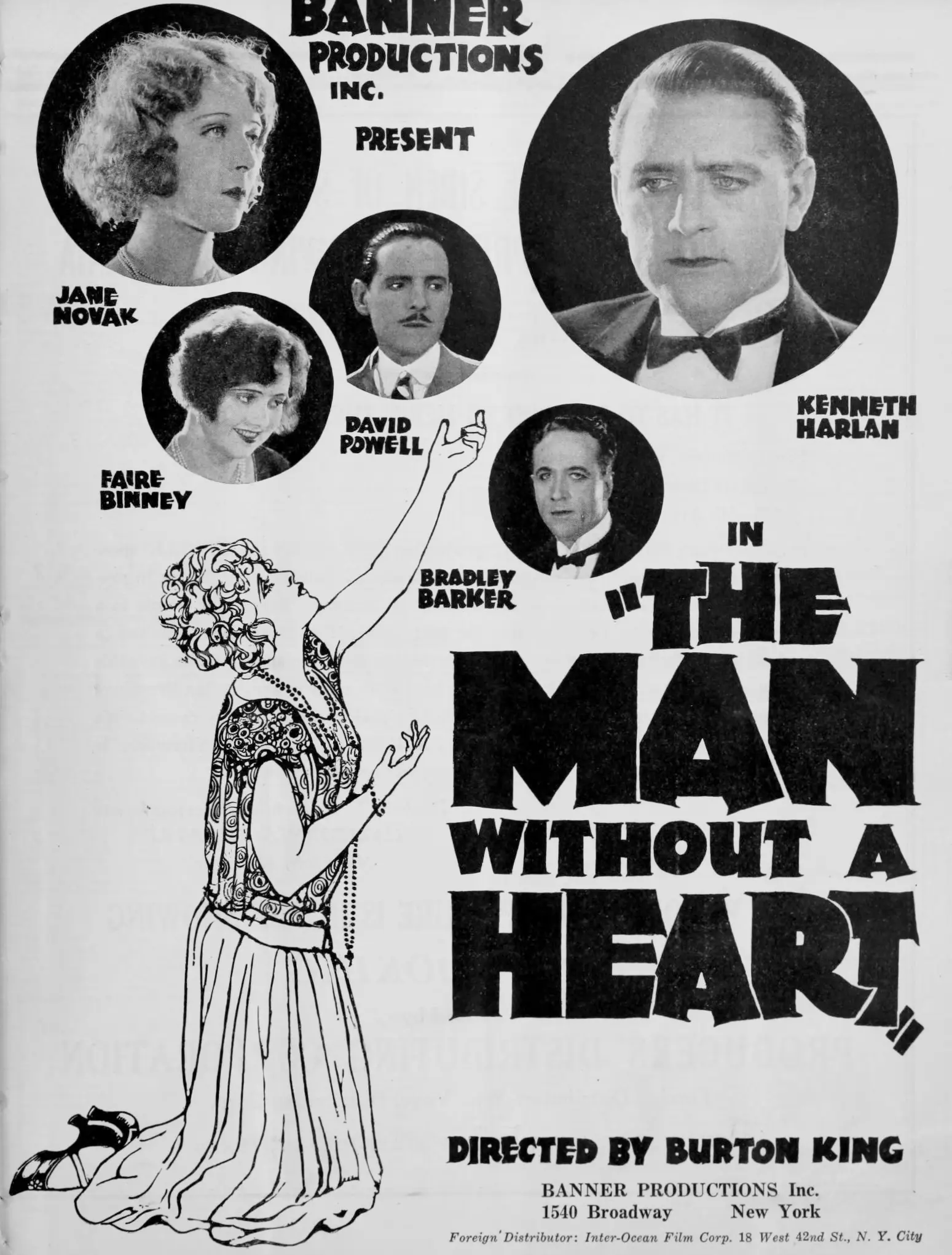
There's a particular allure to unearthing films from the nascent days of cinema, especially those that, despite their age, grapple with themes as enduring as human folly, suspicion, and the redemptive power of truth. The Man Without a Heart, a 1921 offering, emerges from the silent era as a fascinating artifact, a narrative tapestry woven with threads of melodrama, mistaken identity, and an unexpected journey toward understanding. It’s a film that, even a century later, invites us to ponder the fragility of perception and the often-circuitous routes by which genuine connection can be forged. This isn't just a simple plot summary; it's an invitation to delve into the psychological undercurrents that define this captivating piece of early filmmaking.
Our story unfurls with Rufus Asher, portrayed with a compelling intensity by Bradley Barker, consumed by a virulent suspicion. He believes Barbara Wier, played with a nuanced vulnerability by Mary McCall, is conspiring with his sister's husband, Edmund Hyde. The very notion ignites a furious protectiveness in Asher, a sense of betrayal that curdles into a drastic, impulsive action. It’s a classic setup for the dramatic tension that silent films excelled at, relying heavily on exaggerated gestures and facial expressions to convey the turbulent inner worlds of their characters. Asher, convinced of Barbara's perfidy, takes matters into his own hands, resorting to abduction – a morally questionable act that immediately casts him as a complex, rather than purely heroic, figure. This initial act of desperation sets a tone of high stakes and emotional volatility, pulling the viewer into a narrative where intentions are murky and consequences are profound.
The decision to spirit Barbara away to a lonely mountain retreat is not merely a plot device; it’s a symbolic gesture. The isolation of the mountains becomes a crucible, stripping away the societal pretenses and external influences that might otherwise obscure the raw human drama unfolding. It’s a deliberate choice by writers Harry Chandlee and Ruby M. Ayres to place their protagonists in an environment where they are forced to confront each other, and, by extension, themselves, without the distractions of the outside world. This geographical detachment amplifies the psychological intensity, much like the remote settings in films such as The Big Adventure often served to heighten personal struggles.
The narrative takes a sharp, unexpected turn when Barbara, mistaking Rufus for a vagabond – a testament to his dishevelled state and her own terror – shoots him. This act of self-preservation, born of fear and misjudgment, is profoundly ironic. The very man who abducted her, driven by his own misjudgment, now becomes a victim of hers. This moment is pivotal, shifting the power dynamic and forcing a new kind of interaction. Instead of continuing as captor and captive, they are now patient and caregiver. Barbara, displaying an inherent human compassion despite her ordeal, nurses Rufus back to health. This enforced intimacy, born from violence and necessity, becomes the unlikely foundation for a deeper revelation. It's a testament to the era's storytelling, where grand, melodramatic gestures often paved the way for profound character development. This forced cohabitation, where animosity slowly yields to empathy, recalls the unexpected bonds formed in films like The Mating, albeit under far more dramatic circumstances.
The silent era, with its reliance on visual storytelling, excelled at conveying these complex emotional shifts. The subtle changes in posture, the fleeting expressions, the gradual softening of a hardened gaze – all contribute to the audience's understanding of the characters' internal journeys. Mary McCall's portrayal of Barbara during this period is particularly commendable; she conveys both her initial terror and her burgeoning sense of duty with a quiet strength that resonates deeply. It's in these quiet, intimate moments, stripped of dialogue, that the true artistry of silent cinema shines through, allowing the audience to project their own understanding onto the unspoken narrative.
As Rufus recovers, the truth, like a slow-dawning sun, begins to illuminate the shadows of his misunderstanding. Barbara explains that her clandestine meetings with Edmund Hyde were not acts of betrayal, but rather a desperate, collaborative effort to prevent an elopement – Edmund's wife was planning to flee with another man, Hugh Langley. This revelation is the narrative's fulcrum, turning the entire premise on its head. Rufus’s initial, fervent conviction crumbles, replaced by the stark realization of his grave error. It's a classic case of mistaken identity and misconstrued intentions, a trope often explored in early cinema, yet rendered here with a fresh urgency due to the extreme measures Asher took. The film cleverly plays with audience expectations, initially positioning Asher as a wronged protector, only to reveal him as a misguided aggressor. This reversal is powerful, forcing both Asher and the viewer to re-evaluate everything that has transpired.
The genius of this plot twist lies in its ability to humanize all parties involved. Asher is not merely a villain; he is a man driven by love and a flawed sense of justice. Barbara is not a conspirator; she is a woman caught in a delicate, life-altering intervention. Edmund and his wife, though not central to the immediate abduction drama, become catalysts for the larger narrative of human frailty and the complexities of relationships. This intricate dance of misdirection and eventual clarity is reminiscent of the narrative sophistication found in films like The Painted Soul, where hidden truths are slowly peeled back to reveal deeper realities. The film doesn't just present a plot; it unravels a moral dilemma, inviting us to consider how quickly judgment can lead to catastrophic actions and how difficult it can be to truly discern another's intentions.
Bradley Barker, as Rufus Asher, delivers a performance that oscillates between fierce conviction and profound remorse. His initial scenes are charged with a raw, almost animalistic intensity, perfectly conveying a man on the precipice of a disastrous decision. As the truth dawns upon him, Barker’s nuanced expressions transition from anger to bewilderment, and finally to a palpable sense of shame and dawning affection. This arc is crucial, as it transforms Asher from a potential antagonist into a figure capable of redemption. Similarly, Mary McCall, as Barbara Wier, navigates a challenging role with grace. Her initial fear and defiance gradually give way to a compassionate pragmatism, and then to a hesitant understanding. The chemistry between Barker and McCall, though largely unspoken, is tangible, evolving from antagonism to a burgeoning, complicated rapport. This ability to convey deep emotional shifts without dialogue is the hallmark of great silent film acting, and both leads rise to the occasion admirably. The supporting cast, including David Powell and Mary C. McCall Jr., though less prominent, contribute effectively to the overall dramatic texture, ensuring that the world of the film feels fully inhabited, much like the ensemble work seen in My Boy.
Beyond the immediate thrills of its melodramatic plot, The Man Without a Heart delves into themes that remain pertinent even today. The dangers of unchecked suspicion, the fallibility of human judgment, and the surprising ways in which adversity can forge unexpected bonds are all explored with considerable depth. Rufus Asher’s journey is a cautionary tale about jumping to conclusions, a narrative thread that resonates across different eras and cultures. Barbara’s resilience and compassion, even in the face of abduction and violence, speak to an enduring human capacity for empathy. The film suggests that true understanding often requires a dismantling of preconceived notions, a willingness to see beyond the surface and engage with the complex realities of others. This exploration of moral ambiguity and the consequences of hasty actions places it in conversation with other thoughtful silent dramas like The Prussian Cur, which also navigated complex ethical landscapes.
Moreover, the film subtly touches upon the societal expectations and constraints of the time, particularly regarding women and their roles in domestic dramas. The desperation to prevent an elopement, for instance, underscores the significant social stigma attached to such actions in the early 20th century. The film captures a snapshot of a bygone era's moral landscape, making it not just a compelling drama but also a valuable historical document. It's a reminder that while technology and social norms evolve, the fundamental human emotions – love, jealousy, fear, forgiveness – remain constant. The intricate emotional web woven by Chandlee and Ayres showcases a sophisticated approach to character and conflict that belies the common misconception of silent films as purely simplistic entertainment.
As a product of 1921, The Man Without a Heart exemplifies many of the strengths of silent cinema. Its visual storytelling is robust, relying on evocative cinematography and the powerful expressiveness of its actors. The pacing, while perhaps slower by modern standards, allows for a deeper immersion into the characters' emotional states. The use of intertitles, far from being a mere substitute for dialogue, often serves to heighten the drama, delivering crucial plot points or emotional declarations with impactful brevity. The film’s ability to evoke strong emotional responses without spoken words is a testament to the artistry of the era’s filmmakers and performers. It’s a craft that demanded a unique blend of theatricality and cinematic nuance, a balance that films like The Lion and the Mouse also mastered in their own right.
Looking back, one can appreciate how these early films laid the groundwork for narrative structures and character archetypes that continue to inform cinema today. The journey of redemption, the power of forgiveness, and the complexities of human relationships are timeless themes that The Man Without a Heart explores with an earnestness and dramatic flair characteristic of its time. It serves as a reminder that even in the absence of sound, stories could resonate deeply, provoke thought, and entertain audiences with their intricate plots and compelling performances. It’s a piece of film history that deserves to be rediscovered and appreciated for its contributions to the evolving language of cinema.
In its totality, The Man Without a Heart is more than just a historical curiosity; it is a compelling drama that offers a window into the narrative sophistication of early 20th-century filmmaking. It challenges its characters, and by extension its audience, to confront their preconceived notions and to find empathy in the most unlikely of circumstances. The film’s exploration of love, suspicion, and the arduous path to redemption ensures its place as a noteworthy entry in the silent film canon. It's a testament to the fact that compelling storytelling transcends technological limitations, proving that a powerful narrative, well-acted and thoughtfully constructed, can speak volumes even without a single spoken word. For enthusiasts of early cinema or anyone curious about the roots of dramatic storytelling on screen, this film offers a rich and rewarding experience, a journey into the complex heart of human experience, meticulously crafted by talents like Harry Chandlee and Ruby M. Ayres, and brought to life by a dedicated cast including Kenneth Harlan and Faire Binney, alongside the aforementioned leads.

IMDb 6.7
1934
Community
Log in to comment.