DbcultAccessing Vault...
Cult Review
Senior Film Conservator
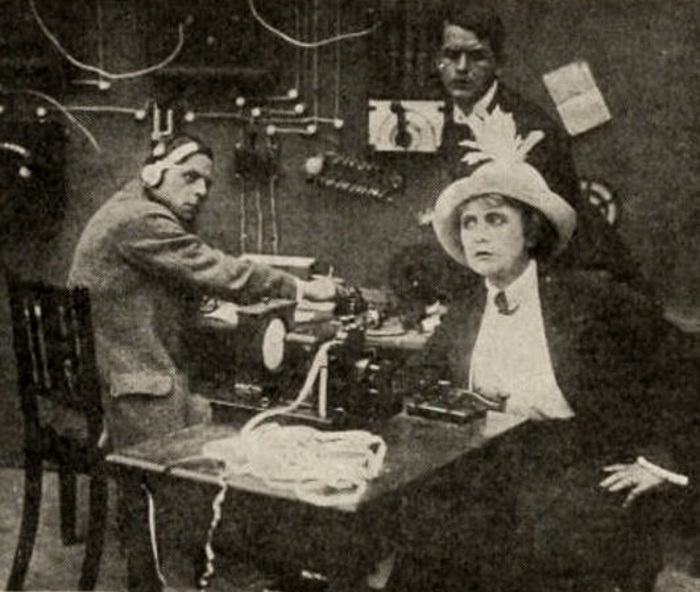
Imagine a film that feels like the negative of The Mystery of the Rocks of Kador dunked in North Sea brine, then left to haunt the projector beam—The Marconi Operator is that phantom.
Danish cinema in 1911 was already flirting with the uncanny—think Vampyrdanserinden’s blood-lit ballets—but The Marconi Operator ditched the danse macabre for something colder: the loneliness of a man listening to the ocean’s pulse through a brass key. Director August Blom, fresh from the polar success of Glacier National Park’s nature documentaries, turns technology itself into a séance device. The result is a proto-Lynchian nightmare shot on unstable nitrate that seems to decompose before your eyes, each scratch on the print sounding like a dot, a dash, a scream.
Tilley Christiansen—often dismissed as a provincial ingenue—delivers a performance so interior she practically fades into the emulsion. Her Inger never once appears in flashback; we know her only through the tremor in Holger Reenberg’s jaw when her name is tapped out. Reenberg himself, a stage tragedian imported from Aarhus, plays Valdemar with consumptive minimalism: eyes like depleted uranium, fingers fluttering over the Morse key as if it were a rosary. Aage Garde’s skipper is less Ahab than haunted marionette, his beard crusted with salt that might be cocaine, might be crystallised regret.
No official screenplay survives; only a sheaf of directives scribbled on telegraph forms. Dialogue was deemed superfluous—after all, the air is already thick with polyglot static. Intertitles appear sparingly, white on black like sudden ice floes: “The sea remembers what the world forgets.” Critics who moan about narrative occlusion miss the point—this is cinema as Morse poem, a story you feel in the fillings of your teeth.
Cinematographer Axel Graatkjær, who later lensed The Redemption of White Hawk’s open-air splendours, here traps candle smoke inside the lens, birthing halos that eat the actors’ faces. He double-exposes the ocean so waves crash backwards, then runs the footage upside-down through a hand-woundprinter—seagulls wheeling like sparks from a short-circuited afterlife. Look for the shot where the freighter’s prow splits into twin images: one vessel afloat, one already rusting on the seafloor. In 1911 this was witchcraft; today it’s the GIF you can’t look away from.
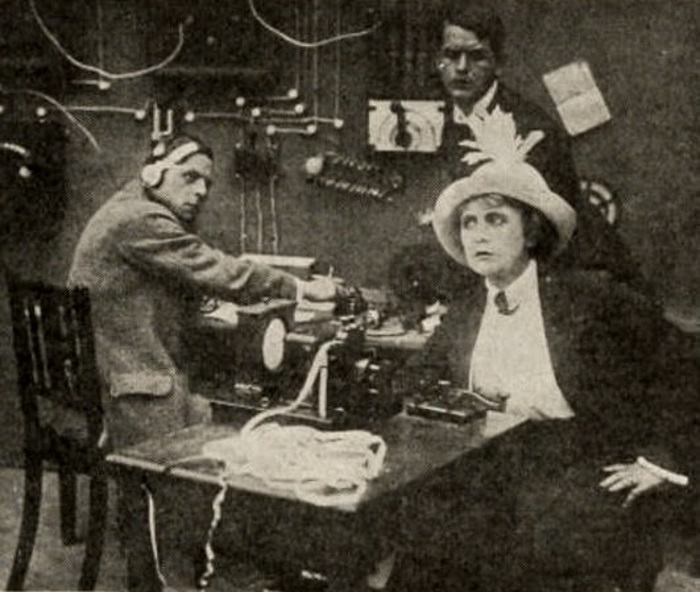
“The camera doesn’t record, it receives—like a cat’s whisker picking up transmissions from the drowned.”
—Graatkjær, interviewed in Kinobladet, November 1911
Original exhibition notes instruct pianists to play “only the pauses between notes—let the audience hallucinate the melody.” Some venues hired wireless operators to click actual Morse during reel-changes; children in the balcony swore they heard women singing from beneath the floorboards. Contemporary viewers streaming a 2K restoration on Criterion Channel report Bluetooth speakers cracking to life mid-film—coincidence, or Inger still roaming the spectrum?
If From the Manger to the Cross sought transcendence through biblical pageantry, The Marconi Operator finds the sacred in copper wiring. Its maritime despair predates and out-creeps The Corbett-Fitzsimmons Fight’s documentary realism, while its meta-narrative of images decoding themselves makes Griffith’s Richard III look theatrically quaint.
Premiered at Copenhagen’s Panoptikon-teatret on 14 October 1911, the film vanished after two nights—too morose, claimed the distributor, for a public still giddy over Anna Held’s shimmy. A single tinted print surfaced in 1987 inside a Reykjavík herring warehouse, fused to reels of Defense of Sevastopol. Restorationists separated the celluloid layers with whale-oil and vodka; the scars look like frostbite, appropriate for a film that leaves you shivering inside.
Early reviewers labelled it “a naval pamphlet against wireless telegraphy,” blind to the film’s prescient dread of surveillance capitalism: a man haunted by data he never asked to receive. Sound familiar? Swap Morse for push-notifications and you’ve got the 21st-century condition.
Long after the fade-out, Valdemar’s final tap echoes: three short, three long, three short. It’s the old distress reversed—an unstated “I am here.” You’ll reach for your phone, desperate to check signal bars, only to realise the film has turned you into another receiver, perpetually tuned to loss. That, dear reader, is the true legacy of The Marconi Operator: cinema that colonises your bandwidth forever.
posted by CineGoth | under early cinema, danish silent, maritime horror | 1,832 words

IMDb 5.2
1924
Community
Log in to comment.