DbcultAccessing Vault...
7.1/10
Senior Film Conservator
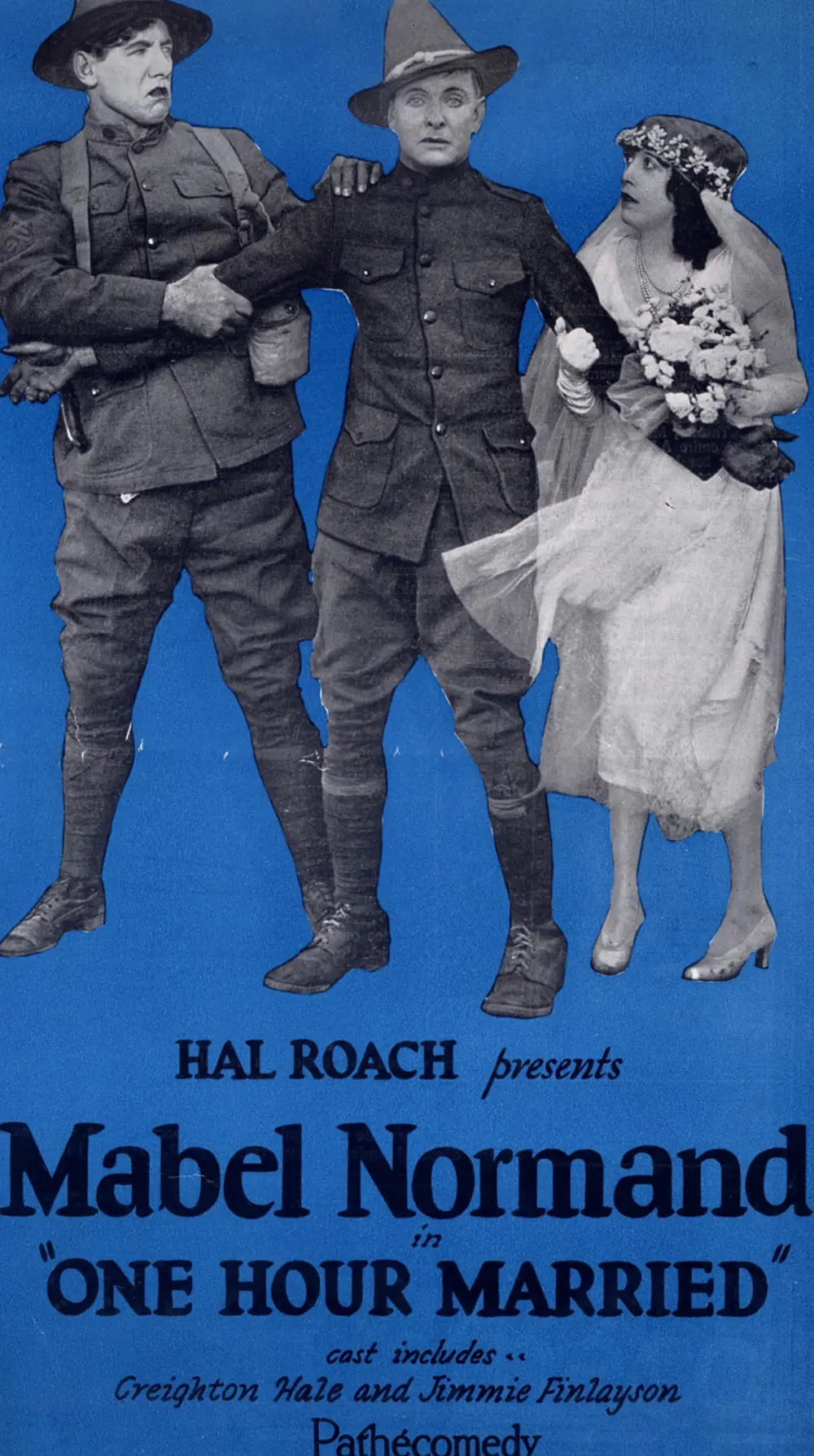
A definitive 7.1/10 rating for a film that redefined the boundaries of cult cinema. One Hour Married remains a cornerstone of transgressive art.
Is One Hour Married a forgotten treasure or a relic better left in the vaults? Short answer: It is a kinetic, often hilarious showcase for Mabel Normand’s physical comedy that remains essential viewing for silent film enthusiasts, though its frantic pacing may alienate those used to modern narrative structures.
This film is for fans of the Hal Roach school of slapstick and those who appreciate the subversive history of female comedians in early cinema. It is not for viewers who demand historical accuracy or those who find the repetitive 'near-miss' tropes of silent shorts to be exhausting.
1) This film works because it leverages Mabel Normand’s unique ability to blend vulnerability with aggressive physical comedy, turning a thin premise into a masterclass of timing.
2) This film fails because the secondary characters, particularly the husband, are often overshadowed to the point of being mere props for the gags.
3) You should watch it if you want to see how early cinema handled gender-bending roles with a mix of innocence and sharp social commentary.
In the landscape of 1927, Mabel Normand was a titan navigating a changing industry. In One Hour Married, she doesn’t just perform; she vibrates. The premise of a woman disguising herself as a soldier was not new even in the twenties—think of Pants—but Normand brings a specific brand of frantic sincerity to the role. When she struggles with the oversized doughboy uniform, it isn't just a visual gag. It is a physical manifestation of her character's refusal to be sidelined by the machinery of war.
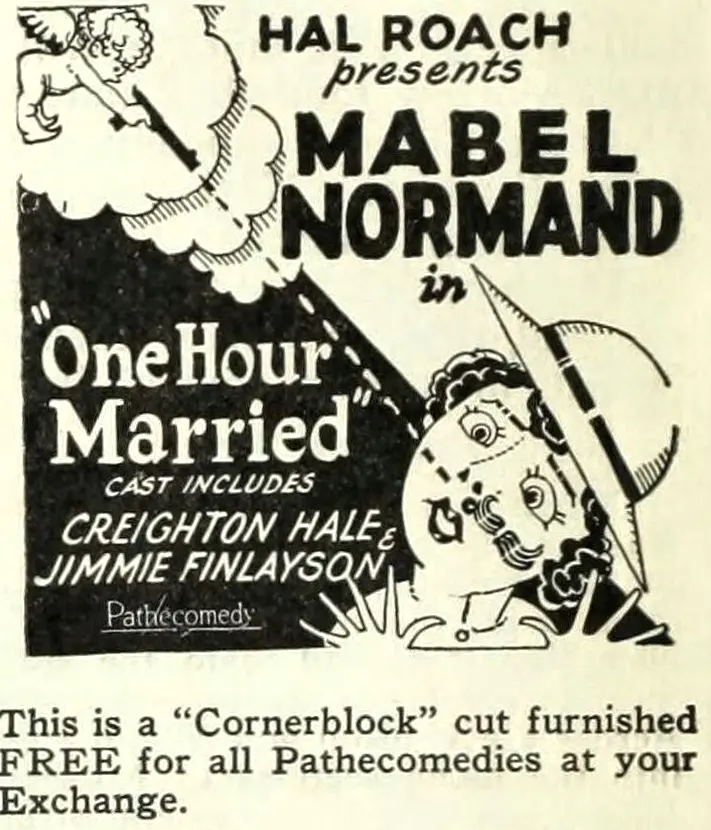
There is a specific moment where Normand attempts to salute while concealing her long hair under a campaign hat. Her eyes dart with a mixture of terror and defiance that feels remarkably modern. She isn't playing a caricature; she is playing a woman in a crisis of the heart. It’s a performance that reminds us why she was the queen of the Roach lot. Unlike the more stoic performances in The Man Who Forgot, Normand’s work here is purely about the immediate, visceral reaction.
No discussion of a Roach comedy is complete without mentioning James Finlayson. His presence here provides the necessary friction. Finlayson’s face is a topographical map of frustration. Every time Normand’s character narrowly avoids detection, Finlayson’s 'slow burn' elevates the stakes. He is the perfect foil for Normand’s high-frequency energy. While some films of the era, like The Hoosier Schoolmaster, relied on earnest drama, One Hour Married understands that comedy requires a relentless antagonist.
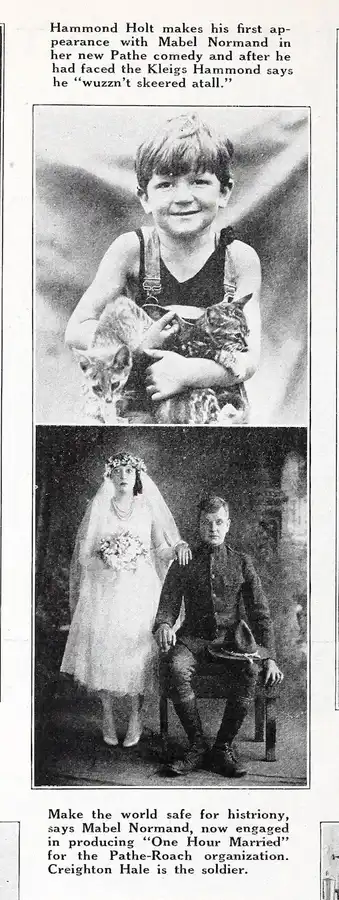
Creighton Hale, as the newlywed husband, plays the 'straight man' with a level of bewildered charm. However, the film clearly belongs to the ensemble's ability to navigate the confined spaces of the barracks. The choreography of the soldiers moving in unison while Normand breaks the pattern creates a visual rhythm that is almost musical. It is a testament to the directing that the screen never feels cluttered, despite the constant movement.
The cinematography in One Hour Married is functional but effective. It relies heavily on the medium shot to capture the full body language of the performers. This is crucial because the comedy isn't in the dialogue—provided by the witty H.M. Walker—but in the way bodies occupy space. When Normand hides under a bunk, the camera stays low, trapping the audience in her claustrophobic perspective. It is a simple technique, but it builds genuine tension.
Compare this to the grander, more sweeping shots found in Winners of the Wilderness. Where that film seeks to awe, One Hour Married seeks to agitate. The pacing is relentless. There is no room for the quiet introspection found in European imports of the time. This is American slapstick at its most refined: efficient, loud (visually speaking), and unapologetically populist. The film doesn't waste a single frame on sentimentality, even during the wedding scene. It moves.
Yes, One Hour Married is worth watching because it represents the peak of silent comedy craftsmanship. It serves as a vital historical document of Mabel Normand’s talent just before the advent of sound changed the industry forever. The film is short, punchy, and delivers a high ratio of laughs per minute. It is a perfect entry point for those looking to understand why silent shorts were the dominant form of entertainment for a generation.
Pros:
- Exceptional comedic timing from the entire cast.
- A fast-paced script that avoids the 'mid-film slump' common in longer features.
- High production values for a comedy short of the era.
- Subversive gender themes that feel ahead of their time.
Cons:
- Some gags are repeated one too many times.
- The husband character lacks agency and personality.
- The print quality of surviving versions can be inconsistent.
One Hour Married isn't just about a woman in a soldier’s suit; it’s about the anxiety of the post-war era and the shifting roles of women. By 1927, the 'New Woman' was a recognized social force. Normand’s character taking charge of her own destiny—even through a ridiculous disguise—mirrored the real-world push for female autonomy. It’s a subtle layer that adds depth to the pratfalls. While it lacks the heavy-handed moralizing of The Man Who Forgot, its message is clear: women are tired of being left behind.
"The film is a dizzying dance of identity where the uniform is the only thing standing between romance and a court-martial."
The barracks scenes are particularly telling. They depict a hyper-masculine environment that Normand’s presence completely destabilizes. The comedy arises from her attempts to mimic 'manly' behavior, which inadvertently highlights the performative nature of masculinity itself. It is a sophisticated observation hidden inside a slapstick shell. This is where the film transcends its genre.
When placed alongside other shorts like Pants, One Hour Married feels more polished and narratively cohesive. While earlier shorts often felt like a series of disconnected vignettes, this film has a clear through-line. The 'one hour' ticking clock adds a layer of suspense that keeps the audience engaged. It lacks the experimental cinematography of something like Nonkina tosan ryugu mairi, but it makes up for it with sheer personality.
The use of titles by H.M. Walker is another high point. The dialogue is snappy and often provides the punchline to a visual setup. Walker was a master of the 'quip,' and his work here ensures that the film works on both a visual and a literate level. It’s a reminder that silent films were never truly 'silent'; they were a multi-sensory experience of reading and watching.
One Hour Married is a triumph of economy and energy. It works. But it’s flawed. The film relies heavily on the audience's willingness to suspend disbelief, even more so than its contemporaries. However, if you can get past the absurdity of the premise, you are rewarded with one of the most charismatic performances of the 1920s. Mabel Normand was a force of nature, and this film captures her at her most electric. It is a necessary piece of the silent comedy puzzle and a testament to the enduring power of a well-executed gag. Don't go in expecting a deep war drama; go in expecting a riot. You won't be disappointed.
IMDb —
1926
Community
Log in to comment.