DbcultAccessing Vault...
Cult Review
Senior Film Conservator
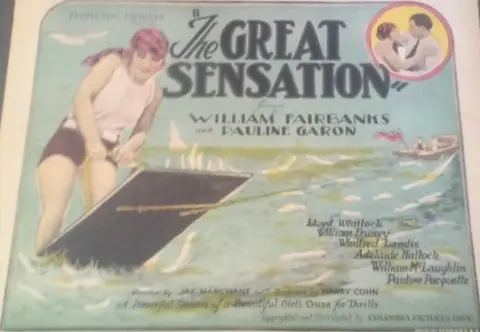
Short answer: Yes, but only if you appreciate the unpolished energy of 1920s B-action cinema. This film is for viewers who enjoy the 'masquerade' trope and the physical dynamism of the silent era, but it is definitely not for those who require complex character arcs or high-concept storytelling.
The 1920s was a decade obsessed with the concept of the 'idle rich' finding their soul through manual labor or proximity to the working class. The Great Sensation, directed with a brisk, no-nonsense pace, leans heavily into this cultural anxiety. Unlike the more polished productions of the era like Pampered Youth, this film trades in psychological nuance for pure, kinetic movement. It is a film that understands its audience wanted two things: a beautiful girl in a bathing suit and a hero who could throw a punch.
One cannot discuss this film without addressing the 'other' Fairbanks. While Douglas Fairbanks was leaping over castle walls, William Fairbanks was carving out a niche as a more grounded, rugged alternative. In The Great Sensation, his portrayal of Jack Ruby avoids the theatrical preening common in 1925. This film works because Fairbanks treats the role of a chauffeur with a tactile realism; he looks like he actually knows how to fix an engine, which makes his eventual transition into a man of action feel earned rather than choreographed.
A standout moment occurs during the initial meeting between Jack and Peggy. Instead of the typical romantic gaze, there is a sequence involving the handling of the vehicle where Jack’s competence is contrasted with the chaotic energy of the Howell household. It’s a subtle bit of class commentary through physical blocking. This film works because it balances the lighthearted 'flapper' aesthetic with a genuine sense of physical stakes.
Pauline Garon brings an infectious, if somewhat frantic, energy to Peggy Howell. In the context of 1920s cinema, Peggy is the quintessential flapper—independent, slightly reckless, and utterly bored by the traditionalists surrounding her. Her performance here is a fascinating counterpoint to the more somber tones found in films like The Price of Pleasure. Garon’s Peggy is a woman who needs to be saved, yes, but she is also the catalyst for the entire plot’s momentum.
The drowning scene, which serves as the film's first major set-piece, is shot with a surprising amount of grit. The camera stays close to the water line, capturing Garon’s genuine struggle against the waves. It’s a visceral sequence that elevates the film above the standard melodrama of its time. You can feel the weight of the wet fabric and the panic in her movements, which makes Jack’s rescue feel like a feat of strength rather than a scripted beat.
Every great sensation needs a great villain, and Lloyd Whitlock delivers a masterclass in the 'society crook' archetype. Captain Winslow is the kind of antagonist who uses a tuxedo as armor. He doesn't break into houses; he is invited into them. This dynamic adds a layer of tension to the film that mirrors the themes found in Fate's Frame-Up. Winslow represents the rot within the upper class, making Jack’s 'lowly' chauffeur the only honest man in the room.
The scene where Winslow manipulates Adelaide Hallock’s character (the mother) is particularly effective. It’s a slow-burn sequence of psychological manipulation that stands in stark contrast to the film’s later action beats. This film fails because its secondary characters, particularly the mother, are little more than props for the plot to move around, but Whitlock manages to make his scenes feel substantial through sheer presence.
For a B-picture, the cinematography by the uncredited cameramen is remarkably efficient. There is a heavy use of natural light in the outdoor sequences that gives the film a 'newsreel' immediacy. This is most evident in the jewel recovery sequence. The way the shadows are utilized in the crook’s hideout creates a proto-noir atmosphere that wouldn't become standard for another twenty years.
The editing, however, is where the film shows its age. Some transitions are jarring, and the title cards occasionally interrupt the flow of a perfectly well-acted scene. If you compare this to the fluidity of Adventures of Tarzan, you can see where the budget constraints forced the filmmakers to cut corners. However, the raw energy of the final chase sequence compensates for these technical hiccups.
If you are looking for a deep exploration of the human condition, look elsewhere. But if you want to understand the DNA of the modern action-romance, The Great Sensation is a vital watch. It captures a specific moment in American history where the lines between the 'haves' and 'have-nots' were being blurred by the advent of the automobile and the changing social mores of the youth.
You should watch it if you have an interest in how pre-Code cinema utilized 'class-play' to titillate audiences without actually challenging the status quo. It is a breezy 60-minute ride that delivers exactly what it promises on the tin: a sensation. It lacks the polish of The Better Wife, but it makes up for it with sheer, unadulterated moxie.
The Great Sensation is a punchy, athletic diversion that proves William Fairbanks was a formidable star in his own right. It’s a film that doesn't pretend to be art, and in doing so, achieves a level of honest entertainment that many of its 'prestige' contemporaries lack.
Ultimately, the film succeeds because it leans into its own absurdity. The idea that a wealthy socialite could pass as a chauffeur just by putting on a cap is ridiculous, but Fairbanks sells it with such earnestness that you find yourself rooting for him. It is a fascinating relic of an era that was obsessed with reinvention. While it may not be a 'masterpiece' in the traditional sense, it is a significant piece of genre history that deserves a look from anyone interested in the evolution of the American action hero. It is a loud, proud, and kinetic example of why we fell in love with the movies in the first place.
IMDb 6.2
1915
Community
Log in to comment.