DbcultAccessing Vault...
6/10
Senior Film Conservator
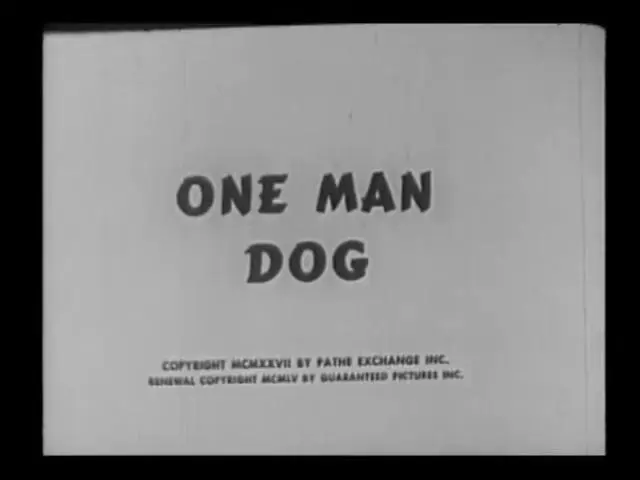
A definitive 6/10 rating for a film that redefined the boundaries of cult cinema. One Man Dog remains a cornerstone of transgressive art.
Should you invest your time in a ninety-year-old silent film about a dog? Short answer: yes, but only if you are willing to look past the technical limitations of 1929 to find a surprisingly modern core of action and loyalty.
This film is specifically for enthusiasts of early cinema history, fans of the 'wonder dog' subgenre, and those who appreciate the raw, unpolished energy of late-era silent westerns. It is emphatically not for viewers who require fast-paced dialogue, CGI-enhanced action, or complex, multi-layered psychological subplots.
In the landscape of 1929, cinema was at a crossroads between the silence of the past and the noise of the future. One Man Dog stands as a testament to the power of pure visual storytelling before sound complicated the medium. It is visceral, direct, and surprisingly unsentimental.
1) This film works because the physical performance of Ranger (the dog) is grounded in genuine athleticism and clear-eyed direction that avoids the cloying 'cuteness' often found in modern animal films.
2) This film fails because the human characters are written with the depth of a cardboard cutout, serving only as props to facilitate the dog's heroics.
3) You should watch it if you want to see the blueprint for the modern action-hero archetype, stripped down to its most primitive and effective form.
While Sam Nelson is ostensibly the lead, the film belongs entirely to Ranger. In an era where human actors often leaned into theatrical over-expression, Ranger provides a masterclass in subtlety. His eyes carry the weight of the narrative. Unlike the domestic drama found in Adam's Rib, where dialogue drives the tension, One Man Dog relies on the kinetic movement of the animal to convey urgency. The dog is better. He is more reliable, more expressive, and frankly, more interesting than his human counterparts.
Consider the sequence where Ranger must navigate a rocky outcrop to deliver a message. The camera stays low, emphasizing the height and the danger. There are no safety nets visible here. The tension is real. This is not the choreographed safety of a modern set; it is the gritty reality of 1920s filmmaking where the stakes felt genuine because the physical risks were palpable. It reminds me of the raw physicality seen in Man of Might, but with a quadruped at the center.
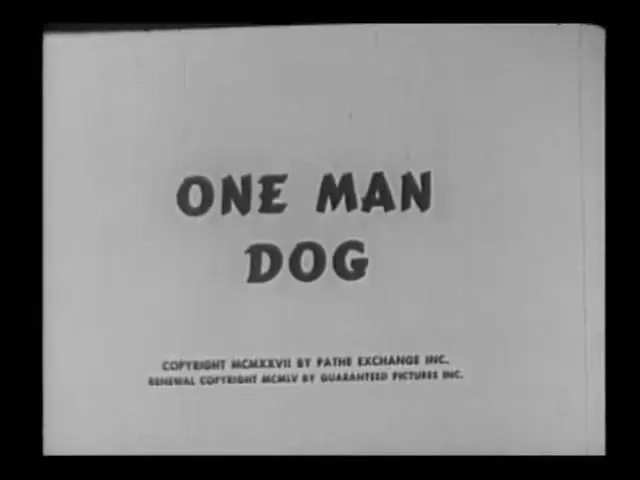
Bert Glennon's direction is surprisingly sophisticated for a B-western of the period. He utilizes the natural light of the frontier to create a sense of vast, uncaring space. This isn't the romanticized West of The Girl of the Golden West; it is a place of dirt, sweat, and survival. The pacing is tight, avoiding the stagnation that often plagues silent films. Glennon understands that if the camera stops moving, the audience's interest might wander.
The editing in the final chase sequence is particularly noteworthy. It uses rhythmic cuts to build a sense of impending doom. While it lacks the avant-garde flair of European cinema from the same year, it possesses a blue-collar efficiency that is admirable. The film moves with the same single-minded purpose as its lead dog. It doesn't waste time on flowery intertitles or unnecessary subplots. It has a job to do, and it does it.
When we look at other films from the late 20s, like The Busher or even the more dramatic Dangerous Waters, we see a medium trying to find its soul. One Man Dog doesn't care about soul; it cares about survival. This lack of pretension is its greatest strength. It is a 'meat and potatoes' movie. It provides exactly what it promises: a man, a dog, and a fight for justice.
One surprising observation is how the film handles the concept of 'villainy.' The antagonists aren't just mustache-twirling evildoers; they represent the encroaching 'civilization' that seeks to tame the wild. In this sense, Ranger and Nelson are relics of an older world. This thematic depth is often overlooked in reviews of 'dog movies,' but it’s what gives the film its lasting resonance. The dog isn't just saving a man; he's defending a way of life.
Yes. In a world of over-processed digital content, there is something profoundly refreshing about watching a well-trained animal perform genuine stunts in a real environment. It is a piece of history that still has a pulse. It isn't a masterpiece of high art, but it is a masterpiece of functional entertainment. It bites. It snarls. It delivers on its simple premise without apology.
Pros:
Cons:
One Man Dog is a fascinating artifact. It proves that some themes—loyalty, justice, and the bond between species—are truly universal. While it may not have the intellectual weight of a Murnau or a Lang, it has a heart that beats with the rhythm of the frontier. It is a rugged, honest film. It works. But it’s flawed. If you can accept its simplicity, you will find a rewarding experience that puts many modern 'pet' movies to shame. Ranger is a star, and this film is his shining moment.
"A primitive, pulse-pounding relic that reminds us why we fell in love with the hero's journey in the first place."
IMDb —
1914
Community
Log in to comment.