DbcultAccessing Vault...
Cult Review
Senior Film Conservator
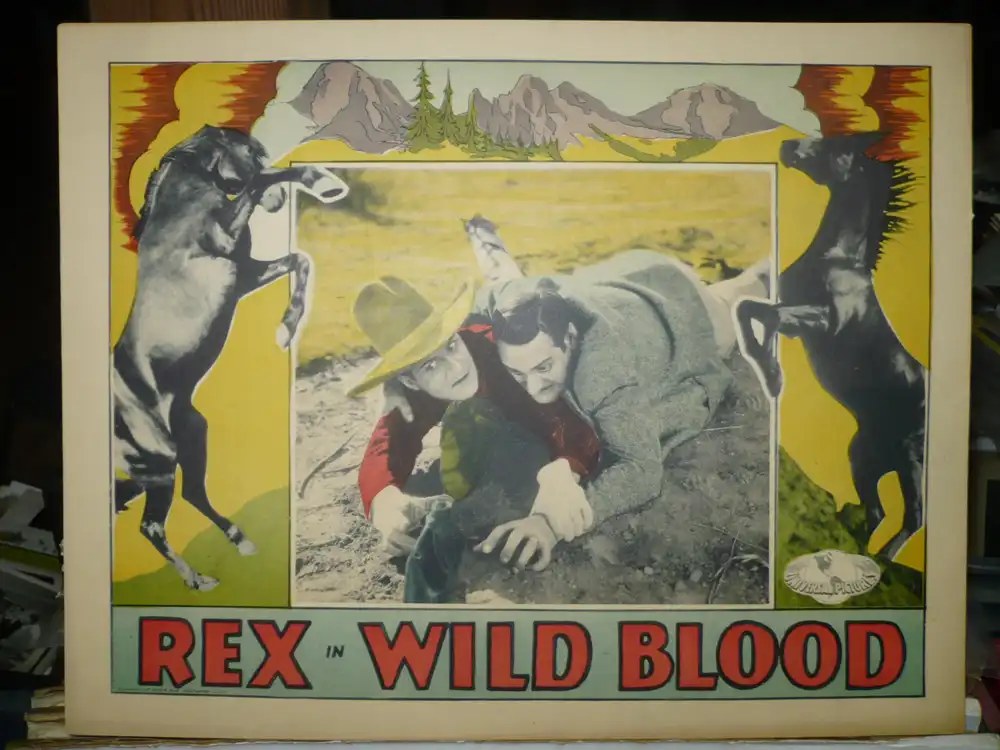
If you’re coming to Wild Blood for the plot, you’re going to be bored within ten minutes. But if you’re here to see a horse actually out-act a group of grown men, it’s a weirdly fascinating watch. It’s definitely not for everyone—if you can't stand the flickering, static-heavy quality of late 20s B-Westerns, skip it. But for people who like seeing how stunts were done before safety was really a thing, there’s some gold here.
The movie stars Rex, who was billed as the "Wonder Horse." Honestly, the billing is fair. There are moments where Rex is standing on a ridge looking out over the valley, and the way the camera lingers on him makes him feel more like a protagonist than Jack Perrin ever does. Perrin is fine, I guess, but he has this very specific way of standing with his chest puffed out that makes him look like he’s posing for a statue rather than living in the woods. It’s that very stilted, 1920s leading-man posture that feels so unnatural today.
There’s a scene early on where Rex is interacting with Starlight, the other horse, and the editing is so choppy. It’s like the editor was trying to cut around the fact that the horses were just standing there eating, trying to make it look like they were having a deep conversation about the outlaws. It doesn't quite work, but it’s charming in a desperate sort of way. You can almost see the trainer just off-camera shaking a bag of oats to get Rex to turn his head.
Theodore Lorch plays the villain, and he is doing a lot. Maybe too much. Every time he’s on screen, he’s sneering so hard you’d think his face would get stuck that way. It reminds me a bit of the broad acting in The Wild Woman, where nobody seems to know how to just be in a scene without waving their arms around. Ethlyne Clair is the damsel in distress, and she spends a lot of time looking worried in very clean, very pressed pioneer clothing that looks like it just came out of a costume trunk five minutes before they yelled action.
The best parts of the movie are the wide shots. There’s a specific sequence where the horses are running across a rocky slope, and the camera is positioned low. It’s genuinely impressive. You see the dust kicking up and the way the animals navigate the terrain. It feels dangerous. Compare that to the interior scenes, which feel like they were filmed in a drafty barn with three walls. The lighting in the cabin scenes is incredibly flat, making everything look like a school play for a few minutes until they finally go back outside.
One thing that kept distracting me was Jack Perrin’s hat. It stays perfectly level through almost every chase. He can be galloping down a hill, and that hat is glued to his head. It’s one of those tiny details that breaks the reality of the "wild" West they’re trying to build. If you’ve seen The Canyon of Light, you know the vibe—rugged landscapes and very polite, well-groomed heroes who never seem to get dirty.
The pacing drags in the middle. There is a long sequence involving some letters and a misunderstanding that feels like it belongs in a different movie. It’s the kind of "plot" that silent films used to pad the runtime when they didn't have enough stunt footage. You’ll find yourself waiting for the horse to come back on screen. When Rex finally shows up to save the day, the energy shifts immediately. The horse has this weirdly intense presence; he doesn't just run, he charges.
I noticed a weird edit during the final confrontation where a character seems to teleport about five feet to the left between shots. It’s the kind of mistake you only catch if you’re really looking, but once you see it, it’s all you can think about. It makes the whole climax feel a bit disjointed, like they ran out of daylight and had to stitch together whatever they had left in the can.
Is it a masterpiece? No. It’s a B-movie from 1928. But there’s a sincerity to it that’s missing from modern stuff. They really put that horse in some precarious spots. It’s worth a look if you’re into the history of animal stars or if you just want to see a Western that doesn't take two hours to get to the point. Just don't expect the humans to do anything as interesting as the livestock.
IMDb —
1921
Community
Log in to comment.