DbcultAccessing Vault...
Cult Review
Senior Film Conservator
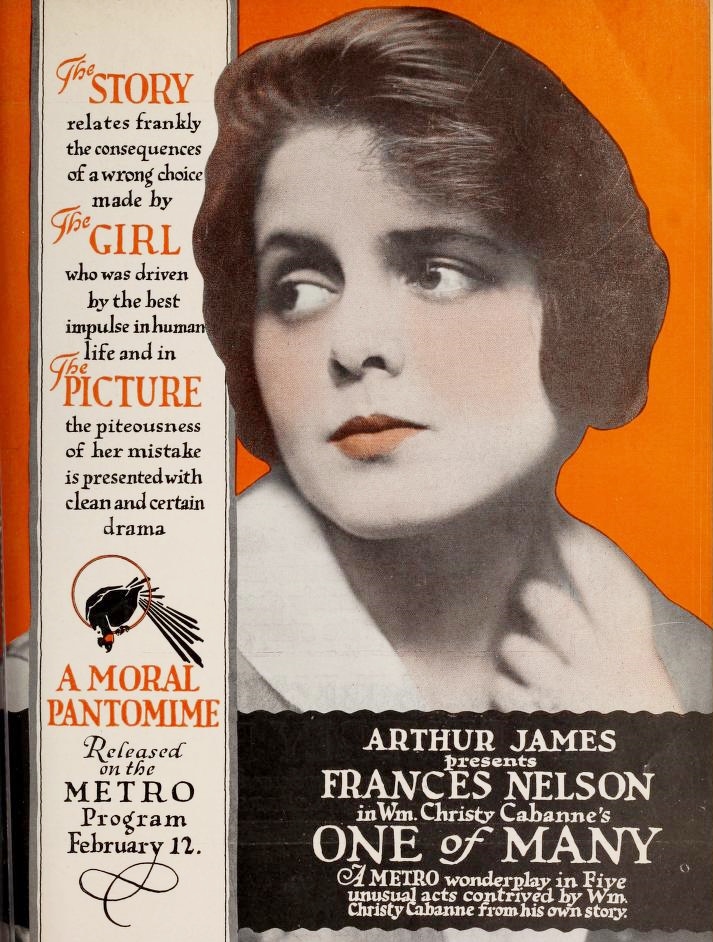
Stepping back into the flickering shadows of early 20th-century cinema, one often encounters narratives steeped in the grand traditions of melodrama—tales where virtue is tested, sacrifice is paramount, and the human heart endures trials of staggering proportion. 'One of Many,' a compelling silent feature from 1917, is precisely such a film, a potent testament to the era's storytelling prowess and its fascination with moral quandaries. Directed by the prolific Christy Cabanne, whose hand guided many a compelling narrative, this film transcends its simple plot synopsis to deliver a searing commentary on societal pressures, the crushing weight of poverty, and the boundless, often self-destructive, nature of familial love.
At its core, 'One of Many' is a tragedy born of economic desperation. We are introduced to the Bryson household, a tableau of domestic warmth tinged with the stark reality of indigence. Mrs. Bryson, frail and ailing, desperately needs the restorative mountain air that her meager circumstances deny. Her two daughters, including the central figure, Shirley, portrayed with a poignant vulnerability by Mary Mersch, strive tirelessly to keep the wolf from the door. Yet, it is Shirley who shoulders the invisible burden of responsibility, an almost preternatural awareness of her mother's encroaching mortality etching lines of worry onto her youthful features. This palpable anxiety is not merely an internal torment but a visible marker, a silent plea for understanding that resonates with those around her, including the audience.
The film masterfully sets the stage for a classic Faustian bargain. Shirley's employment in a manicure shop, a delicate intersection of labor and luxury, places her squarely in the path of Wilfred Templeton, essayed by Walter Worden with an air of sophisticated menace. Templeton, a man of evident wealth and discerning eye, notices Shirley's perpetual melancholia. His subsequent inquiry into her dejected demeanor opens the door to her confession of her mother's dire illness and the family's financial straits. For Templeton, this is not a moment for empathy but for calculated opportunity. He extends a proposition cloaked in generosity but steeped in transactional control: he will provide all the necessary funds for her mother's care, a veritable lifeline, in exchange for Shirley's presence in an apartment he will establish for her. It's a deal that, in its stark simplicity, lays bare the uncomfortable truths about power dynamics and the exploitation of vulnerability in a society where women, especially those without means, often found their choices severely constrained.
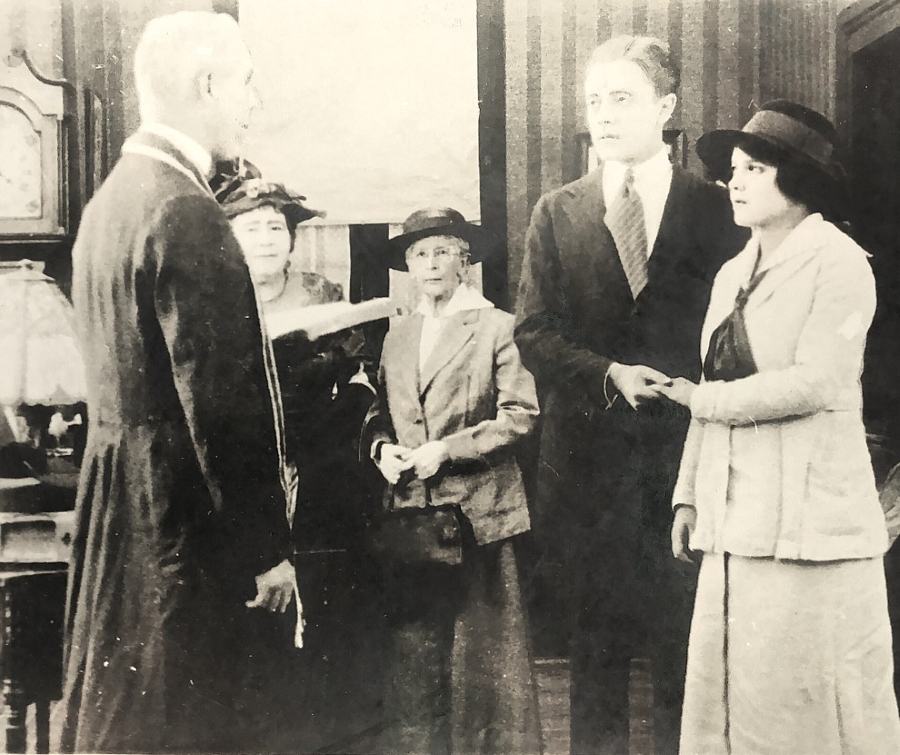
Shirley's initial refusal is instinctual, a last stand of moral integrity against an encroaching tide. But as her mother's condition deteriorates, the weight of her love and the desperation of her circumstances crush her resistance. She yields, embarking on a path of profound deception, fabricating a marriage to Templeton to spare her mother and sister, Emma (Frances Nelson), the scandalous truth. This act, while morally ambiguous, is portrayed not as a lapse into depravity but as an agonizing sacrifice, a daughter's ultimate gamble for her mother's happiness, even if built on a foundation of lies. The film deftly navigates the emotional tightrope of this deceit, showing Mrs. Bryson's renewed joy as a direct, albeit tragic, consequence of Shirley's painful compromise.
The fragile illusion, however, cannot endure indefinitely. The first crack appears through the machinations of James Lowery, Templeton's butler, a character brilliantly imbued with sinister intent by Richard Dix. Discovering Shirley's unmarried status, Lowery, a man whose moral compass is clearly askew, attempts to exploit her vulnerability, forcing his way into her boudoir. Mersch's portrayal of Shirley's harrowing struggle to repel him is a visceral moment, highlighting the pervasive danger faced by women in precarious positions. Lowery's subsequent discharge, while a momentary relief, foreshadows his later, more insidious reappearance, a recurring shadow that dogs Shirley's steps.
The narrative's tension ratchets up considerably with Emma's visit, an innocent desire to meet her sister's wonderfully generous husband. Shirley, caught in the snare of her own making, finds it impossible to maintain the charade. Emma, initially trusting, wrings a confession from her sister, and the revelation acts as a corrosive agent, preying upon her mind. The news, too heavy for Emma to bear alone, inevitably reaches Mrs. Bryson. Stricken by the perceived dishonor, the mother, whose life force had been sustained by the very lie Shirley created, finally succumbs. This is the film's brutal turning point, a devastating consequence that underscores the tragic irony of Shirley's sacrifice: her act of love ultimately precipitates the very outcome she sought to prevent. This particular plot point resonates with the thematic explorations found in films like Her Mother's Secret, where hidden truths, no matter how well-intentioned, often lead to unforeseen heartbreak and familial rupture.
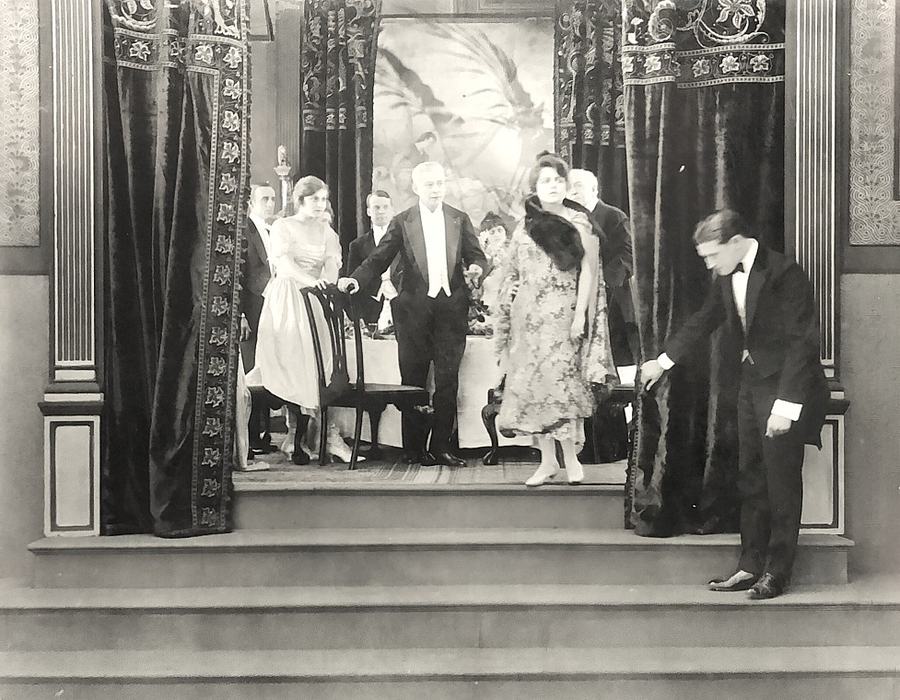
The death of her mother frees Shirley from the gilded cage of Templeton's apartment, but it also casts her adrift. She seeks a new life, a fresh start, finding work as a cabaret entertainer, a profession that, while offering independence, often carried a certain social stigma in that era. It is here that the malevolent Lowery resurfaces, his attentions unwelcome, his insults public. This scene, a testament to Shirley's enduring vulnerability, sets the stage for the introduction of Harold Templeton, Wilfred's son, portrayed by Niles Welch. Harold, the 'black sheep' of his affluent family, living away from home, steps in as Shirley's rescuer, a knight in somewhat tarnished armor. Their acquaintance ripens into genuine affection, a blossoming romance that offers Shirley the promise of authentic love and acceptance, free from the manipulative grip of his father.
Their eventual marriage is a beacon of hope, yet it is perpetually shadowed by Shirley's deep-seated fear that her past will inevitably come to light. This anxiety, a ticking time bomb, is a powerful dramatic device, keeping the audience on edge, anticipating the inevitable moment of reckoning. The narrative structure here is classic melodrama, building towards a confrontation that will either shatter or solidify the protagonists' happiness. This element of a hidden past threatening future happiness is a common trope, seen in other contemporary films like The Natural Law, where societal judgment and personal history constantly clash.
The expected, and dreaded, reunion occurs when Wilfred Templeton, having forgiven his prodigal son, comes to call on Harold and his new bride. The scene is a masterclass in silent film acting and direction. Shirley and her husband's father are brought face to face, and the truth, unspoken, hangs heavy in the air. Their very manner, the subtle shifts in their expressions, the averted gazes, the sudden tension, accuse them before a single confession is uttered. Harold, confronted with this crushing reality, reacts with a visceral betrayal, turning against his wife in a storm of hurt and disillusionment. It's a moment designed to elicit gasps, a dramatic peak that tests the very foundations of their nascent love.
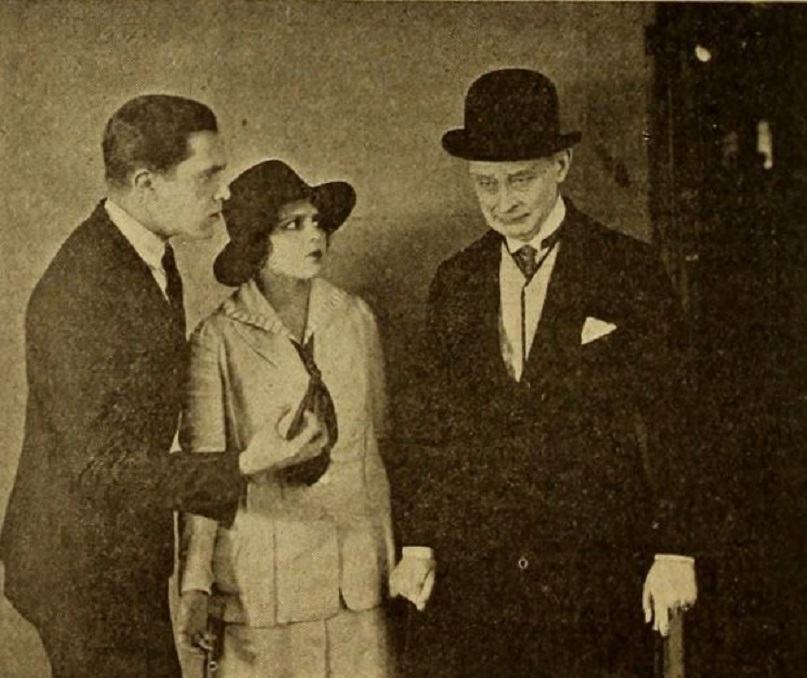
However, 'One of Many', for all its melodramatic flourishes, ultimately champions the triumph of empathy and understanding. Harold's initial fury gives way to introspection. His 'better nature asserts itself,' a beautiful phrase that speaks to the innate goodness of the character. He confronts his father, driving him away, effectively severing the last tie to the manipulative past. More importantly, he realizes the profound truth behind Shirley's actions: her 'mistake' was made not for personal gain or wantonness, but out of an overwhelming, desperate love for her mother. This realization transforms his anger into compassion, his judgment into forgiveness. He takes her into his arms, a gesture of profound acceptance that validates her sacrifice and offers the promise of a future built on understanding rather than judgment. This arc of redemption, where understanding transcends societal condemnation, is a powerful thematic thread that ties into the broader social commentary often found in films of this era, challenging conventional morality and advocating for a deeper, more humane perspective.
The success of 'One of Many' hinges significantly on the caliber of its performances. Mary Mersch, as Shirley, delivers a portrayal that is both nuanced and emotionally raw. Her ability to convey profound sorrow, desperate resolve, and eventual tentative joy through gestures and facial expressions alone is a testament to the art of silent acting. She carries the emotional weight of the film, making Shirley's impossible choices feel not only understandable but deeply sympathetic. Walter Worden's Wilfred Templeton is a study in suave villainy, his charm a thin veneer over a calculating and self-serving nature. He embodies the insidious power of wealth and privilege, making his character a formidable antagonist without resorting to overt theatricality. Richard Dix, as the reprehensible Lowery, manages to be genuinely unsettling, a recurring threat that adds a layer of suspense and danger to Shirley's already tumultuous life. Niles Welch, as Harold, completes the central quartet with a performance that charts a convincing journey from initial disillusionment to ultimate, compassionate understanding. His transformation is crucial to the film's redemptive conclusion, and Welch imbues it with sincerity.
Christy Cabanne's direction is, as expected for a filmmaker of his stature in the era, precise and effective. He understands the language of melodrama, knowing when to linger on a close-up to amplify emotion, when to use tableau shots to convey social context, and how to pace the narrative to build suspense and dramatic tension. The visual storytelling, devoid of dialogue, relies heavily on the actors' physicality and the careful composition of scenes. Cabanne ensures that the emotional stakes are always clear, even when the characters' internal struggles are complex. His use of light and shadow, characteristic of the period, also adds to the film's atmospheric quality, enhancing the mood of despair, hope, and moral ambiguity.
'One of Many' stands as a fine example of silent cinema's ability to tackle weighty themes with grace and emotional impact. It is a film that, while firmly rooted in the melodramatic conventions of its time, offers insights into enduring human struggles—the desire for survival, the complexities of moral compromise, and the redemptive power of forgiveness. Comparisons can be drawn to other films of the era that explored similar social injustices or personal sacrifices. For instance, the plight of women forced into difficult circumstances due to economic hardship is a recurring motif, also present in films like The Toll of Mammon, where the allure of wealth and its potential for corruption are starkly portrayed. Similarly, the challenges of navigating rigid social structures and judgments, as seen in Barriers of Society, echo Shirley's struggle against a judgmental world.
The film's exploration of hidden truths and their inevitable, often devastating, revelation also finds kinship with the dramatic tension of a mystery or a thriller. While not a mystery in the traditional sense, the secret Shirley harbors creates a similar sense of suspense, forcing the audience to grapple with the potential fallout. In this vein, one might even see faint echoes of the dramatic tension inherent in films like The Mysterious Man of the Jungle or Eye of the Night, where concealed identities or clandestine motives drive much of the plot, though the thematic thrust is decidedly more personal and less overtly criminal in 'One of Many'.
Ultimately, 'One of Many' is more than just a historical curiosity; it is a compelling piece of cinematic art that speaks to timeless human experiences. It reminds us that behind every grand gesture or perceived transgression, there often lies a complex tapestry of motivation, circumstance, and love. Cabanne, with his cast and crew, crafted a film that not only entertained its contemporary audience but continues to resonate with its powerful emotional core, its nuanced performances, and its unwavering belief in the possibility of understanding and forgiveness, even in the face of profound error. It's a film that asks us to look beyond the surface, to consider the 'why' behind the 'what,' and in doing so, offers a deeply moving and ultimately hopeful commentary on the human condition. It is, indeed, one of many silent films deserving of our continued attention and appreciation, a true gem in the vast, glittering treasury of early cinema.
IMDb —
1918
Community
Log in to comment.