DbcultAccessing Vault...
5.7/10
Senior Film Conservator
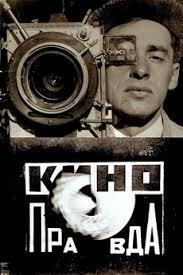
A definitive 5.7/10 rating for a film that redefined the boundaries of cult cinema. Kino-pravda no. 8 remains a cornerstone of transgressive art.
Imagine a strip of film hurled against the winter breath of Petrograd, each frame a shard of broken icon, each splice a synapse firing inside the skull of a newborn state. Kino-pravda no. 8 is not watched; it detonates. Vertov, Svilova and Kaufman—this trinity of optic insurgents—abandoned the corseted grammar of melodrama so adored by contemporaries like Her Great Match or The Bull's Eye. Instead they pursued what Eisenstein would later theorize as “the montage of attractions,” only here the attraction is life itself, raw and unhousebroken.
Vertov’s lens skitters across tram rails that gleam like graphite veins. We see a woman’s cracked boots ascending a frozen staircase; cut to a turbine rotor spinning so fast it becomes halo. The juxtaposition is not symbolic—it is metabolic. Urban infrastructure and human muscle share one circulatory system. Compare this to the pastoral beer-swill of Auf dem Oktoberfest, whose Bavarian leisure feels prehistoric when set beside Vertov’s galvanic modernity.
Svilova’s cutting bench becomes a battlefield. She interlaces shots of bread queues with close-ups of currency printing presses, ink still wet. The implication? Hunger and surplus are Siamese twins separated at birth by policy. Film scholars love to drool over Rhythmus 21 for its Bauhaus purity, but Svilova’s montage is messier, blood-borne, closer to a scream than a geometry lesson.
Kaufman performs acrobatics: he straps the Debrie to a motorbike, plunges down Liteyny Prospect, the lens winking at cobblestones. Result? The spectator feels asphalt as Morse code tapped against the kneecap. Such kinesthetic bravado makes Douglas Fairbanks’ rooftop swashbuckling in The Thief look like stage-bound pageantry.
No pretty ingenues à la The Other Girl. Instead, a soldier with a frost-nipped moustache stares, unblinking, while a medic re-bandages the stump where his left arm used to be. The camera holds long enough for the audience to perceive pores, stubble, shame, endurance. This is the anti-close-up: no vaseline on the lens, no studio key-light, just the metallic tang of ether.
Animated intertitles—hand-drawn by Svilova—depict fat capitalists with top-hats shaped like artillery shells. A worker’s hammer morphs into a factory whistle. These doodles prefigure the Soviet propaganda poster boom, yet their jittery, hand-scratched texture keeps them tethered to celluloid rather than marble.
Watch how the film loops chronology. A locomotive is shown in long-shot, then again months later in snow, then in a thaw of mud. The repetition is not continuity error but temporal cubism; the same steel leviathan aging like a war veteran within minutes. Compare this with the tidy flashback structure of Tol'able David, where time marches obediently from A to B.
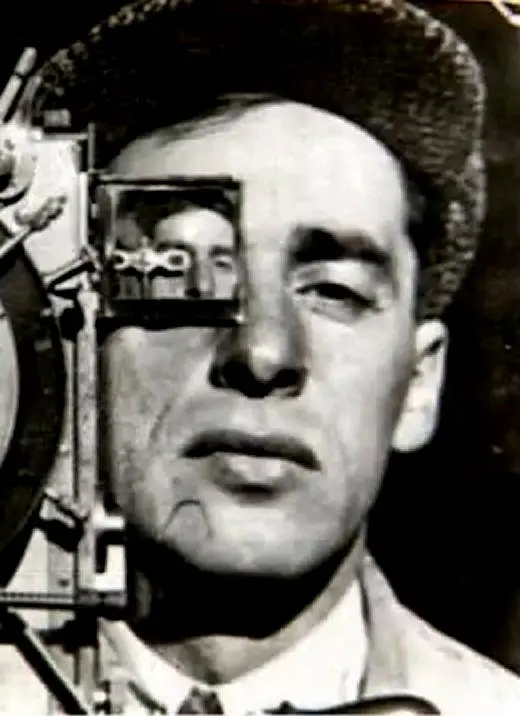
Though shot silent, the reel demands a phonograph of clanks, coughs, sleet. Modern restorations often pair it with Shostakovich or Mosolov, yet I project it mute, letting the room’s own radiator clicks become Foley. The absence teaches you how much cinema lives in your own cochlea.
Unlike Men, Women, and Money, where dames oscillate between virgin and vamp, the women here are neither. A machinist removes her head-scarf, wipes soot from her cheek, and adjusts a lathe with calloused precision. Desire is redirected: we lust for her competence, not her compliance.
The film survived because a crate labeled “educational hygiene” sat forgotten in a Kazan basement, thus escaping Stalin’s purges that melted more incendiary reels. History’s filing error becomes our archaeological jackpot.
Vertov insists you become co-editor. Blink and you excise frames; focus and you re-order meaning. Hollywood contemporaries such as Humility lull you into somnolent consumption; Kino-pravda slaps you awake.
Yes, the film heralds a regime that would later devour its children. Yet its formal boldness transcends ideology the way a hammer can build or brain. To censor it for its politics is to amputate cinema’s own DNA.
Close your eyes and you still see: a child’s marble rolling between boots of soldiers; a poster of Lenin catching rain until ink bleeds into rivulets of blue; a cat staring at a cinematograph, pupils reflecting the spinning shutter. These images graft onto your cortex like burn scars you cherish.
TikTok’s epileptic cuts owe royalties to Vertov. Every drone-shot city symphony, every found-footage doc, every vlog that trusts the spectator to splice meaning—all grandchildren of this 13-minute stick of dynamite. Even the glacial tracking shots in Jesse James Under the Black Flag feel arthritic beside the adrenal pulse of newsreel no. 8.
The reel ends mid-stride: a woman steps into a streetcar, foot poised above the gap. Fade to white. Not closure but perpetual departure, a reminder that history itself is an unfinished cut. Watch it, then walk outside; the world will strobe with untold stories demanding their own splice.
IMDb —
1919
Community
Log in to comment.