DbcultAccessing Vault...
5.8/10
Senior Film Conservator
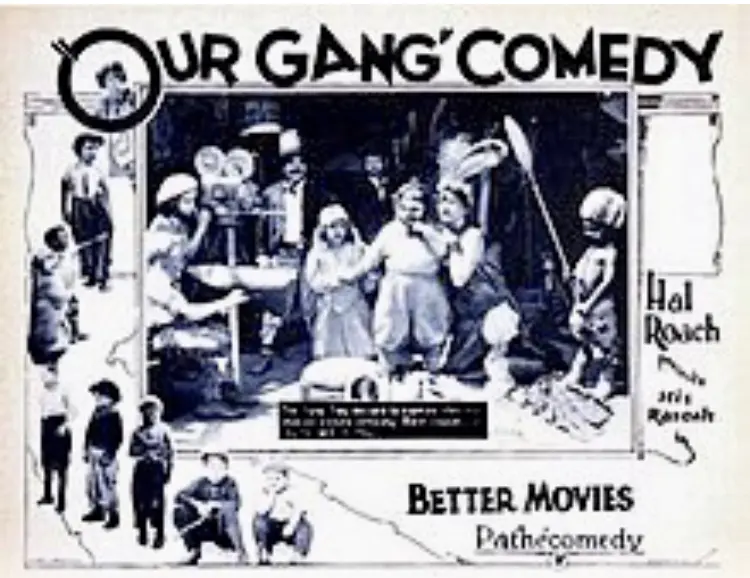
A definitive 5.8/10 rating for a film that redefined the boundaries of cult cinema. Better Movies remains a cornerstone of transgressive art.
There's an undeniable enchantment to early cinema, a raw, untamed energy that predates the colossal studio systems and the intricate algorithms of modern spectacle. It's a realm where ingenuity often trumped budget, and the sheer joy of creation pulsed through every frame. Hal Roach and H.M. Walker's "Better Movies" stands as a delightful, if perhaps overlooked, testament to this era, offering a meta-narrative that is as charmingly simple as it is profoundly resonant. It’s not merely a film; it’s a playful treatise on the very act of filmmaking itself, viewed through the unvarnished lens of childhood ambition.
The premise, on its surface, is disarmingly straightforward: a spirited collective of youngsters decides to embark upon the grand adventure of movie-making. This isn't just a casual backyard lark; it's a full-fledged cinematic enterprise, complete with an array of meticulously constructed sets and an eclectic assortment of props, transforming their everyday world into a veritable soundstage of dreams. The film, in its quiet brilliance, celebrates the boundless imagination and resourcefulness inherent in childhood. We witness not just children playing, but children creating, building miniature worlds, crafting narratives, and, in essence, laying the groundwork for what they perceive as the future of entertainment. This nascent studio, born of youthful zeal, becomes a microcosm of the nascent Hollywood itself, a testament to the idea that passion and ingenuity can overcome any perceived lack of resources.
However, the path to cinematic glory, even for these pint-sized pioneers, is fraught with peril. Their ambitious venture inevitably draws the attention—and the ire—of those not involved, a shadowy collective of antagonists whose motivations are left tantalizingly open to interpretation. Are they rival children, consumed by jealousy? Are they skeptical adults, dismissive of what they perceive as frivolous child's play? Or do they represent a broader societal resistance to unconventional endeavors, a desire to maintain order at the expense of creative chaos? This ambiguity lends a surprising depth to what might otherwise be a simple comedic conflict, elevating it to a parable about the eternal struggle between innovation and stagnation, between the joy of creation and the envy of those who cannot or will not participate.
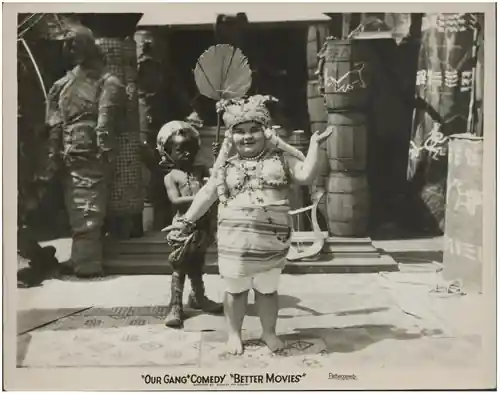
The antagonists, rather than engaging in direct confrontation, opt for a series of escalating pranks, a campaign of minor sabotages designed to derail the filmmaking process. These aren't malicious acts of true villainy, but rather the petty, often comedic, annoyances that highlight the vulnerability of any fledgling enterprise. Imagine a carefully constructed set collapsing due to a mischievous tug, or vital props mysteriously disappearing. These incidents, while ostensibly lighthearted, underscore the fragility of creative endeavors, especially when undertaken by those without established power or protection. The film subtly explores the emotional toll such disruptions take on the young filmmakers, showcasing their frustration, their determination, and ultimately, their resilience.
The conflict escalates dramatically when these detractors, unable to completely stifle the children's artistic spirit through mere pranks, resort to a more formal, and arguably more absurd, tactic: involving the police. This development introduces a fascinating dynamic, pitting the innocent, playful creativity of children against the rigid, often humorless, machinery of adult law and order. The spectacle of uniformed officers being called to mediate a dispute over child-made movies is inherently comedic, yet it also carries a poignant undertone. It questions the societal boundaries placed upon youthful expression and the arbitrary ways in which "serious" adult concerns can crush the most innocent of dreams. The film, in its depiction of this clash, subtly critiques the tendency to dismiss children's pursuits as trivial, even when those pursuits are imbued with genuine passion and collaborative effort.
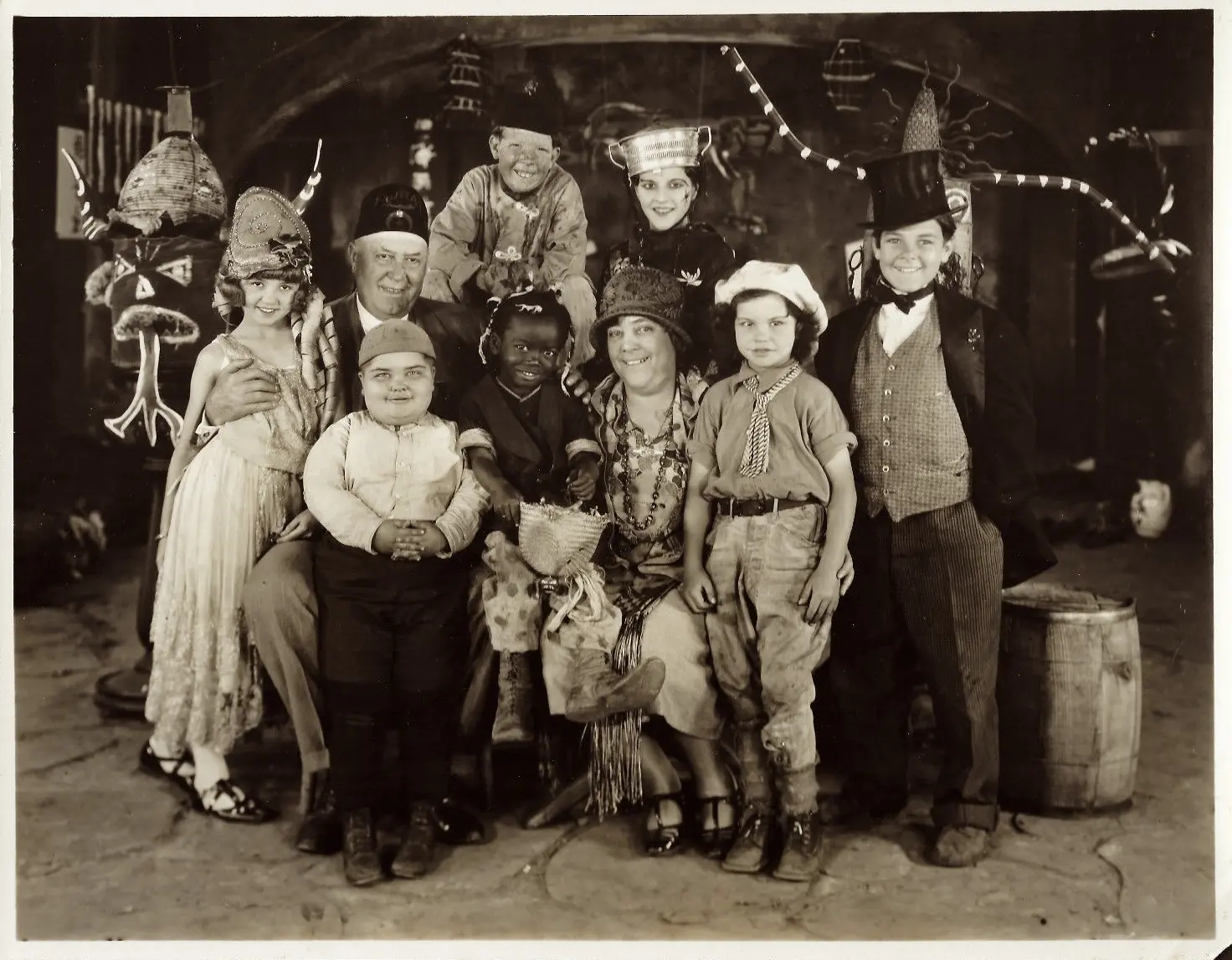
The cast of "Better Movies" is a veritable who's who of early child actors, many of whom would go on to define an era of comedic short films. Lyle Tayo, David Durand, Mary Kornman, Jackie Condon, Fay McKenzie, Toby Lambert, Lynwood Crystal Rapp, Jay R. Smith, Jackie Hanes, Donald Hughes, William Gillespie, Clifton Young, Martha Sleeper, Nancy McKee, Allen 'Farina' Hoskins, Joe Cobb, David Campbell, Douglas Haig, Phyllis Crane, Alice Lambert, Johnny Downs, and Mickey Daniels—each name evokes a specific brand of naturalism and unbridled energy that was characteristic of the Hal Roach studio's approach to youth-centric comedy. These weren't actors in the polished, trained sense, but rather children whose genuine reactions and inherent charisma were expertly captured on film.
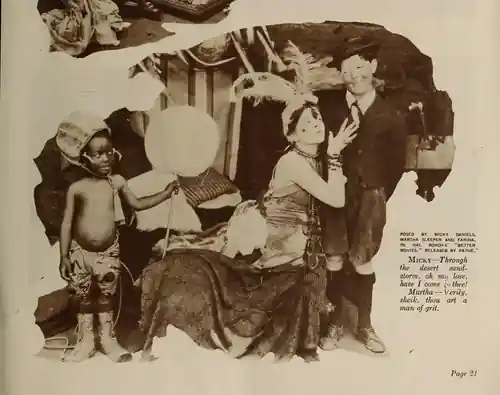
The magic of their performances lies in their authenticity. There’s a palpable sense of camaraderie among the "gang," a shared purpose that transcends individual roles. One can easily imagine Lyle Tayo bringing a certain determined leadership, Mary Kornman adding a touch of spirited charm, and icons like Allen 'Farina' Hoskins and Mickey Daniels providing their inimitable brands of comedic timing and mischievousness. Their interactions feel organic, unforced, and utterly captivating. Hal Roach, as a writer and producer, possessed an uncanny knack for eliciting these natural performances, allowing the children to embody their characters rather than merely portray them. This philosophy is evident in every frame, creating a film that feels less like a staged production and more like a candid glimpse into a vibrant, imaginative world.
The creative genius behind "Better Movies" rests firmly with Hal Roach and H.M. Walker. Roach, a titan of early cinema, was a master of comedic timing and narrative simplicity, best known for his work with Laurel and Hardy and, of course, the enduring "Our Gang" series. "Better Movies" fits seamlessly into this legacy, showcasing Roach's signature blend of slapstick, heartwarming sincerity, and a keen understanding of childhood psychology. He understood that the humor and drama of children's lives were just as compelling, if not more so, than those of adults.
H.M. Walker, a prolific writer for Roach's studio, undoubtedly contributed to the cleverness of the script, crafting a narrative that, despite its simplicity, manages to touch upon universal themes. Their collaborative vision brought to life a world where the stakes, though seemingly small, felt immense to its young protagonists. This film, like many of Roach's productions, serves as a delightful time capsule, preserving a particular brand of American humor and storytelling that continues to resonate. It’s a reminder that great narratives don't always require elaborate special effects or convoluted plot twists; sometimes, the most profound stories are found in the everyday struggles and triumphs of the human (or in this case, child) spirit.
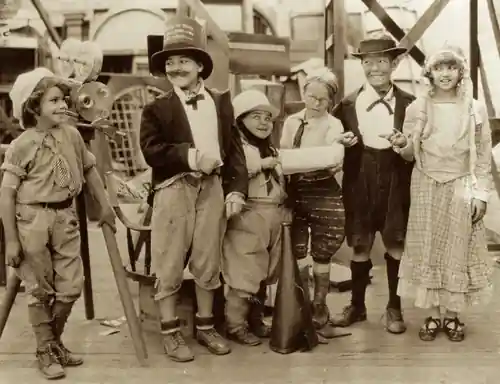
Perhaps the most compelling aspect of "Better Movies" is its meta-narrative. It is a film about the very act of making films, an introspective look at the creative process itself. The children's struggles with sets, props, and external interference mirror the real-life challenges faced by early filmmakers, including Roach himself. This layer of self-awareness, though likely unintentional in its deeper philosophical implications, adds a charming dimension to the viewing experience. We're not just watching a story unfold; we're watching a story about telling stories.
This theme of creative ambition against adversity is one that resonates across cinematic history. One might draw a parallel to the earnest, often difficult, pursuit of dreams seen in films like La flambée des rêves, where characters strive to achieve their aspirations despite formidable obstacles. Similarly, the playful trickery and deception employed by the antagonists in "Better Movies" finds echoes in the more complex machinations of a film like Bluff, though of course, with far lighter consequences. The film becomes a subtle commentary on the resilience required to bring any artistic vision to fruition, a testament to the idea that true passion will always find a way, even when faced with seemingly insurmountable odds.
Beyond its comedic surface, "Better Movies" delves into several profound themes. The most apparent is the celebration of childhood innocence and ingenuity. The children's ability to transform ordinary objects and spaces into extraordinary cinematic worlds speaks volumes about the power of an unfettered imagination. This stands in stark contrast to the often cynical or unimaginative world of the adults (or rival children) who seek to disrupt their efforts.
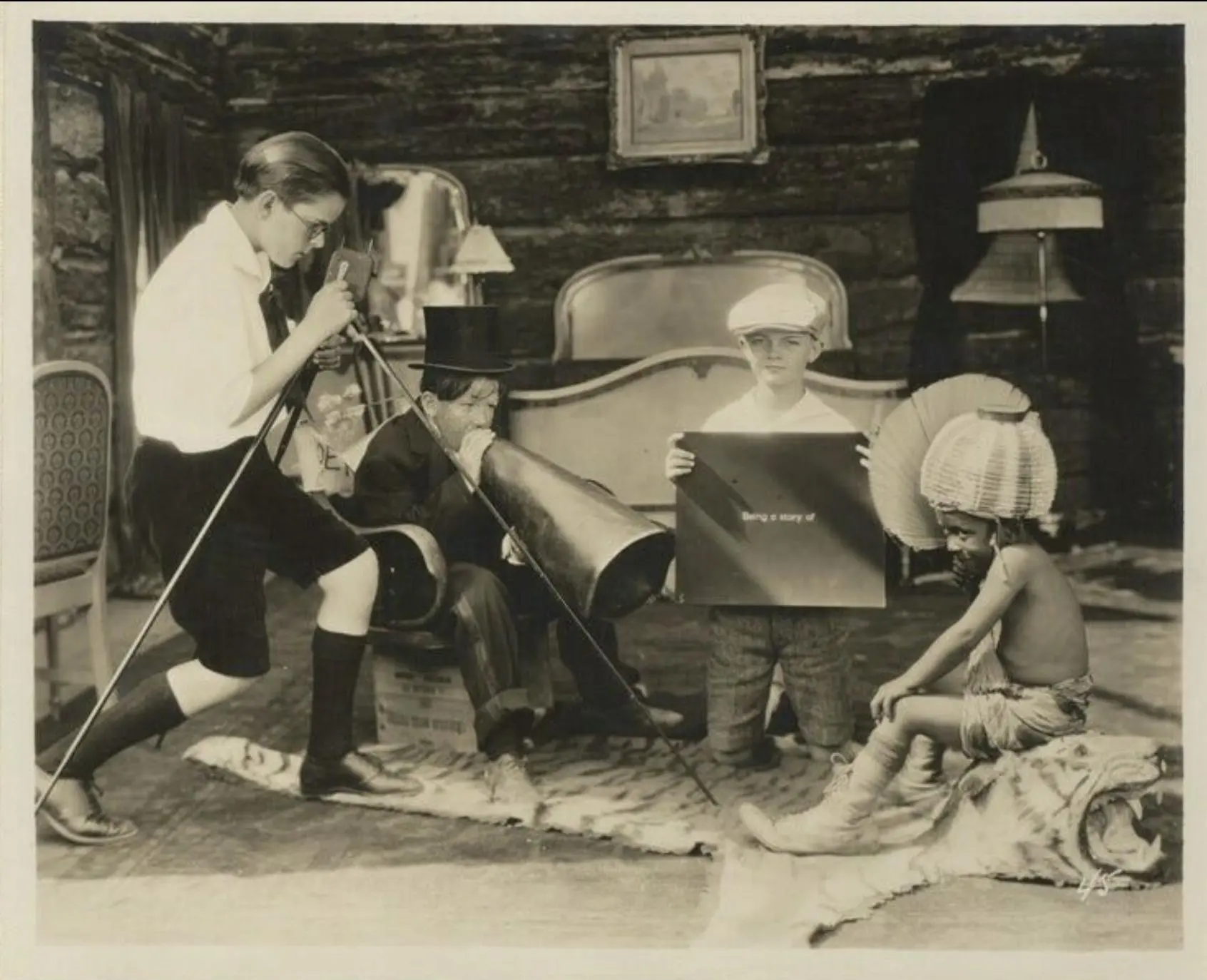
The film also explores the clash between the pure, collaborative spirit of youthful enterprise and the external forces that seek to control or diminish it. The "gang's" collective effort in building their studio and producing their films highlights the importance of teamwork and shared vision. This sense of community and shared purpose is a powerful counterpoint to the divisive actions of their antagonists, who represent a kind of isolated, destructive jealousy. This struggle between collective creation and individual obstruction can be seen as a microcosm of broader societal conflicts, where innovative ideas often face resistance from established norms or vested interests.
The involvement of the police, as mentioned, introduces the theme of authority and its often heavy-handed application, even in the realm of children's games. This echoes the tension between individual freedom and societal control, a theme that, while played for laughs here, can be found in more dramatic forms in films like The Coming of the Law, where the concept of justice is central to the narrative. "Better Movies" subtly asks: at what point does maintaining order stifle healthy expression and creativity?
As a product of the silent era, "Better Movies" communicates through a distinct cinematic lexicon. The performances are necessarily exaggerated, relying on physical comedy, expressive facial gestures, and broad movements to convey emotion and intent. This is where the talents of the young cast truly shine, their natural exuberance perfectly suited to the demands of silent film acting. The pacing would have been brisk, driven by visual gags and rapid-fire sequences of action, a hallmark of Roach's comedic style.
Intertitles, sparse but impactful, would have provided crucial dialogue and narrative exposition, guiding the audience through the children's ambitious plans and the antagonists' mischievous plots. The cinematography, while perhaps not groundbreaking for its time, would have focused on clear compositions and dynamic staging to maximize comedic effect. The ingenuity displayed by the children within the film—their use of "all kinds of sets and props"—mirrors the ingenuity of the filmmakers themselves, who often had to create compelling visuals with limited technology. This spirit of innovation is what makes early cinema so captivating, a quality celebrated both within and by "Better Movies."
In the grand tapestry of film history, "Better Movies" may not be as widely discussed as some of its contemporaries, but its significance is undeniable. It's a charming, insightful peek into the origins of cinematic ambition and the enduring power of youthful dreams. It reminds us that the spark of creativity can ignite anywhere, even in a makeshift studio built by children, and that the struggle to protect that spark is a timeless one.
Comparing it to other films, one can see the thematic threads that connect it to narratives of ambition and conflict. The challenges faced by the children in "Better Movies" evoke the spirit of perseverance found in stories like The Prodigal Liar, where characters navigate complex social landscapes to achieve their goals. The antagonistic forces at play, while lighthearted, share a lineage with the more intense conflicts depicted in films such as The Black Circle or The Night Riders, albeit transposed into a comedic, juvenile setting. Even the subversion of expectations and the element of surprise in the pranks could be loosely linked to the narrative twists in The Yellow Traffic, showcasing how simple acts can have cascading effects.
Ultimately, "Better Movies" is more than just a silent comedy; it's a celebration of the human spirit's innate drive to create, to collaborate, and to overcome obstacles, however petty or profound they may be. It's a delightful, poignant reminder that sometimes, the best movies are made not with massive budgets or cutting-edge technology, but with a generous dose of imagination, a dash of teamwork, and an unwavering belief in the magic of storytelling. It captures a fleeting moment in cinema history with warmth and humor, leaving viewers with a smile and a renewed appreciation for the innocent audacity of childhood ambition. It continues to be a charming piece of cinematic history, inviting us to revisit an era when the silver screen was still a canvas for pure, unadulterated dreams.
IMDb 6.7
1926
Community
Log in to comment.