DbcultAccessing Vault...
Cult Review
Senior Film Conservator
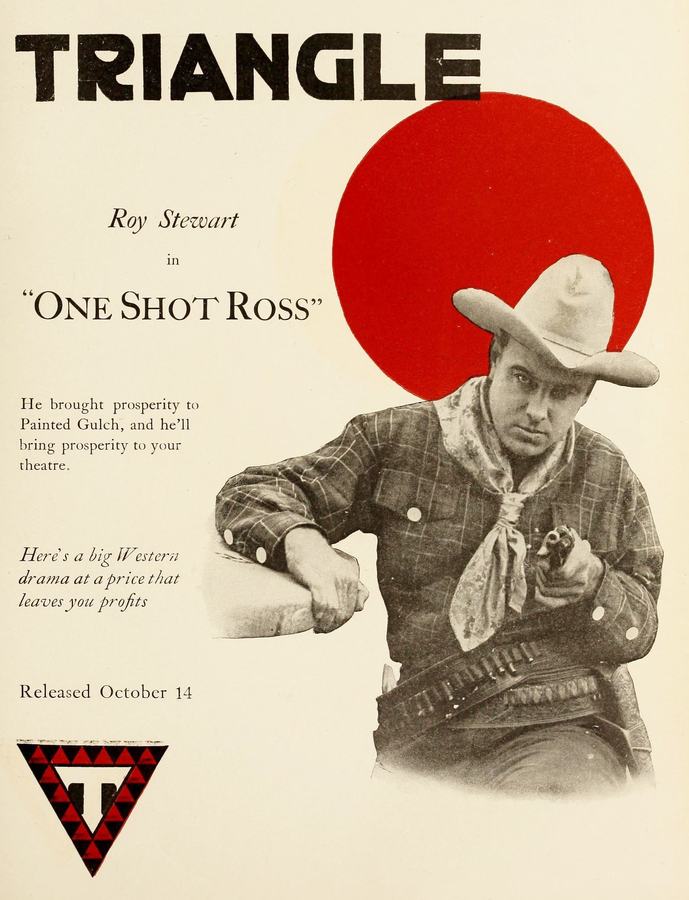
The year 1917 was a watershed moment for the cinematic grammar of the American West. While the world was embroiled in the mechanical carnage of the Great War, Hollywood was busy refining its own mythology of individualistic justice. One Shot Ross, directed by the prolific Lambert Hillyer, emerges not merely as a relic of this era, but as a sophisticated psychological study of the gunfighter’s burden. It is a film that grapples with the inherent paradox of the Western hero: the man who must be a monster to protect the innocent, and the toll that such a duality takes on the human spirit.
The opening sequences in Painted Gulch are masterfully staged, establishing Roy Stewart’s Ross as a figure of terrifying competence. Unlike the flamboyant heroes seen in The Americano, Ross is a creature of economy. His moniker 'One Shot' isn't just a boast; it is a clinical description of his relationship with violence. However, Hillyer avoids the trap of glorification. When Ross observes the daughter of his latest victim, the camera lingers on his face, capturing a flicker of realization that the 'order' he brings is built upon a foundation of grief. This isn't the melodrama of The Shooting of Dan McGrew; it is something more intimate and haunting.
The decision to 'hang up the six-shooters' is a trope as old as the genre itself, yet here it feels earned. Ross’s attempt to migrate East is a metaphorical quest for a pre-fallen state. He is looking for a civilization that doesn't require his specific brand of lethality. But the frontier, in Hillyer’s vision, is a liminal space where law is a fragile veneer. The stagecoach robbery is the universe’s way of rejecting Ross’s resignation. It is a brutal reminder that in a land of wolves, a lion cannot simply choose to be a lamb.
What follows is one of the most intriguing narrative shifts in early Western cinema. After the murder of Mr. Sheridan, Ross doesn't simply strap on his guns and go on a rampage. Instead, he adopts a persona of intellectual deficiency to infiltrate Jim Butler’s ranch. This 'feeble-minded' ruse allows Roy Stewart to showcase a range of acting that was rare for the period. He must play a man playing a man who is less than he is. This layer of deception adds a tension that rivals the psychological depths of Das Phantom der Oper, albeit in a sun-drenched, dusty setting.
By positioning himself as the 'village idiot' on Butler’s ranch, Ross becomes invisible. He is the observer who is never observed, the silent witness to the machinations of Butler’s gang. This tactical choice elevates the film from a standard shoot-'em-up to a proto-espionage thriller. We see the mechanics of the outlaw operation through Ross’s eyes, and the audience shares in the slow, methodical accumulation of evidence. It is a testament to Lambert Hillyer’s direction that this middle act, largely devoid of traditional action, remains utterly gripping.
Visually, One Shot Ross utilizes its locations with a stark, almost documentary-like realism. The Sheridan cabin is not a romanticized homestead; it is a lonely outpost of vulnerability. The contrast between the open, exposed plains and the claustrophobic interiors of the ranch houses mirrors Ross’s internal state. He is a man caught between the vastness of his past and the narrow path of his future. The cinematography captures the harsh light of the West, creating deep shadows that emphasize the moral ambiguity of the characters. While it may lack the domestic theatricality of A Doll's House, it possesses a rugged, tactile beauty that is uniquely cinematic.
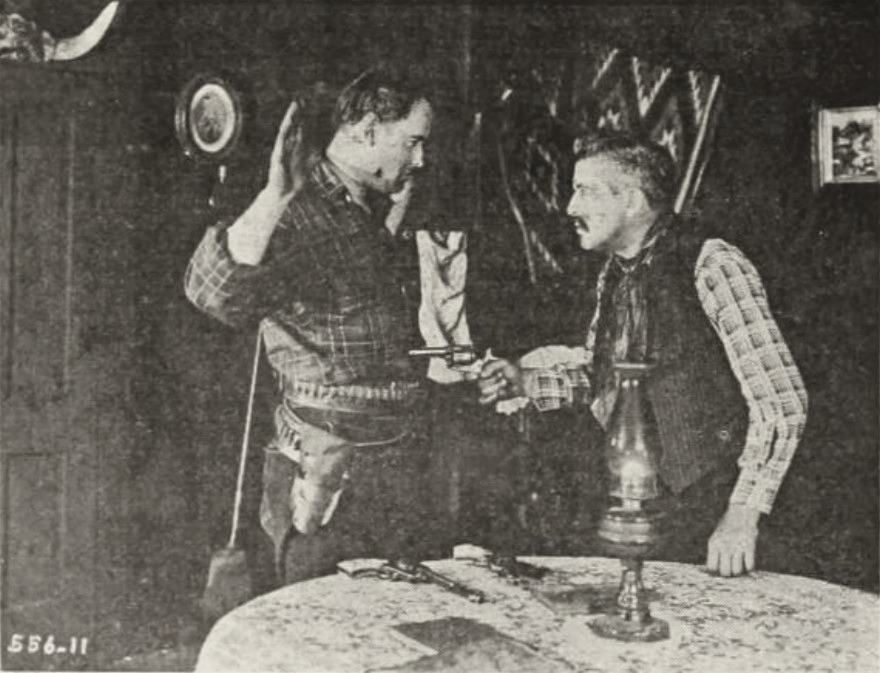
The supporting cast deserves significant praise. Josie Sedgwick as Nan Sheridan provides the film’s emotional anchor. Her grief is the catalyst for the entire plot, and her eventual rescue is not just a physical salvation but a spiritual one for Ross. Jack Richardson, playing the villainous Jim Butler, is a formidable foil. He represents the opportunism of the frontier—a man who uses the lack of oversight to build a petty empire of crime. The conflict between Ross and Butler is not just a battle of guns, but a clash of philosophies: the reformed man versus the man who refuses to change.
The climax of the film is a masterclass in silent film pacing. As Ross sheds his 'feeble' mask and leads the posse, the energy of the film shifts from psychological tension to kinetic release. The final shootout at the Sheridan cabin is staged with a clarity and visceral impact that many modern directors would do well to study. When Ross finally rescues Nan, it is a moment of profound symmetry. He began the film by creating an orphan; he ends it by saving one. The 'One Shot' moniker is reclaimed, but its meaning has shifted. It is no longer a tool of the lawman’s ego, but a precision instrument of justice.
One cannot discuss One Shot Ross without acknowledging its place in the lineage of the 'thinking man’s Western.' It shares a certain DNA with Monsieur Lecoq in its emphasis on deduction and undercover work, yet it remains firmly rooted in the American soil. The film understands that the West was not won merely through violence, but through the courage to stand up when the cost is highest. Ross’s journey from the nihilism of Painted Gulch to the moral clarity of the Sheridan cabin is a powerful arc that resonates even a century later.
In the pantheon of early Westerns, One Shot Ross stands tall because it refuses to offer easy answers. Ross is a hero, yes, but he is a damaged one. The film doesn't suggest that his sins are erased by his final act of heroism; rather, it suggests that he must live with the weight of both his past and his present. This nuance is what separates a great film from a merely functional one. Like the characters in The Family Honor, Ross is bound by a code that is as much a prison as it is a guide.
Lambert Hillyer’s direction is lean and muscular, stripping away the unnecessary flourishes that often plagued silent dramas. Every frame serves the narrative, and every character beat is designed to propel Ross toward his inevitable confrontation with Butler. The use of the posse as a collective force of law, led by the former outsider, provides a satisfying resolution to the film’s themes of community and isolation. Ross, who began as a man apart, finds his place by leading others toward the light.
Ultimately, One Shot Ross is a film about the transformative power of empathy. It is Nan’s tears that change Ross’s life, and it is his empathy for her plight that drives him to risk everything. In a genre often defined by stoicism and machismo, this focus on the emotional consequences of violence is remarkably progressive. It invites the audience to look beyond the gun smoke and see the human cost of the frontier mythos. It is a haunting, beautiful, and essential piece of early American cinema that deserves a prominent place in the conversation about the evolution of the Western.
A cinematic relic that still breathes with the fire of redemption, One Shot Ross is a testament to the enduring power of the silent image to tell stories of profound moral complexity.
IMDb 6.3
1919
Community
Log in to comment.