DbcultAccessing Vault...
Cult Review
Senior Film Conservator
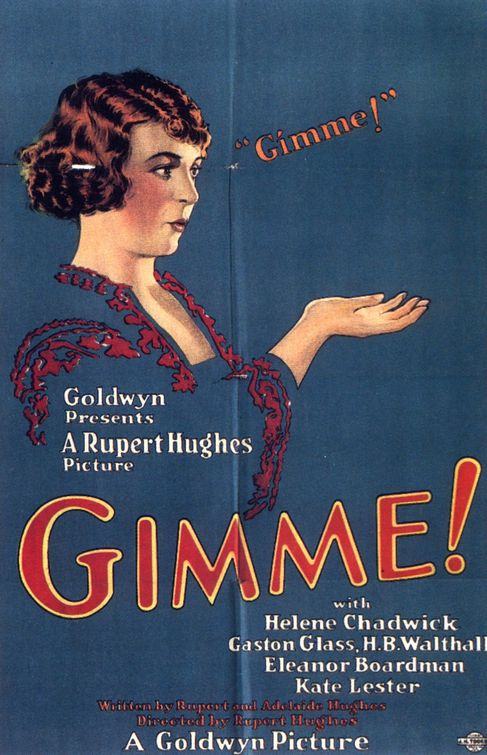
The silent era of Hollywood was frequently a playground for simplistic moralities, yet within the filmography of Rupert Hughes, one finds a recurring fascination with the internecine conflicts of the modern household. His 1923 offering, Gimme, stands as a remarkably prescient exploration of financial autonomy—or the lack thereof—within the marital bond. While contemporary audiences might view the protagonist's dilemma through the lens of antiquated social norms, the film’s core tension remains uncomfortably relevant: the intersection of love and debt.
From the opening frames, it is evident that Fanny Turner, portrayed with a luminous vulnerability by Eleanor Boardman, is a woman caught between two worlds. She possesses the refined tastes of the burgeoning middle class but lacks the capital to sustain them. The film meticulously builds the pressure of her situation. It isn't just a dress she is buying; it is the semiotic armor required to enter her new life as a wife. Boardman, whose career would later reach heights in masterpieces like Vidor's *The Crowd*, demonstrates here an uncanny ability to convey internal panic beneath a veneer of poise. Her performance avoids the histrionics often associated with the period, opting instead for a subtle, trembling anxiety that anchors the film’s more melodramatic turns.
The cinematography, though constrained by the technical limits of 1923, utilizes shadows and domestic interiors to create a sense of encroaching claustrophobia. As Fanny navigates the office of her boss and the home of her husband, the camera emphasizes the physical distance between characters, highlighting the emotional chasms created by their secrets. This visual storytelling is far more sophisticated than the broad strokes found in films like Trailed by Three, where the conflict is purely external.
The central conflict of Gimme arises from a moment of seemingly innocuous pragmatism. Fanny borrows money. In the patriarchal landscape of the 1920s, this act is laden with moral weight. When her employer demands repayment after her marriage, the film pivots into a harrowing study of the 'allowance' system. Her husband, Clinton Ferris, played with a stiff, almost oblivious traditionalism by Gaston Glass, views his role as the sole provider not as a partnership, but as a form of benevolent dictatorship. To Fanny, asking for money is an act of self-immolation. She would rather risk the legal repercussions of writing a check on his account than endure the perceived humiliation of the 'gimme' dynamic.
This thematic depth separates the film from more superficial comedies of the era. It shares a certain DNA with The Reawakening, which also delved into the psychological toll of repressed desires and social expectations. However, Hughes’ script, co-written with Mrs. Rupert Hughes, injects a level of domestic realism that is both biting and empathetic. The dialogue (conveyed through intertitles) is sharp, eschewing flowery prose for the direct, often cruel language of marital discord.
The ensemble surrounding Boardman and Glass provides a rich tapestry of 1920s social types. Henry B. Walthall brings a seasoned gravity to his role, acting as a counterpoint to the youthful folly of the leads. His presence reminds the viewer of the generational shifts occurring at the time—the clash between Victorian values and the 'flapper' era's burgeoning independence. Meanwhile, the inclusion of actors like Kate Lester and May Wallace adds layers of social scrutiny, representing the judgmental gaze of a society that prized appearance over integrity.
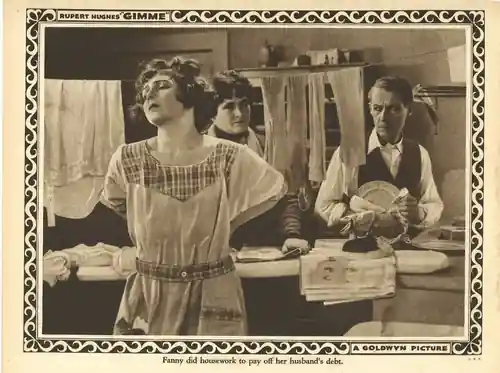
Interestingly, the film’s pacing mimics the heartbeat of a scandal. It starts with the slow, rhythmic build of a secret, then accelerates into a frantic series of misunderstandings and near-misses. This structural choice is far more effective than the episodic nature of many contemporary silents, such as the somewhat disjointed Maciste turista. In Gimme, every scene is a logical progression of Fanny's initial, desperate choice.
Rupert Hughes was a man of many talents—novelist, historian, and filmmaker—and his literary background is palpable in the film’s narrative density. He understands that the most profound tragedies often occur in the quietude of a breakfast room. By focusing on a checkbook rather than a weapon, he elevates the domestic drama to the level of a high-stakes thriller. The 'check' becomes a MacGuffin of morality, representing Fanny’s attempt to reclaim a shred of her former agency. Unlike the grand historical spectacles like The Destruction of Carthage, the stakes here are intimate, yet they feel universal.
The film also touches upon the predatory nature of the workplace. The boss who lends the money is not depicted as a mustache-twirling villain, but as a man exercising a casual, systemic power over a female subordinate. This nuance is vital. It frames Fanny’s predicament not as a personal failing, but as a systemic inevitability. When compared to the more whimsical tone of Neptune's Daughter, Gimme feels grounded in a gritty, almost cynical reality.
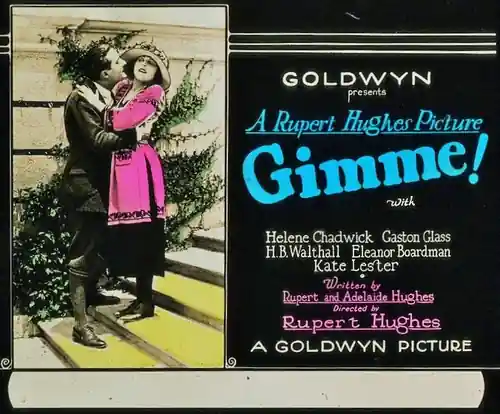
While the film does not employ the experimental lighting of German Expressionist works like Journey into the Night, it excels in its use of kinesics. The way Glass towers over Boardman in moments of confrontation, or the way she shrinks into the upholstery of their lavish home, tells the story of power dynamics more effectively than any title card could. The editing is crisp, maintaining a tension that makes the 70-minute runtime feel both substantial and fleeting.
Furthermore, the film’s exploration of 'the price of a woman' echoes themes found in Carmen, though transposed to a bourgeois American setting. It asks: what does a woman owe a man who provides for her? And conversely, what does a man owe the woman he has effectively purchased through the contract of marriage? These are dangerous questions for 1923, and the film’s refusal to provide easy, saccharine answers is its greatest strength.
The title itself is a provocation. It refers to the derogatory slang of the era for women who were perceived as gold-diggers. However, the film subverts this label by showing that the 'Gimme' girl is often a creation of a society that denies women direct access to capital. Fanny doesn't want to say 'gimme'; she wants to be a partner. The tragedy lies in the fact that the only way she can achieve financial parity is through deception. This irony is handled with a deft touch that avoids the preachiness of social hygiene films like Es werde Licht! 2. Teil.
In the final act, when the truth is inevitably unspooled, the resolution is less about forgiveness and more about a grim realization. The characters are left to navigate a marriage that has been stripped of its romantic illusions. It is a sobering conclusion that resonates far more than the tidy endings of films like The Fortunate Youth. Gimme is a testament to the power of silent cinema to tackle complex social issues with nuance and wit. It remains a vital piece of film history, a mirror held up to the transactional nature of the human heart.
To watch Gimme today is to witness the birth of the modern domestic psychological thriller. It eschews the broad comedy of Throwing the Bull or the melodrama of Sacred Silence in favor of something much more difficult to achieve: a believable portrait of a marriage in crisis. Eleanor Boardman’s performance is a revelation, a masterclass in silent acting that deserves a place alongside the greats of the era. While some of the film’s secondary plot points may feel like relics of a bygone age, the central question of autonomy within intimacy is timeless. This is not just a 'woman's picture'; it is a rigorous interrogation of the American Dream and the costs hidden within its ledger. If you can find a print of this elusive gem, do not hesitate. It is a sharp, sophisticated, and ultimately haunting experience that proves that even in 1923, Hollywood was capable of profound introspection.
IMDb —
1922
Community
Log in to comment.