DbcultAccessing Vault...
Cult Review
Senior Film Conservator
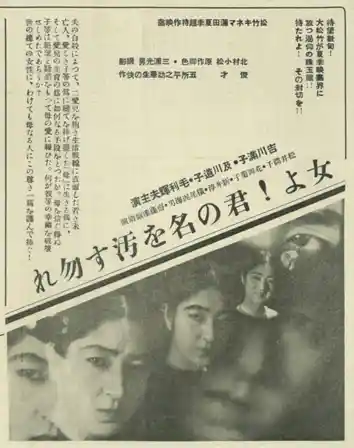
You should probably watch this if you have a soft spot for early Japanese cinema or if you just want to see Kinuyo Tanaka before she became a total legend. It is definitely for the patient crowd who doesn't mind reading intertitles and staring at grainy black-and-white faces for an hour.
If you hate slow movies where people talk about 'honor' and 'shame' every five minutes, you will probably want to skip this one. It feels very much of its time, which can be a bit much if you aren't in the right mood.
The title is a whole lot to handle—Onna yo! Kimi no na o kegasu nakare. It translates to somthing like 'Woman! Do Not Stain Your Name,' which already tells you exactly how much pressure the main character is under.
Kinuyo Tanaka is just... wow. Even back in 1930, she had this way of looking at the camera that makes you feel like you are intruding on a private moment.
There is this one scene where she is just sitting by a window, and the way the light hits her face is almost too perfect. You can see her thinking about every mistake she might have made, even though she hasn't realy done anything wrong yet.
The plot is kind of a standard family drama about reputation. It reminds me a little bit of the themes in Purity, but with a much more intense focus on the daughter's role in the house.
I noticed that the film gets much better once the family starts arguing. The silence in the room feels heavy, like you could cut it with a knife, and the lack of sound actually makes the shouting scenes feel louder in your head.
It is way more grounded than something like The Street. It doesn't try to be flashy with the camera work, it just lets the actors do their thing.
Some of the supporting actors are a bit stiff. There is this one guy who keeps adjusting his collar like he is wearing it for the first time, and it kept distracting me from the actual dialogue.
Mabye that is just how people acted back then? I don't know, but it felt a little bit like a high school play whenever he was on screen.
The movie deals with 'staining your name' in a way that feels very dated but also weirdly relatable. Everyone is still worried about what the neighbors think, right? Just now we do it on the internet instead of over the garden fence.
"A woman's name is her only shield, and once it's cracked, the world rushes in."
That quote isn't actually in the movie, but it is basically the vibe of the whole second half. It gets pretty depressing toward the end, honestly.
I wish the print was in better shape. There are parts where the screen gets so flickery that I had to squint to see who was talking to who.
If you liked The Guilty Man, you might appreciate the moral weight here. It has that same feeling of a trap closing in on someone who just wanted to be happy.
Is it a masterpiece? I don't think so. But it's a realy solid look at a specific time and place that doesn't exist anymore.
The ending felt a bit rushed, like they ran out of film or the sun was going down and they had to go home. It just sort of stops.
But hey, Kinuyo Tanaka makes it worth the price of admission, even if the 'admission' is just you sitting on your couch with a bowl of cereal. Watch it for her.
The way she walks away in the final shot is something I'll probably remember for a while. It's just a walk, but it feels like a whole story by itself.
IMDb 4.6
1924
Community
Log in to comment.