DbcultAccessing Vault...
5.2/10
Senior Film Conservator
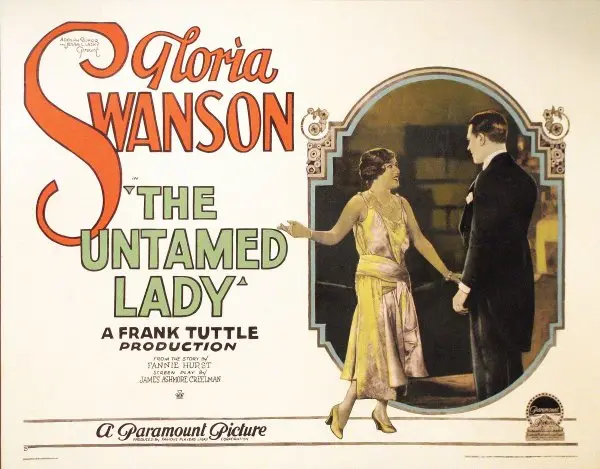
A definitive 5.2/10 rating for a film that redefined the boundaries of cult cinema. The Untamed Lady remains a cornerstone of transgressive art.
Is The Untamed Lady worth watching today? Short answer: yes, but with significant caveats that place it firmly in the category of historical curiosity rather than essential viewing for a casual audience. This film is best suited for ardent silent film enthusiasts, cinephiles tracing Gloria Swanson’s early career, and those interested in the social commentaries of the 1920s. It is decidedly not for viewers seeking modern pacing, complex character development, or an escape from period-specific melodramatic conventions.
For those who venture into its black-and-white reels, a distinct experience awaits. It’s a glimpse into an era where moral lessons were often wrapped in grand gestures and where the power of a star’s charisma could carry an entire production. This film works because of Gloria Swanson's magnetic screen presence, which elevates even the most conventional scenarios, making her character, Carol Montgomery, undeniably watchable despite her initial flaws. This film fails because its narrative relies heavily on a simplistic, moralistic arc that feels undeniably dated, sacrificing nuance for didacticism in its portrayal of a 'spoiled rich girl brought down to earth.' You should watch it if you appreciate the raw, unpolished charm of early Hollywood and want to witness a star in the making before the full refinement of her craft, understanding that its primary value today is historical rather than purely entertaining.
At its core, The Untamed Lady presents a narrative archetype as old as storytelling itself: the taming of a wild spirit. Here, that spirit belongs to Carol Montgomery, a character who, in the hands of a lesser actress, might have been insufferable. She is the quintessential Jazz Age heiress, flitting from one indulgence to the next, her life a tapestry woven with privilege and caprice. The plot, penned by James Ashmore Creelman and Fannie Hurst, does not shy away from painting Carol as profoundly out of touch, a woman whose every whim is catered to, fostering an almost childlike inability to cope with even minor discomforts.
The turning point, predictably, arrives through the persistent devotion of a suitor – presumably Charles E. Graham's character – who sees beyond the superficiality to the potential for growth. The method of her 'taming' is less about a forceful breaking of her will and more about a carefully orchestrated series of humbling experiences. This is where the film’s moralistic leanings become most apparent. It’s not enough for Carol to merely fall in love; she must first be stripped of her external comforts and forced to confront her own character flaws in a more elemental setting, away from the cushioning of wealth.
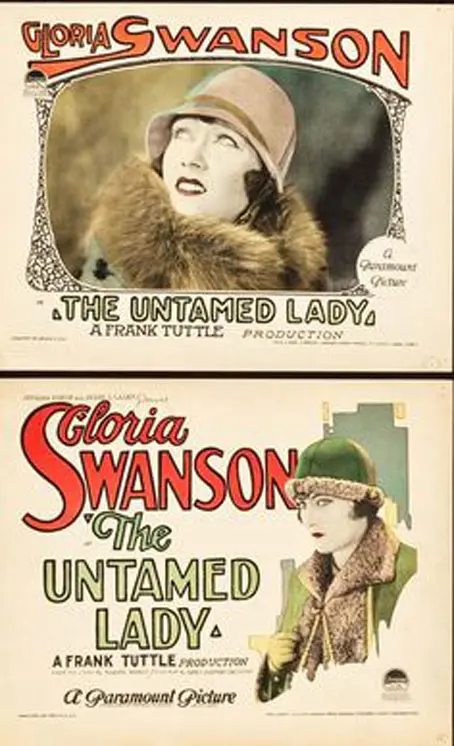
While this narrative arc is straightforward, its execution is steeped in the melodramatic conventions of the silent era. The stakes are often communicated through exaggerated gestures and stark contrasts between opulence and simplicity. One particular scene that stands out, though perhaps unintentionally humorous to a modern audience, involves Carol attempting to perform a simple domestic task, like mending a garment, only to fail spectacularly, her expressions conveying utter bewilderment and frustration. This moment, intended to highlight her helplessness, also serves as a potent, if heavy-handed, symbol of her detachment from everyday life. The story, while predictable, delivers exactly what its premise promises: a journey from self-absorption to self-awareness, guided by love.
Gloria Swanson, even in this relatively early stage of her illustrious career, is the undisputed gravitational center of The Untamed Lady. Her performance as Carol Montgomery is a testament to her innate understanding of the camera and her ability to command attention without uttering a single word. She doesn't just play the part; she embodies the very essence of the 'untamed lady' with a vivacity that crackles on screen, making the character compelling even in her most spoiled moments.
Swanson’s initial portrayal of Carol is a masterclass in silent-era exaggeration, yet it rarely veers into caricature. Consider the scene where Carol, frustrated by a minor inconvenience – perhaps a dress not arriving on time for a gala – throws a tantrum, stomping her foot and flailing her arms, her expressive eyes conveying a childish fury that is both amusing and horrifying. Her later transformation, however, is marked by a subtle softening; a moment where she looks at her suitor not with petulance, but with a flicker of genuine vulnerability, a silent acknowledgement of her own folly. This shift is gradual, conveyed through subtle changes in her posture and the way her gaze lingers, suggesting a burgeoning maturity beneath the surface.
The supporting cast, including Lawrence Gray and Thomas Holding, play their parts competently, providing the necessary foils for Swanson’s dynamic presence. However, they are undeniably overshadowed. Charles E. Graham, as the persistent suitor, delivers a performance that is stoic and earnest, a necessary anchor to Carol's tempestuous nature. His quiet determination contrasts effectively with her flamboyant outbursts. It is Swanson, however, who elevates the material, injecting personality and depth into what could have been a one-dimensional character. Her ability to convey both disdain and burgeoning affection through facial expressions and body language alone is a remarkable feat, solidifying her status as a silent film icon long before Sunset Boulevard.
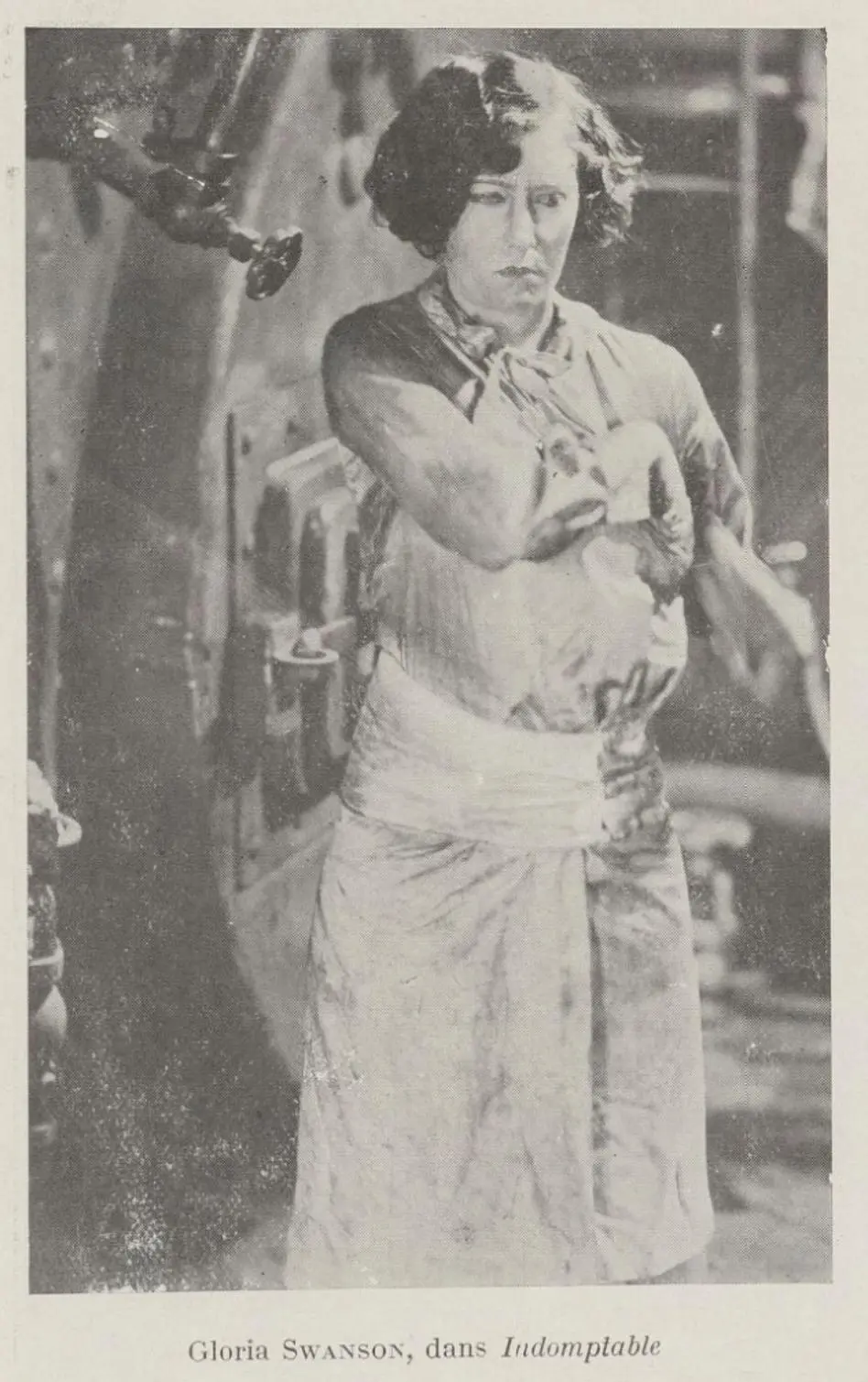
Joseph W. Smiley’s direction of The Untamed Lady is competent, if not groundbreaking. He understands the mechanics of silent storytelling, utilizing intertitles effectively to convey dialogue and crucial plot points, while allowing the actors ample space to perform for the camera. The visual language, typical of the era, relies heavily on establishing shots, medium close-ups to capture emotional reactions, and a relatively static camera that emphasizes theatricality over dynamic movement.
The cinematography, while not attributed to a specific individual in the provided context, often contrasts Carol's opulent surroundings with the starker, more 'real-world' environments she eventually encounters. Early scenes in her lavish mansion, perhaps featuring sweeping shots of grand staircases and servants attending to her every whim, are bathed in a soft, almost ethereal light, emphasizing her detachment from reality. The elaborate set dressing, complete with plush furnishings and intricate details, serves to underscore her privileged existence.
Later, when she is presumably 'brought down to earth,' the cinematography shifts to harsher, more direct lighting, perhaps in a rustic setting, highlighting her newfound vulnerability and the stripping away of her illusions. A particularly effective shot might involve Carol, initially adorned in furs and jewels, standing awkwardly in simple attire, framed against a plain backdrop, her former grandeur starkly absent. This visual juxtaposition is a simple yet powerful technique, reinforcing the film's central theme without needing extensive dialogue.
However, one could argue that Smiley’s direction, while serviceable, rarely attempts to transcend the conventional. There are few moments of true visual innovation or daring camera work that might set The Untamed Lady apart from countless other silent melodramas. It’s a film that largely adheres to the established grammar of its time, delivering the story clearly but without much stylistic flair. This isn't necessarily a flaw, especially for those seeking an authentic silent film experience, but it does mean the film relies almost entirely on Swanson’s star power to provide its unique spark.
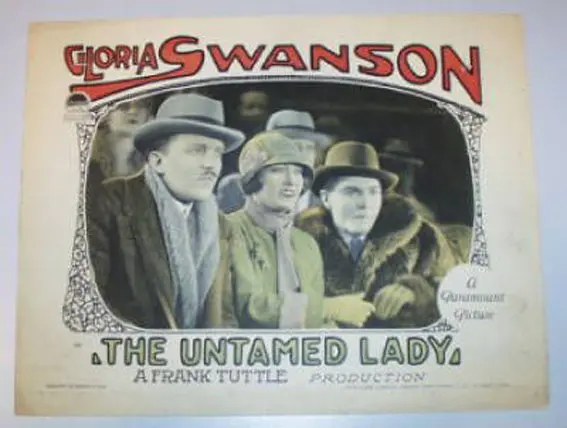
The pacing of The Untamed Lady is entirely consistent with silent cinema of the mid-1920s. For modern viewers accustomed to rapid-fire editing and constant narrative propulsion, it will likely feel deliberate, even slow. Silent films operate on a different temporal rhythm, allowing scenes to unfold with a measured grace, giving the audience time to absorb the visual information and the emotional beats conveyed through performance. This pacing is not a flaw, but a characteristic that requires a shift in viewing expectations.
The film’s tone is predominantly melodramatic, a common sensibility of the era. Emotions are writ large, conflicts are often black and white, and moral lessons are frequently explicit. Carol’s transformation, while ultimately satisfying within the film’s own logic, can feel somewhat abrupt and unearned by contemporary standards. The script, while aiming for a moral uplift, occasionally sacrifices psychological realism for thematic clarity. This results in moments that might elicit a knowing chuckle from today's audience, particularly when the 'bringing down to earth' sequences feel more like a series of contrived misfortunes than organic character development.
Despite these period sensibilities, the film maintains a certain charm. It’s a window into the social values and entertainment priorities of its time. The themes of wealth, privilege, and the redemptive power of love are universal, even if their presentation is distinctly of the Jazz Age. The film’s strength lies in its unpretentious delivery of a straightforward story, bolstered significantly by the sheer force of its lead actress. It works. But it’s flawed. The didacticism, while a product of its era, ultimately hobbles its potential for genuine emotional resonance beyond the surface.
For silent film enthusiasts, absolutely. It's a valuable piece of cinematic history.
For Gloria Swanson fans, it's essential viewing to trace her early career.
For a casual viewer, approach with an understanding of silent film conventions.
Its primary value is historical and as a showcase for a burgeoning star.
Do not expect modern pacing or complex character arcs.
Cons:
The Untamed Lady is undeniably a product of its time, both in its narrative sensibilities and its filmmaking techniques. It offers a straightforward, moralistic tale that, without the incandescent presence of Gloria Swanson, might have faded into obscurity. Swanson, even in this early role, possessed an innate understanding of the camera that few of her contemporaries could rival, making her portrayal of Carol a masterclass in silent-era physical comedy and subtle emotional shifts, despite the script's limitations. Her performance alone is reason enough for silent film aficionados and students of cinematic history to seek this out.
However, for the casual modern viewer, the film’s deliberate pacing and overt didacticism may prove challenging. It lacks the groundbreaking artistry of a Griffith or the intricate plotting of later dramas. It is not a forgotten masterpiece. Instead, it serves as a valuable historical document, showcasing the formative years of a true star and reflecting the storytelling conventions of a bygone era. Approach it with an appreciation for its historical context and the sheer force of Swanson’s personality, and you will find an engaging, if somewhat quaint, cinematic experience.
IMDb 6
1934
Community
Log in to comment.