DbcultAccessing Vault...
5.7/10
Senior Film Conservator
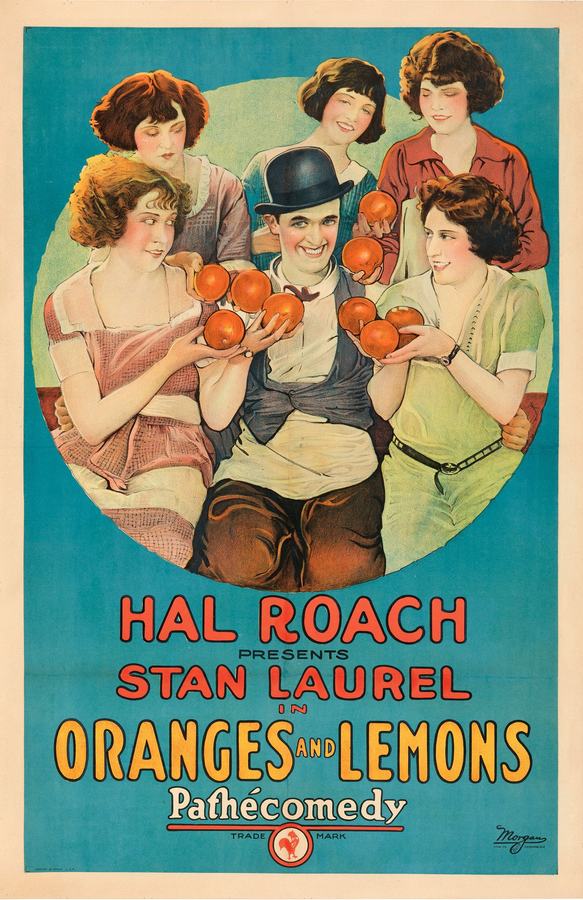
A definitive 5.7/10 rating for a film that redefined the boundaries of cult cinema. Oranges and Lemons remains a cornerstone of transgressive art.
The year 1923 was a crucible for the language of cinematic comedy, a period where the primitive energy of early slapstick began to fuse with a more sophisticated, character-driven architecture. In the midst of this evolution stands Oranges and Lemons, a short film that serves as a testament to Stan Laurel’s burgeoning genius long before his legendary partnership with Oliver Hardy. This isn't merely a collection of falls and fisticuffs; it is a meticulously choreographed subversion of the industrial workspace, a theme that resonates through the silent era as a precursor to the mechanical anxieties of the modern age.
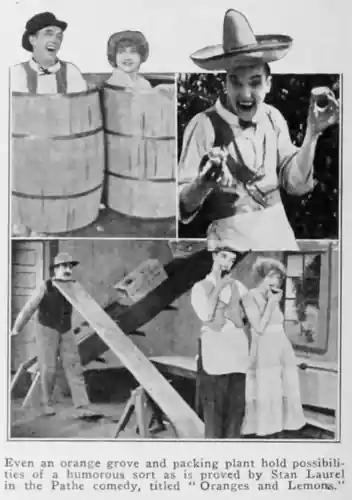
The film opens not in the domestic sphere, but in the heart of the orange groves, a setting that immediately grounds the comedy in the reality of labor. Laurel is not a dandy or a tramp here; he is a cog in the machine. However, as is the case with all great silent comedians, he is a cog that refuses to turn in the prescribed direction. The packing house serves as more than just a backdrop; it is a labyrinthine character in its own right. Much like the rural settings found in Fresh from the Farm, the environment dictates the physical comedy, forcing the protagonist to interact with objects—crates, belts, and fruit—as if they were sentient adversaries.
The initial scuffle with the boss is a masterclass in escalating tension. James Finlayson, that master of the squint and the indignant double-take, provides the perfect foil for Laurel’s fluid, almost serpentine movements. While the humor is broad, there is an underlying critique of the hierarchical structures of the time. The workplace is a powder keg of micro-aggressions, where a misplaced piece of fruit or a misunderstood gesture can lead to an all-out riot. This socioeconomic friction is a common thread in films of the era, though often handled with less grace than seen here.
To watch Stan Laurel in 1923 is to witness a performer still discovering the boundaries of his screen persona. There is a raw, jagged energy to his movements that would later be smoothed out into the gentle, bewildered Stan we know and love. In Oranges and Lemons, he is surprisingly aggressive, a desperate man using his entire body as a weapon of evasion. His interactions with the female packers provide a brief, fascinating glimpse into the gender dynamics of the 1920s workforce. While the women are largely presented as a collective audience for his antics, their presence adds a layer of social pressure that fuels his frantic attempts to maintain dignity amidst the chaos.
One cannot help but compare the frantic pacing of this short to the more polished, high-society dramas of the same year, such as The Affairs of Anatol. While DeMille was exploring the moral decadence of the upper crust, Laurel was finding the transcendent humor in the struggle of the common man. The contrast is stark; where DeMille uses lavish sets to signify status, Laurel uses the gritty, dusty interior of a storage area to signify a trap. The visual language is one of claustrophobia versus liberation.
The ensemble in Oranges and Lemons is a "who's who" of Hal Roach regulars. James Finlayson, as mentioned, is the anchor of the film’s antagonistic energy. His ability to convey absolute fury through a single twitch of his mustache is unparalleled. Then we have 'Tonnage' Martin Wolfkeil and Eddie Baker, whose physical presence provides a looming threat that makes Laurel’s slight frame seem even more vulnerable. This David-and-Goliath dynamic is essential for the slapstick to function; the audience must feel that the stakes of the chase are real, even if the weapons are merely oranges.
The presence of Katherine Grant offers a soft counterpoint to the masculine aggression that dominates the packing house. While her role is limited by the conventions of the time, she serves as the catalyst for some of Laurel’s more subtle character moments. It is in these brief interactions that we see the seeds of the pathos that would later define the Laurel and Hardy films. The comedy is not just in the fall; it is in the look of hurt surprise that follows it.
The final act of the film is a tour de force of mechanical choreography. As Laurel retreats into the storage area, the film shifts into a proto-surrealist mode. The machinery—conveyor belts, pulleys, and sorting bins—becomes an extension of his own body. He navigates these hazards with a mixture of terror and accidental grace that prefigures the famous factory scene in Chaplin’s *Modern Times*. However, where Chaplin’s humor was overtly political, Laurel’s is purely kinetic. He is not fighting the machine; he is dancing with it to avoid the greater threat of human retribution.
The use of the machinery as an escape route is a brilliant narrative device. It allows for a verticality in the action that was often missing from earlier, more stage-bound comedies. We see Laurel climbing, sliding, and tumbling through different levels of the packing house, creating a sense of scale and momentum that keeps the viewer breathless. This level of technical ambition was rare in short-form comedy and suggests a director and star who were eager to push the medium forward.
To fully appreciate Oranges and Lemons, one must view it within the broader context of 1923 cinema. This was the year of *Safety Last!* and *Our Hospitality*, films that were redefining what a comedy could be. In this landscape, Laurel was carving out a niche for the "frantic underdog." Unlike the stoicism of Keaton or the aspirational charm of Lloyd, Laurel’s character in this film is defined by a chaotic survival instinct. He is a man who, when faced with the complexities of the world—or even the simple task of packing fruit—finds that the universe is fundamentally tilted against him.
We can draw parallels to the suspenseful undertones of The Flash of Fate or the social entanglements of Through the Wrong Door. While these films occupy different genres, they share a common interest in the individual’s struggle against an unyielding system. In Oranges and Lemons, the "system" is both the literal machinery of the packing house and the social hierarchy of the workers.
The cinematography, though standard for the era, makes excellent use of natural light in the outdoor scenes and the harsh, industrial shadows of the interior. The editing is particularly noteworthy; the cuts during the chase sequences are tight, maintaining a frantic energy without losing the spatial logic of the scene. We always know where Laurel is in relation to his pursuers, which is crucial for the comedy to land. If the audience is confused, the joke is lost. Here, the geography of the packing house is established with such clarity that the viewer can anticipate the collisions before they happen, allowing for that delicious tension that precedes a great laugh.
The film also avoids the trap of repetitive gags. Each encounter with a co-worker or a piece of equipment feels distinct. Whether he is dealing with a mountain of fruit or a precarious ladder, the solutions Laurel finds are always unexpected. This inventiveness is what separates a master like Laurel from the legions of forgotten silent comics who relied on the same tired tropes. He understood that comedy is the art of the unexpected redirection.
In the final analysis, Oranges and Lemons is more than just a historical curiosity. It is a vibrant, breathing piece of cinema that captures a genius in transition. It bridges the gap between the anarchic spirit of the Mack Sennett era and the sophisticated character work of the late 1920s. For fans of Laurel and Hardy, it offers a fascinating look at the solo Stan—a performer of immense physical capability and a deep understanding of the human condition’s inherent absurdity.
While it may not have the epic scale of Captain Kidd or the dramatic weight of The Seven Pearls, its impact is found in its intimacy and its relentless pursuit of the laugh. It reminds us that comedy is often born from the most mundane of circumstances—a scuffle at work, a misplaced piece of fruit, a desperate need to escape. In the hands of Stan Laurel, these trifles are transformed into art.
Final Verdict: A zesty, high-energy romp that showcases the industrial-strength comedy of a silent era titan. Essential viewing for anyone interested in the roots of slapstick and the evolution of a comedic legend.
IMDb —
1921
Community
Log in to comment.