DbcultAccessing Vault...
Cult Review
Senior Film Conservator
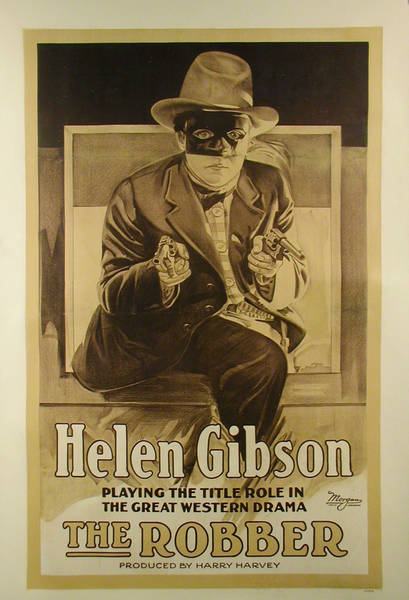
Stepping back into the flickering shadows of early cinema, one occasionally unearths a gem whose narrative complexity and thematic resonance belie its age. Such is the case with Alan James’s The Robber, a compelling silent-era crime drama that, despite its vintage, pulsates with an energy and moral ambiguity that resonates even today. It's a film that eschews simplistic hero-villain dichotomies, instead plunging into the murky waters of justice, perception, and the elusive nature of truth. This is not merely a tale of pursuit and escape; it's a nuanced examination of a society grappling with its own contradictions, reflected through the prism of a charismatic outlaw.
At its heart is Arthur Sterling, portrayed with a captivating blend of suave sophistication and internal turmoil by the masterful Edward Peil Sr. Peil Sr. embodies the 'gentleman thief' archetype with an effortless grace, his every gesture and expression conveying a depth that transcends the limitations of silent film. He isn't merely a character; he's a force of nature, a 'Midnight Phantom' whose nocturnal escapades are less about material gain and more about a theatrical, if dangerous, form of social critique. His targets are not random victims but the city's most corrupt and ostentatious figures, their ill-gotten wealth a stark contrast to the symbolic gestures he leaves behind – a mocking commentary on their hypocrisy.
The narrative, penned by Alan James himself, unfolds with a meticulous rhythm, each scene building inexorably towards a grand confrontation. The plot, rich with intrigue, hinges on Sterling’s audacious plan to relieve the ruthless industrialist Silas Vance of the fabled Star of Ophir diamond. This isn't just a heist; it's a statement, a challenge to the established order, executed with the precision of a seasoned artist. The brilliance of James's writing lies in its ability to infuse a seemingly straightforward crime story with layers of psychological depth and moral quandary, making the audience question where their sympathies truly lie.
The ensemble cast surrounding Peil Sr. contributes significantly to the film’s rich tapestry. Leon De La Mothe, as Detective Inspector Harding, delivers a performance of steely determination and unwavering principle. Harding is the Phantom’s antithesis: a man of rigid adherence to the law, whose pursuit is driven by an almost puritanical belief in absolute justice. De La Mothe's portrayal avoids caricature, instead offering a nuanced glimpse into a mind consumed by duty, creating a compelling cat-and-mouse dynamic that forms the backbone of the film's tension. Their intellectual sparring, though wordless, is palpable, a true testament to the power of visual storytelling in the silent era.
Helen Gibson, as the intrepid journalist Lillian Thorne, injects a vital human element into the unfolding drama. Her character serves as the audience’s moral compass, initially drawn to the Phantom’s mystique but ultimately forced to confront the complexities of his actions. Gibson conveys Lillian’s evolving emotions with remarkable clarity, her initial journalistic curiosity giving way to a profound, conflicted attraction to Arthur Sterling. This romantic subplot is handled with a delicate touch, avoiding melodrama and instead focusing on the genuine emotional turmoil of a woman caught between her ideals and her heart. The revelation of Sterling’s true identity to Lillian is a pivotal moment, masterfully executed, showcasing the raw shock and betrayal that underpins their burgeoning relationship.
Yvette Mitchell, in the role of Vivian Dubois, adds another layer of intrigue. As the enigmatic club singer secretly working for Vance, Mitchell’s performance is one of subtle manipulation and calculating charm. Vivian is a character shrouded in mystery, her loyalties ambiguous, making her a formidable, unpredictable presence. She acts as a fascinating foil, her street-level cunning contrasting with Sterling’s more refined approach, and her suspicion of Sterling builds a palpable sense of impending doom for the Phantom. Her role as Vance's eyes and ears in the underworld not only propels the plot but also highlights the pervasive corruption that Sterling aims to dismantle.
The direction by Alan James is remarkably assured for its time, utilizing the visual language of silent cinema to its fullest potential. The cinematography, while constrained by the technology of the era, employs striking compositions and dynamic editing to convey suspense and emotion. Sequences of the Phantom scaling rooftops or engaging in a frantic chase are executed with a kinetic energy that keeps the audience on the edge of their seats. The use of shadow and light, a hallmark of early film, is particularly effective in establishing the duality of Sterling’s character and the clandestine nature of his world. The grand society gala, for instance, is a masterclass in visual spectacle, contrasting the glittering facade of wealth with the underlying tension of the impending heist.
When considering The Robber within the broader context of early cinema, its narrative sophistication and character depth stand out. One might draw parallels to the intricate plotting found in other contemporary serials or thrillers, such as Who Is Number One?, which also explored themes of hidden identities and complex criminal masterminds, albeit with a more overt sensationalism. The romantic entanglement amidst danger also brings to mind elements present in films like Miss Innocence, where the protagonist often finds herself in morally ambiguous situations, though perhaps without the same criminal undercurrent. The relentless pursuit by law enforcement, a central tenet here, is a trope perfected in many films of the era, but The Robber imbues it with a psychological edge that feels ahead of its time.
The film’s climax is particularly noteworthy. It’s not simply about Sterling’s escape; it’s about his choice. Confronted by Lillian’s discovery and his own conscience, he makes a decision that transcends mere self-preservation. By orchestrating Vance's downfall while allowing the diamond to be recovered, Sterling achieves a form of justice that the law might never have delivered. This twist elevates the film from a simple chase narrative to a profound statement on justice and personal redemption. It's a conclusion that resonates with the moral complexity seen in films like For the Defense, where the lines between legal and moral victories are often blurred.
The influence of The Robber, while perhaps not as widely celebrated as some of its contemporaries, can be seen in the development of the 'gentleman thief' subgenre, paving the way for countless cinematic anti-heroes who operate on the fringes of society with their own code of ethics. Edward Peil Sr.’s performance, in particular, sets a high bar for such characters, imbuing Arthur Sterling with a charisma and inner conflict that makes him endlessly fascinating. His ability to convey such a rich inner life without spoken dialogue is a masterclass in silent film acting. The dynamic between the law and the outlaw here is more sophisticated than the blunt force confrontation found in westerns like Out of the West or The Spoilers, leaning instead into psychological warfare and moral chess.
In conclusion, The Robber is far more than a historical curiosity; it is a vibrant, engaging piece of cinematic artistry that showcases the potential of early filmmaking to tell complex, character-driven stories. Alan James, through his meticulous writing and direction, crafts a world where shadows conceal as much as they reveal, and where the pursuit of justice takes many forms. The performances by Edward Peil Sr., Leon De La Mothe, Helen Gibson, and Yvette Mitchell are uniformly excellent, breathing life into their roles and making their silent struggles and triumphs profoundly resonant. It serves as a potent reminder that the power of storytelling, regardless of technological limitations, lies in its ability to explore the human condition with insight and originality.
For those with an appreciation for the foundational works of cinema, The Robber offers a captivating journey into a bygone era, proving that a compelling narrative and nuanced characterizations are timeless. It’s a film that challenges perceptions, entertains with its daring escapades, and ultimately leaves a lasting impression long after the final frame fades to black. Its intricate plotting and moral ambiguity position it as a significant, if often overlooked, contribution to the crime genre, demonstrating that even in its nascent stages, cinema was capable of profound and thoughtful narratives.
IMDb 6
1931
Community
Log in to comment.