DbcultAccessing Vault...
8.6/10
Senior Film Conservator
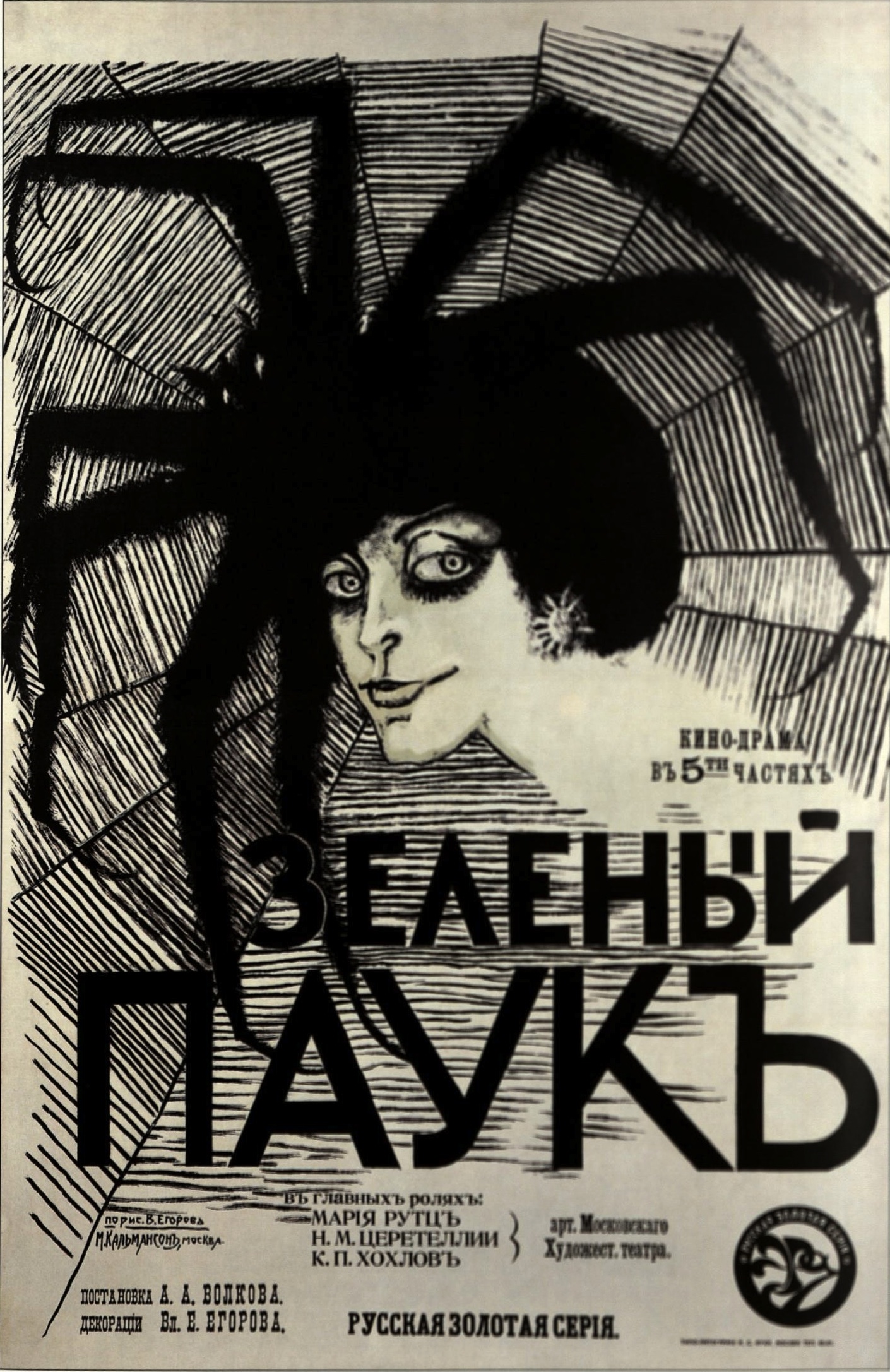
A definitive 8.6/10 rating for a film that redefined the boundaries of cult cinema. Zelyonyy pauk remains a cornerstone of transgressive art.
To witness Zelyonyy pauk (1916) is to step into a sepia-toned void where the ghosts of the Russian Silver Age still dance with a frantic, desperate energy. Directed by Aleksandr Volkov, this piece of silent cinema is far more than a mere detective procedural; it is a visual manifesto of the psychological unrest that permeated the Russian Empire just before the storm of 1917. While Western audiences were becoming accustomed to the serialized thrills of Fantomas: The Mysterious Finger Print, Volkov was busy imbuing the genre with a distinctly Slavic melancholy, a weightiness that transforms a story of crime into a profound meditation on the fragility of the human psyche.
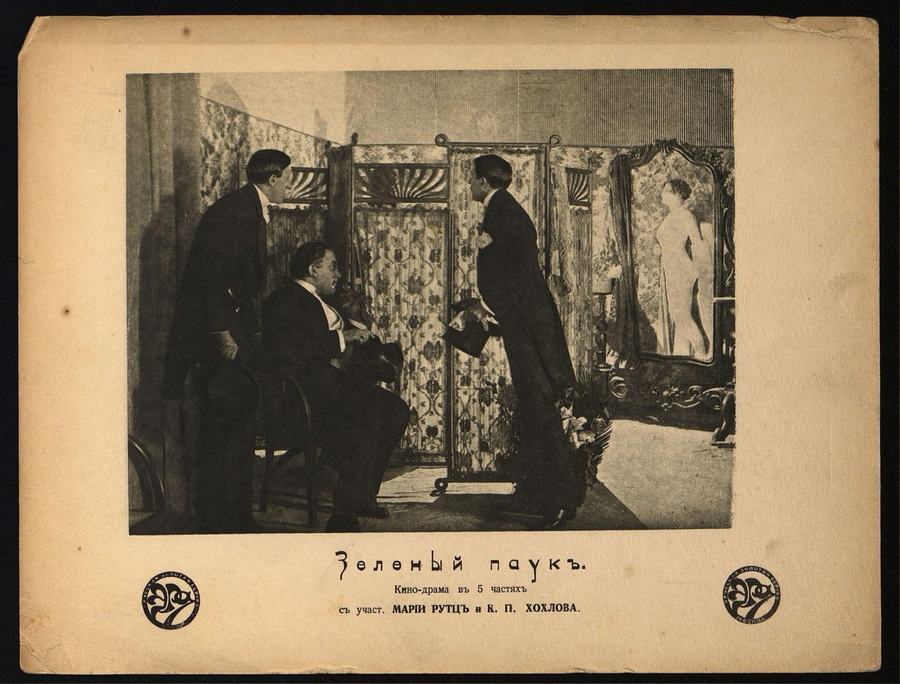
The visual language of Zelyonyy pauk is one of calculated obscurity. The cinematography relies heavily on the interplay of light and dark, a precursor to the German Expressionism that would dominate the next decade. The sets are not merely backgrounds; they are extensions of the characters' internal states. We see grand, high-ceilinged rooms that feel like cages, and narrow, winding alleyways that mimic the legs of the spider itself. This film shares a certain atmospheric DNA with The Spirit of the Poppy, where the environment serves as an intoxicating, almost narcotic presence that dictates the rhythm of the narrative.
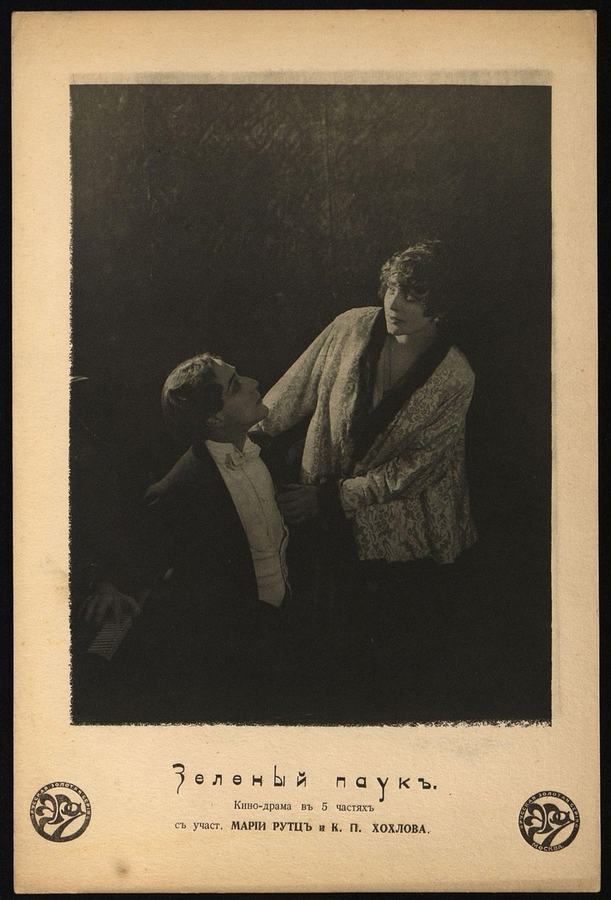
Volkov’s use of the frame is revolutionary for 1916. He doesn't just record action; he composes it. The 'Green Spider' of the title is a symbol that appears in the most unexpected places—on a discarded note, in the pattern of a rug, or reflected in the terrified eyes of a victim. This creates a sense of omnipresence, an invisible threat that makes the viewer as paranoid as the characters on screen. It lacks the straightforward heroism found in The Dare-Devil Detective, replacing it with a pervasive dread that is far more sophisticated and enduring.
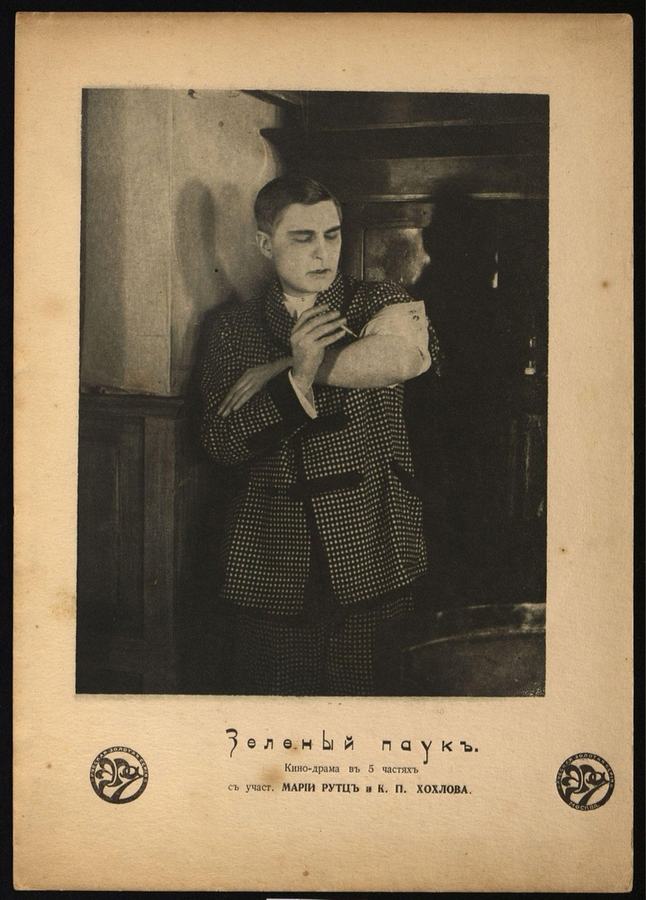
Nikolai Tsereteli delivers a performance that is nothing short of magnetic. In an era where silent acting often veered into the histrionic, Tsereteli maintains a restrained, simmering intensity. His eyes carry the burden of the narrative, reflecting a soul being slowly consumed by the very mystery he seeks to solve. There is a specific vulnerability in his movements that reminds one of the nuanced character work in The Love Mask, where the face becomes a battlefield of conflicting emotions. Tsereteli does not play a hero; he plays a man disintegrating.
Konstantin Khokhlov and Maria Rutz provide the necessary friction to Tsereteli’s central gravity. Khokhlov, in particular, embodies a certain aristocratic decay—a man whose physical elegance masks a moral hollowness. Rutz, meanwhile, escapes the 'damsel in distress' trope by injecting her character with a quiet, steely resolve. Their interactions are choreographed with a precision that suggests a ballroom dance on the deck of a sinking ship. This ensemble dynamic elevates the film from a standard mystery to a sophisticated social critique, much like the thematic depth explored in Judge Not.
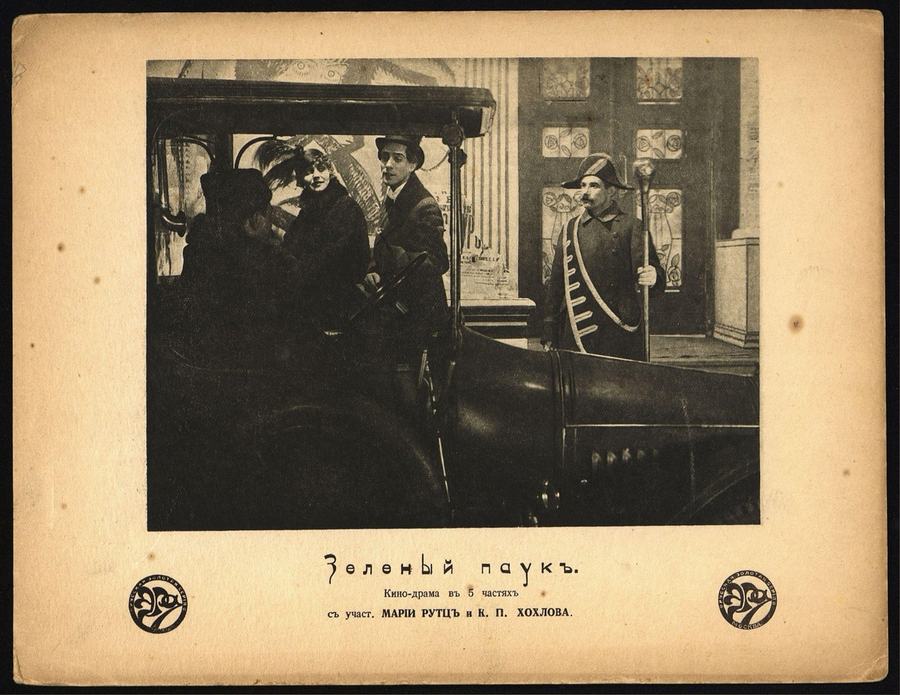
The structure of Zelyonyy pauk is intentionally non-linear in its emotional progression. While the plot moves forward, the thematic resonance circles back on itself, much like the spinning of a web. It avoids the episodic simplicity of A Motorcycle Adventure, opting instead for a dense, layered approach. The mystery of the Green Spider is not solved through a series of clues, but through a gradual uncovering of the characters' own complicity in the chaos surrounding them. It is a film that demands active participation from the viewer, requiring one to read between the title cards and look deep into the shadows of the mise-en-scène.
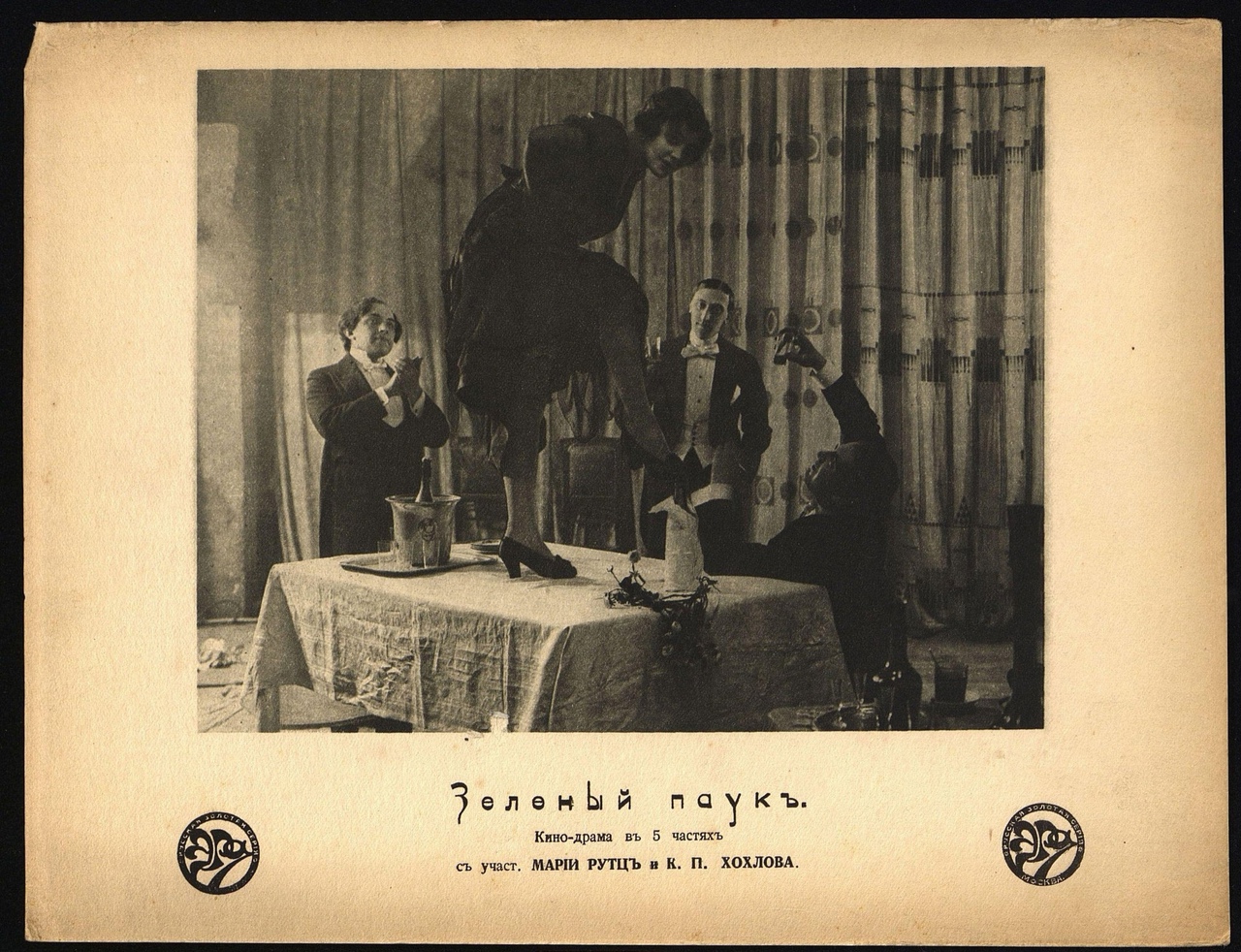
There is a sequence in the middle of the film—a masquerade ball—that serves as the perfect microcosm for the entire work. Characters hide behind literal masks while their true natures are revealed through their desperate, clawing actions. The opulence of the setting is contrasted with the visceral fear of the unknown. It is as grand in scope as The Last Days of Pompeii, yet it focuses that grandeur into a singular, sharp point of psychological terror. The 'Spider' is not just a criminal; it is the realization that the masks everyone wears are beginning to slip.
To understand Zelyonyy pauk, one must understand the year 1916 in Russia. The country was embroiled in World War I, and the foundations of the monarchy were cracking. This film is a product of that tension. It lacks the patriotic fervor of The Battle of Shiloh or the historical didacticism of One Hundred Years of Mormonism. Instead, it offers a cynical, almost nihilistic view of power and justice. The Green Spider is a phantom of the impending revolution, a force that cannot be bargained with or defeated by traditional means.
When compared to other contemporary works like Gems of Foscarina or Her Great Match, Zelyonyy pauk stands out for its refusal to provide easy catharsis. It is a grim, beautiful artifact of a lost world. The cinematography by Nikolai Efros is particularly noteworthy, utilizing low-angle shots and deep focus to create a sense of impending doom that feels remarkably modern. This is not the bright, sun-drenched world of Un día en Xochimilco; this is a world of soot, silk, and secrets.
Zelyonyy pauk is a challenging watch, not because of its pacing, which is surprisingly brisk, but because of its emotional density. It requires the viewer to engage with a sense of existential dread that is often absent from early cinema. It is a film that feels like the The Last Chapter of a civilization, a final, beautiful gasp before the silence of the Soviet era began to reshape the artistic landscape. It doesn't have the rugged simplicity of Fighting Bob or the international intrigue of Mr. Grex of Monte Carlo, but it possesses a haunting, localized soul that is far more impactful.
In the pantheon of 1910s cinema, Volkov’s masterpiece deserves a place of honor. It is a testament to the power of the medium to capture the zeitgeist of a nation in turmoil. The Green Spider may be a creature of the shadows, but the film itself shines with a dark, brilliant light that continues to fascinate those who are willing to venture into its web. It is a visceral reminder that cinema, even in its infancy, was capable of expressing the most complex and terrifying aspects of the human condition. For the modern cinephile, Zelyonyy pauk is not just a historical curiosity; it is a vital, breathing piece of art that remains as potent today as it was over a century ago.
IMDb —
1926
Community
Log in to comment.