DbcultAccessing Vault...
6.8/10
Senior Film Conservator
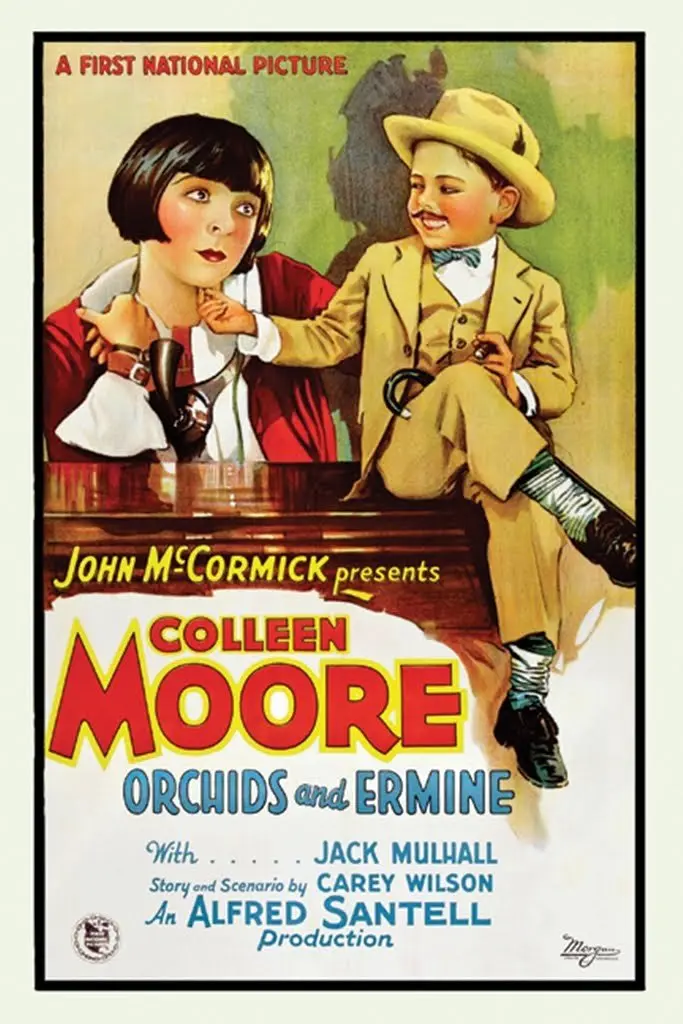
A definitive 6.8/10 rating for a film that redefined the boundaries of cult cinema. Orchids and Ermine remains a cornerstone of transgressive art.
Is Orchids and Ermine a film that warrants your attention in the modern era? Short answer: yes, but with significant caveats. This 1927 silent romantic comedy, starring the effervescent Colleen Moore, offers a fascinating glimpse into a bygone cinematic age, yet it demands a certain patience and appreciation for historical context. It’s a film for those who cherish silent cinema's unique storytelling rhythm and the magnetic charisma of its stars, particularly Moore, whose presence alone elevates the material. However, it is decidedly not for viewers accustomed to rapid-fire pacing, complex narratives, or contemporary dialogue-driven performances.
For silent film aficionados, film historians, and those intrigued by early Hollywood star power, Orchids and Ermine provides a delightful, if somewhat predictable, experience. Its charm lies in its simplicity and the sheer star wattage of its lead. Those seeking intricate character development or a departure from classic romantic tropes, however, might find its narrative too straightforward.
Orchids and Ermine plunges us into the bustling, class-segregated world of a luxurious hotel, a microcosm of 1920s society where opulence brushes shoulders with the unseen labor that sustains it. Here, the film introduces us to 'Pink' (Colleen Moore), a telephone operator whose vivacious spirit and undeniable charm are far too grand for her humble station. Her world, confined to switchboards and whispered connections, is suddenly broadened by the arrival of a seemingly ordinary young man, played by Jack Mulhall. Their budding romance, however, is built on a charming deception: Mulhall's character is not the average Joe he pretends to be, but rather a fabulously wealthy oil millionaire, slumming it, as it were, to find genuine connection.
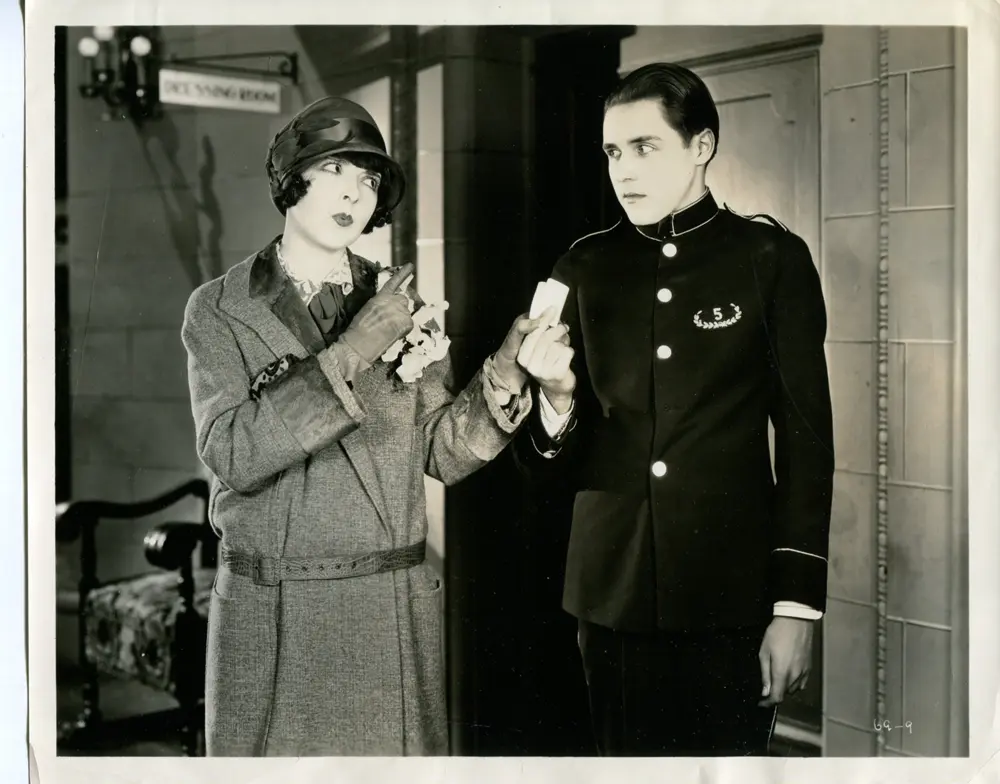
The premise is a classic Cinderella story with a twist, or perhaps, a 'Prince and the Pauper' where the prince is merely testing the waters. It's a narrative vehicle designed to explore themes of authenticity, class disparity, and the often-misguided pursuit of wealth over true affection. The film, written by Carey Wilson and Ralph Spence, doesn't delve into these themes with profound intellectual rigor, but rather uses them as a lighthearted scaffolding for its romantic comedy elements. It’s less about dissecting social stratification and more about celebrating the triumph of true love over superficial appearances.
What makes this particular iteration intriguing is Moore's ability to ground the fantasy. She doesn't play a damsel in distress; instead, Pink is a resourceful, spirited woman who navigates her circumstances with a pragmatic optimism. This portrayal lends a surprising amount of agency to a character who, in lesser hands, might have been a mere prop in a rich man's game. The film leans into the glamour of the hotel setting, using it as a stark visual contrast to Pink's working life, highlighting the 'orchids' (luxury) and 'ermine' (wealth) that define one world, versus the grit and honest labor of another.
The narrative, while simple, is executed with a lightness that perfectly suits the silent era's often exaggerated yet emotionally direct style. It's a testament to the era's ability to convey complex feelings through gesture and expression, often more powerfully than words.
The undeniable star of Orchids and Ermine is Colleen Moore. As 'Pink,' she is simply radiant, a force of nature that commands every frame she inhabits. Moore was one of the biggest stars of the silent era, known for her flapper image and vivacious screen presence, and this film perfectly showcases her enduring appeal. Her performance is a masterclass in silent acting, conveying a wide range of emotions with just a glance, a smile, or a perfectly timed gesture. She imbues Pink with an infectious optimism and a genuine sense of self-worth that transcends the character's social standing. When Pink dreams of a better life, Moore makes you believe in that dream, not as a naive fantasy, but as a deserved aspiration.
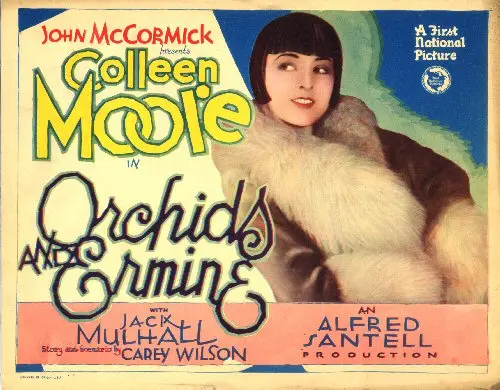
There's a scene where Pink, momentarily overwhelmed by the opulence around her, still maintains a dignified posture, her eyes sparkling with ambition rather than envy. It's a subtle moment, but it speaks volumes about Moore's ability to create a character who is both aspirational and deeply relatable. Her chemistry with Jack Mulhall, while not explosive, is charming and believable, built on a foundation of playful banter and unspoken understanding. She doesn't just play the role; she embodies the spirit of an era, a modern woman navigating traditional expectations.
Jack Mulhall, as the millionaire in disguise, provides a solid, if less flashy, counterpart to Moore. His performance is understated, providing the necessary grounding for Moore's more exuberant portrayal. He manages to convey both the charm of a man genuinely falling in love and the slight awkwardness of someone maintaining a charade. While his character could easily come across as manipulative, Mulhall plays him with a sincerity that makes his intentions feel honorable, even if his methods are questionable. The narrative requires us to believe in his genuine affection for Pink, and Mulhall delivers this with quiet conviction.
The supporting cast adds considerable texture to the film. Jed Prouty and Gwen Lee provide comedic relief and, at times, a subtle commentary on the superficiality of the wealthy elite. Their exaggerated reactions and often self-serving motivations serve as a foil to Pink's authenticity. It’s also fascinating to spot a very young Mickey Rooney in a brief, uncredited role. These early appearances, like Rooney's here, are always a treat for film historians, offering a glimpse at future legends in their nascent stages.
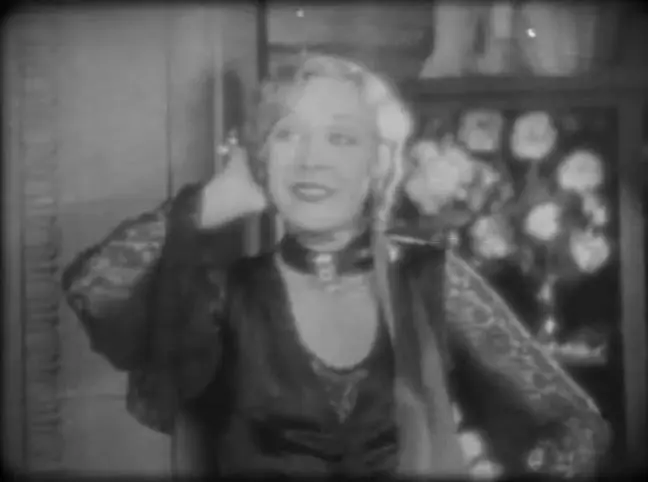
The ensemble works together to create a believable, if somewhat theatrical, world. The interactions, though silent, are fluid and well-choreographed, a testament to the directorial hand of Emmett J. Flynn. The film's energy largely stems from Moore, but the surrounding characters provide the necessary context and comedic beats to keep the story moving effectively.
Emmett J. Flynn's direction in Orchids and Ermine is competent and effective, showcasing a clear understanding of silent film aesthetics and pacing. Flynn, who also directed films like The Grip of Evil and The City, knew how to use visual language to compensate for the lack of dialogue. The film's visual style is clean and functional, prioritizing clarity of narrative and emotional expression over elaborate camera trickery. The sets, particularly the opulent hotel lobby and its various rooms, are designed to emphasize the disparity between Pink's world and the world of the wealthy. The use of deep focus in certain shots allows for multiple layers of action, drawing the viewer's eye across the bustling scenes.
The pacing, while slower than modern films, is typical of the era. Flynn allows scenes to breathe, giving the audience time to absorb the visual information and the emotional beats conveyed through the actors' expressions. This can feel deliberate to a contemporary viewer, but it's a fundamental aspect of silent film's charm. For instance, the extended sequence where Pink grapples with the idea of wealth versus love, shown through a series of close-ups and subtle shifts in her facial expressions, is beautifully handled, allowing the audience to truly connect with her internal struggle.
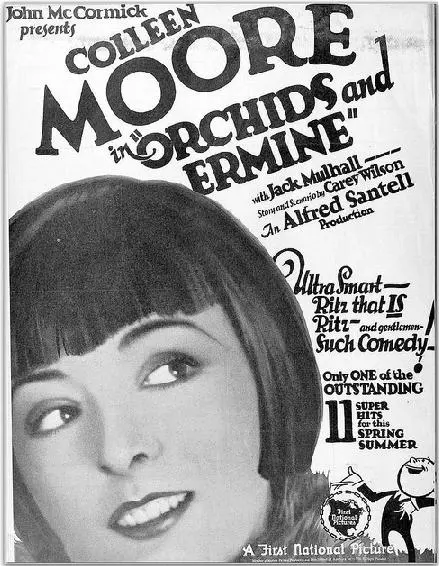
Cinematography, while not groundbreaking, is solid. The lighting is used effectively to highlight Moore's features, making her literally shine on screen. The contrast between the bright, airy spaces of the hotel and the slightly more confined, functional areas where Pink works is well-established through lighting and set design. There's a particular shot of Pink looking out from the telephone exchange, her face illuminated by a single lamp, contrasting with the blurred, bustling world outside; it's a simple yet powerful visual metaphor for her position.
The pacing of Orchids and Ermine is characteristic of late silent-era cinema. It builds its narrative steadily, allowing for character moments and comedic interludes to unfold naturally. Modern audiences, accustomed to faster cuts and more frenetic energy, might initially find it leisurely. However, once attuned to this rhythm, the film offers a satisfying progression. It’s a gentle current rather than a rushing river, carrying you along with its charm.
The tone is overwhelmingly lighthearted and romantic, with strong comedic undertones. While there's an inherent commentary on class differences, it's never heavy-handed. The film uses humor to address these disparities, suggesting that genuine character transcends wealth. There are moments of genuine pathos, particularly when Pink feels the sting of social judgment, but these are quickly balanced by her resilient spirit and the film's overall optimistic outlook. It's a feel-good film, designed to entertain and uplift, a common aim for romantic comedies of the period.
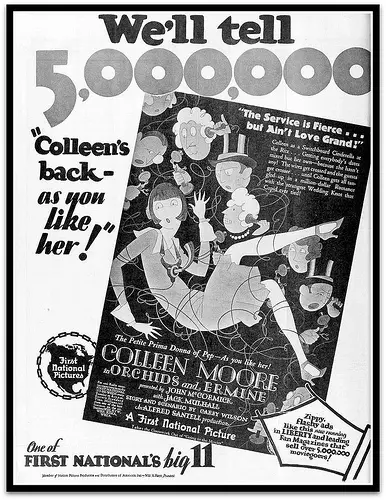
Thematic resonance, though not deeply explored, is present. The central theme revolves around authenticity and the idea that true love should be blind to social standing or wealth. The millionaire's disguise serves as a test, not just for Pink, but for himself – can he find love based on who he is, rather than what he owns? It’s a timeless question, presented here with a charming, if simplistic, resolution. This film, much like Chickie or Wild Primrose, explores the challenges faced by young women navigating societal expectations and romantic entanglements in a rapidly changing world.
One unconventional observation is how Orchids and Ermine, despite its lightheartedness, subtly critiques the superficiality of high society. The wealthy characters, aside from Mulhall's protagonist, are often portrayed as vapid, self-absorbed, or comically out of touch. This isn't groundbreaking social commentary, but it's a consistent undercurrent that gives the film a surprising edge. It suggests that while the 'ermine' might look luxurious, it often cloaks a lack of substance, an idea explored with more dramatic weight in films like Souls Enchained.
My strong, debatable opinion? While Colleen Moore is phenomenal, the film's reliance on the 'secret millionaire' trope, even then, felt a little too convenient. It's charming, yes, but it avoids a potentially more interesting narrative where Pink falls in love with a genuinely working-class man, or where the millionaire's wealth is revealed earlier, forcing a more complex exploration of their relationship dynamics. The final reveal, while satisfying for the romance, feels like a missed opportunity for deeper character conflict. It works. But it’s flawed.
Another debatable point: is the millionaire's deception truly romantic, or mildly condescending? One could argue that testing someone's love by hiding one's true identity is inherently manipulative, regardless of the 'good' intentions. The film, of course, frames it as endearing, a noble quest for true love, but a modern lens might view it with more skepticism. This doesn't detract from the film's entertainment value, but it's a thought worth pondering.
Orchids and Ermine is a delightful, if not revolutionary, silent film that largely succeeds on the strength of its lead, Colleen Moore. Her vibrant performance injects life into a familiar romantic premise, making it enjoyable even for those who might typically shy away from silent cinema. While its plot is straightforward and its pacing deliberate, these are less flaws and more characteristics of its era. It's a charming time capsule, reflecting the aspirations and romantic ideals of the 1920s.
For silent film enthusiasts, it's an absolute must-see, a testament to Moore's enduring appeal. For casual viewers, approach it with an open mind and an appreciation for cinematic history, and you might find yourself surprisingly captivated by its old-fashioned charm. It's not a profound cinematic statement, but it is a thoroughly pleasant one, proving that sometimes, a simple story, well-told and brilliantly performed, is all you need. It’s a solid entry in the annals of romantic comedy, a testament to the power of a genuine smile and a well-timed glance. Go in expecting a sweet, engaging silent romance, and you won't be disappointed.
IMDb 7
1930
Community
Log in to comment.