DbcultAccessing Vault...
Cult Review
Senior Film Conservator
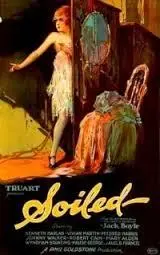
Is 'Soiled' worth watching today? Short answer: yes, but with significant caveats that demand a specific kind of viewer. This film is a fascinating historical artifact best suited for dedicated silent film scholars and those with a high tolerance for early melodrama, but it will likely alienate casual viewers expecting modern pacing or nuanced character development.
For those willing to engage with its historical context, 'Soiled' offers a compelling window into the narrative conventions and emotional landscape of early 20th-century cinema. It’s a film that asks for patience and an appreciation for foundational storytelling, rather than instantaneous gratification.
This film works because: It provides a compelling glimpse into early cinematic storytelling, particularly its ambitious race sequence and the raw, unpolished performances that convey genuine human desperation, effectively capturing the moral dilemmas of its era.
This film fails because: Its narrative relies heavily on melodramatic contrivances and a somewhat simplistic moral framework, which can feel dated and predictable to a contemporary audience, often sacrificing subtlety for immediate emotional impact.
You should watch it if: You are a student of film history, an admirer of early acting styles, or someone who appreciates the foundational elements from which modern cinema evolved, especially if you have a soft spot for silent-era thrillers and moral dilemmas that explore sacrifice and redemption.
'Soiled' is, at its heart, a quintessential melodrama of the silent era. It dives headfirst into themes of moral compromise, sacrifice, and the precariousness of virtue, all set against a backdrop of stark class distinctions. The tone is earnest, almost relentless in its pursuit of emotional highs and lows, a common characteristic of films from this period designed to elicit strong audience reactions without the aid of spoken dialogue.
The film’s pacing, while perhaps jarring to modern sensibilities, was entirely typical for its time. Events unfold rapidly, often with little setup, transitioning from a desperate family crisis to a high-stakes sporting event with a briskness that demands engagement. This isn't a film that lingers; it propels its characters from one dramatic predicament to the next with an almost breathless urgency.
Consider Mary Brown’s initial predicament: the revelation of her brother’s theft and her subsequent negotiation with John Duane. This entire sequence is orchestrated to maximize emotional tension, presenting Mary with an impossible choice. The film doesn't shy away from the gravity of her potential sacrifice, using close-ups and exaggerated gestures – as was the style – to convey her inner turmoil. It's a testament to the power of early cinema that such a complex moral dilemma could be communicated so effectively without a single spoken word, relying instead on visual storytelling and the audience's inherent empathy.
Some might argue that this reliance on broad strokes and overt emotionality is a weakness, a sign of narrative immaturity. However, I maintain that early melodrama, for all its perceived excesses, forged a direct and powerful connection with its contemporary audiences. It was a cinema of feeling, designed to bypass intellectual analysis and go straight for the gut. While it might feel less sophisticated than later narrative forms, its effectiveness in its own time is undeniable and, frankly, quite admirable.
The acting in 'Soiled' is a masterclass in silent film performance, relying on a lexicon of gesture, facial expression, and body language that has largely been lost in contemporary cinema. Mary Alden, as Mary Brown, anchors the film with a portrayal that balances vulnerability with a fierce, albeit desperate, resolve. Her expressions, from the initial shock of her brother's crime to the agonizing contemplation of Duane's offer, are clear and impactful, guiding the audience through her emotional journey.
Kenneth Harlan, playing the heroic race-car driver Jimmie, embodies the ideal of the earnest, self-sacrificing sweetheart. His performance is characterized by a youthful exuberance and a palpable sense of determination, especially evident in the scenes leading up to the 'Big Race'. You can feel his character's earnestness through his physical presence, even when the situations veer into the improbable.
Wyndham Standing, as the predatory John Duane, delivers a performance that is subtly chilling. He isn't a mustache-twirling villain in the most exaggerated sense, but rather a man whose smooth demeanor barely conceals his opportunistic and morally bankrupt nature. Standing uses his posture and a certain calculating stillness to convey Duane's menace, making him a more insidious threat than a bombastic one. It's an unconventional observation, but Standing’s understated portrayal of the villain is almost more compelling in its quiet assuredness than Harlan’s more overtly heroic, but sometimes less nuanced, Jimmie. The sheer simplicity of Duane’s motivations makes him a stark, effective antagonist.
The challenge for these actors was immense: to convey complex emotions and motivations without dialogue, relying solely on their physicality and the director's guidance. The performances in 'Soiled' are a testament to their skill, demonstrating how a well-trained silent actor could imbue a character with depth and resonance, even within the confines of a melodramatic plot.
While 'Soiled' might not immediately leap to mind as a technical marvel alongside films like The Vampires: The Poisoner or even later epics, it certainly showcases the burgeoning innovations of its era, particularly in its ambitious 'Big Race' sequence. Filming a car race in the early 20th century was no small feat, requiring ingenuity in camera placement, editing, and perhaps even early special effects or miniature work to convey the speed and danger.
The director and cinematographer must have faced considerable challenges in capturing the dynamism of a race. We can infer the use of multiple camera angles, cutting between wide shots of the track and closer shots of Jimmie's determined face, even if the execution feels rudimentary by today's standards. This sequence is a clear highlight, demonstrating the filmmakers' desire to push beyond static theatrical staging and embrace the unique capabilities of the moving image. It works. But it’s flawed.
The visual storytelling is direct. When Jimmie’s tire blows, the impact is communicated through a sudden, jarring cut and the immediate visual of his car veering. This bluntness, while lacking the sophisticated slow-motion or CGI of modern racing films, carries its own raw power. It’s a moment designed to shock and disappoint, and it largely succeeds. The camera’s focus on the immediate aftermath, and the despair on Jimmie’s face, underscores the dramatic weight of the setback.
Furthermore, the film's overall visual style, while adhering to the conventions of its time – often static cameras, reliance on intertitles – still manages to frame its emotional beats effectively. The contrast between the opulent, almost predatory environment of John Duane and the simpler, more desperate world of Mary and Jimmie is conveyed through set design and lighting choices, however subtle they might appear through the lens of a century of cinematic evolution.
The narrative of 'Soiled' is a tightly wound spring, moving from one crisis to another with little downtime. This rapid pacing is characteristic of early cinema, which often sought to maximize plot density to hold audience attention in a new medium. The shift from Mary’s moral dilemma to Jimmie’s race is abrupt, almost jarringly so by today’s standards, yet it ensures the story never truly sags.
The film juggles two primary narrative threads: Mary’s desperate attempt to save her brother and preserve her honor, and Jimmie’s heroic, albeit ill-fated, effort to win the race and provide the money. These threads are skillfully intertwined, with the outcome of one directly impacting the other. The tension builds effectively as the clock ticks down towards the race's conclusion and, implicitly, towards Mary's potential fate.
One could argue that the film sacrifices character development for plot propulsion. While we understand Mary’s motivations and Jimmie’s devotion, the deeper psychological nuances are left unexplored, typical for the era. The characters serve the plot, pushing the melodramatic narrative forward with clear, archetypal roles. This isn't a criticism, merely an observation of a different storytelling philosophy.
The final act, with Jimmie’s blown tire and the subsequent scramble to sell the damaged car, introduces a last-minute twist that might feel contrived to a modern audience. However, within the context of silent melodrama, such eleventh-hour reversals and improbable solutions were often expected, serving to heighten the emotional stakes and provide a final surge of hope or despair. The abruptness of these shifts, while jarring now, might have been seen as dynamic and exciting by contemporary viewers, keeping them on the edge of their seats.
Yes, 'Soiled' is absolutely worth watching today, but with a specific mindset. It’s not a film for passive consumption or for those seeking a light, easily digestible narrative. This is a film for the curious, for the cinephile who wants to understand the roots of cinematic storytelling and witness the evolution of the medium firsthand. It offers a unique window into the moral panic and societal concerns of its time, presented through the lens of a compelling, if dramatically heightened, narrative. It serves as an excellent case study for anyone interested in the foundational elements of film, from early acting techniques to the challenges of filming action sequences in the pre-sound era. It's a piece of history that still manages to evoke genuine emotion.
‘Soiled’ is more than just a relic; it’s a vibrant, if sometimes quaint, testament to the power of early cinema. It demands an audience willing to meet it on its own terms, to appreciate its historical context and its foundational contributions to storytelling. While its melodramatic excesses and straightforward morality might test the patience of some, its raw emotional power, particularly in Mary Alden’s desperate struggle and the thrilling race sequence, remains undeniable. It’s not a flawless film, nor is it a universal recommendation, but for those with an appetite for cinematic history and the silent era’s unique charm, 'Soiled' offers a compelling, often poignant, and ultimately rewarding experience. It’s a film that, despite its age, still manages to grapple with themes that resonate, albeit through a different stylistic lens.
IMDb —
1921
Community
Log in to comment.