DbcultAccessing Vault...
6.9/10
Senior Film Conservator
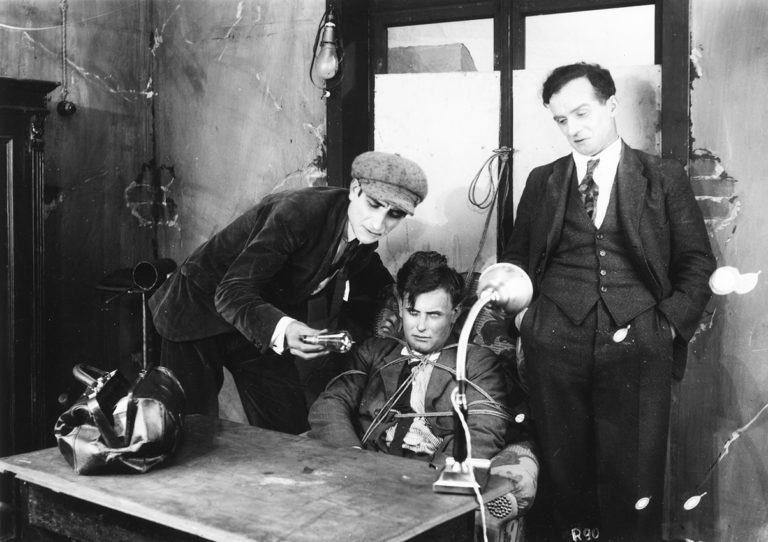
A definitive 6.9/10 rating for a film that redefined the boundaries of cult cinema. Otrávené svetlo remains a cornerstone of transgressive art.
Stepping into the spectral glow of Otrávené svetlo (Poisoned Light) is akin to unearthing a forgotten, yet profoundly resonant, time capsule from the nascent era of Czech cinema. This 1923 silent film, a collaborative vision from the prolific minds of Karel Lamac and Jan S. Kolár, transcends mere historical curiosity, asserting itself as a potent allegorical drama that speaks volumes about the human condition, even a century later. It is a work that, through its stark visual poetry and nuanced performances, dissects the perilous intersection of scientific idealism, corporate greed, and the deceptive allure of progress.
At its luminous core, the narrative orbits around Jan Tichý, brought to life with an exquisite blend of vulnerability and fervent intellect by the remarkable Antonín Marek. Tichý is a reclusive physicist, a man of pure scientific devotion, whose life's work culminates in the invention of a revolutionary phosphorescent material. This is no ordinary light; it's an ethereal, perpetual glow, born from the very essence of discovery, promising to banish darkness from the world without the crude necessity of electricity. Marek imbues Tichý with a wide-eyed idealism, a touching naiveté that makes his eventual descent all the more poignant. His initial scenes, bathed in the soft, otherworldly luminescence of his creation, evoke a sense of almost spiritual purity, a scientist as a modern-day alchemist, seeking to transmute the mundane into the miraculous.
However, this beacon of hope soon attracts the predatory gaze of Baron Kámen, a character of chilling pragmatism and unyielding ambition, masterfully portrayed by Josef Blazek. Blazek's Kámen is not a caricature of evil, but rather a chillingly realistic embodiment of unchecked capitalism—a man whose vision is singularly focused on profit, for whom innovation is merely a commodity to be exploited. His machinations are subtle, insidious, a spider weaving a web of financial entanglement around the unsuspecting Tichý. The Baron’s scenes are often framed in stark contrast to Tichý’s laboratory, featuring opulent, shadowed interiors that hint at the moral darkness lurking beneath a polished surface. The film's visual language here is particularly effective, using chiaroscuro to emphasize the moral dichotomy between the two men.
Kámen's primary instrument in his scheme is Helena, a captivating socialite whose allure is as potent as Tichý's phosphorescent glow, and perhaps even more dangerous. Anny Ondra, a luminary of early Czech cinema, delivers a performance of breathtaking complexity as Helena. Initially, she is presented as a pawn, a beautiful, calculating tool in Kámen's arsenal, tasked with charming the guileless inventor into relinquishing his rights. Ondra's Helena is not a one-dimensional femme fatale; her initial coldness gradually gives way to a profound internal conflict. As she spends more time with Tichý, witnessing his unshakeable idealism and the slow, insidious corruption of his noble dream, a flicker of conscience ignites within her. Her expressive eyes, a hallmark of silent film acting, convey a compelling journey from cynical detachment to a burgeoning, tragic empathy. One might draw a thematic parallel to characters found in films like A Gutter Magdalene or even A Factory Magdalen, where women navigate morally ambiguous worlds, often as victims or agents of societal pressures, but Helena's arc feels particularly nuanced in its exploration of agency and complicity.
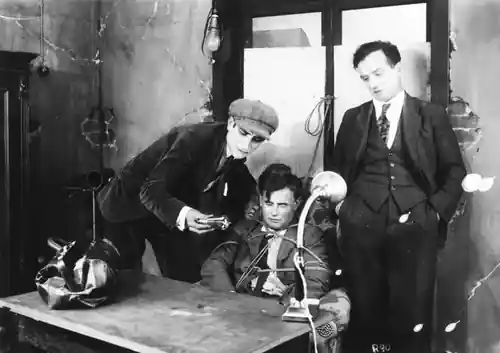
The true genius of Otrávené svetlo lies in its titular metaphor. The phosphorescent light, Tichý’s brainchild, is initially portrayed as a symbol of hope and progress. Yet, as the narrative unfolds, its insidious nature is subtly revealed. Prolonged exposure to its beautiful, ethereal glow is shown to cause psychological distress, hallucinations, and a gradual erosion of mental clarity. This is where the film transcends a simple melodrama, becoming a profound commentary on the double-edged sword of progress. The very thing designed to illuminate and uplift becomes a source of suffering, mirroring the moral decay that Kámen's ambition unleashes upon Tichý's dream. The film dares to ask: what is the cost of beauty, of innovation, when it is untethered from ethical consideration? Is the light truly poisoned, or is it merely reflecting the poisoned souls of those who wield it?
The direction by Karel Lamac, a master craftsman of early European cinema, is both innovative and deeply empathetic. Lamac, who also co-wrote the screenplay with Jan S. Kolár, demonstrates a keen understanding of visual storytelling in the silent era. He employs a striking use of close-ups to capture the raw emotions of his cast, particularly Ondra's conflicted expressions and Marek's growing disillusionment. The cinematography is often breathtaking, utilizing practical effects to create the mesmerizing glow of Tichý's invention, making it feel both tangible and otherworldly. The film’s pacing is deliberate, allowing the psychological tension to build gradually, punctuated by moments of dramatic intensity. The interplay of light and shadow is not merely aesthetic; it is integral to the narrative, visually articulating the film's central themes of illusion versus reality, and purity versus corruption. The scenes depicting the light's detrimental effects, though rendered without sound, are chillingly effective, relying on exaggerated expressions and subtle camera tricks to convey the characters' descent into madness.
The supporting cast, including Karel Fiala, Anna Lamacová-Karinská, and Vojtech Záhorík, contribute to the film's rich tapestry, each adding depth to the world of Otrávené svetlo. Jirina Janderová and Mása Kolárová, though perhaps in smaller roles, help flesh out the societal backdrop against which Tichý's drama unfolds. The presence of figures like Alfred Bastýr, Jindrich Lhoták, and Václav Prazský, even in brief appearances, grounds the narrative in a believable, if heightened, reality. The ensemble's silent performances are a testament to the era's unique acting demands, relying heavily on exaggerated gestures and facial expressions to convey complex emotions without spoken dialogue.
The screenplay, a collaboration between Lamac and Kolár, is remarkably sophisticated for its time. It avoids simplistic good-versus-evil tropes, instead delving into the moral ambiguities that define its characters. Kámen, while villainous, is driven by a recognizable human desire for power and wealth. Helena, despite her initial complicity, grapples with a burgeoning conscience. Tichý, the pure idealist, must confront the devastating consequences of his own creation. This narrative complexity elevates the film beyond a mere cautionary tale, inviting audiences to ponder the nuances of human motivation. The dialogue, conveyed through intertitles, is spare yet impactful, allowing the visuals to carry the brunt of the storytelling.
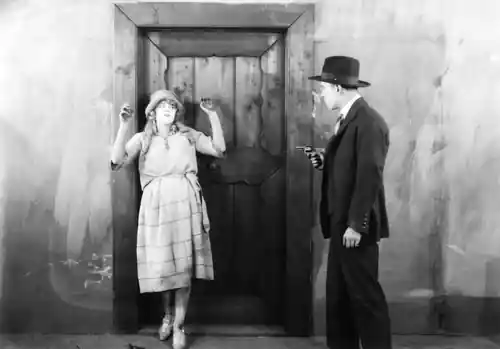
Comparisons to other silent films of the period are inevitable and often illuminating. While not directly a crime serial like Tih Minh, Otrávené svetlo shares a similar sense of unfolding mystery and impending dread. The themes of illusion and deception, particularly regarding the nature of the light itself, resonate with the thematic undercurrents found in films such as The Dust of Egypt, where ancient secrets and hidden dangers lurk beneath a seemingly beautiful surface. Moreover, the tragic romantic elements and the exploration of societal constraints on individuals might find echoes in melodramas like Hearts and Diamonds, albeit with a uniquely Czech sensibility.
The film also touches upon anxieties surrounding technological advancement, a burgeoning concern in the early 20th century. The idea that something designed for good could have unforeseen, detrimental effects reflects a broader cultural trepidation that would only intensify with time. In this regard, Otrávené svetlo is remarkably prescient, anticipating debates about scientific ethics and corporate responsibility that continue to this day. It’s a testament to the film’s enduring relevance that its core message about the seductive yet destructive power of unchecked ambition feels as urgent now as it must have felt a century ago.
The craft on display extends to every detail. The set design, though perhaps modest by today's standards, effectively conveys the stark contrast between Tichý's humble, cluttered laboratory and Kámen's imposing, almost sterile, corporate spaces. The costumes, particularly Helena's elegant gowns, serve as visual shorthand for her social status and her role as a tool of manipulation. Even the minor characters, like Jindrich Edl, Emil Artur Longen, Jirí Hoyer, Jan S. Kolár (also a writer), and Josef Sváb-Malostranský, contribute to the authenticity of the film's world, creating a believable social fabric around the central drama. Their collective efforts ensure that the world of Otrávené svetlo feels lived-in and fully realized.
Otrávené svetlo is not merely a historical artifact; it is a vibrant, compelling piece of cinema that holds up remarkably well. Its themes are universal, its performances are captivating, and its visual storytelling is masterful. It serves as a stark reminder that the pursuit of progress, while noble, must always be tempered by ethical considerations. The film’s ability to evoke such profound questions through purely visual means is a testament to the power of silent cinema and the enduring artistry of its creators. It invites viewers to look beyond the surface, to question the nature of beauty, and to recognize the potential for darkness even within the brightest light. For anyone interested in the rich history of European cinema, or simply in a powerful, thought-provoking drama, this Czech gem is an absolute must-see, a haunting glow that lingers long after the final frame.
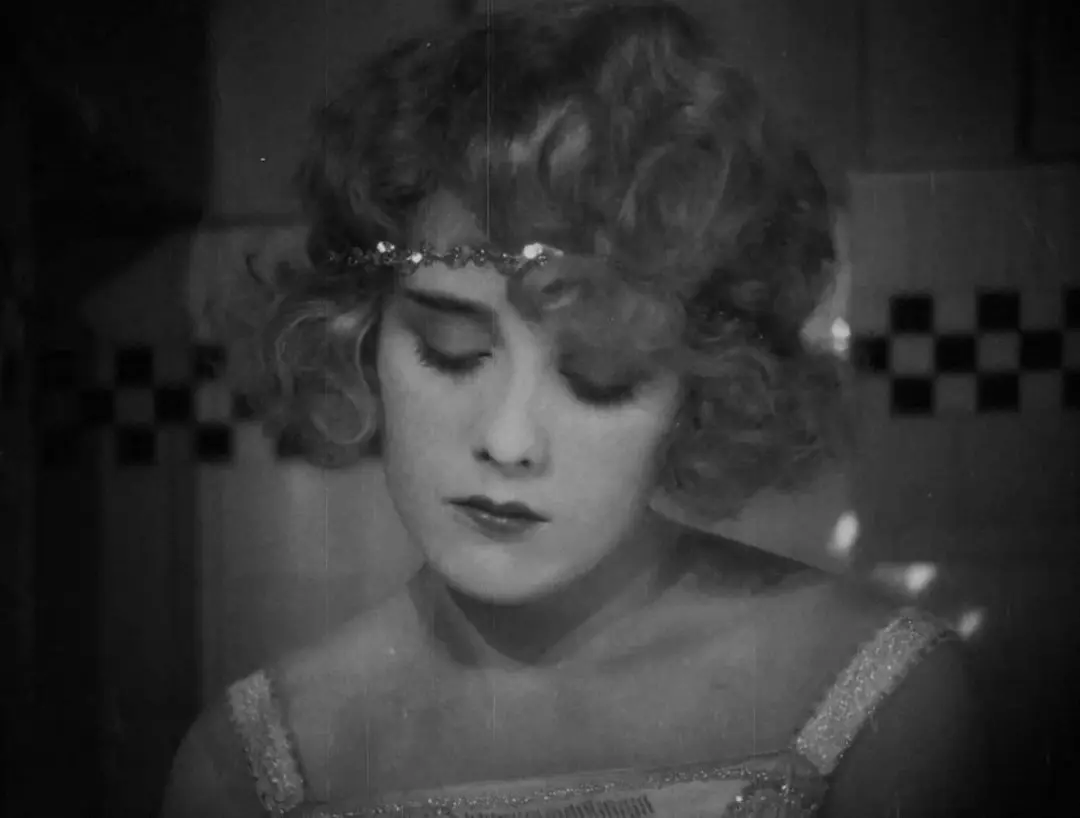
The film's impact on subsequent Czech cinema is undeniable, setting a high bar for dramatic complexity and visual innovation. It demonstrated that silent films could tackle weighty philosophical questions with grace and power, paving the way for future generations of filmmakers. The collaborative synergy between Lamac and Kolár, both as writers and Lamac as director, created a cohesive vision that feels remarkably modern in its thematic depth. It's a film that demands reflection, prompting audiences to consider the unseen costs of ambition and the true nature of enlightenment. The 'poisoned light' ultimately becomes a mirror, reflecting not just the characters' fates, but also the broader societal anxieties of an era grappling with rapid change and the often-unforeseen consequences of human ingenuity.
In an age where technological advancements often outpace ethical discussions, Otrávené svetlo stands as a timeless cautionary tale. It meticulously builds a world where innovation, initially celebrated, slowly reveals its capacity for destruction, both physical and psychological. The film masterfully uses the medium of silent cinema to convey this complex message, relying on the actors' nuanced expressions, the evocative cinematography, and the powerful symbolism of the light itself. It is a work that deserves rediscovery, a beacon of early cinematic artistry that continues to illuminate the timeless struggle between human idealism and the darker impulses that can corrupt even the most noble intentions. This is not just a film about a light; it is a profound meditation on the very essence of human progress and its moral implications.
The narrative's climax, where Tichý finally uncovers the truth about his invention's toxicity and Kámen's deceit, is handled with a dramatic intensity that holds up even without dialogue. Antonín Marek’s portrayal of Tichý's disillusionment, his eyes once filled with scientific wonder now clouded with sorrow and anger, is particularly powerful. Anny Ondra’s Helena, by this point, has undergone her own transformation, her initial coldness replaced by a desperate attempt to rectify the wrongs she unwittingly facilitated. The final confrontation is less about physical violence and more about the shattering of ideals, the stark realization that the light he created, meant to bring clarity, has instead brought a profound, psychological darkness. It's a testament to the film's artistry that this emotional climax resonates so deeply, relying solely on the power of visual storytelling and the actors' profound understanding of their characters' inner turmoil.
The film leaves a lasting impression, not just for its technical prowess or its historical significance, but for its deeply philosophical undertones. It asks us to consider the responsibility that comes with creation, the moral compass that must guide innovation, and the insidious ways in which purity of intent can be corrupted by external forces. Otrávené svetlo is a masterclass in silent film storytelling, a compelling blend of melodrama, social commentary, and psychological drama that continues to shine its poignant, if poisoned, light on the enduring complexities of the human spirit. Its legacy is not just in its existence, but in its continued ability to provoke thought and stir emotion, proving that true cinematic art transcends the boundaries of time and technology.
IMDb —
1933
Community
Log in to comment.