DbcultAccessing Vault...
7.1/10
Senior Film Conservator
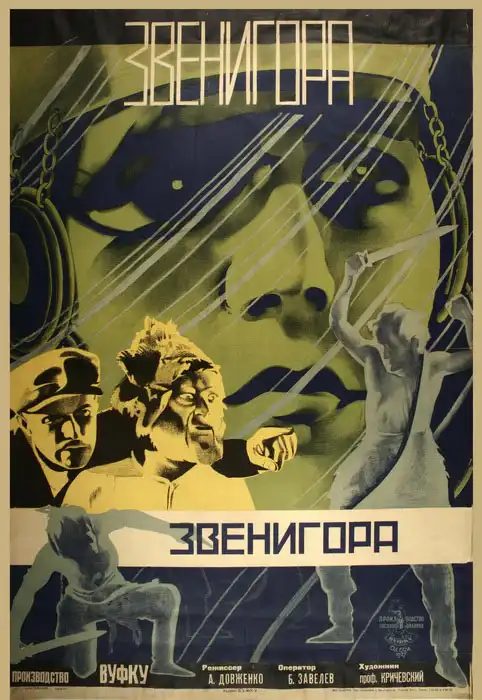
A definitive 7.1/10 rating for a film that redefined the boundaries of cult cinema. Zvenigora remains a cornerstone of transgressive art.
Alexander Dovzhenko’s Zvenigora is not a film you watch for the plot; it is a film you experience as a series of rhythmic, often baffling visual shocks. It is absolutely worth watching today if you have an interest in the history of cinema or the roots of Ukrainian national identity, but casual viewers looking for a linear story will likely find it impenetrable. This is a film for those who appreciate the experimental energy of the 1920s—think the rhythmic editing of Fièvre but with a much more aggressive, sprawling historical scope.
The film doesn't move through time so much as it collapses it. We start with ancient Scythian treasures and Viking invaders, then suddenly find ourselves in the middle of World War I and the Russian Revolution. The connective tissue is the Grandfather, played by Nikolai Nademsky with a performance that feels less like acting and more like a landscape coming to life. He is caked in grime and age, looking like he has been sitting on that mountain for a thousand years.
One of the most striking sequences involves the Grandfather trying to show a group of people the hidden treasure. He digs into the earth, and through a series of double exposures and surreal edits, we see what he sees—ancient warriors and gold—only for the reality to be a dusty hole in the ground. It’s a concrete representation of how folklore can blind a person to the material reality of their present. Dovzhenko doesn't mock the old man, but he clearly views him as a relic that cannot survive the coming industrial age.
The narrative eventually settles on the Grandfather’s two grandsons, Tymish and Pavlo. Tymish is the sturdy, somewhat boring Soviet hero, while Pavlo is the more cinematically interesting failure. Pavlo’s journey takes him to Prague and Paris, and these sequences feel entirely different from the earthy, dusty scenes in Ukraine. There is a bizarre, theatrical moment where Pavlo attempts to shoot himself on a stage in front of a tuxedo-clad audience, only to have the gun fail. It’s a strange tonal shift that borders on dark comedy, highlighting the decadence Dovzhenko wanted to criticize.
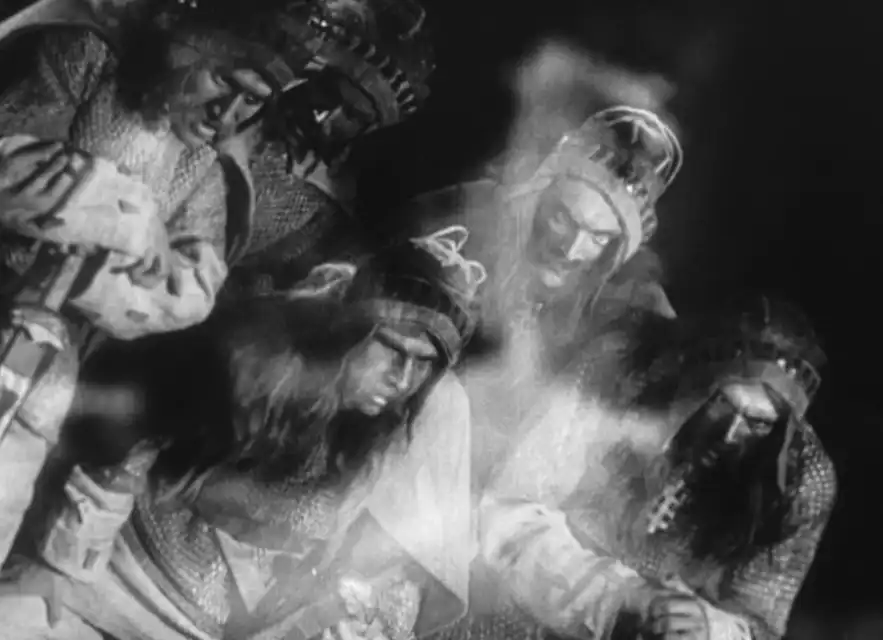
The editing rhythm here is frantic. Unlike the slow, somber pacing of Dovzhenko's later work, *Earth*, Zvenigora feels like a director trying to use every trick in the book at once. There are moments where the jump cuts feel decades ahead of their time, and others where the lack of clear transition makes it nearly impossible to tell who is fighting whom or why we have suddenly jumped five hundred years into the future.
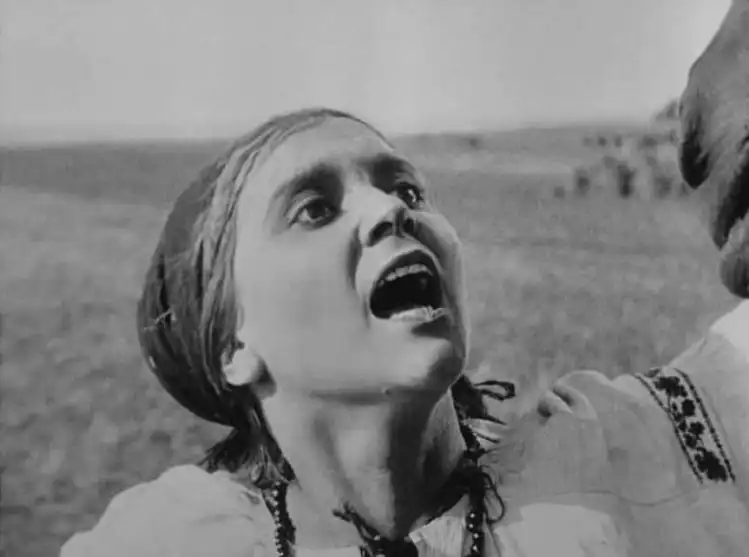
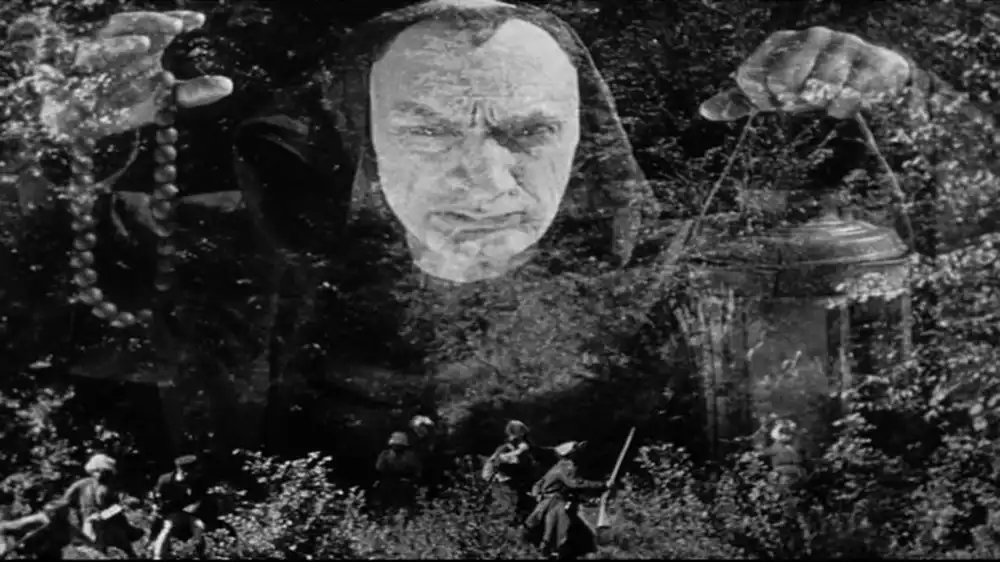
Visually, the film is a feast of high-contrast cinematography. Dovzhenko uses the horizon line of the Ukrainian steppe to create incredible silhouettes. There is a recurring motif of horses—some real, some skeletal—that gives the film a ghostly, spectral quality. You can almost feel the heat and the dust in the outdoor scenes. The lighting in the forest sequences is particularly effective, with shafts of light breaking through dense foliage to illuminate the Grandfather as if he were a religious icon.
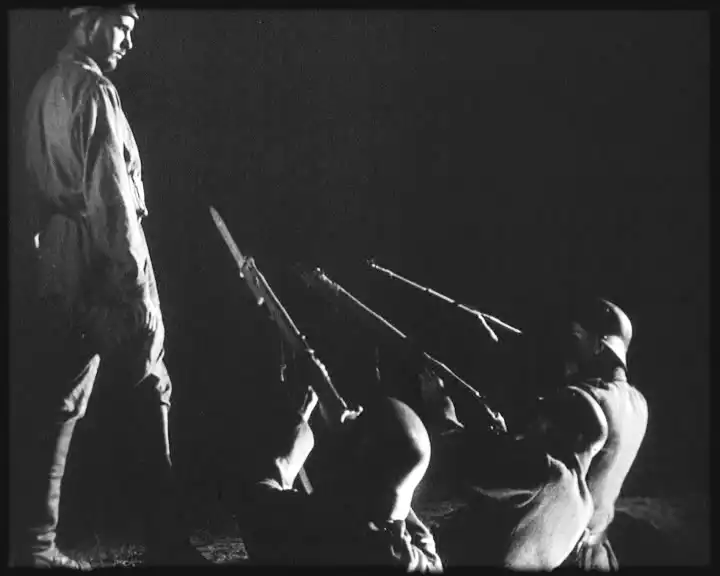
However, the film’s reliance on symbolic imagery can be exhausting. There is a scene involving a monk that feels overlong and relies on a level of cultural shorthand that might be lost on modern audiences. If you aren't familiar with the specific political upheavals of 1917-1920 in Ukraine, the final third of the film can feel like a blur of bayonets and steam engines.
Zvenigora is a loud, messy, brilliant piece of filmmaking. It lacks the polish and thematic clarity of later silent masterpieces like Hilde Warren und der Tod, but it makes up for it with sheer audacity. It is a film that demands you look at it, even when you aren't entirely sure what you are looking at. If you can handle the tonal whiplash and the lack of a traditional protagonist, it offers some of the most indelible images in the history of Soviet-era cinema. It is a vital, breathing piece of art that refuses to be forgotten, even if it refuses to be easily understood.
IMDb 7.1
1931
Community
Log in to comment.