DbcultAccessing Vault...
Cult Review
Senior Film Conservator
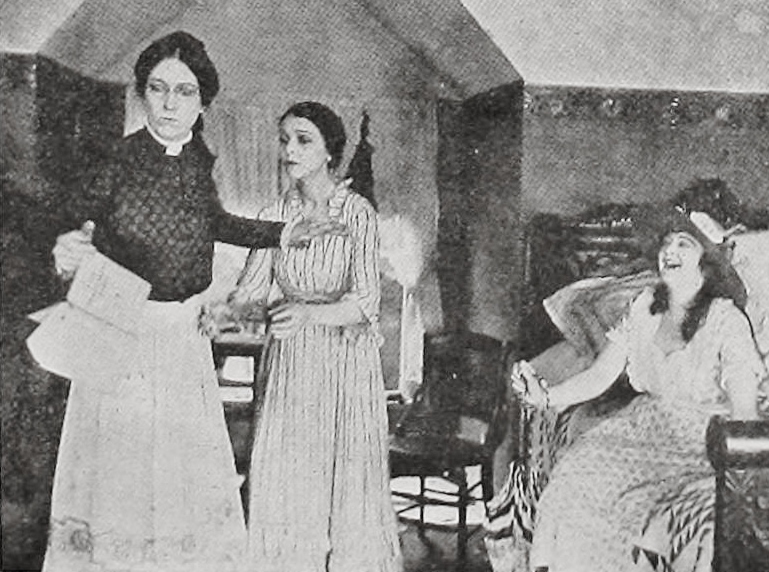
To watch Heart of Twenty (1920) is to witness a fascinating intersection of post-Victorian morality and the burgeoning cynicism of the Jazz Age. Directed with a steady, if conventional, hand, the film serves as a vehicle for the idiosyncratic talents of Zasu Pitts, an actress whose very physicality—all fluttering hands and wide, apprehensive eyes—redefined the 'waif' archetype for a generation. Unlike the more robust heroines found in contemporary works like A Girl Like That, Pitts’ Katie Abbott is a study in internalised despair. The opening sequence, where she contemplates suicide in the village pond, is filmed with a starkness that belies the era's penchant for melodrama, grounding the film in a psychological reality that feels surprisingly modern.
The narrative architecture, penned by the prolific Sarah Y. Mason, utilizes a dual-track progression. On one hand, we have the intimate, emotional trajectory of Katie’s self-actualization; on the other, a burgeoning political thriller centered on industrial malfeasance. This juxtaposition reminds one of the thematic density found in Stolichnyi iad, where urban decay and personal ruin are inextricably linked. In Heart of Twenty, the automobile factory serves as a microcosm for a changing America—a place of technological promise that simultaneously harbors the ancient vices of greed and exploitation.
The brilliance of the film rests almost entirely on Pitts' shoulders. While many silent film stars relied on grand, sweeping gestures to convey pathos, Pitts operates in the realm of the minute. Her portrayal of a young woman who feels 'invisible' is heart-wrenching because it is so recognizable. When she is rescued by the 'nice young man' (played with a breezy, athletic charm by Tom Gallery), her reaction isn't one of immediate romantic rapture, but rather a slow, painful thawing of the soul. This nuanced performance elevates the film beyond the standard 'damsel in distress' tropes seen in Poor Karin or the more sensationalist The Jockey of Death.
Pitts’ chemistry with Gallery is palpable, yet it is her interaction with Percy Challenger’s Henry Higginbotham that provides the film’s moral backbone. Higginbotham is the quintessential 'little man,' a clerk whose conscience outweighs his ambition. His resignation from the factory upon discovering Wiseman’s theft ring is a moment of quiet heroism that mirrors the overt physical heroism of Gallery’s character. It is Katie who bridges these two worlds, transforming from a passive victim into a political strategist. Her insistence that Higginbotham run for mayor is the film’s turning point, signaling her transition from a wallflower to a catalyst for social change.
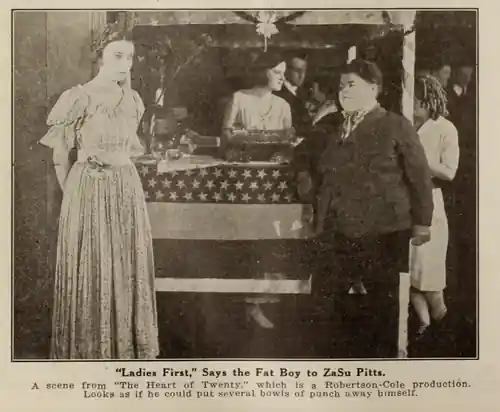
J. W. Wiseman, portrayed with oily sophistication by Charles Herzinger, represents the dark side of the American Dream. His auto theft ring is not merely a criminal enterprise; it is a perversion of the very industry that was supposed to bring prosperity to the town. The film’s exploration of white-collar crime feels remarkably prescient. While films like High Stakes dealt with individual gambling and vice, Heart of Twenty tackles systemic corruption. Wiseman’s attempt to secure the mayoralty is a classic power play—using the legitimacy of office to shield his illicit activities.
The election sequences are among the most engaging in the film. Higginbotham’s failure as an orator provides a touch of 'Everyman' comedy, yet it underscores a deeper truth about the difficulty of truth-telling in a world captivated by polished rhetoric. The tension builds effectively, leading to the third-act revelation that the mysterious rescuer is actually an undercover reporter. This 'deus ex machina' of the Fourth Estate was a popular trope in the 1920s, reflecting a cultural belief in the power of the press to act as a check on power—a theme also explored in The Silent Avenger.
When placed alongside other films of the era, such as The Madonna of the Slums, Heart of Twenty distinguishes itself through its focus on the burgeoning middle class rather than the extreme poor or the decadent rich. It is a film about the 'in-between' people. Its pacing is more deliberate than the action-oriented The Sky Hunters, allowing for character beats that resonate long after the credits roll. The cinematography, while not as experimental as the German Expressionist influence found in Die Schuld der Lavinia Morland, utilizes natural light in the pond scenes to create an ethereal, almost haunting atmosphere.
The film also touches upon themes of national identity and civic duty, echoing some of the sentiments found in Guarding Old Glory, albeit on a much more localized, domestic scale. The idea that a small-town election can be a battleground for the soul of the nation was a potent one in 1920, as America grappled with the aftermath of the Great War and the onset of Prohibition. The resolution, while perhaps too tidy for modern sensibilities, offers a cathartic sense of justice that was the hallmark of the Mason-penned scripts.
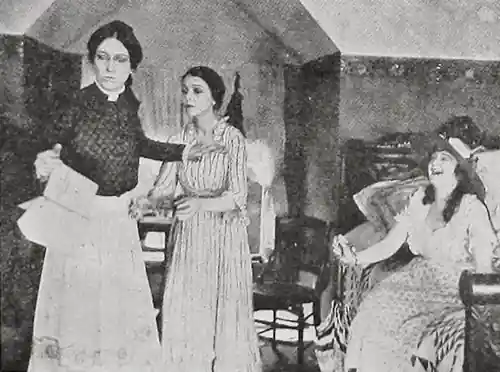
Sarah Y. Mason’s screenplay is a marvel of economy. She manages to weave together three distinct plot lines—the romance, the crime syndicate, and the political race—without losing the central focus on Katie’s emotional journey. The dialogue cards are peppered with a wit that suggests a deep understanding of human foibles. This narrative dexterity is far superior to the somewhat disjointed structure of The Question or the overly theatrical My Lady's Slipper.
The direction by Jack Pratt (who also appears in the cast) is unobtrusive, allowing the actors' expressions to drive the story. This was a crucial period in film history where the camera was beginning to move more freely, and while Heart of Twenty remains largely static, the framing of the factory floor and the town square creates a strong sense of place. The factory itself feels like a character—a noisy, oily behemoth that looms over the town’s inhabitants. This industrial aesthetic provides a sharp contrast to the pastoral stillness of the pond where the film begins and ends.
In the final analysis, Heart of Twenty is more than just a quaint relic of the silent era. It is a testament to the enduring power of the 'underdog' story. Zasu Pitts’ performance remains a masterclass in screen acting, proving that vulnerability can be a form of strength. The film’s critique of corporate greed and political corruption remains relevant, a sobering reminder that the 'Wisemans' of the world are always with us, waiting to exploit the unsuspecting for their own gain.
The film’s conclusion, which sees Wiseman arrested and Higginbotham elected, might seem idealistic, but it serves a vital social function. It reinforces the idea that the individual—no matter how small or 'wallflower-like'—has the power to effect change. When Katie marries her hero, it isn't just a romantic reward; it is a symbolic union of the domestic and the civic, the personal and the political. It is the heart of twenty, beating with the hope of a new decade.
For those interested in the evolution of the social drama, Heart of Twenty is an essential watch. It lacks the exoticism of The Tong Man or the survivalist grit of Out of the Snows, but it possesses a grounded, humanistic warmth that is rare. It is a film that respects its characters and, by extension, its audience, offering a nuanced look at the complexities of the human heart in a rapidly changing world. The interplay of shadow and light, both literally in the cinematography and figuratively in the plot, makes for a viewing experience that is as intellectually stimulating as it is emotionally resonant.
Ultimately, Heart of Twenty stands as a pivotal work in Zasu Pitts' filmography. It captured her at a moment when her unique screen persona was fully coalescing, providing a blueprint for the tragicomic roles that would define her career. The film's ability to balance disparate genres—romance, drama, and political intrigue—is a testament to the skill of the early Hollywood studio system at its most efficient. It remains a sparkling example of silent storytelling, where every gesture and every frame is imbued with profound meaning.
IMDb —
1920
Community
Log in to comment.