DbcultAccessing Vault...
Cult Review
Senior Film Conservator
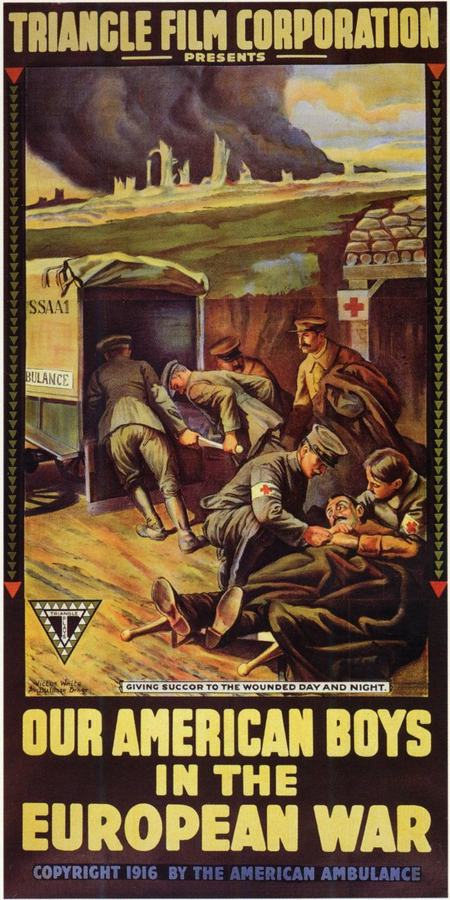
Stepping into the cinematic landscape of 'Our American Boys in the European War' is akin to unearthing a time capsule, a powerful artifact from an era when moving pictures were still finding their voice, yet already masterfully articulating profound human experiences. This silent epic, though perhaps less heralded in modern discourse than some of its contemporaries, offers an unparalleled glimpse into the American psyche at the precipice of a global conflict. It's a film that, even without spoken dialogue, communicates with an emotional intensity that transcends the decades, forcing us to confront not just the historical specifics of World War I, but the universal themes of innocence lost, duty called, and the indelible scars of battle. It’s a narrative tapestry woven with threads of patriotism, brotherhood, and the stark, uncompromising reality of mechanized warfare, all presented through the evocative lens of early 20th-century filmmaking.
The film commences with an almost pastoral idyllicism, painting a vibrant portrait of pre-war America through the lives of its central figures, Jack and Thomas. These two brothers, symbols of youthful vigor and unblemished hope, embody the very spirit of a nation awakening to its global responsibilities. The initial sequences are bathed in a warmth that underscores the profound shift about to occur. We see their lives, their dreams, their simple joys, all rendered with a quiet dignity that makes their eventual departure for the trenches all the more heart-wrenching. The directorial choice to establish such a strong foundation of normalcy amplifies the subsequent brutalization of war, creating a stark, almost unbearable contrast that resonates deeply with the audience. One cannot help but draw parallels to the foundational character introductions in films like Marse Covington, where the individual's rootedness in community defines their subsequent journey and moral compass, though here, the journey is not one of personal vendetta but of national imperative.
As the narrative progresses, the film deftly navigates the emotional landscape of enlistment and departure. The scenes of farewell are particularly poignant, capturing the bittersweet mix of pride and apprehension that gripped families across the nation. The visual storytelling here is masterful, relying on close-ups and gestures to convey the unspoken anxieties and profound love shared between the departing soldiers and their loved ones. This emotional groundwork is crucial, as it imbues the ensuing combat sequences with a weighty human cost. We aren't just watching soldiers; we're watching sons, brothers, and sweethearts, each with a story and a family waiting. This human-centric approach elevates the film beyond mere propaganda, though elements of patriotic fervor are undeniably present, reflecting the prevailing sentiments of the time. The journey across the Atlantic itself becomes a powerful metaphor for the irreversible crossing from innocence to experience, a point of no return for these young men.
Upon their arrival in Europe, the film plunges the audience into the unsparing realities of trench warfare with an uncompromising gaze. The shift in tone is palpable, from the sun-drenched fields of America to the desolate, mud-soaked landscapes of the Western Front. The cinematography, utilizing stark contrasts and desolate wide shots, effectively communicates the sheer scale of destruction and the dehumanizing conditions endured by the soldiers. Thomas, initially brimming with a romanticized vision of martial glory, slowly but surely has his illusions stripped away, replaced by the grim, visceral truth of combat. His transformation is perhaps the most compelling arc of the film, a testament to the brutal education administered by the front lines. Jack, the older, more pragmatic brother, embodies the struggle to maintain a semblance of humanity and protect his younger sibling from the psychological ravages of war, a Sisyphean task given the omnipresent horrors. This dynamic of brotherhood under fire is a recurrent, powerful motif throughout cinematic history, yet 'Our American Boys' renders it with a raw authenticity that feels remarkably ahead of its time for a silent feature.
The film's climactic battle sequence is a masterclass in silent film spectacle and emotional intensity. It avoids gratuitous sensationalism, instead focusing on the chaotic, desperate nature of a trench offensive. The rapid cuts, the frantic movements of the soldiers, and the use of intertitles to convey the deafening roar of artillery and machine-gun fire create an immersive, almost suffocating experience. It’s during this maelstrom that Thomas, in a moment of sheer, unadulterated bravery, risks everything to save a wounded comrade. This act, while heroic, comes at a grievous personal cost, as he sustains a severe injury. This pivotal moment serves as the ultimate shattering of his youthful idealism, replacing it with a profound, almost spiritual understanding of war's indiscriminate cruelty and the fragility of life. The film doesn't glorify his injury; rather, it presents it as a stark consequence, a tangible manifestation of the sacrifices demanded by the conflict. This unflinching depiction of suffering could be seen as an early cinematic precursor to the more explicit anti-war sentiments that would emerge in later decades, distinguishing it from purely propagandistic fare.
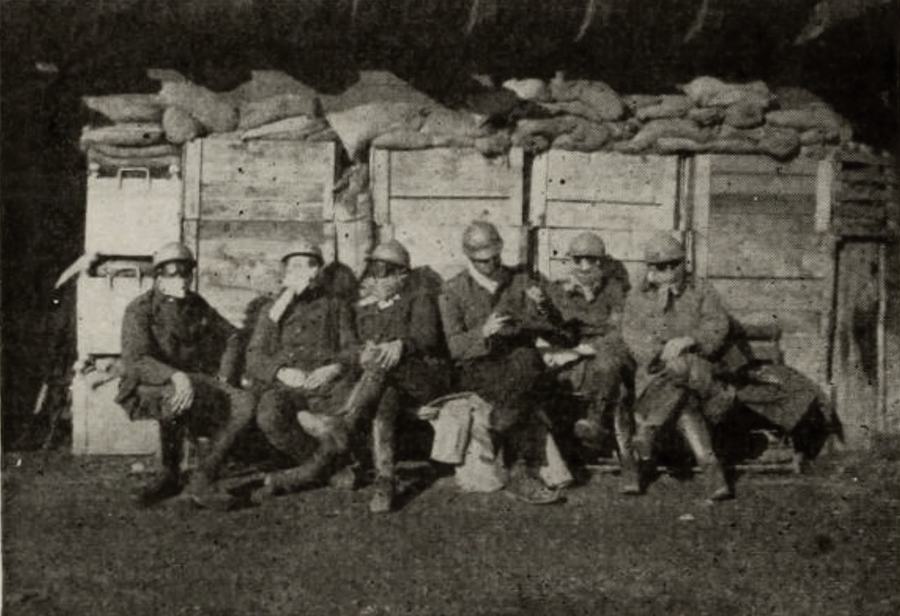
Jack's reaction to his brother's sacrifice is equally compelling. He is forced to confront the ultimate cost of their shared ideals, the devastating realization that heroism often walks hand-in-hand with tragedy. His internal struggle is conveyed through subtle facial expressions and body language, a testament to the power of silent acting. The film's ability to communicate such complex emotions without dialogue is truly remarkable, relying on the universal language of human experience. This emphasis on the psychological toll, rather than just the physical combat, sets 'Our American Boys' apart from many of its contemporaries, which often focused more on broad strokes of heroism. One might compare its emotional weight to the moral quandaries explored in The Broken Promise, albeit in a dramatically different context, where personal integrity is tested against overwhelming external forces.
The film's resolution, far from a triumphant fanfare, is imbued with a somber, reflective quality that speaks volumes about its mature understanding of war's aftermath. Jack's return home, though met with a hero's welcome, is anything but a simple homecoming. He is a decorated soldier, yet profoundly changed, bearing the invisible scars of battle and the heavy burden of memory. The once-vibrant community, initially eager to embrace their returning hero, soon struggles to bridge the chasm between their pre-war innocence and his newfound, harrowing wisdom. This societal disconnect, the inability of those who stayed behind to truly comprehend the experiences of those who fought, is a theme that would resonate through countless war films for generations to come. The final frames, lingering on Jack's solitary figure, are a poignant testament to the 'boys' who left their American idyll for the European maelstrom, their sacrifices forever etched into the fabric of a nation's awakening. This quiet, introspective ending avoids the easy catharsis, opting instead for a more enduring, thought-provoking conclusion.
The portrayal of the supporting characters, particularly the townsfolk and fellow soldiers, contributes significantly to the film's immersive quality. Each face, even in fleeting moments, seems to tell a story, adding layers of authenticity to the narrative. The communal outpouring of patriotism at the film's outset, contrasted with the quiet solemnity of the later scenes, effectively charts the nation's own journey through the war. It's a testament to the ensemble's collective performance, guided by astute direction, that these archetypal figures feel so genuinely human. One might compare the film's ability to capture a collective national spirit to the grand, almost documentary-like scope of The Photo-Drama of Creation, though obviously in a vastly different thematic context; both aimed to convey a large-scale narrative with profound societal implications.
From a technical standpoint, 'Our American Boys in the European War' showcases the remarkable ingenuity of early cinema. The use of practical effects for battle scenes, though rudimentary by today's standards, is incredibly effective in conveying the chaos and danger. The camerawork, while perhaps lacking the dynamic fluidity of later eras, is deliberate and purposeful, framing shots to maximize emotional impact and narrative clarity. The intertitles, far from being mere plot devices, are crafted with a poetic sensibility, often adding a layer of philosophical reflection to the unfolding drama. These textual insertions serve not only to convey dialogue but also to provide insightful commentary, guiding the audience's understanding of the characters' internal states and the broader thematic implications. The subtle use of lighting, transitioning from bright, optimistic hues to dark, somber tones, mirrors the emotional journey of its protagonists.
The film’s score, if one considers the typical accompanying live orchestral performances of the era, would have been integral to its emotional resonance. While the specific score is lost to time, one can easily imagine how soaring patriotic anthems would have underscored the initial enthusiasm, gradually giving way to melancholic dirges and discordant harmonies as the horrors of war unfolded. This interplay between visual and auditory experience, even with the limitations of silent film, was crucial in shaping the audience's perception and emotional engagement. The sheer ambition to tell such a grand, sweeping story with the tools available at the time is commendable and speaks to the vision of its creators. It stands as a testament to the power of cinema to capture and reflect historical moments, even as those moments are still unfolding.
In conclusion, 'Our American Boys in the European War' is far more than a historical curiosity; it is a profoundly moving and expertly crafted piece of early cinema. It serves as a vital document of a nation's entry into a global conflict, capturing both the fervent idealism and the devastating human cost. Its enduring power lies in its ability to transcend its historical context and speak to universal truths about war, sacrifice, and the resilience of the human spirit. For anyone interested in the evolution of war cinema, the silent film era, or simply a deeply affecting human drama, this film is an essential viewing. It reminds us that while the technology of storytelling may evolve, the fundamental narratives of courage, loss, and transformation remain timeless. Its legacy is not just in its historical accuracy, but in its emotional honesty, offering a window into the souls of those who lived through, and fought in, the Great War. It’s a powerful reminder of how cinema, even in its nascent form, could articulate the profound complexities of human experience with remarkable clarity and empathy, solidifying its place not merely as entertainment, but as an indispensable chronicler of our collective history and humanity.
IMDb 7.3
1933
Community
Log in to comment.