DbcultAccessing Vault...
Cult Review
Senior Film Conservator
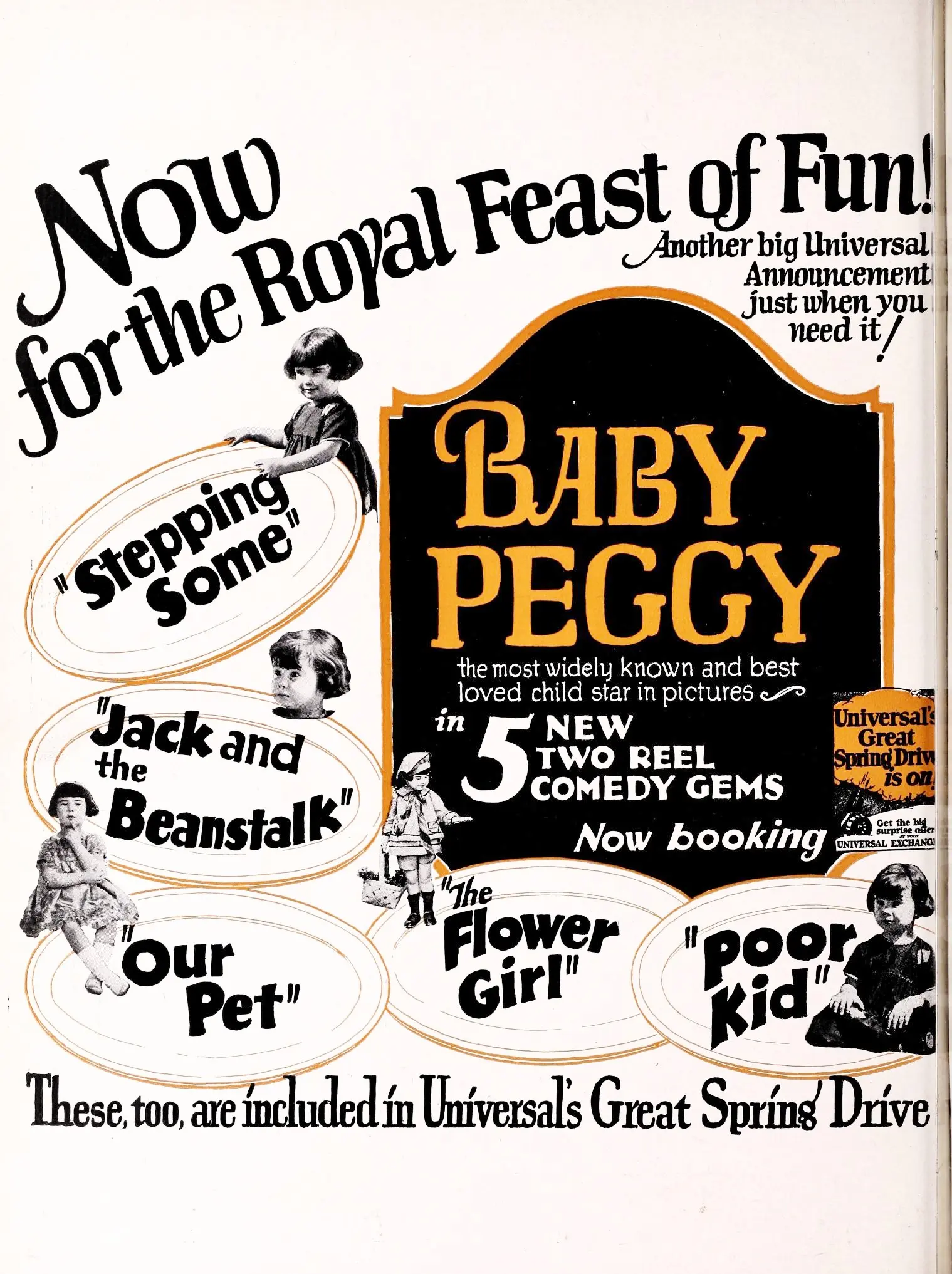
Step right up, fellow cinephiles, and journey with me back to the roaring twenties, a golden age of silent cinema where laughter was loud, emotions were grand, and a pint-sized dynamo named Baby Peggy reigned supreme. Today, we're unearthing a delightful gem from 1923, Our Pet, a film that, despite its brevity and seemingly simple premise, encapsulates the spirit of its era with an infectious charm and a surprising depth of comedic craft. Directed by Herman C. Raymaker, this short feature isn't just a historical curiosity; it's a vibrant testament to the power of pure, unadulterated slapstick, anchored by one of cinema's earliest and most captivating child stars. Forget the dry, academic treatises; let's talk about the sheer joy and ingenious chaos that unfolds on screen.
At its heart, Our Pet is a two-act play of domestic disarray, with Baby Peggy (played by the inimitable Diana Serra Cary, known professionally as Baby Peggy Montgomery) as its unwitting ringleader. The first act introduces us to Peggy's accidental heroism. As the sun dips below the horizon, casting long, dramatic shadows – a visual trope so beloved by silent filmmakers – a nefarious burglar, played with a delightful mix of menace and bumbling incompetence by Winston Radom, infiltrates Peggy's home. The stakes are immediately clear, yet the film deftly injects a sense of playful absurdity into this otherwise tense scenario. What transpires next is a masterclass in physical comedy, where the mundane objects of a child's bedroom transform into instruments of justice. Peggy’s toys, her balloons, her very environment, become a booby-trapped labyrinth for the unfortunate intruder. It’s a delightful inversion of expectations: the child, ostensibly helpless, becomes the catalyst for the villain's downfall, not through intentional action, but through the sheer, unadulterated chaos of her world. This sequence reminds me of the innocent, yet destructive, energy seen in films like Squabs and Squabbles, where domesticity is constantly on the brink of collapse due to unexpected forces.
The burglar's flailing attempts to navigate a room filled with seemingly innocuous playthings are pure comedic gold. He trips, he stumbles, he gets entangled, each movement exaggerated for maximum effect, a hallmark of silent-era performance. The visual gags are rapid-fire, building to a crescendo where the hapless criminal, disoriented and battered by the inanimate resistance, crashes headlong into a wall, an act of poetic justice delivered by architectural stability. The timely appearance of a policeman, a classic deus ex machina of the era, seals the burglar's fate, leaving Baby Peggy to slumber peacefully, oblivious to the heroic havoc she has wrought. This opening segment, while brief, is remarkably effective in establishing Peggy's unique screen persona: a child whose innocence inadvertently triggers monumental events.
The film then pivots sharply into its second, equally chaotic act, transforming from an accidental crime caper into a full-blown romantic farce. The following day, Peggy's domestic tranquility is shattered by a succession of eager suitors, each arriving to pay their respects to the young enchantress. Harry (Billy Condon), James (Joe Moore), Henry (Newton Hall), and David (Billy Franey) — a parade of eager, if somewhat awkward, gentlemen — descend upon the house, their visits orchestrated with a farcical precision that would make a stage director proud. The humor here is derived from the classic 'door-slamming' tradition of French farce, where characters are constantly being hidden or revealed at inopportune moments. As each new suitor rings the bell, the previous one is unceremoniously shoved into a closet, behind furniture, or into any obscure corner available. It’s a hilarious ballet of concealment and revelation, a testament to the universal comedic appeal of mistaken identity and desperate measures.
The comedic timing here, though often broad, is surprisingly effective. The rapid succession of arrivals and the increasingly desperate attempts to hide the growing number of concealed gentlemen build a palpable sense of impending explosion. The film uses exaggerated gestures and facial expressions, typical of silent cinema, to convey the mounting panic and exasperation of those trying to manage the situation. Edna Gregory, likely playing a caretaker or mother figure, delivers a performance that perfectly captures the escalating frenzy. This kind of sequential, escalating chaos finds echoes in later screwball comedies, demonstrating how early silent films laid foundational comedic structures. One might even draw a parallel to the intricate, escalating deceptions in films like What Happened to Jones, where a simple premise spirals into an uncontrollable, hilarious mess.
The tension, or rather, the comedic pressure, reaches its zenith with the arrival of Chauncey (Harry Archer), not just on foot, but in a magnificent Packard car, signaling a certain status and perhaps a greater chance of success. This is the moment Peggy has been waiting for, and she is finally ready to depart, leaving behind a house full of hidden, increasingly agitated rivals. Her exit is the spark that ignites the powder keg. The moment Peggy and Chauncey are out of sight, the hidden suitors emerge from their various cubbyholes, each discovering the presence of the others. The ensuing melee is a riotous explosion of jealousy, indignation, and pure, unadulterated slapstick. Furniture is overturned, decorations are smashed, and the once-orderly home transforms into a war zone, a testament to the destructive power of thwarted romance and bruised egos. The visual spectacle of the house being systematically dismantled is both shocking and hilarious, a perfect example of how silent comedy could push boundaries.
When Peggy's folks (presumably Edna Gregory and another cast member, though specific roles beyond Peggy's are often uncredited in these shorts) return home, they are met with a scene of utter devastation. The house, once a picture of domestic bliss, now resembles a tornado's aftermath. This moment of parental dismay and the looming threat of punishment for Peggy is a crucial beat, adding a touch of relatable consequence to the preceding anarchy. However, the film, ever true to its comedic heart, provides a swift and satisfying resolution. The same policeman who apprehended the burglar reappears, not to chastise Peggy, but to deliver her reward for capturing the criminal. This unexpected twist not only saves Peggy from a potential spanking but also neatly ties the two disparate comedic acts together, reinforcing her role as a charming agent of both chaos and justice.
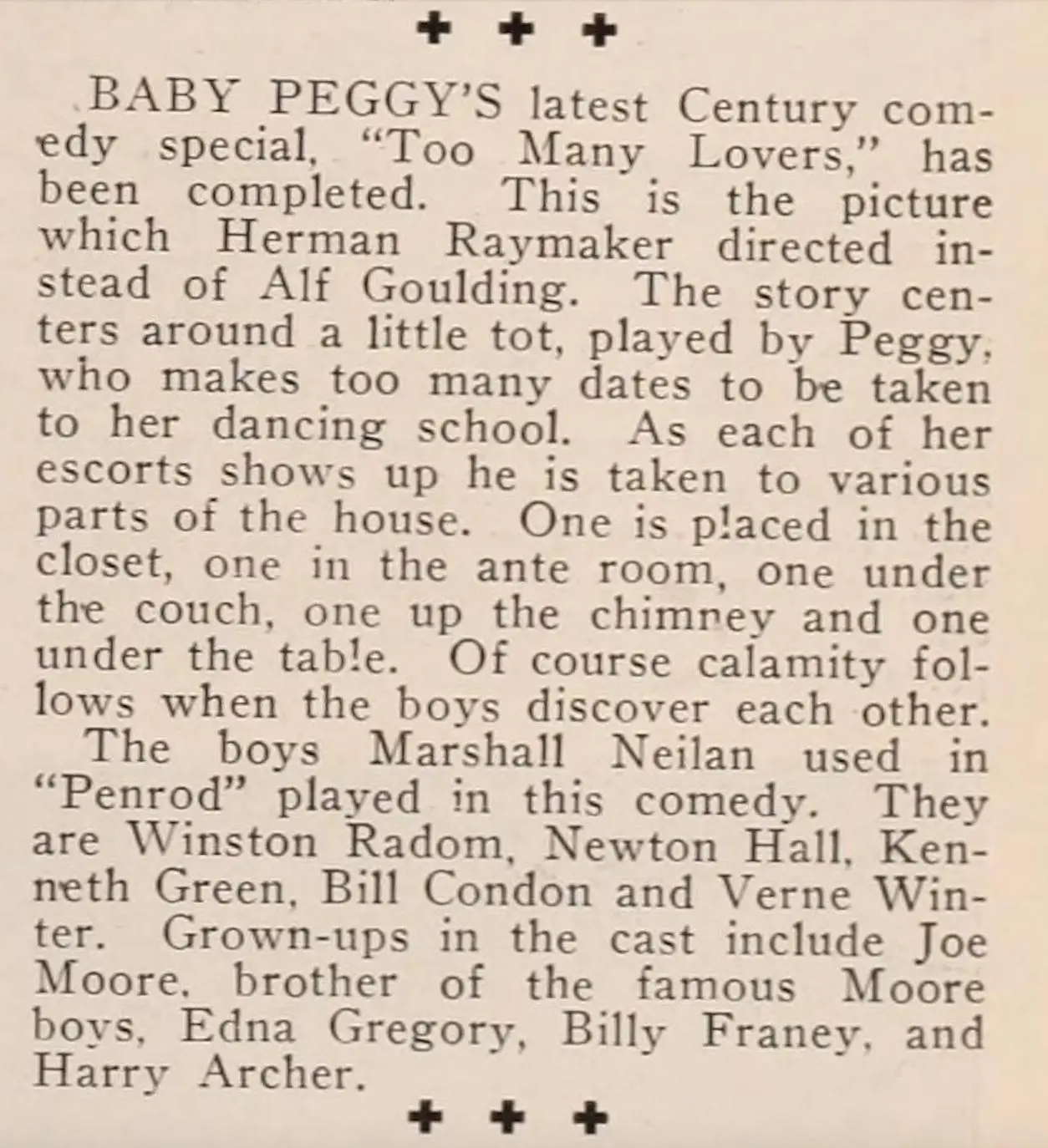
Baby Peggy herself is, of course, the undeniable star. At an age when most children are barely forming complete sentences, she commanded the screen with a presence that belied her years. Her ability to convey innocence, mischief, and a certain knowing charm made her a sensation. Her wide, expressive eyes and perfectly timed reactions were a cinematographer's dream. She wasn't just cute; she was a performer, understanding the nuances of physical comedy and the power of a well-placed glance. Her performance in Our Pet is a microcosm of her broader appeal, showcasing her natural talent for eliciting both laughter and empathy from the audience. Comparing her to other child stars of the era, such as Jackie Coogan, one can see a shared precociousness, but Peggy often brought a slightly more mischievous, less overtly sentimental energy to her roles, which made her characters particularly endearing.
Herman C. Raymaker, the writer for Our Pet, demonstrates a keen understanding of silent comedy's mechanics. The plot, while straightforward, is meticulously structured to maximize comedic impact through escalation and unexpected turns. The film relies heavily on visual storytelling, a necessity in the silent era, and Raymaker's narrative provides ample opportunities for physical gags and exaggerated character reactions. The pacing is brisk, never allowing a moment to linger too long, keeping the audience engaged through a constant stream of visual information and escalating absurdity. It's a testament to the craft of these early filmmakers who, without dialogue, had to rely purely on action, expression, and clever plotting to tell their stories effectively. One could argue that the simplicity of the premise in films like The Catspaw or The Humming Bird, while perhaps more dramatic, shares that same directness in narrative approach.
The supporting cast, including Winston Radom as the burglar, Edna Gregory, Billy Condon, Joe Moore, Newton Hall, Billy Franey, Harry Archer, Verne Winter, and Kenneth Green, all contribute to the film’s vibrant tapestry of characters. Their performances, though brief, are essential in building the comedic world around Baby Peggy. Each suitor, for instance, has just enough distinctiveness in their portrayal to make their individual plights and eventual collective outrage believable within the farcical context. Radom’s burglar is particularly memorable, embodying the perfect blend of villainy and utter ineptitude that makes for compelling slapstick. Their collective energy elevates the simple narrative into a truly engaging spectacle.
From a technical perspective, Our Pet showcases the burgeoning techniques of early cinema. The cinematography, though perhaps not groundbreaking, is functional and clear, allowing the physical comedy to take center stage. The editing is sharp, particularly in the sequences of rapid hiding and revelation, contributing significantly to the comedic timing. The use of intertitles is minimal, a smart choice that allows the visual action to drive the narrative, a hallmark of well-executed silent shorts. While we don't have the benefit of an original musical score to analyze, one can imagine how a live pianist or organist would have underscored the frantic pace of the chases and the dramatic swells of the suitors' confrontations, enhancing the audience's emotional experience.
The enduring appeal of films like Our Pet lies in their universal themes and their masterful execution of physical comedy. Laughter, after all, transcends language barriers, and the exaggerated movements and clear motivations of silent film characters speak directly to our primal understanding of humor. It’s a nostalgic glimpse into an era where cinema was still finding its voice, experimenting with narrative forms and performance styles, yet already captivating audiences with its unique blend of spectacle and storytelling. The film reminds us that sometimes, the simplest stories, told with conviction and a healthy dose of silliness, are the most effective.
Moreover, Our Pet offers a fascinating window into early 20th-century culture. The portrayal of domestic life, the dynamics of courtship, and even the role of law enforcement, all reflect societal norms and expectations of the time, albeit through a comedic lens. The film’s lighthearted treatment of a home invasion, for example, speaks to a different cultural relationship with crime and danger, often played for laughs in a way that might seem jarring to modern sensibilities. Yet, it's precisely this historical context that adds another layer of intrigue to the viewing experience, allowing us to not only laugh but also to reflect on how much, and how little, society has changed.
In an age dominated by CGI and complex narratives, there's something incredibly refreshing about returning to the foundational elements of cinema. Our Pet, with its straightforward plot and reliance on the sheer talent of its performers, particularly Baby Peggy, serves as a powerful reminder of film's innate ability to entertain. It’s a testament to the fact that compelling storytelling doesn't always require intricate dialogue or elaborate special effects; sometimes, all it takes is a clever premise, a charismatic star, and a whole lot of well-timed physical comedy. It stands as a vibrant example of why silent films continue to captivate, offering a pure, unadulterated cinematic experience that remains timeless.
In conclusion, Our Pet is more than just a historical artifact; it's a delightful, energetic, and surprisingly sophisticated piece of silent comedy. It showcases Baby Peggy at her enchanting best, navigating a world of accidental heroism and romantic pandemonium with a captivating blend of innocence and mischief. Herman C. Raymaker’s direction ensures a brisk pace and a constant stream of visual gags, making it a joy to watch even a century later. For anyone interested in the foundational elements of cinematic comedy, the enduring appeal of child stars, or simply in experiencing a burst of pure, unadulterated fun from the silent era, Our Pet is an absolute must-see. It's a charming, chaotic, and ultimately triumphant little film that proves laughter truly is timeless. So, grab some popcorn, dim the lights, and let Baby Peggy whisk you away to a simpler, yet infinitely more boisterous, time in cinematic history.
IMDb —
1919
Community
Log in to comment.