DbcultAccessing Vault...
Cult Review
Senior Film Conservator
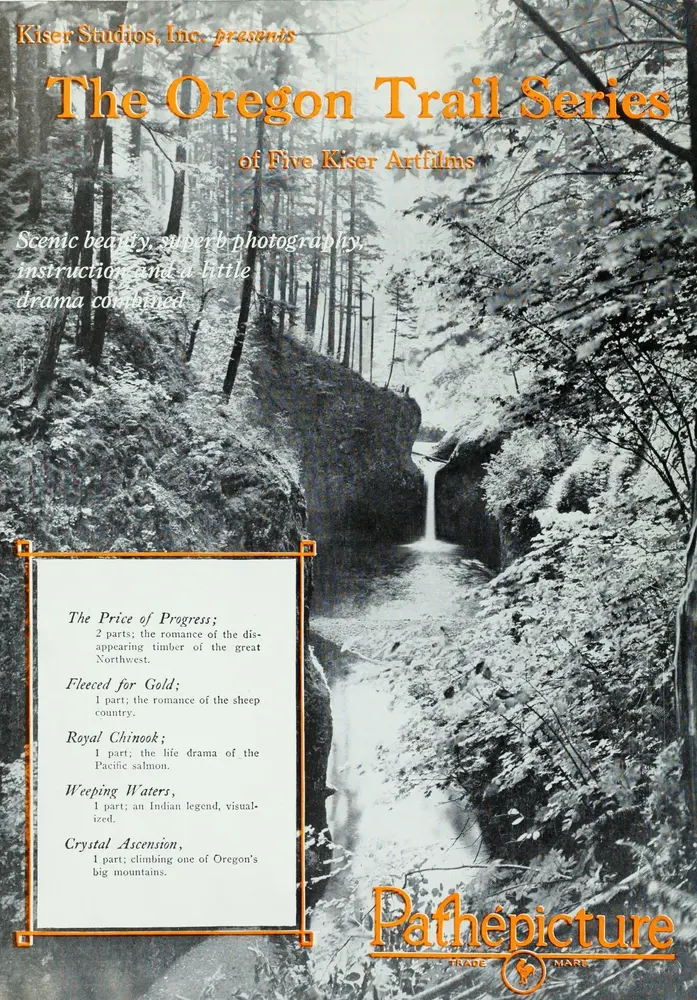
In the pantheon of early twentieth-century cinema, few works challenge the boundaries of narrative cohesion as aggressively as The Crystal Ascension. It is a film that breathes through its textures, a celluloid artifact that feels as though it were unearthed rather than directed. At its core, the film is a meditation on the intersection of human fragility and the terrifying permanence of the mineral world. While contemporaneous efforts like The Yosemite Trail utilized the American landscape as a backdrop for rugged heroism, The Crystal Ascension treats the earth as a sentient, encroaching antagonist. The film’s protagonist, portrayed with a jarring, kinetic intensity by Broderick O'Farrell, is not a hero in the traditional sense, but a sacrificial lamb at the altar of ontological curiosity.
The opening sequence sets a tone of claustrophobic wonder. We see Vane’s hands—calloused, stained with the dust of a thousand eras—trembling as they brush away the silt from a jagged protrusion of quartz. The lighting here is masterfully handled, employing a sea blue tint that suggests an underwater dreamscape, a choice that immediately divorces the viewer from the sun-drenched expectations of the western genre. Unlike the slapstick chaos of Bungled Bungalows, there is no levity to be found in Vane’s isolation. His loneliness is a physical weight, a density that O’Farrell conveys through a series of micro-expressions that predate the Method acting revolution by decades.
The middle act of the film is where the 'ascension' of the title begins to take its toll. Vane’s descent into the cavernous depths of his own mind is mirrored by the increasingly abstract cinematography. The camera lingers on the facets of the central crystal, turning the screen into a kaleidoscope of refracted light that threatens to blind the audience. This visual strategy is far more sophisticated than the melodramatic staginess of The Heart of Rachael. Here, the emotion is not found in the dialogue—which is sparse and cryptic—but in the way the light dies against O’Farrell’s sunken cheeks. The director uses yellow filters during Vane's fever dreams to evoke a sense of jaundiced reality, a world decaying under the influence of an alien frequency.
One cannot discuss this film without referencing the thematic parallels to The House Built Upon Sand. Both films deal with the erosion of domestic stability, yet while the latter focuses on moral failings, The Crystal Ascension posits that all human structures—emotional, physical, and societal—are inherently built upon sand when compared to the deep time of the mountain. Vane’s abandonment of his family is not portrayed as a betrayal, but as an inevitability. He is being pulled by a gravity that his peers cannot feel. When compared to the social climbing of Vanity Fair, Vane’s journey is an anti-social climb, a vertical movement toward a peak of isolation that offers no view but the abyss.
The technical prowess exhibited in the subterranean scenes is nothing short of miraculous for the era. The use of practical mirrors and hidden lanterns to simulate the crystal's inner glow creates an atmosphere of genuine supernatural dread. It lacks the explosive spectacle of The Flaming Trail, opting instead for a slow-burn tension that rewards the patient observer. The sound design—or rather, the rhythmic silence of the intertitles—emphasizes the auditory vacuum of the cave. We are forced to hear the silence, to feel the pressure of the mountain pressing down on Vane’s skull. It is a visceral experience that transcends the limitations of early filmmaking technology.
O’Farrell’s performance is the anchor that prevents the film from drifting into pure avant-garde abstraction. He possesses a face that seems carved from the very granite he obsesses over. In the scenes where he speaks to the crystal, his eyes reflect a terrifying mixture of devotion and horror. It is a performance that rivals the historical weight of Marc'Antonio e Cleopatra, yet it is far more intimate and disturbing. He isn't playing a king; he is playing a man who has discovered that he is a speck of dust, and he is trying to find a way to love the wind that will eventually blow him away.
There are moments of startling beauty that break through the gloom, often signaled by a shift to dark orange hues in the sunset shots. These sequences provide a fleeting sense of warmth before the cold blue of the night returns. This cycle of warmth and frost mirrors the bipolar nature of Vane’s discovery. The crystal is both a source of enlightenment and a harbinger of extinction. This duality is something rarely explored in the straightforward narratives of the time, such as Up and Going or the comedic brevity of Barsoum Looking for a Job. The Crystal Ascension demands more from its audience; it asks us to contemplate our own obsolescence.
As the film nears its conclusion, the editing becomes increasingly erratic, mimicking Vane’s loss of temporal awareness. We see flashes of his past—a brief, soft-focus memory of a woman, perhaps the 'Janet' of Jilted Janet in a different life—intercut with the cold, unmoving geometry of the cave walls. This juxtaposition highlights the tragedy of the human condition: our memories are fluid and fragile, while the world we inhabit is rigid and indifferent. The 'Birth of a Man' mentioned in The Birth of a Man is here inverted; we are witnessing the un-birth of a man, the systematic dismantling of an identity in favor of a mineralogical union.
The final shot is one of the most haunting in all of cinema. Vane is no longer visible as a person; he has become a silhouette, a shadow cast against the glowing heart of the crystal. The screen fades not to black, but to a blinding, sterile white. It is an ending that offers no catharsis, only a profound sense of displacement. Unlike the resolution of A Trick of Fate, where destiny is revealed to have a design, The Crystal Ascension suggests that fate is merely a byproduct of geological coincidence. We are here because the rocks allow us to be, and we will leave when they decide our time is up.
In the grand tapestry of O’Farrell’s career, this film stands as a lonely, jagged peak. It is a work that refuses to be categorized, a film that remains as sharp and dangerous as a shard of obsidian. To watch it is to undergo a transformation of one's own. You do not leave the theater the same person you were when the lights went down. You leave with the unsettling suspicion that the ground beneath your feet is watching you, waiting for its turn to ascend. The film’s legacy is not one of box office success or popular acclaim, but of a persistent, low-frequency vibration that continues to resonate in the minds of those brave enough to seek it out. It is, quite simply, a crystalline triumph of the human spirit’s desire to understand the incomprehensible, even at the cost of its own existence.
For those accustomed to the straightforward heroics of The Boss of the Rancho, this film may prove difficult. It requires a shedding of expectations and a willingness to sit in the dark with one's own thoughts. But for the seeker of true cinematic art, The Crystal Ascension is an essential pilgrimage. It is a reminder that cinema can be more than entertainment; it can be a mirror, a window, and a tomb. The sea blue shadows and the dark orange flickers of Vane's dying fire will haunt your dreams, reminding you that while we may look at the stars, our destiny is often buried deep within the stone.
Ultimately, the film succeeds because it dares to be silent where others would scream. It finds the music in the drip of water on limestone and the drama in the slow growth of a stalactite. Broderick O'Farrell gave the world a gift with this performance—a portrait of a man who looked into the heart of the world and didn't blink, even when the world looked back. It is a masterpiece of the highest order, a jagged, beautiful, and utterly terrifying ascent into the unknown.

IMDb 6.8
1932
Community
Log in to comment.