DbcultAccessing Vault...
Cult Review
Senior Film Conservator
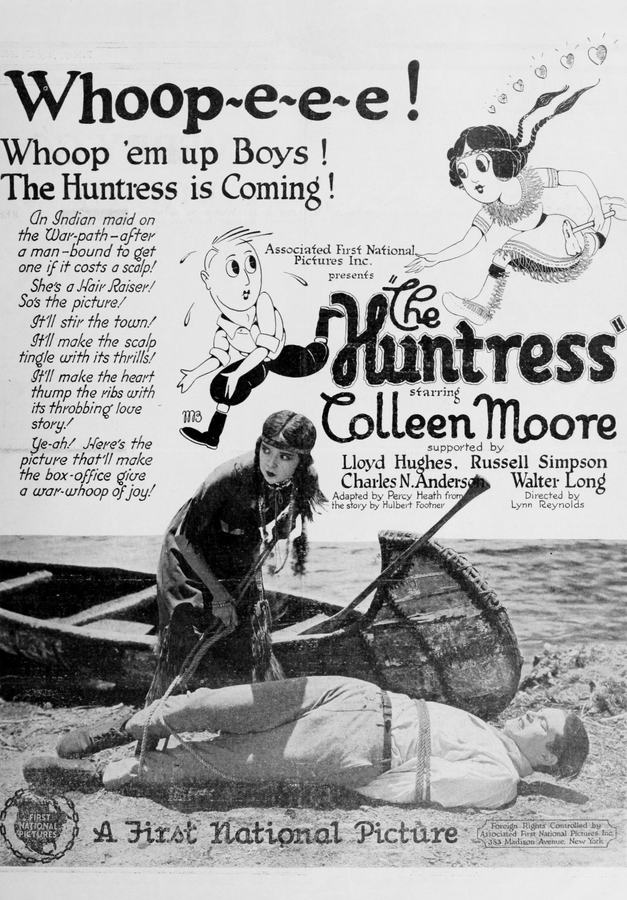
Stepping into the cinematic landscape of 1923, one encounters The Huntress, a film that, even a century later, reverberates with a peculiar blend of primal energy and nascent feminism, all channeled through the incandescent star power of Colleen Moore. This isn't merely a silent film; it's a testament to the raw, unpolished storytelling of an era, a narrative tapestry woven with threads of cultural clash, identity crisis, and an unyielding pursuit of love. It invites us to consider the very fabric of belonging, challenging preconceived notions of civilization and wilderness, and the fierce independence of a woman caught between worlds.
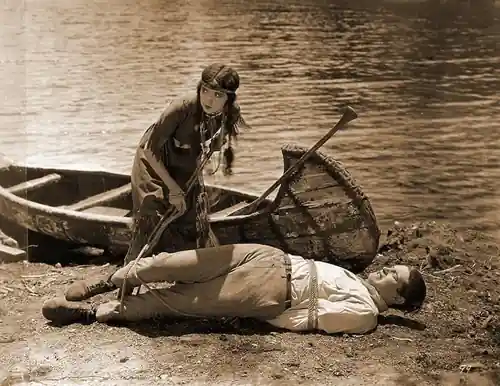
At its heart lies Bela, a character so compellingly rendered by Moore that she transcends the typical ingenue of the period. Reared within the embrace of an Indigenous community, her existence is one steeped in nature's rhythms, far removed from the burgeoning complexities of early 20th-century American society. Her initial world, rich in its own traditions and spiritual depth, is abruptly shattered by the revelation of her true parentage: she is not of the tribe, but a white orphan. This revelation isn't just a plot device; it’s an existential earthquake, uprooting her sense of self and demanding a radical re-evaluation of her place in the world. Moore imbues Bela with an almost animalistic grace, a wildness that feels both authentic and deeply moving, making her subsequent flight from a tribal marriage not just an escape, but a desperate assertion of burgeoning self-determination.
Bela’s journey from the familiar confines of her upbringing to the uncertain landscape of the 'white man's world' is fraught with internal and external conflict. Her determination to marry Sam Gladding, a land prospector portrayed by the capable Lloyd Hughes, isn't born of demure affection or societal expectation. Instead, it’s a force of nature, an almost territorial claim. Gladding, initially bewildered and resistant to her advances, represents stability, a new identity, and perhaps, a bridge to understanding her newly discovered heritage. His reluctance is palpable, a subtle nod to the social awkwardness of such a raw, untamed courtship. Hughes navigates this initial discomfort with a believable performance, making his character's eventual surrender to Bela's magnetism feel earned rather than abrupt. This isn't a fairy-tale romance; it's a battle of wills, a clash of sensibilities, where one character’s fierce resolve ultimately conquers another’s guarded practicality.
The film’s narrative arc hinges significantly on the intervention of an Indian sage, a figure who, with quiet wisdom, guides Gladding towards an understanding of Bela's unique spirit. This plot point is crucial, as it elevates the romance beyond mere physical attraction, suggesting a deeper, more spiritual connection. It’s a moment that, while perhaps leaning into certain tropes of the era, also attempts to bridge cultural divides through empathy and ancient insight. The sage's advice acts as a catalyst, transforming Gladding's initial resistance into genuine affection, allowing him to see beyond Bela's unconventional upbringing and recognize the profound depth of her character. This subtle shift in Gladding’s perspective is a quiet triumph for Bela, validating her unconventional path to love and belonging.
Colleen Moore's performance as Bela is nothing short of captivating. Known for her flapper roles in films like My Best Girl or Stage Struck, here she sheds the urban veneer to embody a character of raw, untamed spirit. Her eyes, often wide with a mix of defiance and vulnerability, speak volumes without the need for intertitles. Her physicality is fluid, almost feral, perfectly conveying a woman who is more attuned to the rustle of leaves than the dictates of drawing-room etiquette. Moore doesn't just play Bela; she inhabits her, making her struggles for identity and acceptance feel deeply personal and universally resonant. It’s a performance that underscores her remarkable versatility as a silent film actress, demonstrating a range far beyond the vivacious, bob-haired persona for which she became famous.
The supporting cast, while not always given the same depth as Moore's character, contributes effectively to the film's atmosphere. Lloyd Hughes, as Sam Gladding, offers a grounded counterpoint to Bela's wildness. His portrayal of a man slowly thawing under the relentless warmth of an unconventional love is nuanced, avoiding caricature. Figures like Lila Leslie, Helen Walron, and Chief John Big Tree, though perhaps less central, lend authenticity to the frontier setting and the cultural dynamics at play. The film's depiction of Indigenous characters, while viewed through the lens of a different era, attempts to imbue them with a certain dignity, particularly through the wise sage, a recurring archetype that often serves as a moral compass in such narratives.
Percy Heath and Hulbert Footner, the writers behind The Huntress, craft a story that, despite its potential for melodrama, largely maintains a sense of earnestness. The screenplay deftly navigates the emotional complexities of Bela's identity crisis, her desperate search for belonging, and her audacious pursuit of love. While certain plot points might feel familiar to contemporary audiences, within its historical context, the narrative offered a compelling exploration of female agency and cross-cultural understanding. Their ability to develop a character like Bela, who defies easy categorization, speaks to a willingness to push boundaries, even subtly, within the popular cinema of the time.
Visually, The Huntress benefits from its natural settings, which are often breathtaking. The sweeping landscapes serve as more than just backdrops; they are active participants in Bela's journey, mirroring her wild spirit and the untamed nature of her desires. The cinematography captures the vastness of the American frontier, emphasizing both its beauty and its harshness, creating an immersive experience for the viewer. One can almost feel the wind across the plains, the sun beating down on the wilderness, elements that underscore Bela's connection to the land and her initial resistance to domesticated life. This visual storytelling is a hallmark of silent cinema, where environment often plays a crucial role in conveying mood and character motivation.
Comparing The Huntress to other films of its era, one might draw parallels with narratives that explore societal outsiders or the clash between different ways of life. While not a direct comparison in terms of plot, the thematic exploration of an individual navigating a complex social structure, as seen in The Cinderella Man, hints at similar underlying anxieties about identity and acceptance. However, The Huntress distinguishes itself through its focus on a female protagonist who actively shapes her destiny, rather than passively accepting it. Her agency, her determination to claim Sam Gladding, sets her apart from more traditionally submissive female characters of the period.
The film also touches upon themes of cultural assimilation and the inherent tension between different ways of knowing and living. Bela's struggle to reconcile her Indigenous upbringing with her newfound identity as a white woman speaks to broader societal questions of belonging and the complex, often painful, process of cultural integration. This isn't just a simple love story; it’s a commentary, however subtle, on the evolving American identity and the diverse threads that weave into its fabric. The film's portrayal of the Indian sage, for instance, is a deliberate attempt to imbue Indigenous culture with a sense of venerable wisdom, offering a counterpoint to the more pragmatic, land-focused aspirations of characters like Gladding.
In many ways, The Huntress feels like a precursor to later, more explicit explorations of female empowerment in cinema. Bela is not a damsel in distress; she is a force of nature, a woman who knows what she wants and pursues it with an almost primal tenacity. This portrayal stands in stark contrast to some more conventional heroines of the silent era. Her journey is one of self-discovery, not just romantic fulfillment, making her a remarkably modern character for her time. She learns to navigate the complexities of a world alien to her, not by conforming entirely, but by asserting her unique spirit within it.
The film's enduring appeal lies in its ability to tap into universal human experiences: the search for identity, the yearning for love, and the courage required to forge one’s own path. Colleen Moore’s Bela is a character who resonates because she is flawed, fierce, and utterly human in her pursuit of a life she believes is rightfully hers. Her transformation from a bewildered orphan to a woman who confidently embraces her chosen future is compelling. It’s a narrative that, while rooted in its historical moment, speaks to timeless struggles, offering a glimpse into the evolving social consciousness of early 20th-century America.
Ultimately, The Huntress is more than just a historical artifact; it's a vibrant, emotionally charged drama that showcases the power of silent cinema to tell complex stories with profound impact. It's a testament to Colleen Moore's talent, a reminder of the frontier spirit, and an engaging exploration of what it means to truly belong, both to oneself and to another. Its themes of identity, cultural integration, and the indomitable spirit of a woman forging her own destiny continue to resonate, making it a valuable watch for enthusiasts of classic cinema and anyone interested in the evolving portrayal of women on screen.
The film’s legacy, though perhaps not as widely celebrated as some of Moore's more famous vehicles, provides a crucial insight into the breadth of her acting capabilities and the kinds of stories that captivated audiences of the 1920s. It’s a film that asks us to look beyond superficial differences and recognize the shared humanity that binds us, even across cultural divides. The quiet strength of the Indigenous sage, the unwavering resolve of Bela, and the gradual awakening of Sam Gladding all contribute to a narrative that, while simple in its premise, is rich in its emotional texture and thematic depth. It's a compelling journey into the heart of the wild, and into the wild heart of a woman determined to find her place.
In its quiet moments, The Huntress often achieves a poetic quality, particularly when focusing on Bela's internal world. The camera lingers on her expressions, allowing the audience to interpret the turmoil and resolve simmering beneath her outwardly strong demeanor. This reliance on visual storytelling and the nuanced performances of its leads is what elevates the film beyond a simple frontier romance. It becomes a commentary on the human spirit's capacity for adaptation and resilience, a testament to the idea that love can blossom in the most unexpected of circumstances, transcending cultural barriers and personal histories.
The final act, where Gladding fully embraces Bela, isn't just a happy ending; it’s a reconciliation of two disparate worlds, brought together by mutual respect and a burgeoning understanding. It suggests that true connection often requires stepping outside one's comfort zone, listening to different forms of wisdom, and accepting the unconventional. The Huntress, therefore, remains a fascinating piece of cinematic history, a poignant tale of discovery, defiance, and the enduring power of the human heart to find its true north.
IMDb 6.3
1927
Community
Log in to comment.