DbcultAccessing Vault...
Cult Review
Senior Film Conservator
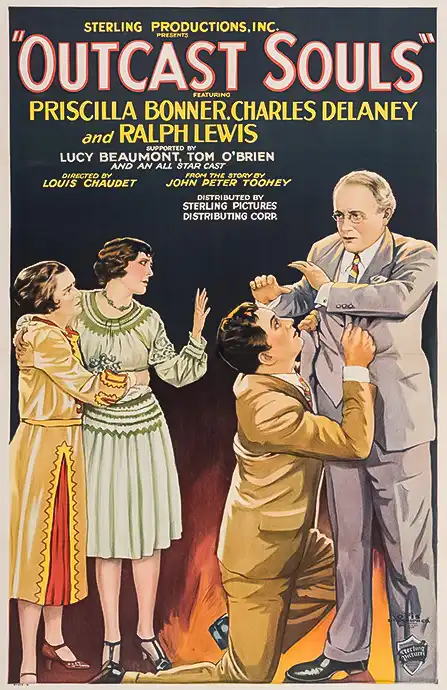
If you decide to sit down with Outcast Souls, you have to be prepared for the fact that the entire plot is kicked off by a couple getting arrested for 'petting' in a car. It’s 1928, so this is treated with the same narrative gravity as a double homicide. Alice (Priscilla Bonner) and Charles (Charles Delaney) are just kids, really, and the movie spends about five minutes on their romance before the law intervenes and they’re basically forced into a shotgun wedding without the shotgun. It’s worth watching if you enjoy the specific brand of social paranoia that existed right before the Great Depression, but if you’re looking for a tight, logical narrative, you’re going to be annoyed by the twenty-minute mark.
The movie is at its best when it’s being a claustrophobic domestic drama. Once the 'shame' of the car incident fades, we get into the meat of the story: the in-laws. Alice’s mother, played by Lucy Beaumont, moves in and immediately realizes she’s about as welcome as a leak in the roof. There’s a really specific, uncomfortable shot of her standing in the kitchen while the young couple ignores her that felt genuinely sad. It’s not 'cinematic' in a grand way; it just feels like anyone who has ever lived in a studio apartment with too many people. Beaumont has this way of shrinking her shoulders that makes you want to reach into the screen and buy her a coffee.
Then we get the father. Ralph Lewis plays Charles’s dad, and he shows up after selling everything he owns. The movie doesn't really explain why he thought moving in with his son unannounced was a great retirement plan, but Lewis plays it with such a baffled, sweet energy that you sort of forgive the writing. The house gets crowded, the tension gets weird, and then the movie makes a choice that I honestly didn't see coming: the two parents just... leave. They realize they’re the problem and they go out into the world to find themselves.
There is a bizarre sequence where Mrs. Davis gets a job soliciting for a bus touring company. It’s such a random, specific career choice. We see her standing on the street, trying to get people to go on a bus tour, and it feels like the movie accidentally turned into a documentary about 1920s gig work for ten minutes. It’s much more interesting than the lead couple, who are honestly a bit of a bore. Charles Delaney has a very 'leading man' face, but there’s not much going on behind the eyes. He looks like he’s constantly trying to remember if he left the stove on.
The middle of the film drags. There are several scenes of the parents wandering around that could have been cut by half. You can feel the movie trying to stretch its runtime. It lacks the punchy editing of something like Stage Struck. Instead, we get long, lingering shots of people looking at park benches. But then, the movie takes a hard left turn into a crime thriller. Out of nowhere, Charles is arrested for embezzling company funds. The transition is so jarring it almost gives you whiplash. One minute we’re watching a sweet romance between two elderly people who met by chance, and the next, we’re in a police station dealing with white-collar crime.
I actually laughed during the arrest scene. The way the detectives move into the frame is so stiff, it looks like they’re being pushed on dollies. And the dialogue—well, the intertitles—get incredibly preachy. It’s the kind of writing that wants to make sure you know that Embezzlement Is Bad. It lacks the nuance you find in Sealed Lips, where the moral stakes feel a bit more grounded in reality. Here, it just feels like a plot device to force Ralph Lewis to give up his life savings.
Speaking of that moment, Ralph Lewis really carries the ending. When he has to decide whether to save his son or keep his money, the camera stays on his face for a long time. It’s one of those moments where silent acting actually beats modern acting. You can see him doing the math in his head—the cost of his son’s freedom versus the quiet life he wanted with Mrs. Davis. It’s a bit manipulative, sure, but it’s the only time the movie feels like it has actual stakes.
The chemistry between the two parents is significantly better than the chemistry between the young leads. When Ralph Lewis and Lucy Beaumont are on screen together, the movie settles into a comfortable, almost modern rhythm. When it switches back to Charles and Alice, it feels like a stage play from 1910. Priscilla Bonner is fine, I guess, but she spends most of the movie looking vaguely worried or vaguely relieved. There’s no middle ground.
One detail I couldn't stop looking at was the wallpaper in the couple's apartment. It’s this aggressive, busy floral pattern that seems to vibrate whenever the characters move. It adds to the feeling of being trapped, though I’m not sure if that was intentional or just a bad decor choice by the set dresser. Also, keep an eye out for the bus tour scenes—the extras in the background look genuinely confused, like they were just people caught on the street who didn't know they were being filmed.
Is it a masterpiece? No. It’s messy and the ending is wrapped up way too neatly. Everyone is 'happily reunited' in a way that feels unearned given that Charles is still, you know, a thief. But there’s something about the way it treats the loneliness of the older characters that sticks with you. It’s a much more human film than something like Faint Hearts, even if it’s technically less polished. If you can get past the 'petting' arrest and the weird bus company subplot, there’s a decent little story about how hard it is for families to actually live together without losing their minds.
IMDb —
1933
Community
Log in to comment.