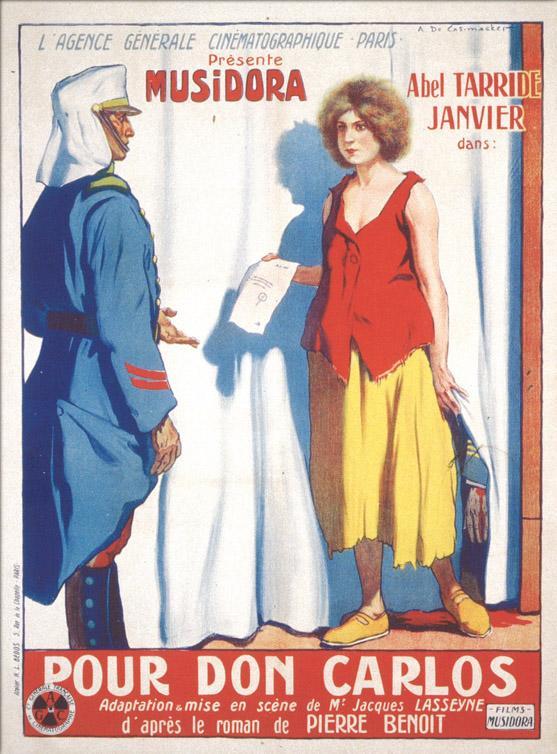
A century after its suppressed premiere, Pour don Carlos erupts from nitrate anonymity like a powder-horn blast, scattering clichés about silent historiography.
The opening tableau—moonlight sliding across the cantilevered cranes of Bilbao’s shipyards—announces an aesthetic unafraid of modernist geometry. Jullien’s camera glides above the estuary, revealing clandestine caravans of rifles smuggled in sardine barrels; the sequence’s tactile graininess rivals the Keystone Comedies’ kinetic mayhem, yet replaces slapstick entropy with fatalist gravitas.
Benoît’s source novel, long derided as royalist pulp, mutates under Musidora’s co-authorship into a feminist battle-hymn. Where Benoît romanticized Carlos VIII’s lineage, Musidora carves space for Allegria’s anarchic fervor, reframing dynastic war as class pyrotechnics. The result: a film that feels like Pots-and-Pans Peggy re-shot by a nascent Buñuel, swapping kitchen-sink satire for sulphur-soaked insurgency.
Visual Alchemy in Sepia and Cyanide
Cinematographer Henri Janvier employs orthochromatic stock that bleaches royal sashes into cadaverous greys while rendering Basque reds as bruise-black voids. Such chromatic inversion weaponizes monochrome: every Carlist flag becomes a wound unfurling against the screen. Compare this chromatic sabotage to the candy pastels of Neptune’s Bride—the tonal chasm exposes how colour philosophy shapes ideological storytelling.
Equally audacious is the repeated motif of mirrors: Carlos studies his reflection in a cracked hand-mirror looted from a convent; the fragmentation foreshadows monarchical dissolution. Later, Allegria spits on the same glass, her saliva diluting the pretender’s visage—a gesture equal parts erotic and iconoclastic. The sequence reverberates with Lacanian rupture: identity liquefies under revolutionary gaze.
Sound of Silence: Montage as Munition
Archival records reveal a lost score by Ramiro Arrué, but even sans audio, the film’s montage detonates. Consider the cross-cutting between a priest’s sermon on Saint Sebastian and a republican firing squad—both sequences share identical rhythmic beats, implying martyrdom’s political elasticity. Eisenstein would later theorize such intellectual montage; Musidora practices it, fusing theology and ballistics into a single dialectical punch.
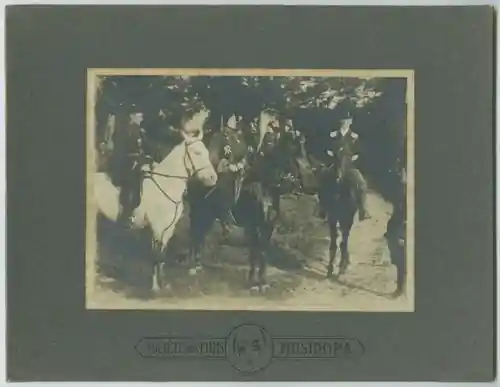
Yet the film’s tempo is anything but didactic. Rapid-fire gags—such as a drunk grenadier chasing his runaway false beard—recall Chumps and Cops, reminding viewers that revolutions, like cinema, are carnivalesque. The tonal oscillation between burlesque and bloodbath keeps audiences ethically off-balance, mirroring the chaos of civil conflict.
Performances: From Marionette to Medium
Musidora’s magnetism radiates not through histrionic gestures but micro-movements: the languorous drag of a cigarette ember in a moonlit stable, the predatory tilt of her beret brim. She channels the feral eroticism of A Magdalene of the Hills yet weaponizes it for revolutionary seduction. Opposite her, Henry Reynal’s Carlos embodies regal ennui—his tremulous hands clutching parchment decrees evoke a man gripping his own obituary.
Supporting players enrich the tapestry: Abel Tarride’s republican general delivers courtly manners while ordering village burnings, evoking the moral vertigo of Thou Shalt Not. Child actor Jean Signoret, as the bugle-boy, channels Chaplin’s tramp via Up from the Depths pathos—his mute stare at a slaughtered donkey condenses warfare’s absurdity into a single, heart-splitting frame.
Gender Dynamite: Allegria as Anarchist Madonna
Where contemporaneous heroines swan-dove into melodramatic martyrdom (The Heart of Nora Flynn), Allegria refuses victimhood. She weaponizes seduction: kissing a Carist lieutenant while slipping dynamite into his cartridge pouch. Sexuality becomes guerrilla tactic, prefiguring Double Crossed femme fatales by a full decade.
Yet the film avoids simplistic ‘strong woman’ tropes. A haunting flashback—presented via hand-tinted amber—reveals Allegria’s convent upbringing, suggesting her militancy stems from theological disillusionment rather than mere political pamphleteering. The complexity renders her final sacrifice neither saintly nor nihilistic, but existentially triumphant.
Production Calamities: Censors, Dynamite, and Bulls
Shot during Spain’s 1919 political turmoil, the production skirted prison raids and papal condemnation. Legend claims Musidora detonated actual Civil-War surplus ordinance for verisimilitude; locals swore Saint Ignatius’ statue wept ash. Budgetary woes forced location reuse: the same forest doubles as both Carlist hideout and republican camp—continuity gaffes that paradoxically heighten absurdist realism.
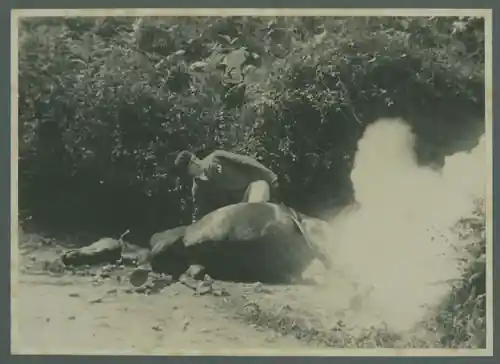
Such production anarchy mirrors Buried Treasure’s on-set brawls, yet here the chaos bleeds into thematic marrow. When a frightened bull rampaged across the set, Jullien kept cameras rolling; the beast’s horn-gouged backdrop remains visible in the final cut, a palimpsest of authentic panic.
Reception Orbit: From Ban to Canon
Premiering at San Sebastián’s Teatro Circo in May 1920, the film incited clerical boycotts; prints vanished into Francoist vaults. Only in 1998 did a desiccated negative surface in a Biarritz attic, its emulsion scarred like Allegria’s cheek. After a 4K restoration by Filmoteca Española, the movie re-debuted at Cannes Classics, where critics hailed it as the missing link between Idle Wives’ domestic surrealism and Buñuel’s Viridiana.
Contemporary discourse now labels Pour don Carlos the progenitor of political noir, anticipating Pan’s Labyrinth by embedding civil strife within folkloric hallucination. University syllabi dissect its gendered iconoclasm; TikTok hashtags (#AllegriaAintSorry) circulate GIFs of Musidora’s smoky wink, proving revolutions—cinematic or otherwise—never truly die.
Final Celluloid Testament
Does the film lionize Carlist legitimism or republican secularism? It gleefully refuses both, opting instead for a paean to perpetual resistance. In an era when algorithmic echo chambers calcify opinion, Pour don Carlos champions ambiguity as insurgent art. Its final intertitle—“May every crown become a crown of thorns for those who would rule”—feels less like Marxist slogan, more like prophecy for our surveillance-state age.
Seek it on restored Blu-ray or archival streaming; let Allegria’s laughter ricochet off your living-room walls until the floorboards quake with 19th-century gunpowder. For if cinema’s mandate is to resurrect ghosts, then Musidora’s anarchist Madonna demands we dine with them—and emerge, mouths chalked with cordite, ready to topple our own modern tyrannies.
Verdict: A molotov cocktail of gender revolt and formalist bravura—mandatory viewing for cine-punks and history-obsessives alike.