DbcultAccessing Vault...
4.8/10
Senior Film Conservator
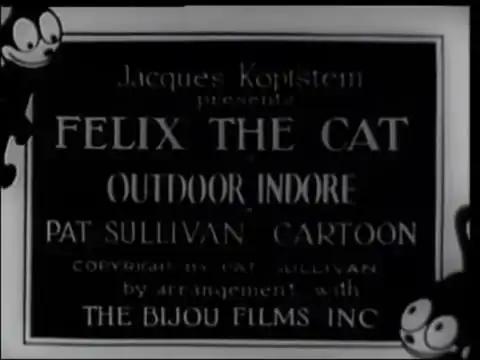
A definitive 4.8/10 rating for a film that redefined the boundaries of cult cinema. Outdoor Indore remains a cornerstone of transgressive art.
If you've got a soft spot for early animation, particularly the kind where narrative logic takes a backseat to pure, unadulterated visual gags, then 'Outdoor Indore' is a quick, charming watch. Anyone else, especially those expecting anything resembling modern narrative coherence or high-def visuals, will probably find its seven minutes a bit baffling or just... well, old.
The premise is classic Felix: a blast of water sends him, quite literally, halfway across the world. One moment he’s by a pump, the next he’s dropped unceremoniously into what the title tells us is 'Indore.' No setup, no explanation, just *poof* you’re in India. This kind of sudden, unearned transportation is a hallmark of these early shorts, and it’s part of their weird charm. You just accept it and move on.
Felix quickly finds himself chased by a tiger, then another. These aren't really threatening tigers, though. They're more like big, stripey bullies that Felix can outsmart with a quick thought bubble. He's never really in danger, not in the way a modern cartoon character might be. It’s more about the visual puzzle of how he’ll escape this time.
Then he pulls a flute out of... nowhere, of course. His tail often becomes whatever prop the scene needs, which is always a neat trick. And the snakes, they just dance. It’s that classic Felix logic, where anything can happen if the gag needs it to. You can almost feel Otto Messmer’s playful hand in every frame, just making it up as he goes.
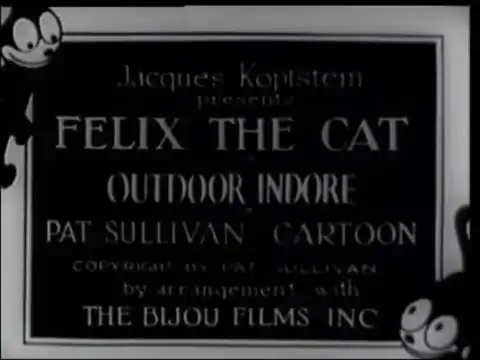
The most substantial part involves an elephant. This elephant looks genuinely distressed, for a cartoon elephant. Felix, ever the resourceful hero, figures out a way to help it. It’s a sweet, if fleeting, moment of cartoon empathy that stands out amidst the rapid-fire gags.
And then he just... takes it home. To the circus. Like you do. The logistics of transporting an elephant across continents are completely ignored, and honestly, that’s half the fun. It’s a testament to the uninhibited imagination of the era.
The whole thing moves so fast, a blur of silly ideas strung together. You don't linger on any one gag for too long before Felix is off to the next impossible situation. There's a moment where Felix uses his tail to form a question mark, then an exclamation point, right there on screen. It's so clever, but also a bit clunky, almost like you can see the animator's hand moving the frames. You don't get that raw, visible ingenuity much anymore.
It’s not a masterpiece of narrative, not by a long shot. But it's pure, unadulterated Felix. A little slice of early animation history that reminds you how weird and wonderful cartoons could be before they had to make 'sense.' If you've got seven minutes and a fondness for the absurd, give it a shot.

IMDb 6.2
1933
Community
Log in to comment.