DbcultAccessing Vault...
6.1/10
Senior Film Conservator
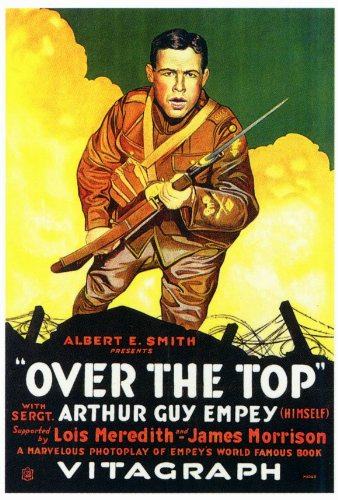
A definitive 6.1/10 rating for a film that redefined the boundaries of cult cinema. Over the Top remains a cornerstone of transgressive art.
In the annals of early cinema, few films capture the raw, unvarnished fervor and the intricate emotional tapestry of a nation grappling with its entry into the Great War quite like Arthur Guy Empey's and Robert Gordon Anderson's "Over the Top." Released in 1918, a pivotal year that saw the tide of the conflict finally turn, this silent epic doesn't merely recount a story; it plunges the viewer into a maelstrom of patriotism, personal sacrifice, and the harrowing realities of a world irrevocably altered by global conflict. It stands as a testament to the power of early filmmaking to stir the soul, to rally a nation, and to craft a narrative that, despite its melodramatic flourishes, resonates with genuine human emotion.
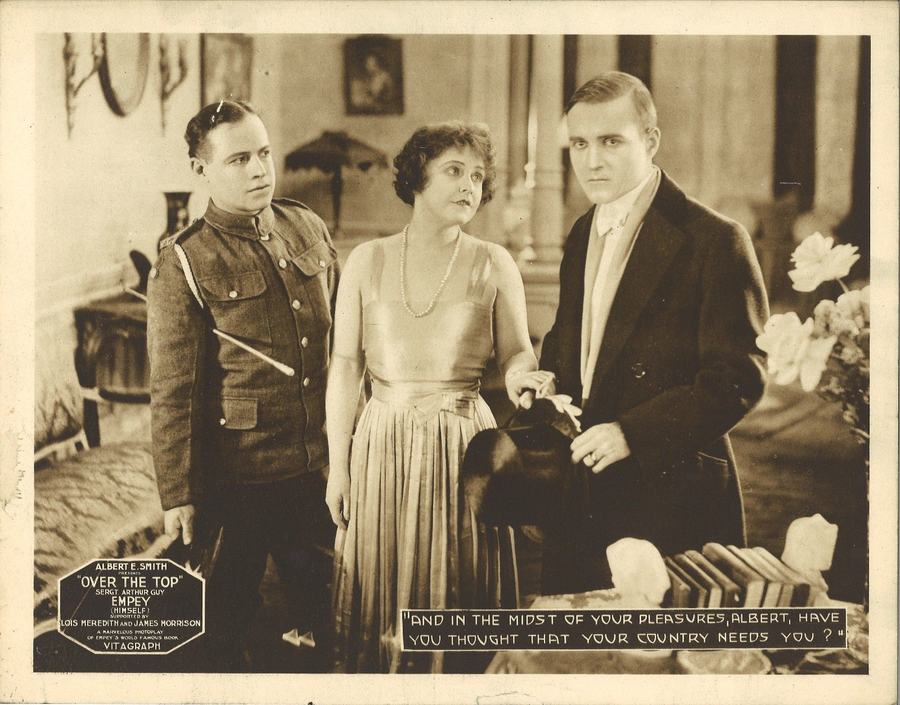
The film's genesis is deeply rooted in the contemporary zeitgeist, capitalizing on the palpable anti-German sentiment that swept across America following the sinking of the Lusitania. This catastrophic event serves as the catalyst for our protagonist, James Garrison "Garry" Owen, portrayed with earnest conviction by James Morrison. Garry is not merely a soldier; he is an embodiment of American idealism, a man compelled by a profound sense of duty to join the fray. His initial decision to enlist with the British forces, a testament to the early global solidarity against the Central Powers, sets him on a path of valor and brutal experience. Morrison's performance, typical of the silent era, relies on broad, expressive gestures and nuanced facial expressions to convey Garry's transformation from an eager recruit to a battle-hardened veteran, a journey abruptly interrupted by a combat wound that necessitates his return stateside.
It is during his recuperation in the bustling, yet still somewhat removed, metropolis of New York that Garry encounters Helen Lloyd, brought to life with captivating grace by Lois Meredith. Their romance blossoms swiftly, a poignant counterpoint to the distant roar of cannons, symbolizing the enduring hope and personal stakes amidst the global conflagration. Their plans for marriage, contingent upon Garry's eventual return from active duty with the American forces now entering the European theater, imbue the narrative with a deeply personal urgency. This love story, while seemingly a classic melodramatic trope, serves as the emotional anchor, providing Garry with a profound motivation beyond mere patriotism – the promise of a future, a life to return to once the horrors of war subside. Meredith's portrayal captures the innocence and steadfast loyalty of a woman caught in the precarious balance between domestic tranquility and the looming shadow of war.
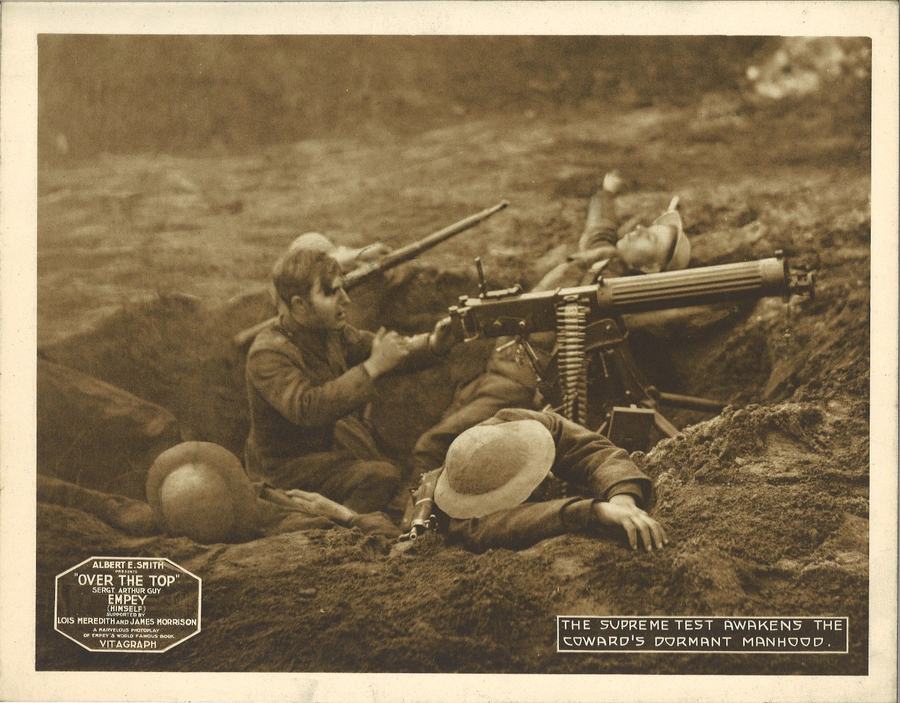
The film's exploration of duty versus personal loyalty reaches its dramatic zenith in the deeply affecting subplot involving Helen's brother, Albert Lloyd. Serving under Garry's command in the American Expeditionary Forces, Albert represents the tragic fragility of the human spirit when confronted with the unimaginable terror of the trenches. His moment of panic and subsequent desertion is not merely a plot device; it's a stark portrayal of the psychological toll of warfare, a raw nerve exposed in the brutal realities of combat. Garry's internal struggle – torn between his affection for Helen's family and his unyielding commitment to military discipline – forms the ethical core of the film. His reluctant report of Albert's transgression leads to a court-martial and a seemingly inevitable death sentence, a grim demonstration of the unforgiving nature of wartime justice. Yet, in a powerful narrative twist that speaks volumes about redemption, Albert seizes a final, desperate opportunity during a company attack. His heroic, self-sacrificing actions to save his comrades not only turn the tide of battle but also irrevocably redeem his name, cementing his legacy as a hero in death. This arc, from cowardice to ultimate valor, is a potent statement on the possibility of atonement and the inherent dignity of even the most flawed individuals, echoing the profound moral dilemmas found in other contemporary dramas like Honor's Altar, where characters are similarly forced to navigate treacherous ethical landscapes under immense pressure.
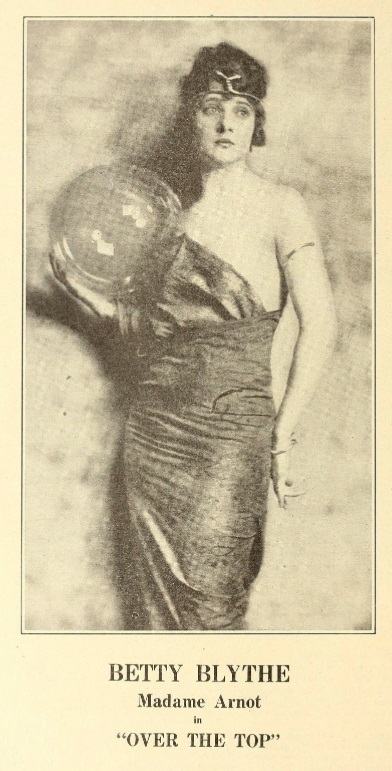
Just as the narrative seems to find a fragile balance, it veers sharply into the realm of suspense and espionage with the audacious abduction of Helen by the sinister German officer, Friederich von Emden, played with chilling conviction by William H. Stucky. Von Emden is the quintessential villain of wartime propaganda cinema – ruthless, cunning, and utterly devoid of moral scruples. His use of a submarine to transport Helen to his secret headquarters, an ominous chateau in Belgium presided over by Madame Arnot (Julia Swayne Gordon), transforms the film from a war drama into a high-stakes thriller. This shift in genre, while perhaps jarring by modern standards, was a common technique in early cinema to maintain audience engagement through escalating stakes and diverse dramatic elements. The visual spectacle of the submarine, a symbol of German technological prowess and perceived barbarity, would have undoubtedly sent shivers down the spines of contemporary audiences.
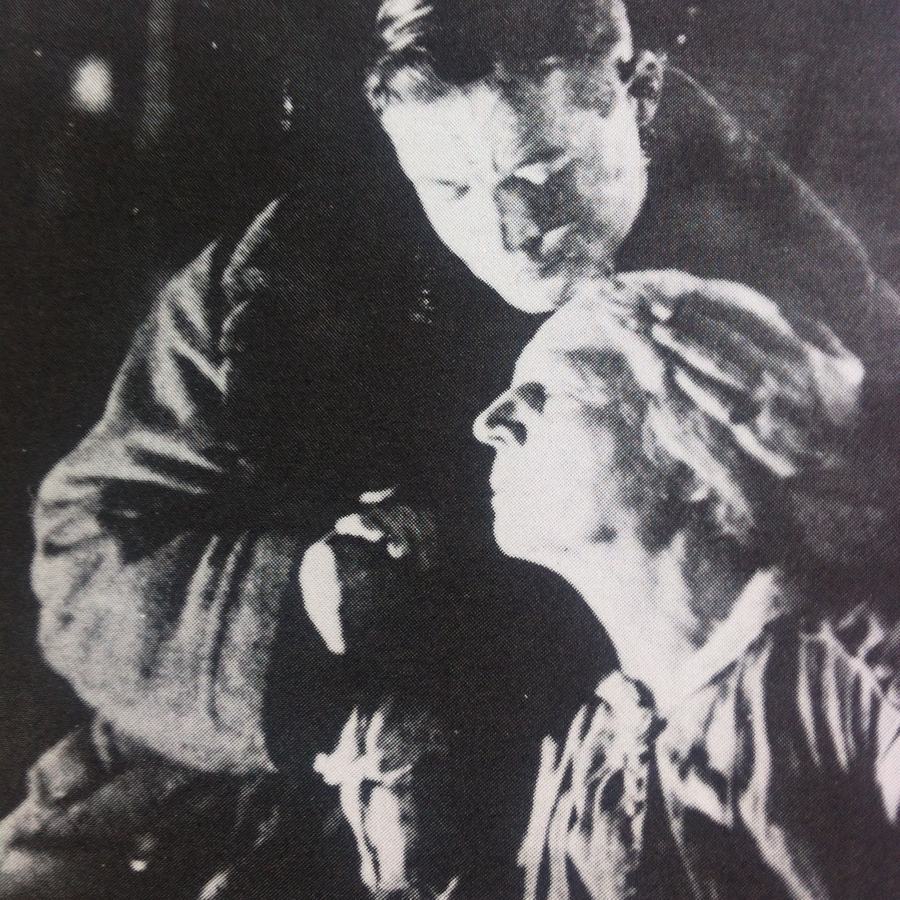
The tension ratchets up considerably when Garry, through a twist of fate and the machinations of war, also falls into von Emden's clutches. The villain's chilling decision to force Garry to attend a macabre banquet, ostensibly celebrating his coerced marriage to Helen, is a masterstroke of psychological torment. This scene, steeped in gothic melodrama, is designed to highlight the depravity of the enemy and the utter helplessness of the protagonists. However, it is within this very tableau of despair that a quiet act of rebellion unfolds. Sonia, an unassuming old servant (portrayed by Nellie Anderson), emerges as an unexpected hero. Her clandestine act of poisoning most of the German guests at the banquet is a testament to the myriad forms of resistance that can arise even in the most oppressive environments. Sonia’s subtle yet devastating intervention provides the crucial turning point, transforming a scene of forced celebration into one of chaotic vengeance, a silent testament to the indomitable spirit of those who resist tyranny.
The ensuing chaos provides Garry with the opening he desperately needs. In a climactic confrontation, he dispatches the nefarious von Emden, a satisfying moment of retribution for both the characters and the audience. The escape of Garry and Helen back to the Allied lines is portrayed as a triumphant dash for freedom, a symbolic victory of love and good over the forces of evil and oppression. This resolution, while perhaps neatly tied, delivers the emotional catharsis that audiences of the era craved, affirming the ultimate triumph of American and Allied values.
"Over the Top" is a rich tapestry woven with themes that resonated profoundly in 1918 and continue to offer insights into the human condition. Patriotism is, of course, a dominant thread, presented not as blind jingoism but as a deeply personal and moral imperative. The film champions sacrifice, not just on the grand scale of national duty, but in the individual choices made by characters like Albert, whose ultimate redemption underscores the film's belief in the power of moral courage. Love, in its purest form, serves as both a motivation and a beacon of hope amidst the darkness of war. The stark portrayal of duty, particularly Garry's unwavering commitment to military protocol, forces a contemplation on the sometimes-brutal necessities of wartime leadership. The clear delineation between good and evil, embodied by the heroic Garry and the villainous von Emden, functions as a powerful moral compass, guiding the audience through the complex moral landscape of war. Furthermore, the film’s narrative arc, particularly Albert's journey, offers a compelling exploration of redemption, suggesting that even in the darkest moments, the opportunity for valor and self-sacrificing heroism can emerge.
The cinematic craft, though constrained by the technological limitations of the silent era, is remarkably effective. James Morrison's and Lois Meredith's performances are exemplary of the period's acting style – highly expressive, often theatrical, yet capable of conveying profound emotion without spoken dialogue. The use of intertitles is artfully integrated, providing necessary exposition and character thoughts, while the visual storytelling relies heavily on composition, staging, and the emotive power of close-ups. The implied direction, guiding the actors through their dramatic arcs, effectively builds tension and pathos. The film also features a notable supporting cast, including Julia Swayne Gordon, Nellie Anderson, William H. Stucky, Betty Blythe, William Calhoun, and Arthur Donaldson, each contributing to the film's rich ensemble and diverse characterizations. These performances, viewed through the lens of modern cinema, might seem exaggerated, but they were the lingua franca of an art form still in its nascent stages, relying on universal gestures and expressions to communicate across a wide audience. The film’s contribution to early war cinema is undeniable, helping to define the visual language and thematic concerns that would shape future portrayals of conflict.
In its broader historical context, "Over the Top" functioned not just as entertainment but also as a powerful piece of propaganda, designed to galvanize American public opinion and reinforce patriotic sentiment during a crucial phase of the war. Its narrative, brimming with heroic Americans, dastardly Germans, and the ultimate triumph of justice, served to unify and inspire. While distinct in its narrative particulars, the film shares thematic kinship with other contemporary war-themed productions such as The War Correspondents, both endeavoring to capture the public imagination and shape perceptions of the conflict. However, "Over the Top" distinguishes itself through its intricate blend of personal drama, military ethics, and espionage thriller elements, creating a multi-layered narrative that transcends simple jingoism. It stands as a fascinating artifact of its time, offering a window into the cultural anxieties, hopes, and values of a nation at war. Its enduring message, despite the passage of over a century, remains relevant: the human spirit's capacity for love, sacrifice, and redemption, even "over the top" of the most formidable challenges imaginable.
The legacy of "Over the Top" is one of a film that perfectly encapsulated its historical moment, delivering a potent blend of action, romance, and moral instruction to a receptive audience. It showcases the foundational elements of storytelling that continue to captivate viewers today: compelling characters, high stakes, and a clear struggle between opposing forces. While silent films may require a different kind of engagement from modern audiences, the emotional impact of "Over the Top" remains undeniable. The film serves as a vital historical document, illustrating how early cinema addressed national crises and shaped collective identity. Its intricate plot, memorable characters, and powerful themes ensure its place not just as a relic of a bygone era, but as a vibrant and compelling piece of cinematic history that continues to speak to the universal experiences of humanity under duress. The blend of military realism (for its time) with heightened melodrama provides a unique viewing experience, reflecting the complex emotional landscape of a world at war. It reminds us that even in the absence of spoken dialogue, the power of visual narrative, supported by strong performances and a gripping storyline, can transcend time and continue to move and inform audiences about the profound impact of war on individuals and nations alike.
IMDb 6.2
1925
Community
Log in to comment.