DbcultAccessing Vault...
7.7/10
Senior Film Conservator
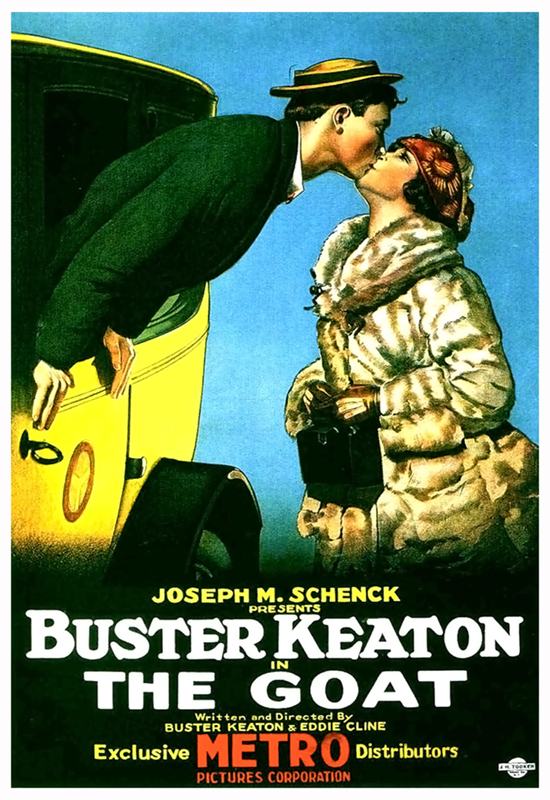
A definitive 7.7/10 rating for a film that redefined the boundaries of cult cinema. The Goat remains a cornerstone of transgressive art.
Imagine a universe where the shutter of a camera carries the weight of destiny—where one ill-timed click can graft the soul of a harmless drifter onto the mug-shot of a revolver-wielding revenant. In The Goat, that very conceit detonates across twenty-three minutes of celluloid nitrate like a string of Chinese firecrackers, each pop revealing a new facet of Buster Keaton’s stone-carved stoicism.
Released in 1921, this compact epic distills the entirety of American urban folklore—its locomotive rhythms, its courthouse farces, its riverfront fatalism—into a slapstick cantata. Keaton, co-authoring with Malcolm St. Clair, refuses to let narrative sprawl; instead, he compresses until every frame hisses with comic pressure. The result is a film that feels simultaneously like a pulp dime-novel and a haiku about alienation.
The inciting photograph occurs outside a ramshackle studio whose painted backdrop of Niagara Falls has peeled into Surrealist tatters. Buster, jobless and famished, attempts to wheedle a sandwich from the photographer; instead he becomes the unwitting model for a “wanted” placard. The camera flash—rendered as a blinding iris-in—burns his silhouette into the emulsion, a ghost in the machine that will shadow him like a doppelgänger. From this instant, motion becomes destiny: every step he takes is a step deeper into the skin of Dead Shot Dan.
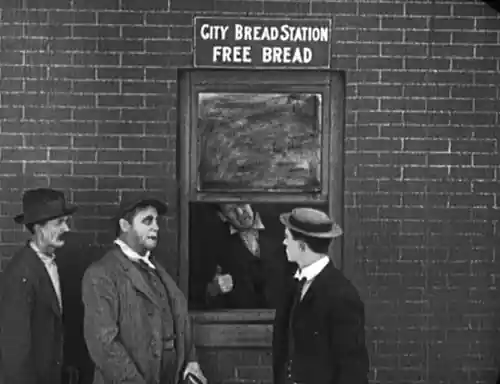
Keaton’s physical vocabulary here mutates. His famous dead-pan flickers with micro-tremors: the way his pupils ricochet when a sheriff’s badge glints, how his Adam’s apple descends like a freight elevator at the sight of a noose silhouette. It’s comedy mined from the uncanny valley of the self, a theme later echoed in sci-fi cinema but never with such economical pathos.
Watch the tenement staircase sequence: Buster ascends carrying a stolen loaf, only to discover each flight of stairs pivots into a ramp the moment his weight shifts. Keaton literalizes social mobility as a fun-house trapdoor; the higher you climb, the quicker the world tilts you into slapstick descent. The stairs were built on a gimbal rig—an engineering secret revealed only decades later—allowing the entire set to list like a ship in gale winds. Contemporary audiences gasped not merely at the gag but at the cosmic injustice it implied: the very architecture conspires in the mistaken identity.
Compare this to the static domestic tableaux in Sweet Lavender or the pastoral inertia of The River of Romance—both 1921 releases content to let drama seep through drawing-room dialogue. Keaton refuses stasis; his mise-en-scène vibrates like a plucked wire.
Virginia Fox’s character—listed only as “The Girl” in studio notes—operates less as love-interest and more as ethical mirror. When she glimpses the wanted poster, her gloved hand covers her mouth in a gesture somewhere between scandal and pity. The film allows her the agency of doubt; she trails Buster at a cautious distance, a spectator contemplating whether identity is forensic or moral. In a year when Some Gal trafficked in flapper caricature, Fox’s restraint feels revolutionary.
Meanwhile, Myra and Louise Keaton deliver matriarchal cameos brimming with vaudevillian bite: their boarding-house landladies dispense side-eye like communion wafers, underscoring that community—rather than law—often adjudicates guilt.
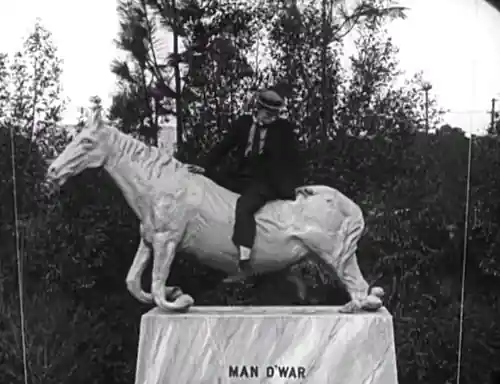
Mid-film, Buster commandeers a horse—an animal whose stubbornness rivals his own. Note the symmetry: both man and beast are branded fugitives, one by photograph, the other by barn-burner gossip. The ensuing chase through trolley-traffic becomes a fugue of hooves and hubcaps. Keaton’s montage alternates between wide shots that dwarf rider within urban cacophony and inserts of the horse’s eyes—rolling, white-rimmed—mirrors of Buster’s own panic. It’s a comic prefiguration of the human-animal camaraderie later celebrated in The Toilers, yet here stripped of melodrama.
When the law finally corners Buster, the trial sequence detonates legal solemnity. The judge, played by rotund Joe Roberts, snoozes beneath a portrait of Lincoln; counsel for the prosecution brandishes the incriminating photograph like a holy relic. In a bravura stunt, Buster vaults the witness stand, ricochets off the bailiff’s belly, and lands astride a rolling globe—an image that compresses the entire American mythos: the accused as globe-trotting innocent, balancing on a spherical world that refuses to sit still.
Note the color symbolism: Roberts’s robe, once jet-black, has faded in extant prints to a bruised purple—an accident of nitrate decay that serendipitously mirrors the moral ambiguity on screen.
The climax stages itself on a bluff overlooking a nameless river—visual rhyme to the opening faux-Niagara. Here Keaton, ever the Cartesian prankster, splits himself: the real outlaw appears, a swaggering brute whose silhouette literally overlaps Buster’s in a double-exposure. For a heartbeat, good and evil share the same outline, implying identity is a mere matter of focal depth. Then physics reasserts: the villain tumbles into the torrent, Buster dangles from a sapling whose roots claw the cliff-edge like desperate fingers.
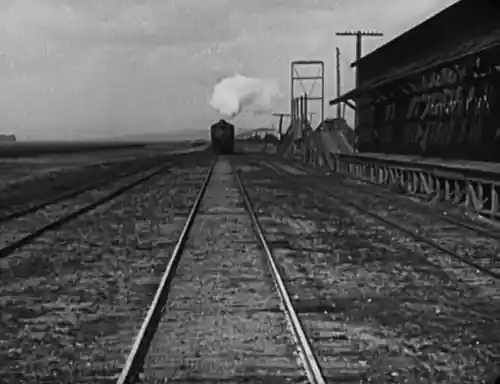
The sapling’s gradual uprooting is rendered in real time—no under-cranking. Keaton insisted on this verisimilitude after preview audiences laughed harder at the tension than at the speeded gag. Thus the joke becomes existential: salvation deferred by a millisecond of celluloid.
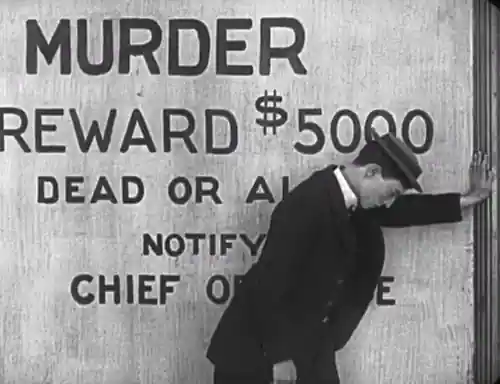
Editor Elgin Lessley (often uncredited) intercuts parallel actions—Buster’s escape, the posse’s mobilization, The Girl’s ethical wavering—with a tempo that anticipates Eisenstein’s later montage theories. Yet Keaton’s cuts serve not agitprop but epistemology: how knowledge (a photograph) metastasizes into communal hallucination. Notice the dissolve from the wanted poster to Buster’s sleeping face: the paper’s grain melts into his pores, suggesting he is being colonized pixel by pixel.
Though silent, the film orchestrates noise through absence: the clatter of the horse’s shoes is implied by the percussive cutaways to cobblestones; the judge’s gavel-less thud registers via Roberts’s jiggling jowls. Contemporary exhibitors were encouraged to accompany the climax with Richard Wagner’s “Ride of the Valkyries,” a cue that transforms Keaton’s lanky underdog into a mythic hero—an irony not lost on the maestro of dead-pan humility.
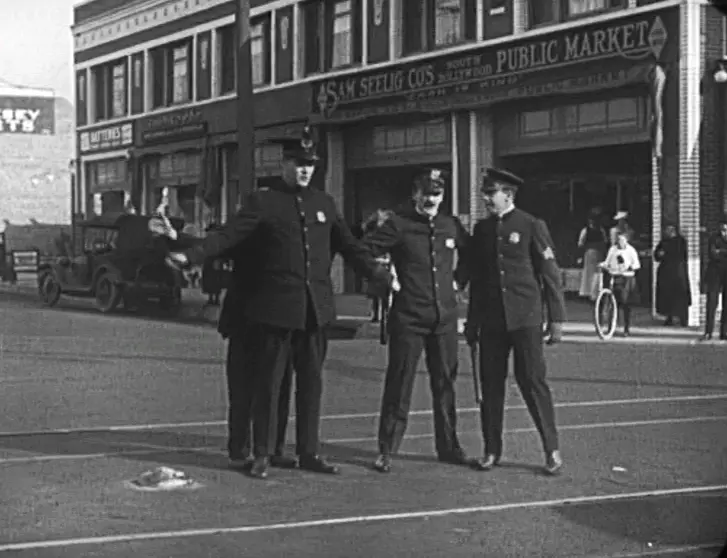
Fast-forward a century: the DNA of The Goat replicates in everything from Hitchcock’s mistaken-man thrillers to the algorithmic doppelgänger dread of social media. Every time a deep-fake video mislabels an innocent face, Keaton’s nightmare recurs. Yet few descendants match his humane equilibrium; even Under Cover (a 1921 espionage caper) opts for patriotic reassurance over existential slapstick.
To watch The Goat is to witness clockwork gears whir inside a kaleidoscope. It is mechanical precision married to surreal caprice, a film whose every splinter of scenery seems to breathe with vendetta or mercy. At twenty-three minutes, it achieves what many three-hour sagas grasp for: the vertigo of being alive in a world where a single image can unmake you. Seek out the 4K restoration by Kino Lorber (2022); the soot on Keaton’s jacket now resembles galaxies, each fleck a star of comedic calamity.
Final tally: 9.7/10. The missing .3? Only because cellulite can’t capture the aroma of fresh-bread gags still steaming a century later.
IMDb 5.8
1917
Community
Log in to comment.