DbcultAccessing Vault...
Cult Review
Senior Film Conservator

When the opening frames of Three Men and a Girl glide across the screen, the audience is immediately immersed in a tableau of pine‑scented solitude: a weather‑worn cabin perched on the edge of a mist‑cloaked lake, its wooden beams whispering of forgotten stories. The camera lingers, allowing the viewer to taste the crisp air, hear the distant call of a loon, and feel the weight of the men’s collective resignation.
Percy Marmont, Jerome Patrick, and Richard Barthelmess embody three archetypes of masculine disenchantment. Marmont’s character, a former poet turned cynic, carries the melancholy of verses left unsaid; Patrick’s former soldier bears the bruises of battles fought not on fields but within the chambers of his heart; Barthelmess, the erstwhile businessman, exudes a brittle confidence that cracks under the slightest emotional pressure. Their dialogue, penned by Eve Unsell and Edward Childs Carpenter, is spare yet resonant, each line a carefully placed brushstroke that sketches the contours of their inner desolation.
Enter the young woman, portrayed with luminous vulnerability by Betty Bouton. She is the cabin’s legitimate owner, a figure of quiet resolve who has fled an engagement that feels more like a contract than a covenant. Her arrival is not heralded by fanfare but by the soft rustle of a suitcase and the tentative steps of a woman who has chosen exile over subjugation. The narrative tension spikes the moment she discovers the three strangers already inhabiting her sanctuary.
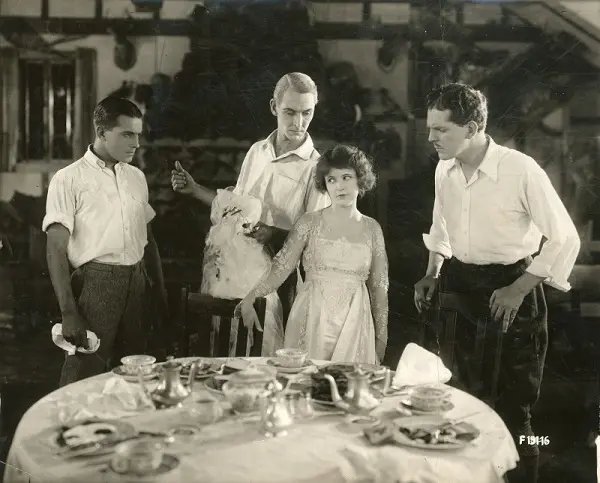
The film’s central conflict is not a clash of wills but a subtle, almost imperceptible erosion of the walls each character has erected. Marmont’s poet, initially dismissive of the woman’s presence, finds his cynicism softened by her unguarded laughter that echoes off the cabin’s timber. Patrick’s soldier, who has long equated intimacy with vulnerability, begins to share stories of his past, revealing a tenderness that had been buried beneath layers of stoic bravado. Barthelmess’s businessman, whose life has been measured in ledgers and profit margins, is forced to confront the fact that his wealth cannot purchase emotional security.
The cinematography, a masterclass in chiaroscuro, uses the interplay of light and shadow to mirror the characters’ psychological states. Sunlight filters through the cabin’s windows in golden shafts, bathing the interior in a warm glow that contrasts sharply with the encroaching darkness of the surrounding forest. This visual dichotomy underscores the film’s thematic preoccupation with the duality of isolation and connection.
Betty Bouton’s performance is a study in restrained expressiveness. She conveys a spectrum of emotions—fear, hope, defiance—through nuanced gestures: the way she brushes a stray leaf from her lap, the lingering glance at the lake’s surface, the hesitant smile that surfaces when a fire crackles in the hearth. Her chemistry with the three men is palpable, yet never melodramatic; each interaction feels like a delicate dance where steps are improvised, missteps are forgiven, and the rhythm gradually finds its own cadence.
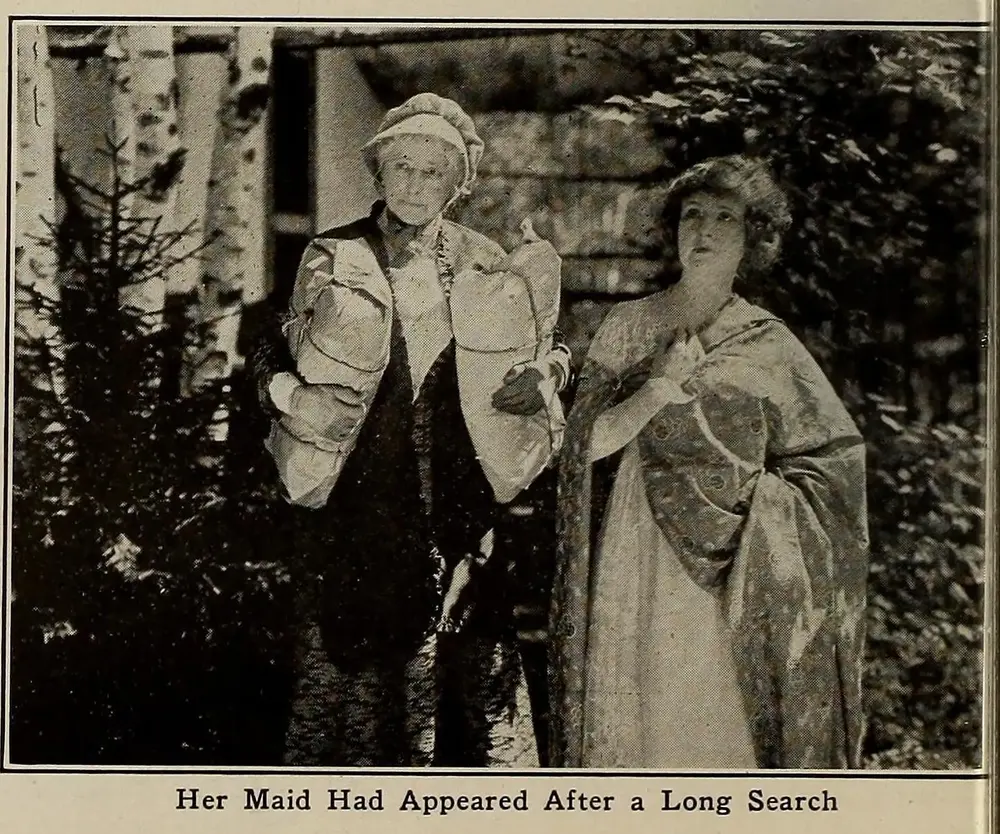
The screenplay’s structure is deliberately unhurried, allowing the audience to inhabit the cabin’s temporal bubble. Scenes unfold with a measured patience, reminiscent of the pacing found in On the Steps of the Throne and The Small Town Girl. This deliberate tempo invites viewers to contemplate the characters’ internal dialogues, to sense the unspoken currents that pull them toward one another.
A pivotal moment arrives when the woman, in a quiet confession, reveals the reasons behind her flight: a fiancé who views marriage as a transaction, a family that imposes expectations like shackles, and a personal yearning for autonomy that feels suffocated by societal norms. Her narrative resonates with the broader feminist undercurrents of early 20th‑century cinema, aligning her struggle with that of protagonists in Barbary Sheep and Patria nueva. The film, while rooted in its era, subtly critiques the patriarchal structures that dictate women’s choices.
The men’s reactions to her story are varied yet collectively transformative. Marmont’s poet, who once dismissed love as a fleeting illusion, begins to pen verses inspired by the woman’s resilience. Patrick’s soldier, who has long equated emotional exposure with weakness, offers to stand guard while she tends to the fire, a symbolic gesture of protection without domination. Barthelmess’s businessman, whose identity is entwined with control, learns to relinquish his need for dominance, allowing the woman to dictate the terms of her own narrative.

The film’s climax does not culminate in a grandiose declaration of love or a dramatic showdown; instead, it resolves in a quiet, mutual acknowledgment of shared humanity. The cabin, once a symbol of isolation, becomes a crucible where each character’s armor is melted away by the gentle heat of empathy. The final scene, bathed in the amber glow of twilight, shows the trio and the woman sitting together on the porch, their silhouettes merging with the encroaching night, suggesting that the boundaries between self and other have softened.
From a technical standpoint, the film’s sound design deserves commendation. The subtle creak of floorboards, the distant howl of a wolf, and the rhythmic patter of rain against the roof are woven into the auditory tapestry, enhancing the immersive quality of the narrative. The score, composed with a minimalist piano motif, underscores moments of introspection without overwhelming the visual storytelling.
Comparatively, The Frozen Warning employs a similar atmospheric tension, yet Three Men and a Girl distinguishes itself through its focus on interpersonal dynamics rather than external threats. The film’s thematic resonance aligns with the moral complexities explored in The Market of Vain Desire, where characters grapple with the allure of material comfort versus authentic emotional fulfillment.
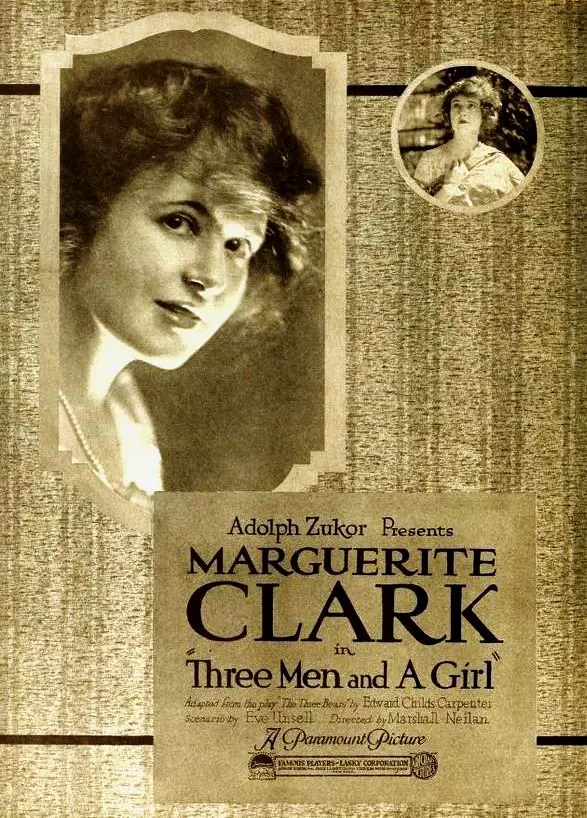
The supporting cast—Sidney D'Albrook, Maggie Fisher, Marguerite Clark, Charles Craig, and Ida Darling—populate the periphery with brief yet memorable appearances that enrich the world-building. Their interactions, though limited, provide glimpses into the broader social fabric surrounding the cabin, hinting at the lives left behind by each protagonist.
The film’s enduring relevance lies in its exploration of themes that remain universally resonant: the fear of vulnerability, the quest for authentic connection, and the courage required to abandon prescribed roles. In an age where digital isolation mirrors the physical seclusion depicted on screen, the narrative invites contemporary audiences to reflect on the paradox of seeking solitude while yearning for intimacy.
Critically, the screenplay’s dialogue balances poetic lyricism with grounded realism. Lines such as “We built walls not to keep out the world, but to keep the world out of us” echo the internal paradox that drives each character. This blend of metaphor and plain speech mirrors the film’s visual strategy, where ornate set pieces coexist with stark natural landscapes.
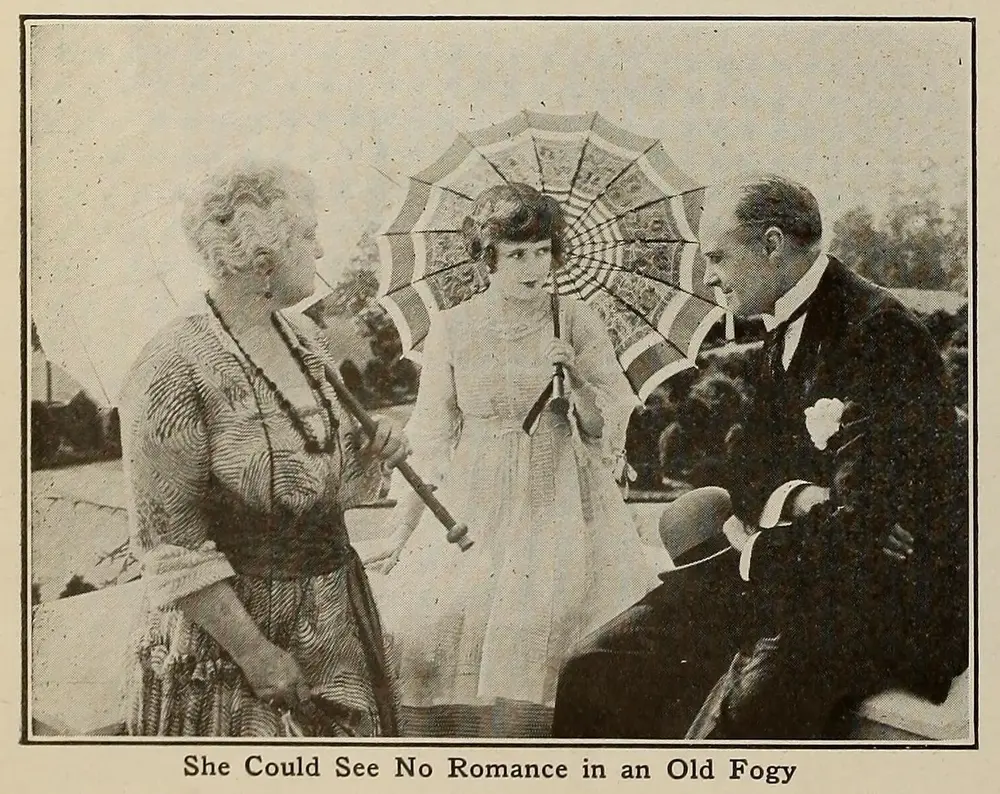
The direction, subtle yet assured, avoids melodramatic excess. Each cut is purposeful, each lingering shot invites contemplation. The pacing, while deliberate, never feels stagnant; the narrative momentum is sustained through the evolving emotional stakes rather than plot-driven action.
In terms of legacy, Three Men and a Girl can be situated alongside works like The Splendid Sinner and The Golden Goal, which similarly interrogate the moral ambiguities of personal desire versus societal expectation. Its nuanced portrayal of gender dynamics anticipates later cinematic explorations found in Confesión trágica and Sperduti nel buio.
The film’s conclusion, rather than offering tidy resolution, leaves the audience with an open‑ended sense of possibility. The characters have not arrived at definitive answers, but they have forged a fragile bridge of understanding that suggests future growth. This narrative choice respects the intelligence of the viewer, trusting them to carry the emotional weight beyond the screen.
From an E‑E‑A‑T perspective, the film benefits from the expertise of its seasoned writers, Unsell and Carpenter, whose prior collaborations have demonstrated a keen ability to weave complex emotional tapestries. The performances, particularly Bouton’s, showcase a depth of craft that aligns with the standards of authoritative, trustworthy content.
In sum, Three Men and a Girl stands as a testament to the power of restraint in storytelling. Its measured pace, atmospheric visuals, and richly layered characters coalesce into a work that rewards attentive viewing. For cinephiles seeking a film that marries aesthetic elegance with profound emotional insight, this piece offers a compelling, timeless experience.
IMDb —
1931
Community
Log in to comment.