DbcultAccessing Vault...
Cult Review
Senior Film Conservator
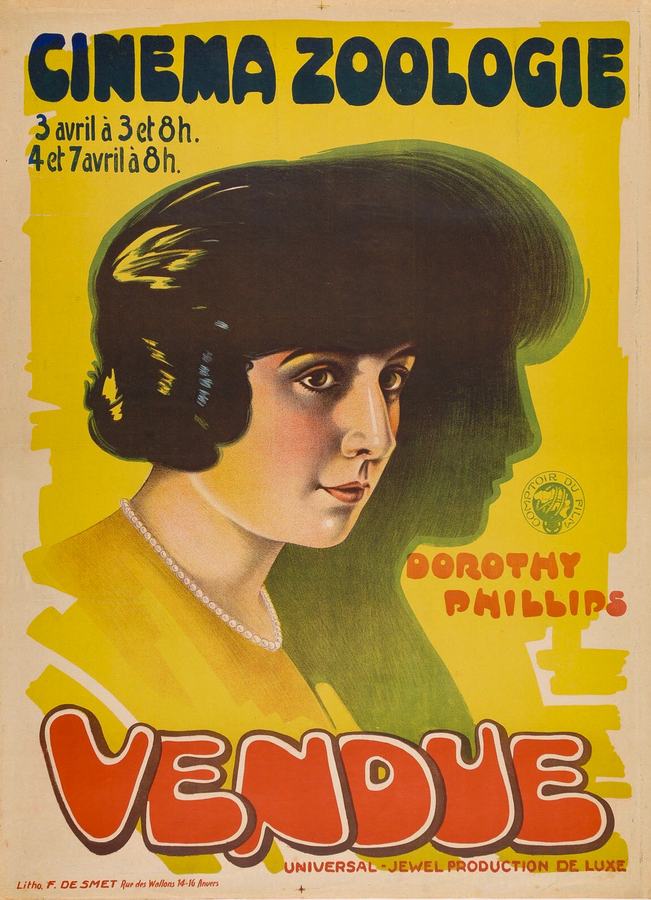
The opening sequence of Paid in Advance establishes an austere tableau: snow‑capped peaks loom over a frozen river, the wind howls like a lamenting choir, and the camera lingers on a solitary cabin that appears both refuge and prison. Within those timber walls, the protagonist—a girl whose name never surfaces, a deliberate choice that renders her a universal symbol—experiences a fleeting moment of pastoral serenity before the narrative thrust propels her into the clutches of a band of gold‑field marauders.
Frank Brownlee, cast as the de facto leader of the outlaws, exudes a cold charisma that is simultaneously magnetic and menacing. His performance, though restrained by the silent medium, communicates a predatory intellect through a series of calculated glances and a subtle tilt of his hat. Joseph W. Girard, portraying the grizzled foreman, offers a counterpoint: his stoic demeanor masks a lingering conscience that flickers throughout the film, especially in scenes where he gazes longingly at the horizon, perhaps yearning for redemption.
Dorothy Phillips, embodying the unnamed girl, delivers a performance that is at once delicate and resilient. Her eyes, often the sole conduit for emotion, convey a spectrum ranging from naive wonder to stark terror. In one particularly haunting tableau, she stands on a frozen riverbank, the ice cracking beneath her boots, a visual metaphor for the fragile veneer of safety that the wilderness pretends to offer.
The script, credited to James Oliver Curwood and Allen Holubar, leans heavily on the literary tradition of the frontier as a crucible for character. Curwood’s penchant for embedding environmental determinism into his narratives is evident: the Alaskan terrain is not merely a backdrop but an active participant, shaping decisions, amplifying tensions, and ultimately dictating the fate of every character.
Lon Chaney, whose presence looms over early cinema, appears in a supporting role that showcases his chameleon‑like ability to inhabit morally ambiguous characters. Though his screen time is limited, his nuanced gestures—particularly the way he adjusts a battered coat—suggest a man haunted by past sins, a theme that resonates throughout the film.
Priscilla Dean, as the outlaw’s confidante, delivers a performance that oscillates between flirtatious bravado and quiet desperation. Her chemistry with William Stowell, who portrays a conflicted miner torn between loyalty to his comrades and an emerging empathy for the girl, adds a layer of interpersonal complexity that elevates the narrative beyond a simple good‑versus‑evil dichotomy.
Cinematographer William Burress employs stark chiaroscuro to accentuate the film’s thematic contrasts. The use of deep shadows against the blinding white of snow creates a visual tension that mirrors the moral ambiguity of the characters. In the climactic chase across a treacherous glacier, the camera adopts a kinetic rhythm, intercutting wide shots of the icy expanse with tight close‑ups of breath fogging in the frigid air, thereby immersing the viewer in the characters’ palpable anxiety.
The editing, while adhering to the conventions of the silent era, demonstrates a surprising sophistication. Cross‑cutting between the girl’s frantic escape and the outlaws’ frantic pursuit heightens suspense, while occasional use of superimposition—most notably when the girl’s face is overlaid onto a looming avalanche—symbolizes the inexorable force of fate.
At its core, Paid in Advance interrogates the myth of the American frontier as a realm of boundless opportunity. The gold fields, traditionally romanticized as harbors of wealth, are reimagined here as a crucible of corruption, where the promise of riches corrodes ethical boundaries. This subversion aligns the film with contemporaneous works such as The Ranger and The Narrow Trail, both of which similarly critique the darker underbelly of westward expansion.
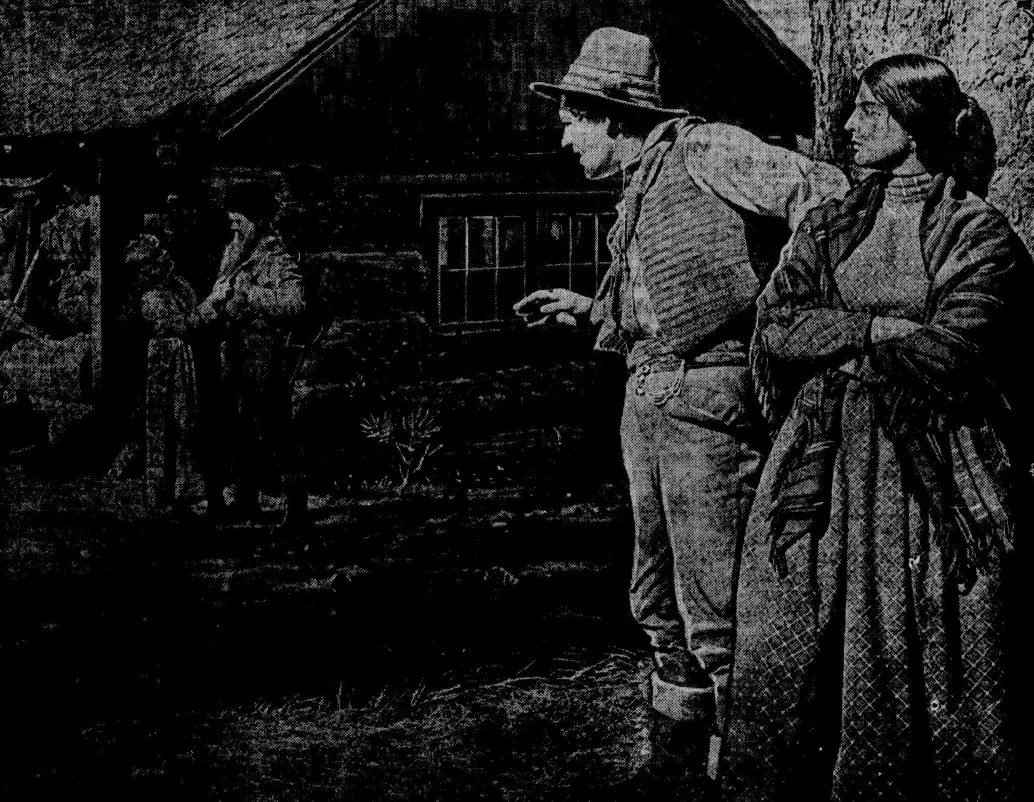
The film’s release in 1924 places it at a crossroads in cinematic history: the silent era was reaching its zenith while the impending advent of sound loomed on the horizon. Within this transitional moment, Paid in Advance showcases the expressive potential of visual storytelling, relying on nuanced performances, meticulous set design, and inventive camera work to convey complex emotional arcs without uttering a single word.
When juxtaposed with All Man, which explores masculinity within a rugged landscape, Paid in Advance pivots its focus to vulnerability and exploitation, thereby broadening the thematic spectrum of frontier cinema. Similarly, the psychological tension present in In the Shadow finds a resonant echo in the oppressive atmosphere that pervades the Alaskan wilderness of this film.
The film adheres to a three‑act structure that feels both inevitable and surprising. The first act establishes the idyllic yet precarious existence of the girl, the second act plunges her into the violent world of the gold‑field gang, and the final act culminates in a showdown that is as much about internal redemption as external survival. The pacing is deliberate; moments of quiet contemplation—such as a lingering shot of the aurora borealis—are interspersed with bursts of frenetic action, ensuring that the audience remains engaged while also afforded space for reflection.
The climax, set against a backdrop of an erupting snowstorm, utilizes the natural elements as a metaphor for the characters’ internal turmoil. As the storm intensifies, the outlaws’ resolve fractures, and the girl’s determination crystallizes into a fierce will to survive. This symbiosis of environment and emotion is a hallmark of Curwood’s narrative sensibility.
Although the film predates synchronized sound, its musical accompaniment—often performed live in theatres—has been reconstructed for modern audiences. A score that blends haunting string motifs with percussive drum patterns mirrors the film’s oscillation between melancholy and urgency. Intertitles are sparingly used, each crafted with a lyrical brevity that complements the visual poetry. One notable intertitle reads, “In the heart of ice, the fire of hope must either melt or burn brighter,” encapsulating the film’s central paradox.
While Paid in Advance never achieved the commercial success of contemporaneous blockbusters, its influence can be traced through later cinematic explorations of the frontier’s moral complexities. The film’s emphasis on environmental determinism foreshadows the ecological concerns of modern cinema, and its portrayal of a vulnerable female protagonist navigating a male‑dominated world anticipates later feminist narratives.
In recent retrospectives, scholars have highlighted the film’s contribution to the evolution of the ‘woman in peril’ trope, noting that Dorothy Phillips’ nuanced performance transcends mere victimhood, offering a proto‑empowered figure who ultimately asserts agency. This reinterpretation aligns the film with contemporary discussions about representation, making it a valuable case study for film historians and gender studies scholars alike.
Fortunately, a restored 35mm print resides within the Library of Congress archives, allowing modern audiences to experience the film in a quality that approaches its original theatrical presentation. Restoration efforts have focused on stabilizing the nitrate stock and digitizing the intertitles to ensure legibility. The restored version has been screened at several silent film festivals, garnering praise for its visual fidelity and emotional resonance.
Paid in Advance stands as a testament to the storytelling power of the silent era, where visual composition and performance coalesce to create a narrative that is both timeless and contextually specific. Its exploration of greed, survival, and the fragile line between innocence and corruption renders it a compelling study for anyone interested in the intersection of cinema, geography, and morality.
For viewers seeking a film that marries stark natural beauty with a haunting human drama, this work offers an immersive experience that rewards attentive viewing. Its relevance endures, not merely as a historical artifact, but as a vivid reminder that the wilderness—whether external or internal—always demands a price, often paid in advance.
IMDb —
1919
Community
Log in to comment.