DbcultAccessing Vault...
5.5/10
Senior Film Conservator
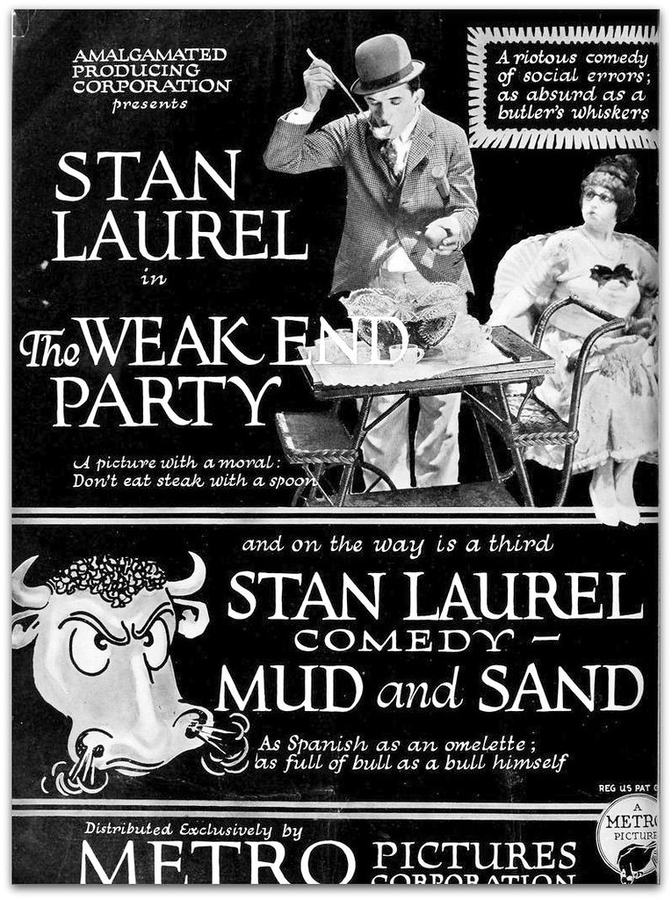
A definitive 5.5/10 rating for a film that redefined the boundaries of cult cinema. The Weak-End Party remains a cornerstone of transgressive art.
Imagine, if you can, a dinner gong that reverberates like a judge’s gavel inside a gilt mausoleum of privilege. Thirteen well-shod aristocrats freeze, forks aloft, as the fatal head-count sinks in. One hush, one gasp, and the veneer of Edwardian poise cracks like thin ice under patent leather. Into this brittle tableau swaggers Mr. Smith, impresario of denial, who salvages numerical respectability by drafting the nearest warm body—the gardener—into a starched collar and a chair that nobody wanted. The joke, of course, is that the fourteenth guest is not a corrective spell but a catalyst of pandemonium.
Superstition here behaves like a rogue AI: once booted, it rewrites every subroutine of etiquette. The footmen’s gloved hands develop tremors; the soufflé refuses to rise; the claret tastes of rust. In the flicker of a silent-film iris, the dinner party becomes a séance where the summoned spirit is embarrassment itself. Laurel’s gardener, moon-faced and unhurried, glides through this hothouse like a man who has mistaken the mansion for a greenhouse. His mere presence is a solvent: waxed mustaches wilt, dowagers hiccup in waltz time, and the butler’s spine turns to taffy.
Director Edward Jefferson shoots the banquet as though it were a last supper staged by Man Ray: oblique angles, cavernous negative space, and a gravity that seems suspiciously negotiable. Every canted frame whispers that the real feast is the disintegration of protocol.

Somewhere between the soup and the existential dread, the party migrates to the billiard room—a cathedral of mahogany where masculinity once went to measure itself in caroms. The table stretches like a battlefield; the balls clack like distant artillery. Stan, handed a cue that might as well be a wizard’s staff, proceeds to rewrite Newton. He massés sideways, jabs the felt, and—in the film’s pièce de résistance—chomps the blue cube of chalk as though it were a communion wafer tinted by a mischievous god.
The gag lands because it is both infantile and profane: chalk, the instrument of precision, becomes a bonbon of idiocy. The camera lingers on Stan’s puckered smack, the azure crumbs on his tongue, and for three beats the whole universe of manners is inverted. The aristocrats, who moments earlier feared death by prime number, now confront the greater horror of gastro-intestinal geometry.
What makes Laurel’s gardener more than a stumblebum is the tempo of his bewilderment. Where Chaplin’s tramp weaponizes pathos and Keaton’s stone-face is a triumph of engineering, Stan operates on laconic revelation: each blink is a koan, each shrug a dismantling of hierarchy. Notice how he never rushes a reaction; rather, he lets the absurdity bloom until the patricians out themselves as the true vulgarians. His chalk-eating is not mere gluttony but a koan of edible nihilism—an assertion that the universe is chalk-flavored and indigestible.
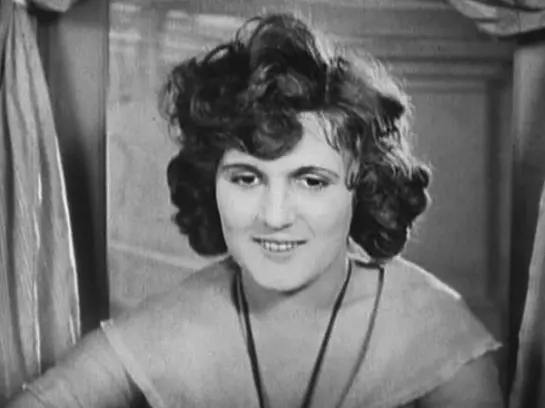
Released in 1922, The Weak-End Party arrives at the hinge between Victorian drawing-room farce and Jazz-Age anarchy. The war is a fresh scar; the influenza phantom still stalks; the wealthy barricade themselves behind superstitions as brittle as the stock market. The film’s genius is to lampoon both the dread and the armor: the thirteen-chair phobia is less about numerology than about the terror of unmasking. Once the gardener chews the chalk, the mask liquefies.
Compare it to When Men Are Tempted (1921), where adultery skulks behind velvet drapes, or to Never Weaken (1921) whose skyscraper antics externalize vertigo into acrobatics. Weak-End Party opts for claustrophobic implosion: four walls, one table, and the uneasy laughter of caste.
Jefferson’s camera is not yet the restless, Soviet-eyed montage of the avant-garde, but it sneaks in sly modernisms. Watch the mirror at frame left: as Stan lines up a shot, the reflection doubles the chaos, turning the solitary gag into a diptych of disintegration. Shadows stretch like spilled ink across the wainscoting, foreshadowing the chalky tongue that will soon desecrate the color wheel. The lighting toggles between tungsten warmth and lunar chill, as though the house itself can’t decide whether to coddle or expel its intruder.
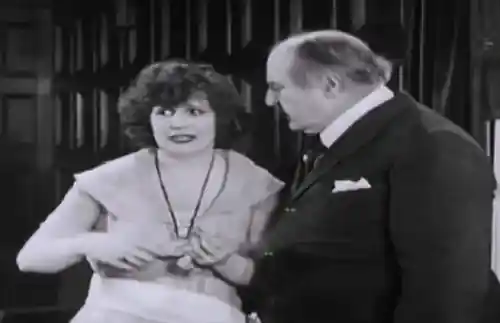
Viewed today, the absence of synchronized dialogue intensifies the sensory prank. We hear the chalk crumble via the phantom synapse of memory—its dusty rasp on blackboards, its ghost-particle bloom in sunlight. The gag ricochets across eras: in TikTok’s age of ASMR, Stan’s mastication becomes a crunchy anthem against digital gloss. The aristocrats’ horror is our delight; their loss of poise, our catharsis.
Marion Aye and Babe London drift through the fracas as flapperish flares, their cigarette holders doubling as antennae picking up the frequency of unrest. They are not mere décor; they orchestrate side-glances, betting on which tuxedo will first combust. Their amusement undercuts the patriarchal solemnity, hinting that women have always known superstition to be men’s panic in a girdle. When Stan devours the chalk, their laughter—caught in iris-close-up—becomes the true breaking of bread.
Clocking in under twenty minutes, the film belongs to the one-reel riot tradition that studios of the day churned like popcorn. Yet its brevity is paradoxically expansive: every rewatch telescopes further into the subconscious of class dread. The weak-end is the weekend, that brief interval when the bourgeoisie play at leisure and accidentally excavate their marrow. By Monday, the mansion will reassemble its gleam, but the chalky smudge on the baize remains—a bruise that refuses polite erasure.
Recent 4K restoration by the EuropaChamber consortium lifts the fog of generations. The grain now glimmers like mica; the silver nitrate shadows pool with velvety menace. Most startling is the blue of the chalk—no longer a pale smudge but a cerulean jolt that pops against the umber table. You can almost taste its dusty grit between your molars, a century removed.
As the credits iris-out on Stan doffing a too-large top hat, the sun—once a threat—now floods the hallway with democratic gold. The aristocrats, disheveled and oddly giddy, have survived not the numeral thirteen but the vertigo of exposure. The gardener shuffles back to his hedges, pockets probably still dusted with azure. The door closes, yet the joke keeps unfurling: superstition, like chalk, dissolves only to re-coat the tongue of the next era.
In the taxonomy of silent comedy, The Weak-End Party is the fleeting hiccup that echoes longer than most symphonies. It reminds us that every ritual is only a pool-ball collision away from absurdity—and that sometimes salvation arrives in the guise of a gardener who snacks on geometry.
IMDb 9
1931
Community
Log in to comment.