DbcultAccessing Vault...
Cult Review
Senior Film Conservator
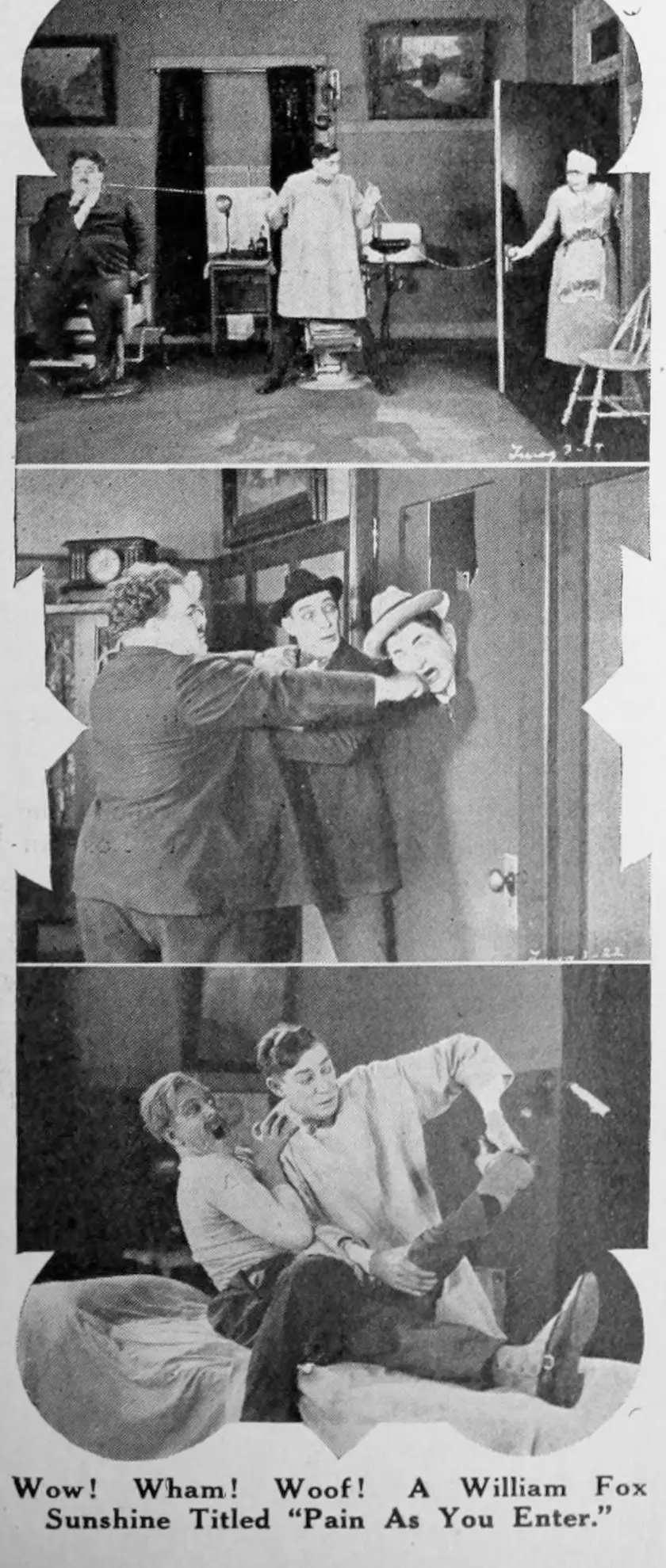
There are films that merely entertain, and then there are those that etch themselves onto the very fabric of your being, resonating with a profound, almost visceral truth long after the final frame flickers into darkness. 'Pain as You Enter,' a compelling, if often overlooked, silent era drama, unequivocally belongs to the latter category. This motion picture is not merely a narrative; it is an experience, a stark, unflinching gaze into the crucible of human suffering and the indomitable spirit that, against all odds, seeks a flicker of hope amidst the encroaching shadows. From its evocative title to its last, lingering shot, the film demands engagement, inviting its audience to confront the uncomfortable realities of a world where true happiness is a luxury often bought at an agonizing price.
At the heart of this emotionally charged tableau stands Ruth Hiatt, whose portrayal of Clara is nothing short of a revelation. Hiatt, a performer whose nuanced expressions and eloquent gestures often spoke volumes without the need for intertitles, delivers a masterclass in silent film acting. Her face, a canvas of shifting emotions, conveys Clara's burgeoning despair, her quiet dignity, and her heart-rending sacrifice with an authenticity that transcends the cinematic conventions of the period. We witness her transformation from a hopeful, if impoverished, young woman into one burdened by an unbearable weight, the lines of worry etched deeper with each passing scene. It's a performance that rivals the expressive power seen in classics like Revolutionens datter, where the protagonist's inner turmoil is externalized with such potent grace. Hiatt doesn't just play Clara; she inhabits her, allowing us to feel the gnawing anxiety of her mother's illness, the yearning for a love she cannot afford, and the bitter pill of a life dictated by cruel circumstance. Her tears, when they fall, are not mere cinematic contrivance; they are the genuine outpouring of a soul pushed to its breaking point.
The film’s genius lies in its ability to render Clara’s plight universally relatable, even as it roots her story in the specific socio-economic struggles of its era. This isn't a melodrama for melodrama's sake; it's a profound character study, a testament to Hiatt's profound understanding of her craft. Her ability to communicate complex psychological states through subtle shifts in posture, the flutter of an eyelid, or the tremor of a hand is truly exceptional. One particular scene, where Clara silently grapples with Mr. Thorne's insidious proposition, is a tour de force of non-verbal communication, conveying a maelstrom of conflicting emotions – revulsion, desperation, and a flicker of grim resolve – without a single word. It is this depth of portrayal that elevates 'Pain as You Enter' beyond a simple tale of woe, cementing Hiatt’s legacy as an actress of formidable talent and emotional range.
While Hiatt anchors the film with her extraordinary presence, the supporting cast contributes significantly to the narrative's emotional resonance. Lee Moran, as Arthur, the struggling artist and Clara's true love, embodies a poignant blend of idealistic passion and frustrating impotence. His inability to provide for Clara, despite his deep affection, underscores the harsh realities that drive the film's central conflict. Moran skillfully conveys Arthur's internal struggle, torn between his artistic aspirations and the pragmatic demands of the world. His scenes with Hiatt are imbued with a palpable tenderness, making their forced separation all the more heart-wrenching. One might draw parallels to the star-crossed lovers in The Humming Bird, where external forces similarly conspire against romantic union.
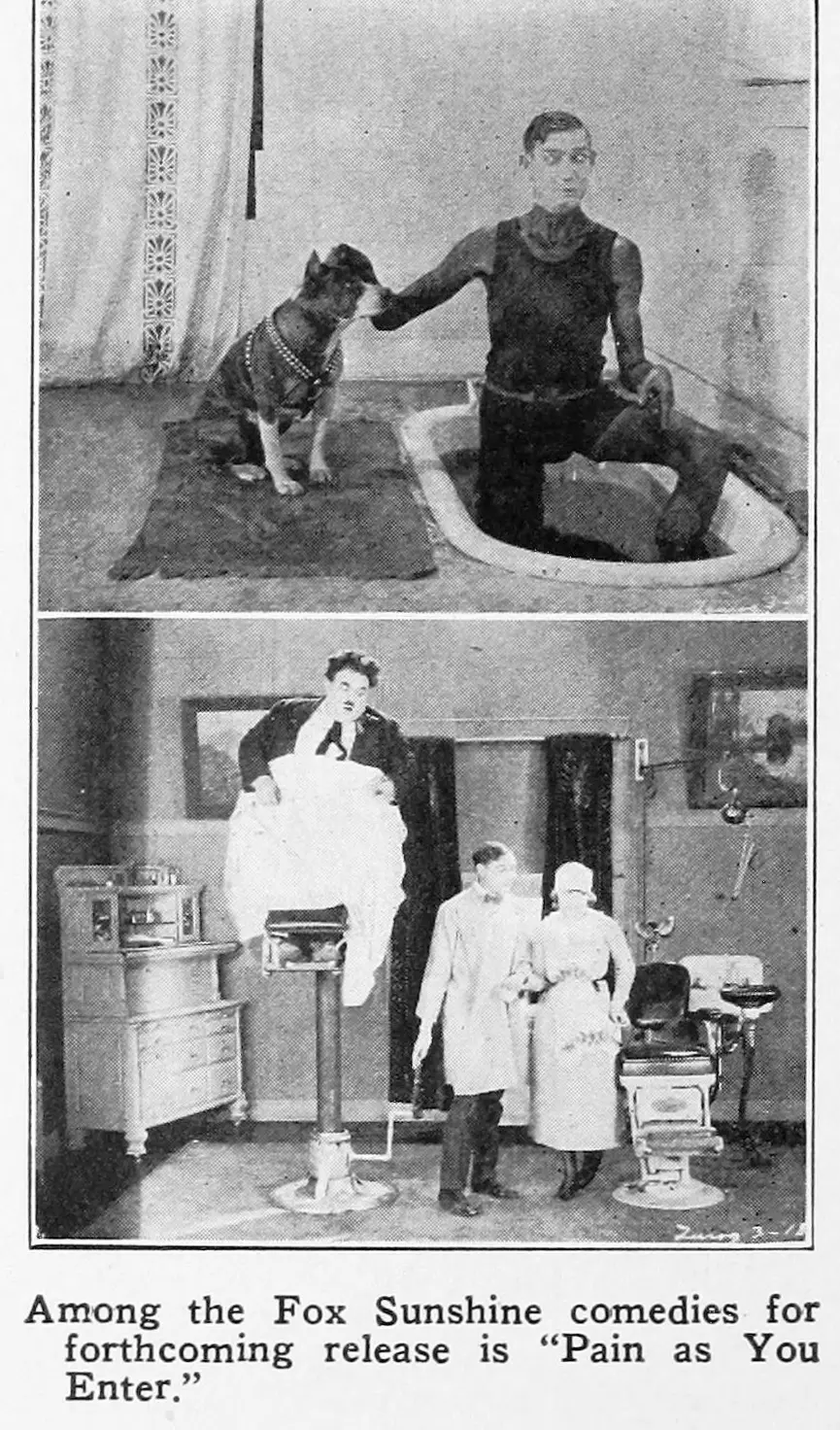
Frank Alexander, cast as the avaricious Mr. Thorne, provides the perfect foil. His portrayal of the wealthy industrialist is chillingly effective, eschewing overt villainy for a more insidious brand of moral corruption. Thorne is not a mustache-twirling caricature; he is a man whose power allows him to manipulate lives with a casual disregard, believing that every person and every principle has a price. Alexander’s subtle sneer and calculating gaze convey a sense of entitlement and cold pragmatism that makes his character genuinely menacing. He is a stark representation of the societal forces that prey upon the vulnerable, a thematic element explored with equal intensity in films like Life's Shop Window, which also dissects the moral compromises necessitated by economic hardship.
James Parrott, in a role that offers a brief respite from the prevailing gloom, plays a well-meaning but ultimately ineffective friend. His character serves as a poignant reminder of the limits of individual kindness in the face of overwhelming systemic injustice. His attempts to assist Clara, while sincere, are ultimately futile, highlighting the enormity of her predicament. And then, there is Pal the Dog. Oh, Pal. The loyal canine companion, whose silent presence and intuitive understanding of Clara's pain offer a profound, wordless comfort. Pal's performance, if one can call it that, is a testament to the emotional power of animal actors in early cinema, providing an innocent counterpoint to the human drama unfolding. His unwavering devotion is a pure, untainted source of warmth in Clara's bleak existence, a silent witness to her suffering, much like the equally memorable animal companions in films such as The Tame Cat, though with a far more dramatic purpose here.
The directorial vision behind 'Pain as You Enter' is one of stark realism tempered by moments of evocative visual poetry. The director (whose name, sadly, is lost to the mists of time, a common tragedy for many silent-era gems) masterfully employs composition and lighting to heighten the emotional impact of each scene. Close-ups of Hiatt's face are used sparingly but to devastating effect, drawing the audience into her inner world of turmoil. The settings, from Clara's humble abode to Thorne's opulent, yet suffocating, mansion, are meticulously crafted to reflect the characters' social standing and psychological states. The contrast between these worlds is not merely visual; it is thematic, emphasizing the chasm between the privileged and the struggling.
Cinematically, the film exhibits a sophisticated understanding of visual storytelling. The use of shadows and light is particularly noteworthy, with chiaroscuro effects often mirroring Clara's emotional landscape. Moments of despair are plunged into deep, oppressive darkness, while fleeting instances of hope are bathed in a soft, ethereal glow. This deliberate aesthetic choice elevates the film beyond mere narrative, transforming it into a visual symphony of sorrow and resilience. It's a testament to the artistry of silent cinema, demonstrating how powerful emotions could be conveyed without dialogue, relying instead on the universal language of imagery. One might compare its visual narrative prowess to the compelling yet wordless storytelling of In the River, which similarly leverages environmental elements to deepen character and plot.
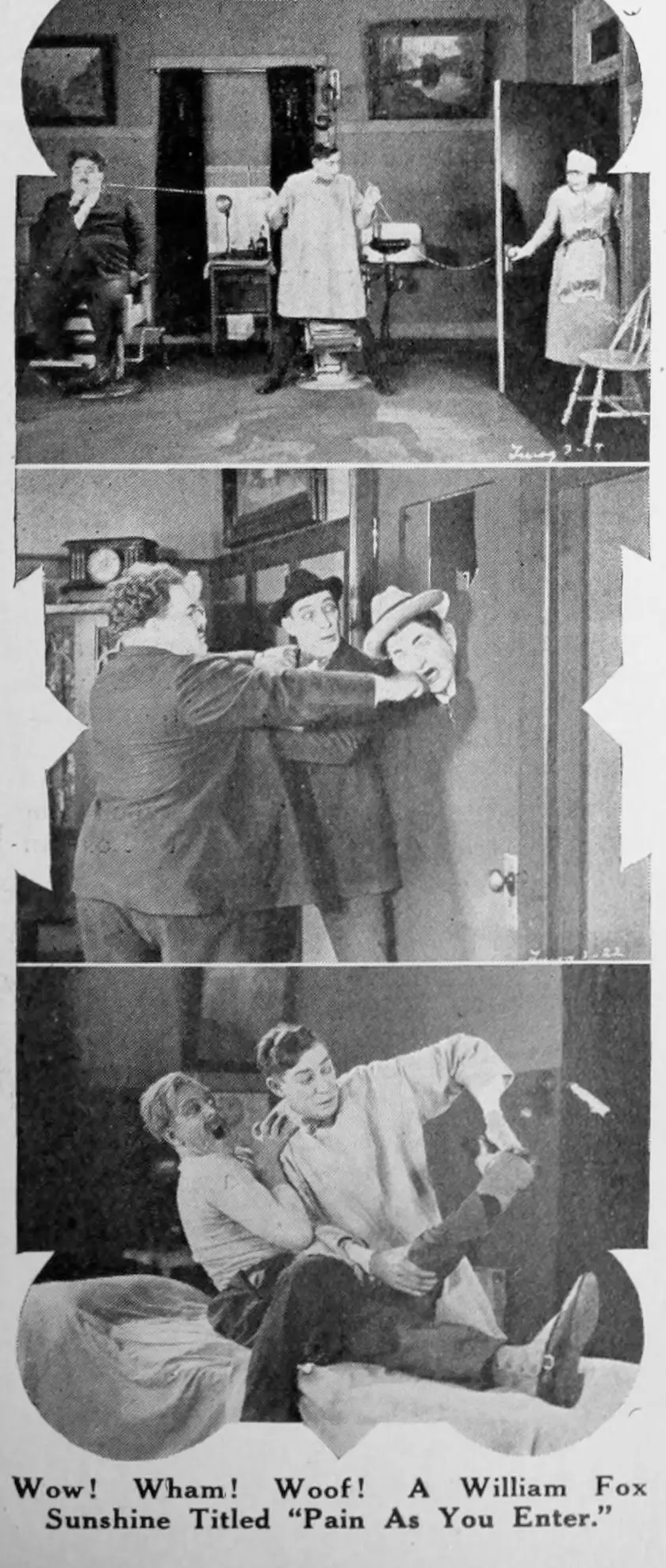
The central theme of 'Pain as You Enter' revolves around the agonizing choices forced upon individuals by societal inequities and personal circumstances. Clara's journey is a meditation on sacrifice, particularly the sacrifice of personal happiness and integrity for the well-being of loved ones. It delves into the moral quandaries that arise when survival itself becomes a compromise. The film bravely explores the idea that sometimes, the most loving act is also the most painful, a concept that resonates deeply and avoids simplistic resolutions. This complex exploration of moral ambiguity is a distinguishing feature, setting it apart from more straightforward narratives of good versus evil.
Furthermore, the film is a trenchant critique of class disparity and the mechanisms by which power is wielded to exploit the vulnerable. Mr. Thorne represents not just an individual villain, but the systemic forces that trap people in cycles of poverty and desperation. His 'offer' to Clara is a stark illustration of how economic power can strip individuals of their agency, forcing them into decisions that shatter their spirits. This thematic depth positions 'Pain as You Enter' alongside other socially conscious films of its time, though its emotional intensity gives it a unique edge. The film’s exploration of the moral cost of survival echoes the profound dilemmas faced by characters in The Other Woman, where societal pressures similarly dictate the path of personal liberty.
Despite its relative obscurity compared to some of its more famous contemporaries, 'Pain as You Enter' deserves a prominent place in the pantheon of silent cinema. Its unflinching honesty, coupled with the transcendent performance of Ruth Hiatt, ensures its enduring power. The themes it explores—sacrifice, class struggle, and the resilience of the human spirit—remain as relevant today as they were a century ago. In an age where economic inequality continues to widen, and individuals are often forced to make impossible choices, Clara's story serves as a powerful, albeit silent, reminder of the universal human struggle.
The film's impact lies not in grand spectacles or intricate plots, but in its profound emotional authenticity. It is a work that understands the quiet agony of everyday life, the silent battles fought within the confines of one's own heart. While it might lack the overt action of a film like An Affair of Three Nations or the frantic pace of Fast Company, its power is derived from its relentless focus on the internal landscape of its protagonist. It's a film that asks its audience to empathize, to feel, and to reflect on the nature of suffering and the strength required to endure it. It's a rare gem that speaks to the timeless human condition, proving that true cinematic artistry transcends the limitations of sound and time.
'Pain as You Enter' is a haunting, evocative masterpiece of silent cinema. It is not an easy watch, nor is it meant to be. It is a film that challenges, provokes, and ultimately, rewards with its profound insights into the human spirit. Ruth Hiatt's performance alone is worth the journey, but the film as a whole is a testament to the enduring power of storytelling, particularly when it dares to confront the darker, more uncomfortable aspects of existence. For those who appreciate the depth and artistry of early film, and for anyone willing to engage with a story that prioritizes emotional truth over fleeting entertainment, 'Pain as You Enter' is an essential viewing experience. It leaves an indelible mark, a quiet echo of Clara's struggle that resonates with a timeless poignancy. It reminds us that sometimes, the greatest courage is found not in grand gestures, but in the quiet, agonizing decision to simply endure, to step through the threshold where pain awaits, and to somehow, against all odds, find a way to keep living. It’s a film that, much like Der Ruf der Liebe, manages to capture the delicate interplay of love and sacrifice in a world determined to test the limits of both.

IMDb —
1931
Community
Log in to comment.