Summary
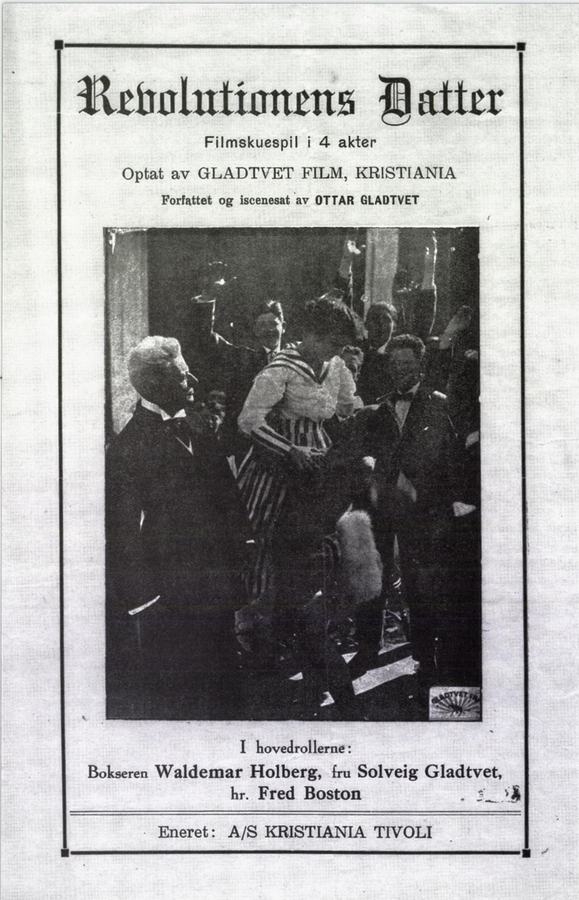
Ottar Gladvedt’s 1918 opus, Revolutionens datter, serves as a searing celluloid document of class friction and industrial upheaval. Set against the jagged, iron-wrought backdrop of a shipyard, the narrative follows Albert Fjeld, a man whose calloused hands and fiery rhetoric position him as the vanguard of a burgeoning labor uprising. When the intransigent Director Staalhammer dismisses the workers' pleas for economic dignity, the simmering tension erupts into a violent proletarian surge. Amidst the chaos of the director’s pillaged estate, Albert’s loyalty is fractured by his devotion to Claire, the director’s daughter. His act of rescue precipitates a desperate exodus to a neighboring sanctuary, where the social hierarchy is momentarily inverted. In the pastoral exile of the Dalton estate, Claire becomes the object of a predatory aristocratic courtship, eventually inheriting a fortune that transforms her from a refugee into a prize. The film’s resolution eschews traditional revolutionary dogma for a visceral, pugilistic climax—a boxing match that pits the raw vitality of the working man against the effete privilege of the landed gentry—culminating in a domestic synthesis that bridges the chasm between the shipyard and the salon.
Synopsis
The film tells the story of Albert Fjeld, a worker at a shipyard, and Claire Staalhammer, the shipyard director's daughter. Albert acts as a spokesman for the workers when they make a demand for a pay rise, which director Staalhammer rejects. The workers do not accept this and they start a revolt. Albert, who has fallen in love with Claire, manages to save her when the workers storm the director's residence, and they flee to the neighboring country, where Claire gets to live with a friend of her father, landowner Dalton. Dalton's son tries to impress Claire, but she doesn't want him. Claire is eventually told that order has been restored in her home country, and that she has inherited almost a million kroner. Because of the money, Squire Dalton is happy to see his son marry Claire, and she feels it would be rude to refuse outright, as the Squire has shown her great hospitality. She therefore proposes a boxing match between Albert and the landowner's son over who will marry her. Albert wins the fight, and five years later we see them living happily in their homeland.
Review Excerpt
"The Industrial Crucible: A Prelude to UnrestIn the pantheon of early silent cinema, few films capture the raw, unvarnished friction of the industrial age with as much vigor as Revolutionens datter. Released in 1918, a year defined by the global tremors of the Russian Revolution, Ottar Gladvedt’s work is not merely a romantic melodrama but a profound sociological study. The film opens in the claustrophobic, soot-stained environment of a shipyard—a setting that mirrors the burgeoning discontent of..."