DbcultAccessing Vault...
Cult Review
Senior Film Conservator
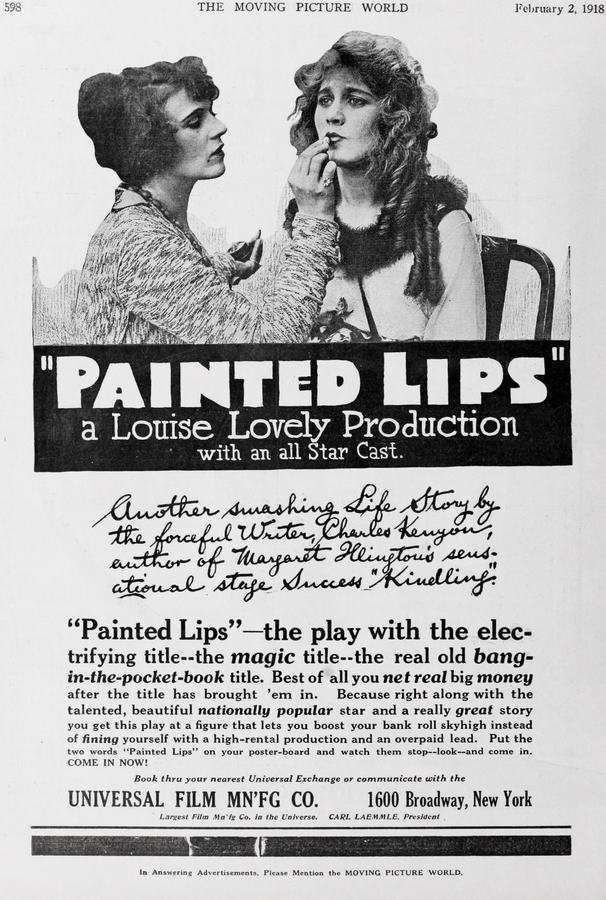
The flickering shadows and evocative piano scores of the silent era often concealed narratives of surprising depth and moral complexity, far exceeding the simplistic melodramas many modern viewers might imagine. Among these cinematic gems, 'Painted Lips,' a 1918 production, emerges as a particularly fascinating artifact, a testament to the period's ability to weave intricate tales of human frailty, vengeance, and the transformative power of unexpected love. Penned by Charles Kenyon and brought to life by a dedicated cast, this film pulls back the curtain on a society grappling with rigid expectations and the volatile desires lurking beneath its surface. It's a journey through a meticulously constructed web of deceit, where identities are forged and shattered, and the pursuit of justice takes a remarkably circuitous, morally ambiguous route.
At the narrative's emotional core is Lou McTavish, a character initially defined by the severe, unyielding moral code imposed by her father, Captain McTavish. Portrayed by the expressive Betty Schade, Lou's early life is one of strictures and boundaries, a world hermetically sealed against the perceived corruptions of modern society. The news, later revealed to be erroneous, of her father's violent death acts as a seismic shock, shattering the foundations of her existence and inadvertently granting her a perilous freedom. This sudden void propels Lou into an entirely new orbit, away from the familiar and into the dazzling, yet potentially dangerous, embrace of the music-hall milieu. Here, she encounters Rose, played by Mattie Witting, a figure who embodies a vibrant, uninhibited spirit utterly alien to Lou's previous experiences. Rose's friendship is not merely a companionship; it's a gateway to a world where conventions are looser, and self-expression is celebrated. Their visit to the Straw Cellar club is more than a casual outing; it signifies Lou's symbolic shedding of her former self, a tentative, yet profound, exploration of identity beyond the confines of paternal authority. This dramatic shift in environment and personal freedom resonates with themes found in other films of the era, such as A Militant Suffragette, where women, through different means, similarly break free from societal molds, albeit with often profound and challenging consequences. The film skillfully illustrates this transition, hinting at the nascent desires and curiosities that Lou, previously repressed, is now tentatively exploring.
It is within the smoky confines of the Straw Cellar that Lou inadvertently captures the attention of Jim Douglass, played with a compelling intensity by Lew Cody. Jim is not merely smitten; he is a man consumed by a singular, burning desire for vengeance. His target: Andrew Solman, a 'male vampire' who, in Jim's eyes, profoundly insulted his sister through a calculated act of emotional manipulation, encouraging her to marry a dissolute woman. Jim's plan is a masterclass in Machiavellian strategizing, a meticulously orchestrated scheme to inflict a similar wound upon Solman. Lou, in her newfound vulnerability and nascent worldliness, becomes the unwitting, yet perfectly malleable, instrument of his retribution. What follows is a remarkable period of transformation: Jim takes Lou away from the city, sequestering her for five months, during which he undertakes her rigorous training. This is no mere charm school; it is a profound metamorphosis, an attempt to sculpt Lou into the very image of a 'lady,' a woman whose elegance and refinement would be irresistible to a man like Andrew Solman. This narrative arc, where a character is deliberately reshaped for a specific purpose, echoes the intricate manipulations seen in films like The Iron Claw, where characters are often entangled in complex plots of control and deception. The ethical implications of Jim's actions are stark: he exploits Lou's innocence and grief, molding her into a weapon without her full knowledge of his true intentions. Yet, the film subtly suggests a flicker of genuine connection beginning to spark between them, even amidst the calculated cruelty.
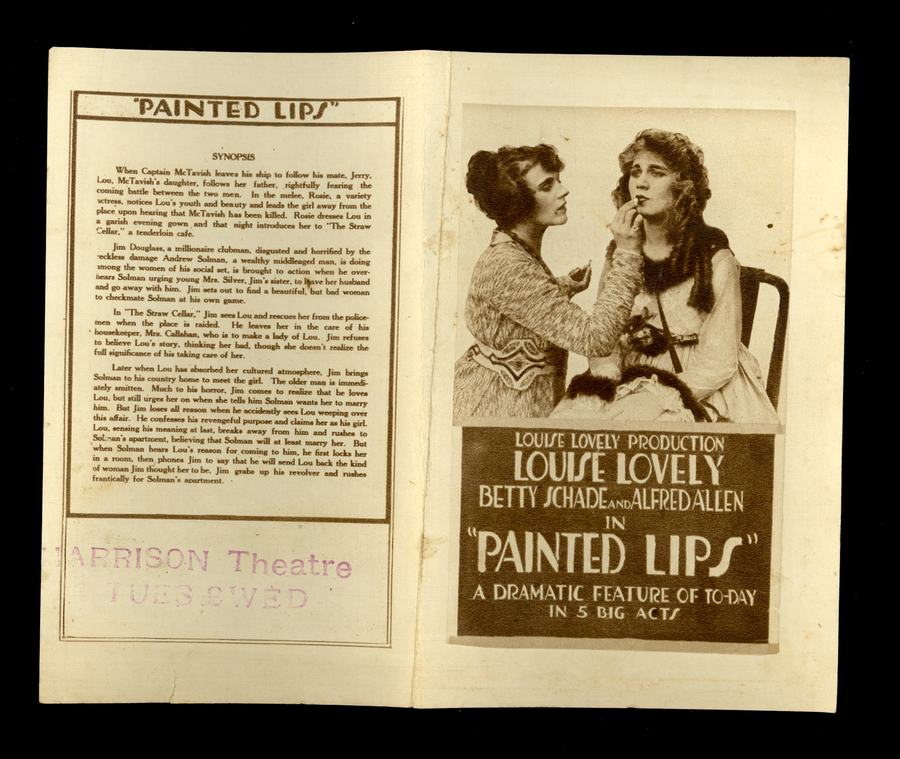
The culmination of Jim's elaborate charade arrives when Lou, now transformed into a vision of refined grace, is introduced to Andrew Solman. Predictably, Andrew is captivated, falling precisely into the trap Jim has so carefully laid. He proposes marriage to Lou, believing her to be the epitome of the respectable woman he desires. However, the narrative takes a pivotal turn, revealing Lou's burgeoning moral compass. Having spent months in close proximity to Jim, and perhaps sensing the dark undercurrents of his true intentions, Lou finds herself unable to complete the deception. She courageously rejects Andrew's proposal and, in a moment of profound moral clarity, exposes Jim's entire vengeful scheme. This act of honesty, while noble, unleashes Andrew's true, predatory nature. The 'male vampire' is revealed not through subtle insinuation, but through a brutal physical assault on Lou. The tension in this scene, rendered without dialogue, is palpable, a testament to the power of silent acting and visual storytelling. Just as Lou's peril reaches its zenith, a figure from her past dramatically re-enters the fray: Captain McTavish. Unbeknownst to Lou, her father had not perished but had spent arduous months tirelessly searching for his daughter, a testament to unwavering paternal devotion. His sudden appearance, reminiscent of the dramatic rescues and climactic confrontations in serials like The Adventures of Kathlyn, injects a powerful dose of raw, visceral action into the unfolding drama. As Captain McTavish bravely battles Andrew, losing ground against his younger, more brutal adversary, Jim Douglass, witnessing the unfolding horror and Lou's imminent danger, makes a decisive, impulsive choice. The calculated avenger transforms into a protector, rushing in to shoot Andrew, effectively ending the cycle of violence and protecting the woman he has, perhaps unknowingly, come to genuinely love. This climax is a whirlwind of emotion, action, and moral reckoning, where all pretenses are stripped away, revealing the characters' true natures under extreme duress.
'Painted Lips' transcends mere melodrama through its exploration of several potent themes. At its core is the destructive nature of revenge. Jim's meticulously planned retribution, while initially appearing justified, ultimately spirals into violence and nearly costs Lou her life. The film subtly critiques the idea that personal justice, outside the bounds of law, can ever truly be clean or without collateral damage. This theme of flawed justice and personal vendettas is a recurring motif in early cinema, often seen in Westerns like Whispering Smith, but here it's transposed to an urban, social drama context, highlighting its universality.
Another compelling theme is transformation and identity. Lou's journey from a strictly reared girl to a sophisticated 'lady' is central. However, her ultimate rejection of the deceptive role Jim crafted for her speaks volumes about the importance of authenticity over superficial appearances. This internal struggle for self-definition, particularly for female characters navigating societal expectations, is a common thread in films like A Daughter of Australia, where heroines often face profound personal tests of character.
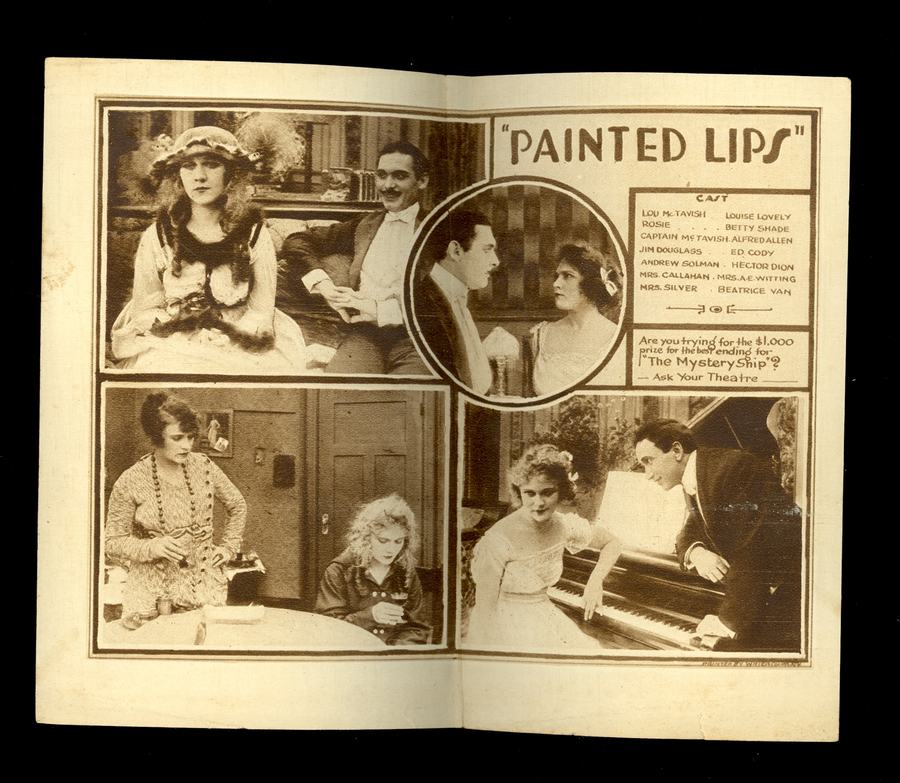
The film also delves into the complexities of love and deception. Jim's initial interactions with Lou are purely instrumental, driven by his vengeful agenda. Yet, his final act of protection and his subsequent confession reveal a genuine affection that blossomed amidst the deceit. This unexpected emergence of true emotion from a foundation of manipulation adds a poignant layer to the narrative, suggesting that even the most cynical plans can be derailed by the human heart. The exploration of complicated romantic entanglements, often fraught with misunderstandings or social barriers, is a hallmark of the era, reminiscent of the emotional intricacies found in Love Watches or Passion.
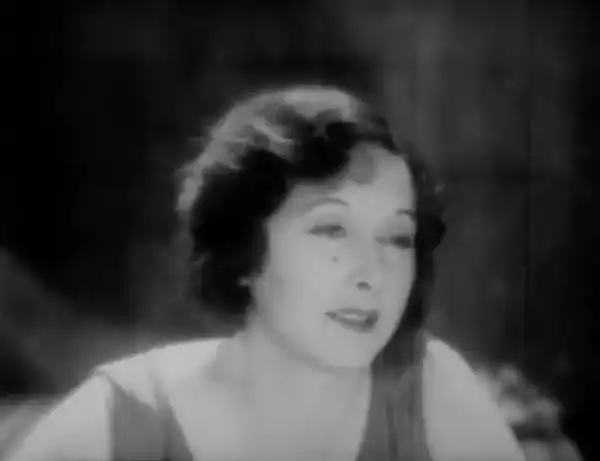
In a medium entirely reliant on visual storytelling, the performances in 'Painted Lips' are crucial. Betty Schade, as Lou McTavish, delivers a compelling portrayal of innocence, vulnerability, and burgeoning strength. Her transformation from a wide-eyed ingénue to a woman capable of moral defiance is conveyed through subtle gestures and expressive facial work, allowing the audience to empathize with her evolving emotional landscape. Lew Cody, as Jim Douglass, captures the conflicted nature of his character with remarkable skill. He embodies the cold, calculating avenger, yet also manages to hint at the underlying humanity and eventual affection that guides his final, decisive action. His journey from manipulator to reluctant hero is central to the film's emotional resonance.
Alfred Allen, as Captain McTavish, provides a powerful anchor. His unwavering paternal presence, even when absent, looms large over Lou's early life, and his dramatic return is both a narrative convenience and a deeply satisfying moment of heroic intervention. The supporting cast, including Mattie Witting as Rose and Beatrice Van, also contribute significantly to the film's rich texture, creating a believable world for the central drama to unfold. The ability of these actors to convey complex emotions and narrative beats without spoken dialogue underscores the unique artistry of silent film, demanding a heightened level of physical and emotional expressiveness.
The direction of 'Painted Lips,' while not attributed to a single director in the provided information, demonstrates a clear understanding of the era's cinematic language. The pacing effectively builds suspense, particularly during Jim's training of Lou and the subsequent confrontation with Andrew. The use of close-ups to emphasize emotional reactions, and wider shots to establish the contrasting environments – from the strict McTavish home to the lively Straw Cellar and the tranquil country retreat – is characteristic of the period's developing visual grammar. The film's cinematography, though likely constrained by the technical limitations of its time, effectively uses light and shadow to enhance mood and characterization, particularly in the darker, more dramatic scenes within the club and during the climactic assault.
'Painted Lips' serves as a valuable reminder that early cinema was far from simplistic. It tackled sophisticated themes, presented morally ambiguous characters, and challenged audience expectations. The film's enduring appeal lies in its exploration of universal human experiences: grief, transformation, the allure of revenge, and the redemptive power of love. It stands as a compelling example of how silent films, through their unique artistic conventions, could communicate profound emotional truths and weave narratives that continue to resonate with viewers today. For those interested in the evolution of storytelling on screen, and particularly the nuanced portrayal of female characters and complex ethical dilemmas, 'Painted Lips' offers a fascinating and rewarding viewing experience, a true testament to the inventive spirit of its age. Its intricate plot, focusing on personal vendetta and engineered romance, finds a thematic kinship with other complex narratives of the period, such as The Silent Mystery or even the dramatic twists of The Governor's Ghost, all of which pushed the boundaries of what cinematic storytelling could achieve without spoken dialogue. The film doesn't just entertain; it provokes thought about the masks we wear, the roles we play, and the genuine emotions that ultimately break through the most carefully constructed deceptions. It’s a compelling journey into the heart of silent-era melodrama, proving that even without sound, a story can possess a thunderous impact.

IMDb 6
1919
Community
Log in to comment.