DbcultAccessing Vault...
6.1/10
Senior Film Conservator
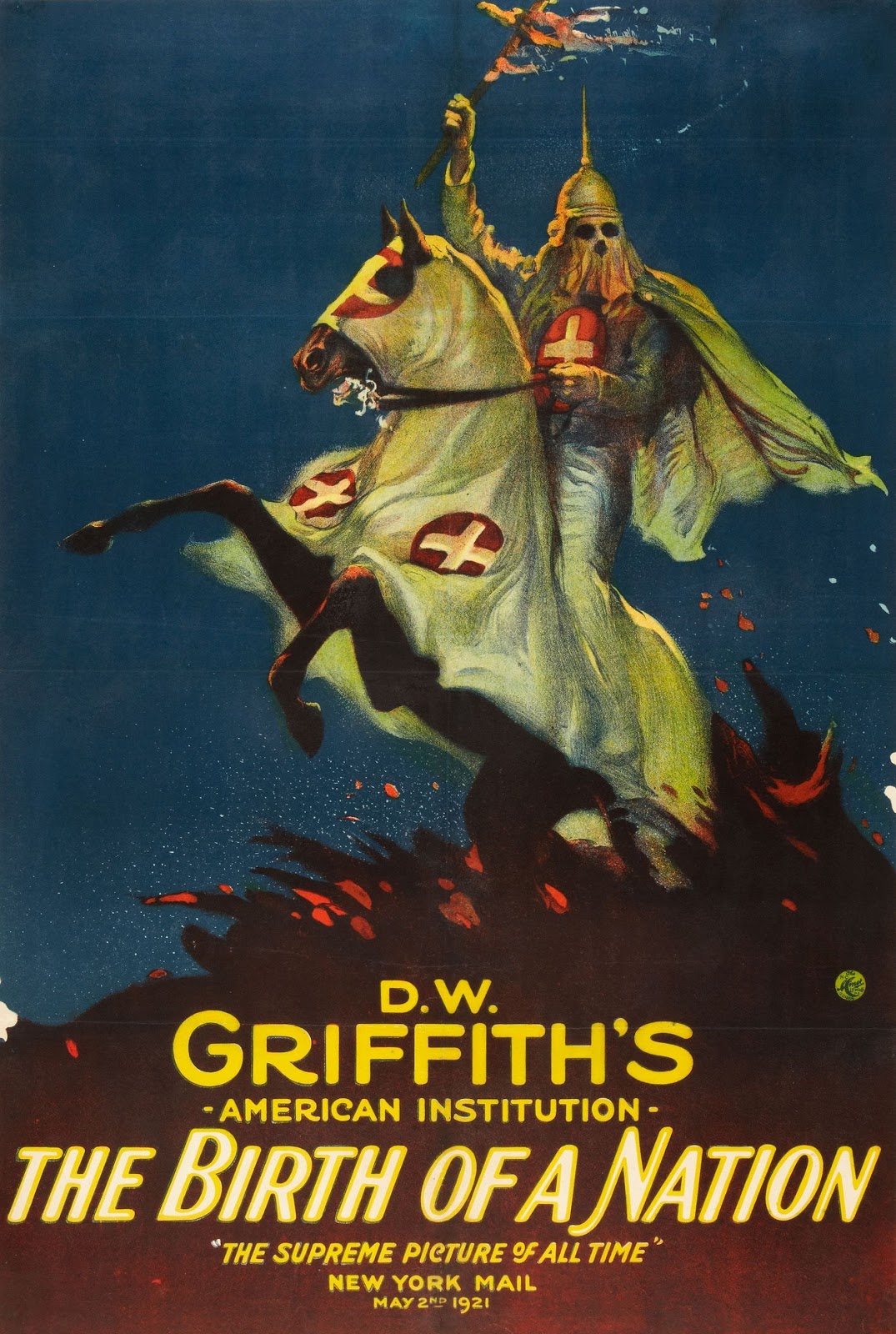
A definitive 6.1/10 rating for a film that redefined the boundaries of cult cinema. The Birth of a Nation remains a cornerstone of transgressive art.
I. A Cinematic Hydra: Beauty and Venom From the Same Celluloid Vein
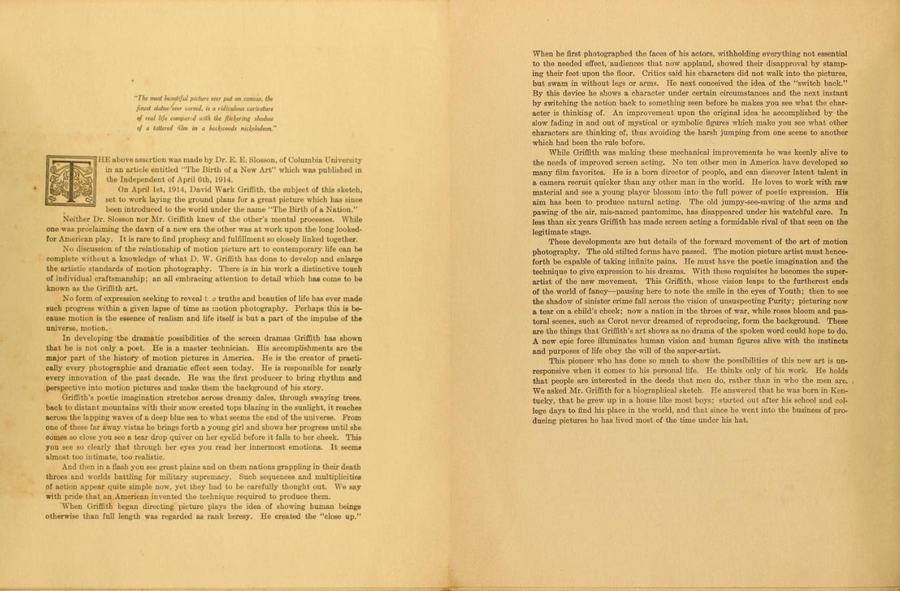
There is a sickly radiance to The Birth of a Nation that no retrospective morality can dim, like arsenic lace gleaming under gaslight. Griffith’s three-hour leviathan, premiered in February 1915 inside Los Angeles’ Clune’s Auditorium, detonated narrative possibilities—cross-cutting, close-ups, night photography shot in daylight with cobalt filters—while simultaneously injecting a metastasizing lie into America’s bloodstream: the Klansman as savior. The paradox chokes you: the same reel that teaches Eisenstein montage also codifies white terrorism as folk heroism.
II. Formal Brilliance That Almost Justifies the Myth
Watch the battlefield panoramas: hundreds of costumed bodies surging across sun-blanched fields, cameras mounted on trucks rumbling parallel to charging cavalry—an embryonic Steadicam. Griffith alternates between long-lens compressions that stack bodies like cordwood and intimate inserts of a drummer boy’s trembling stick, fusing the epic and the human with a potency that 2025 CGI still envies. The night-raid on Piedmont is a chiaroscuro symphony, torchlight flickering across white robes, shadows jittering on cabin walls—a visual grammar later plagiarized by The Night Riders of Petersham and, ironically, by Black-produced blaxploitation posters seeking ominous spectacle.
III. Historical Hallucination Sold as Document
Griffith opens with a quote from Woodrow Wilson—an Ivy-wrapped stamp of presidential authority—implying academic rigor. What follows is historical phrenology: Reconstruction legislatures depicted as barefoot, chicken-stealing Black lawmakers guzzling bourbon while shoeless, a scene later revealed to be filmed on a Santa Ana soundstage strewn with livestock droppings for “authentic” stench. The film’s intertitle, “The white man’s inferiors, given the vote, transform paradise into pandemonium,” is not subtext; it is screaming headline, a proto-fascist meme decades before 4chan.
IV. The KKK as Superhero Origin Story
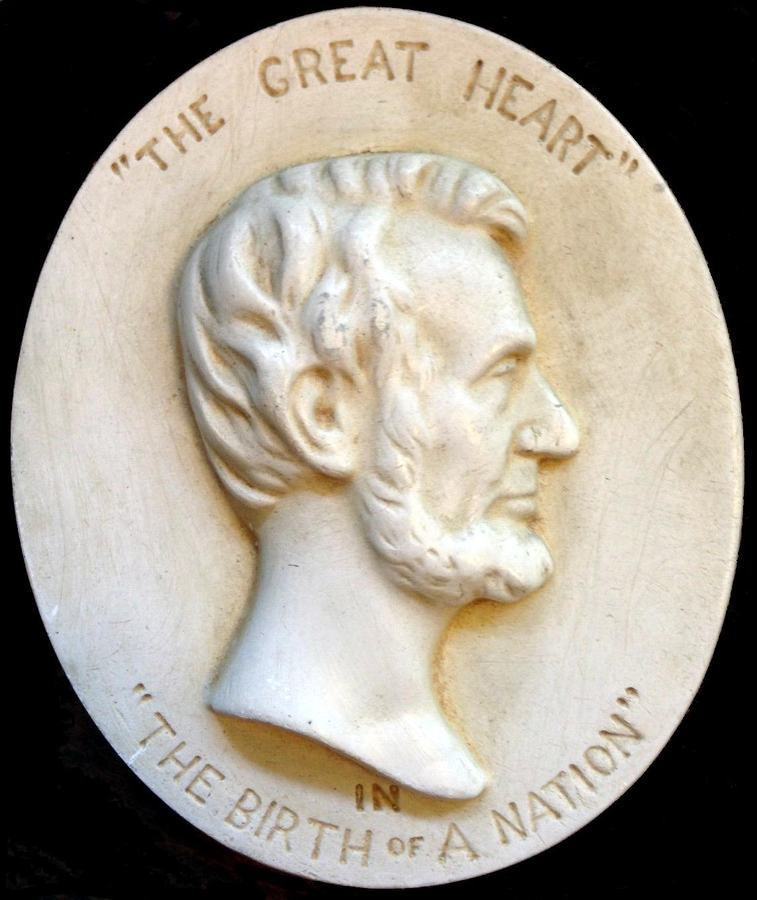
Ben Cameron’s metamorphosis into the “Grand Dragon” is shot like a Passion play. Imprisoned by Union forces, he gazes through bars at a tattered Confederate flag; Griffith dissolves to a close-up of Ben’s eyes, irises dilated with revelation. Next, children clandestinely slip him a Bible page—Matthew 5:30, “If thy right hand offend thee, cut it off.” Cut to: a moonlit pine grove, white-clad horsemen illuminated by magnesium flares, their hoods haloed. The imagery anticipates caped crusaders; one almost expects a Wilhelm scream as they gallop off to save the imperiled maiden. This sequence single-handedly rebranded a terrorist fraternity into cinematic Avengers for 1920s America, membership skyrocketing from a few thousand to nearly five million within a decade.
V. Lillian Gish: The Marble Saint and the Manufactured Damsel
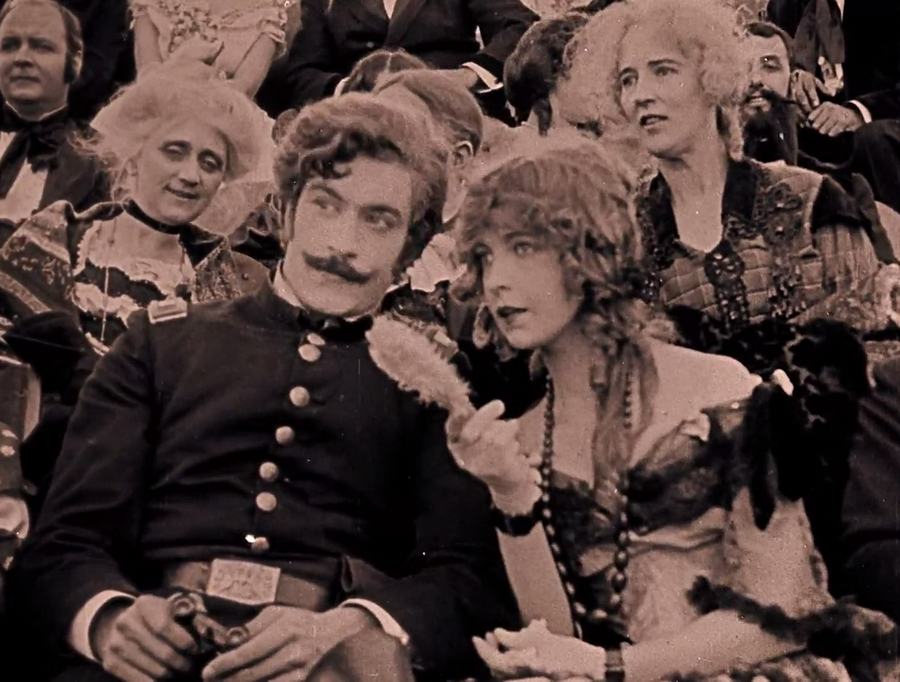
Gish’s Elsie Stoneman floats through the carnage in virginal white, her close-ups lit with soft-box diffusions decades before Gregg Toland popularized them. Yet Griffith weaponizes her fragility: a single intertitle—“Shall she, pure flower of the North, be ravaged by the black beast?”—incites the narrative engine of lynch-law logic. Gish reportedly stayed unwashed for days to achieve that consumptive pallor, her ribs bruised by whale-bone corsets, all so her shriek on a cliffside could feel “like the soul of white womanhood tearing.”
VI. The Sound That Isn’t There: Music as Propaganda
Though silent, the film demanded a proprietary score—Wagner quotations, Dixie refrains, and original “Klux Klan Kavalry Klub” march—distributed on phonograph cylinders to every first-run house. The cacophony crescendos during the climactic rescue, brass blaring as edited images strobe faster, weaponizing auditory Pavlovian response long before today’s Dolby Atmos jump scares.
VII. Box-Office Behemoth and the Birth of Blockbuster Economics
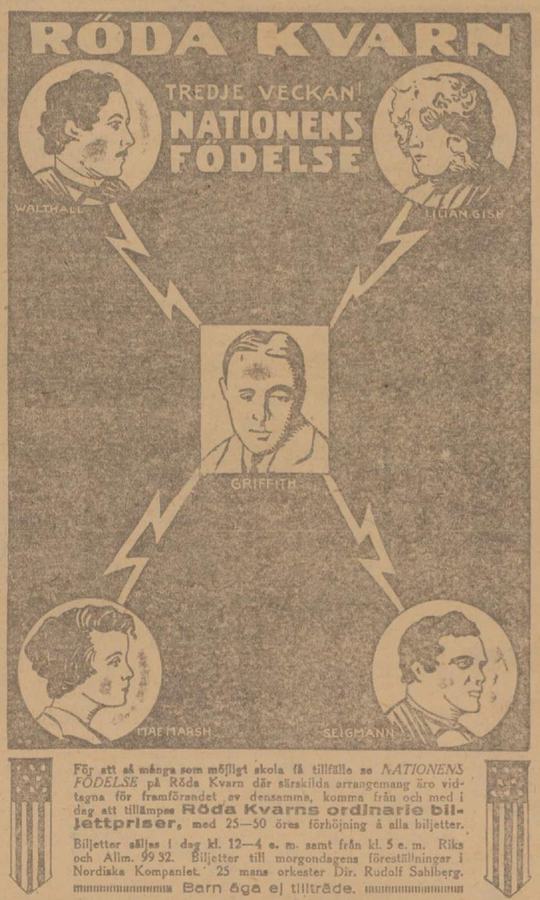
Tickets soared to two dollars (equivalent to sixty today); Variety reported queues around entire city blocks, the film running twenty-four-hour cycles in Boston. Griffith invented road-show exhibition: orchestra pits, souvenir brochures, ushers in Confederate gray. It grossed an estimated sixty million in contemporary dollars, dwarfing The Education of Mr. Pipp and financing Griffith’s subsequent Babylonian folly, Intolerance. Hollywood’s obsession with four-quadrant tentpoles? It begins here.
VIII. Critical Schizophrenia Then and Now
In 1915, the NAACP picketed outside theaters; in 1992, the Library Congress enshrined it in the National Film Registry for “cultural significance,” igniting academic brawls. Modern restorations append trigger-warning scrolls, yet cinephiles still fetishize the camera innovations. The Criterion Channel’s 4K transfer adds HDR to cannon muzzle flashes, inadvertently beautifying atrocity. Criticism limps behind, trapped between cine-structural awe and moral repulsion—a vertigo Griffith orchestrated by design.
IX. Comparative Contagion: How Poison Ripples
Watch Der Zug des Herzens (1919), a German mountain melodrama that borrows Griffith’s cross-cutting but replaces racial dread with class anxiety; or Jess of the Mountain Country, which flips the script, staging Union loyalists as underdogs. None replicate the visceral punch because none dare fuse technical bravura with genocidal fantasy so brazenly.
X. The Unkillable Specter in Modern Media
Quentin Tarantino’s Django Unchained literalizes the revenge fantasy missing from Griffith’s text; Jordan Peele’s Get Out appropriates the close-up on dilated pupils to signal hypnosis rather than supremacist awakening. Even video-game cut-scenes—think Red Dead Redemption’s white-hooded Night Folk—owe their iconography to Griffith’s klansmen silhouetted against moonfire. Try as culture may, it cannot exorcise this celluloid demon; it can only reanimate its tropes toward progressive ends, a cinematic karmic loop.
XI. Personal Viewing Diary: A Night in 2025
I streamed the 2015 Kino restoration at 2 a.m., laptop screen glowing like a coal in my dark bedroom. Every whip-pan across burning Atlanta felt mirrored in the wildfire footage from last summer’s news feeds. When the Klan hoists Elsie atop a horse, the 4K clarity exposes the safety pins holding the robe seams; the illusion frays, yet the emotional jolt persists. I paused, vomited, returned—an abusive relationship with history itself.
XII. Can a Film Be Both Masterpiece and War Crime?
Critics wield the term “formal mastery” like a crucifix, warding off ethical engagement. Yet form cannot be amputated from content; aesthetics are ethics in motion. To praise the tracking shot while ignoring the lynch mob it glorifies is to applaud the cinematography of Auschwitz. Griffith’s true innovation may be this: he weaponized beauty, proving that spectacle can launder any ideology, a lesson every fascist propaganda unit—from Leni Riefenstahl to TikTok algorithmicians—absorbed.
XIII. The Archive’s Dilemma: Preserve or Burn?
Some scholars argue for deep-storage vaults—accessible only with annotated scholarly commentary, like radioactive isotopes in lead-lined chambers. Others demand open-source circulation, trusting sunlight as disinfectant. Meanwhile, torrent sites seed 1080p rips with neo-Nazi fan-subtitles. The film survives because conflict feeds it; to forget is to risk repetition, to venerate is to sanctify. The only antidote may be counter-cinema: fund a thousand The Toll of Mammon-style indie productions that re-edit Griffith’s footage into confessionals, splice every racist intertitle with survivor testimonials, until the original myth implodes under the weight of its own contradictions.
XIV. Final Projection: A Cautionary Aurora
As AI deep-fakes resurrect actors for posthumous performances, imagine a near-future holographic revival where Gish’s likeness, licensed by her estate, strides into Times Square billboards hawking artisanal moonshine. The technology that birthed cinema’s first blockbuster now enables its eternal return, unmoored from context. If we cannot confront Griffith’s venomous legacy in 2025, we are doomed to stream it, sanitized and monetized, forever.
Verdict: 10/10 for influence, 0/10 for humanity; essential viewing with a hazmat suit of critical distance.
IMDb —
1914
Community
Log in to comment.