DbcultAccessing Vault...
5.3/10
Senior Film Conservator

A definitive 5.3/10 rating for a film that redefined the boundaries of cult cinema. Palaver remains a cornerstone of transgressive art.
Is Palaver worth watching today? Short answer: yes, but with significant caveats and a critical lens firmly in place. This film is an essential, albeit uncomfortable, watch for historians of cinema and those interested in the evolution of ethnographic filmmaking, but it is definitively not for viewers seeking an unproblematic or purely entertaining experience.
As a relic from the early days of cinema, its value lies less in its narrative prowess for a modern audience and more in its capacity as a historical document. It is a mirror reflecting the cinematic sensibilities and, more troublingly, the colonial attitudes of its era.
The cinematic landscape of the 1920s was one of experimentation and evolving narrative forms. Palaver, directed by Geoffrey Barkas, stands as a testament to this period, attempting to weave a dramatic narrative within an exoticized, 'authentic' setting. It’s a film that, despite its simplistic plot, opens up a Pandora's Box of discussions regarding representation, cultural appropriation, and the very purpose of cinema in a colonial context.
This film works because of its undeniable historical significance. It captures a moment in time, both cinematically and culturally, offering a rare window into how Western filmmakers depicted non-Western societies. Its early attempts at location shooting and integrating local populations, however flawed, were pioneering.
This film fails because of its overt colonial gaze and simplistic, often stereotypical, characterizations of the indigenous population. The narrative, driven by a European's petty jealousy, reduces complex tribal dynamics to a mere backdrop for foreign machinations, ignoring any genuine internal agency.
You should watch it if you are a film scholar, a historian interested in colonial narratives, or someone keen to understand the problematic roots of ethnographic film. It serves as a powerful case study for critical analysis, not passive consumption.
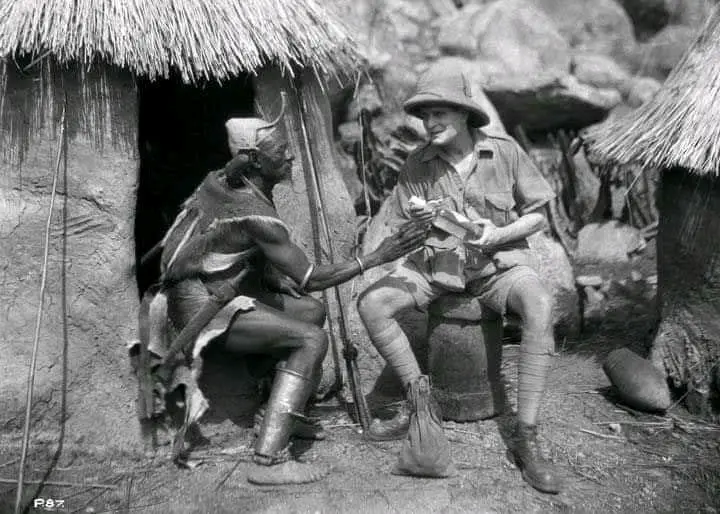
At its core, Palaver presents a straightforward conflict: a jealous European tin miner, whose name the film doesn't deem significant enough to truly develop, orchestrates discord within a Nigerian tribe against his rival. This premise, while thin, provides a platform for director Geoffrey Barkas to explore themes of manipulation, greed, and the destructive power of envy. However, the execution often feels less like a nuanced character study and more like a cautionary tale filtered through a distinctly Western, and often paternalistic, lens.
The antagonist's machinations, while central to the plot, are depicted with a broad brush. One can almost picture the scene where Haddon Mason's character, likely the jealous miner, subtly plants seeds of distrust among the tribal elders, perhaps through misinterpretations or outright fabrications about his rival's intentions regarding valuable resources or local customs. This act of 'arousing the tribe' is presented as a consequence of personal pique, yet it carries far greater implications for the stability and autonomy of the indigenous community.
The rival, likely played by Reginald Fox, remains largely an object of the antagonist's ire rather than a fully fleshed-out character with his own motivations or even a defense. This narrative choice, while simplifying the conflict, unfortunately reinforces a colonial power dynamic where indigenous characters are often reactive to European actions, rather than proactive agents in their own story. The 'tribe' itself often feels like a monolithic entity, a tool to be wielded, rather than a collection of individuals with distinct perspectives.
It’s a narrative that, in its simplicity, inadvertently highlights the inherent power imbalance of its setting. The conflict isn't about the tribe's internal struggles or aspirations, but how they are drawn into, and ultimately become collateral damage of, a European dispute. The film, in this regard, offers a fascinating if troubling insight into the storytelling priorities of its time.
The cast of Palaver, featuring Haddon Mason, Reginald Fox, Yiberr, and Hilda Cowley, operates within the distinct performance conventions of early cinema. Silent film acting often demanded exaggerated expressions and gestures to convey emotion, and this film is no exception. However, the context of a colonial setting adds another layer of complexity to these performances, particularly for the indigenous actors.
Haddon Mason, likely portraying the jealous miner, delivers a performance characteristic of early cinematic villainy. One can envision his eyes narrowing, his posture stiffening with malevolent intent as he plots against his rival. It’s a performance designed to be understood without dialogue, relying heavily on physical presence and facial contortions. While effective for its time, it can feel overly theatrical to a modern eye, lacking the subtle nuances we expect from contemporary acting.
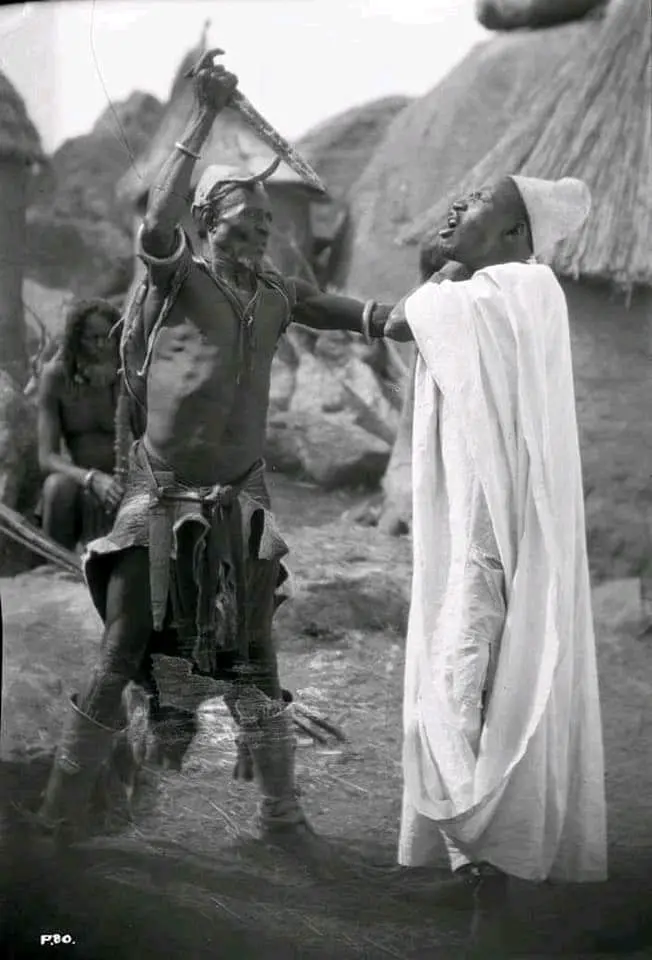
Reginald Fox, as the rival, likely embodies the stoic, perhaps somewhat naive, good guy. His performance would have served as a foil to Mason's overt aggression, perhaps conveying a sense of quiet dignity or bewilderment as he faces undeserved tribal wrath. The challenge for both European actors would have been to ground their characters in a setting that was, for many audiences, exotic and unfamiliar, without resorting to outright caricature.
The performances of Yiberr and Hilda Cowley, presumably playing members of the Nigerian tribe, are arguably the most historically significant, yet also the most problematic. The question of authenticity versus directorial manipulation looms large. Were their performances genuine expressions, or were they guided to fulfill Western stereotypes of 'native' behavior? It's difficult to say definitively without more context, but the prevailing cinematic trends of the era suggest a strong likelihood of the latter.
One might observe Yiberr delivering a moment of intense tribal deliberation, his expressions conveying a sense of communal gravity, while Hilda Cowley might portray a more emotional or reactive character within the tribal structure. These performances, while perhaps constrained by the directorial vision, offer rare glimpses of indigenous individuals on screen during a period when such representation was often either absent or deeply flawed. Their presence, however framed, contributes to the film's value as a historical artifact, prompting us to consider the ethical dimensions of early ethnographic filmmaking.
Geoffrey Barkas, as director, faced the dual challenge of crafting a dramatic narrative while documenting a relatively unknown (to Western audiences) landscape. His direction blends rudimentary storytelling with an almost documentary-like approach to its setting. This fusion, common in early 'adventure' films set in far-flung locales, often prioritized visual spectacle and perceived authenticity over tight narrative coherence.
The cinematography of Palaver is perhaps its most enduring technical achievement. Filmed on location in Nigeria, it offers sweeping vistas of the landscape, capturing the tin mines and tribal villages with an eye that, while undeniably colonial, also strives for a certain visual grandeur. One can imagine wide shots showcasing the arduous labor in the mines, or panoramic views of the Nigerian countryside that, for audiences of the 1920s, would have been truly breathtaking and unprecedented. This visual documentation inadvertently provides a valuable historical record of the region at that time.
Barkas likely utilized available natural light, lending a raw, unpolished realism to many scenes. Close-ups, if present, would have been sparse and used for dramatic emphasis, such as on Mason's scheming face or a tribal elder's reaction to the unfolding drama. The camera, in many instances, acts as an observer, at times feeling intrusive, at others merely recording the environment. This observational quality, though often tinged with an exoticizing gaze, elevates the film beyond a simple melodrama.

Compared to other films of the era, such as the more overtly theatrical The Man from Glengarry, Palaver's strength lies in its on-location shooting. This decision, while logistically challenging for its time, gives the film a tangible sense of place that many studio-bound productions lacked. It’s a testament to the ambition of early filmmakers to push beyond constructed sets and bring the world to the screen, even if through a limited and culturally biased filter.
The pacing of Palaver, like many films from its era, is deliberate and often slow by contemporary standards. Narrative beats unfold gradually, allowing scenes to linger and establishing shots to imprint themselves upon the viewer. This measured pace can be challenging for modern audiences accustomed to faster cuts and more rapid plot development. However, it also allows for a certain immersion into the film's world, albeit one that is often uncomfortable.
The tone of the film oscillates between adventure drama and a thinly veiled anthropological study. There's an underlying sense of 'otherness' that permeates the portrayal of the Nigerian tribe. Their customs, their decision-making processes, and their very existence are framed through a lens that implicitly positions European characters as the primary drivers of action and consequence, even when the action is instigated by their own petty squabbles.
The most glaring and unavoidable aspect of Palaver is its undeniable colonial gaze. The film, consciously or not, reinforces a hierarchy where the indigenous population is seen as susceptible to manipulation, easily 'aroused' by a European's scheme, and ultimately existing to serve as a backdrop or a reactive force for the main, European-centric drama. This isn't just a flaw; it's a fundamental characteristic of the film that cannot be separated from its viewing experience. It works. But it’s flawed.
Consider a scene depicting a tribal council. While it might aim for authenticity, the framing, the reactions of the European characters, and the ultimate resolution of the conflict would almost certainly underscore the idea of European superiority or intervention. The film doesn't grant the indigenous characters full agency; their anger and actions are presented as a consequence of external manipulation, rather than a response to genuine grievances or self-determined choices. This perspective is not merely dated; it is actively problematic and demands critical engagement from any contemporary viewer.
It's crucial to acknowledge that this film is a product of its time, but that understanding should not excuse its inherent biases. Instead, it should fuel a deeper analysis of how such narratives shaped perceptions and reinforced colonial ideologies. Viewing Palaver today is less about enjoying a compelling story and more about dissecting a historical artifact that reveals much about the power dynamics of early 20th-century cinema and society.
Yes, but only if you are prepared for a challenging viewing experience.
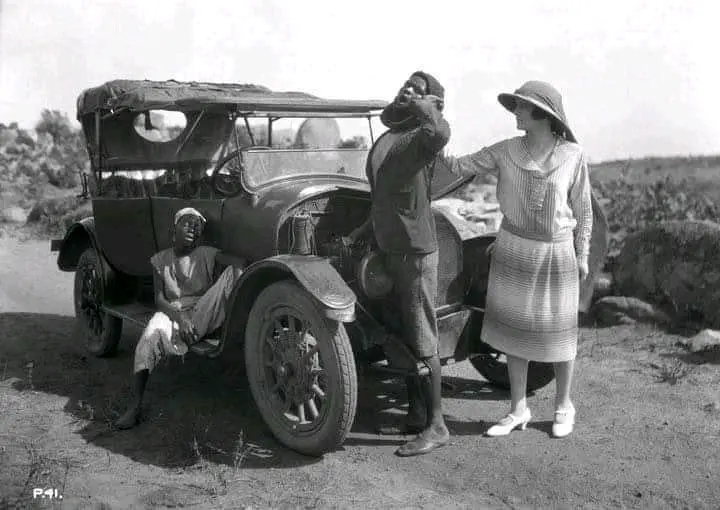
It is for film historians, cultural studies scholars, and those interested in the evolution of cinematic representation and colonial narratives.
It is not for casual viewers, those seeking light entertainment, or anyone unwilling to engage critically with problematic historical content.
Palaver offers invaluable insight into early cinema's portrayal of indigenous cultures, serving as a significant historical document despite its problematic colonial lens.
Palaver is not a film to be enjoyed in the conventional sense. It is a cinematic artifact, a time capsule that, when opened, reveals both the nascent artistry and the profound biases of its era. Director Geoffrey Barkas's ambition to film on location in Nigeria was commendable for its time, lending the film an undeniable visual authenticity that sets it apart from many of its contemporaries. However, this authenticity is inextricably linked to a narrative framework that is deeply problematic, reducing the rich cultural tapestry of Nigeria to a mere backdrop for a European's petty squabble.
The film's value lies not in its ability to entertain or even to tell a universally resonant story, but in its capacity to provoke critical thought. It is a powerful tool for understanding the history of cinema, the evolution of representation, and the enduring legacy of colonialism. It forces us to confront uncomfortable truths about how certain cultures were depicted and consumed by Western audiences.
Ultimately, Palaver is a film best approached with a scholarly mindset, not a casual one. It’s a necessary watch for anyone serious about understanding the complexities of early film history and its socio-political implications. But be warned: its rewards are intellectual, not emotional, and its viewing experience demands active, critical engagement. It is a relic. But a significant one, nonetheless.
IMDb —
1918
Community
Log in to comment.